SEARCH


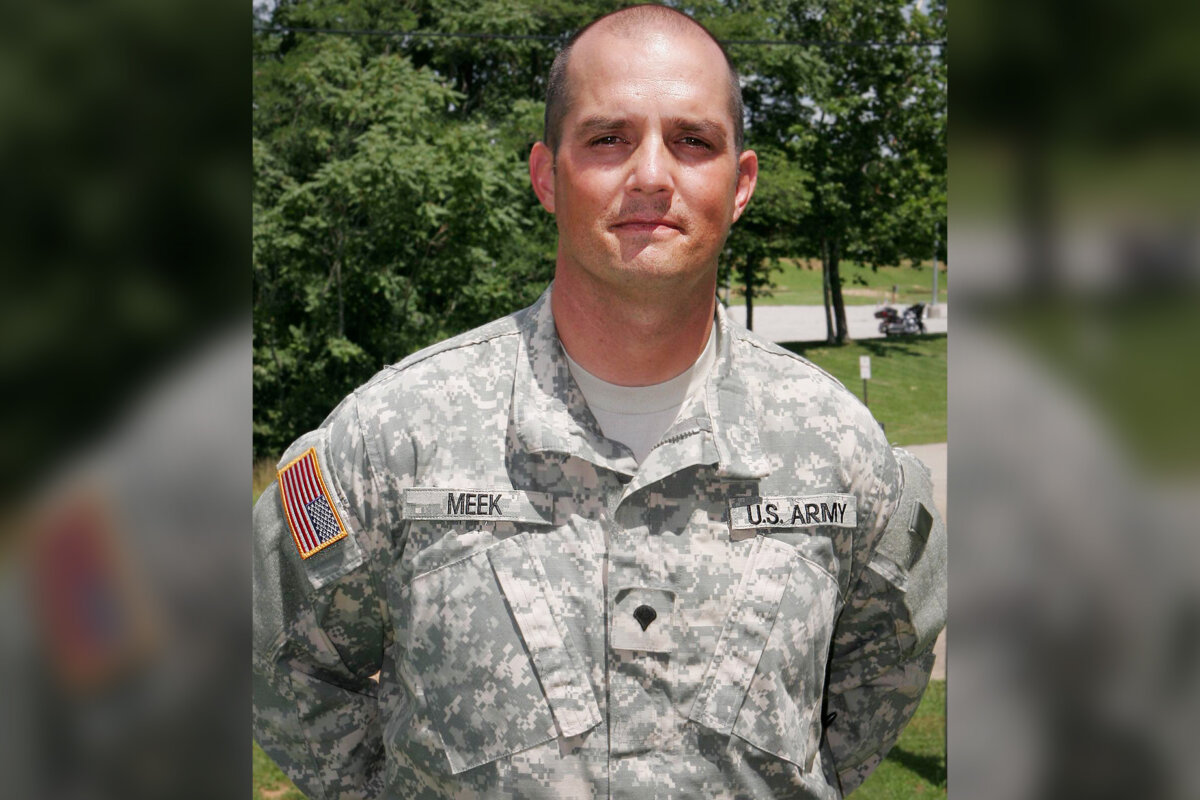
He survived, and he had to live with it.
David Meek watched in horror as plumes of fire and black smoke billowed from the crowded Afghan street where the convoy had been travelling. Live footage was broadcast into the battle room in Kabul, where he and other officers witnessed their worst fears come true: A suicide bomber had struck and personnel were dead.
Meek served with the U.S. Army for three deployments from 2011 to 2021. He joined the nation’s “war on terror” in the wake of the attacks on Sept. 11, 2001. At 37, he was one of the oldest to enroll among his cohorts at that time. He still recalls 17-year-olds crying in their beds at boot camp.
Now 55, Meek had been a teacher and high school principal in California for nine years prior to enlisting. Education had been his calling—to help youths reach their potential as he, once a troubled student, had done. He overcame abandonment, expulsion, and a third-grade reading level only to realize he was post-graduate material. He excelled in his career, yet he always felt that it was his destiny to serve his country.
The fateful incident in Kabul shook Meek to the core during his first tour in 2011. A transportation officer on a base in the city, he oversaw the arrival and departure of thousands of men and women; he ordered fuel, equipment, food, and ammunition; soldiers had to be trained and assigned; contractors were flown in for their expertise; and personnel required transportation. It was a constant flurry.
And security had to be strategic. Always.
The risk that lingered in everyone’s mind, especially Meek’s, was a particular armored bus the army used to move personnel throughout the city. Not only Americans but Afghans, Canadians, civilian contractors, coalition forces, and other partners of the U.S. military constantly shuttled between bases and airfields—even on shopping trips.
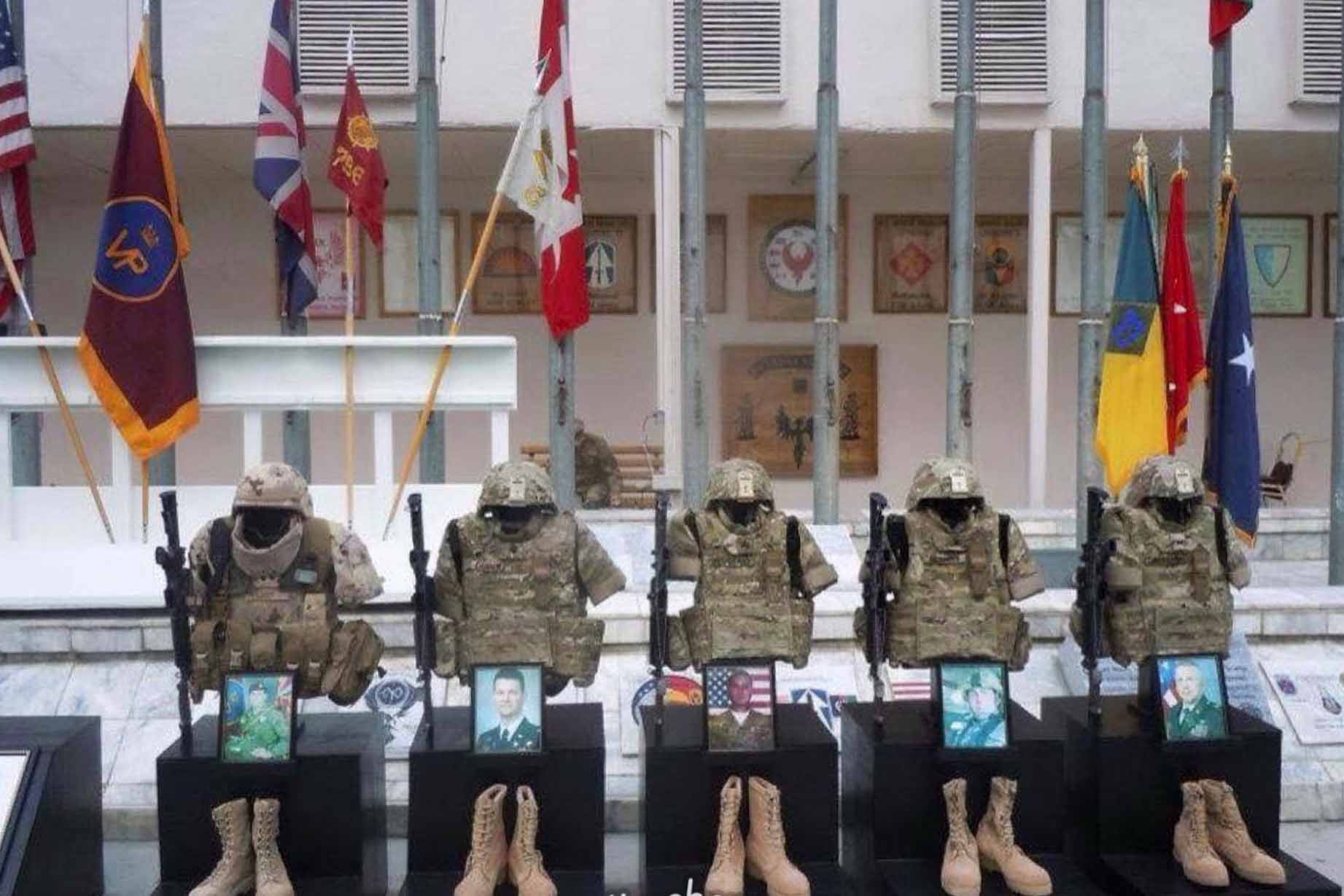 A memorial for servicemen who were killed in the convoy attack in Kabul, Afghanistan, in 2011. (Courtesy of David Meek)
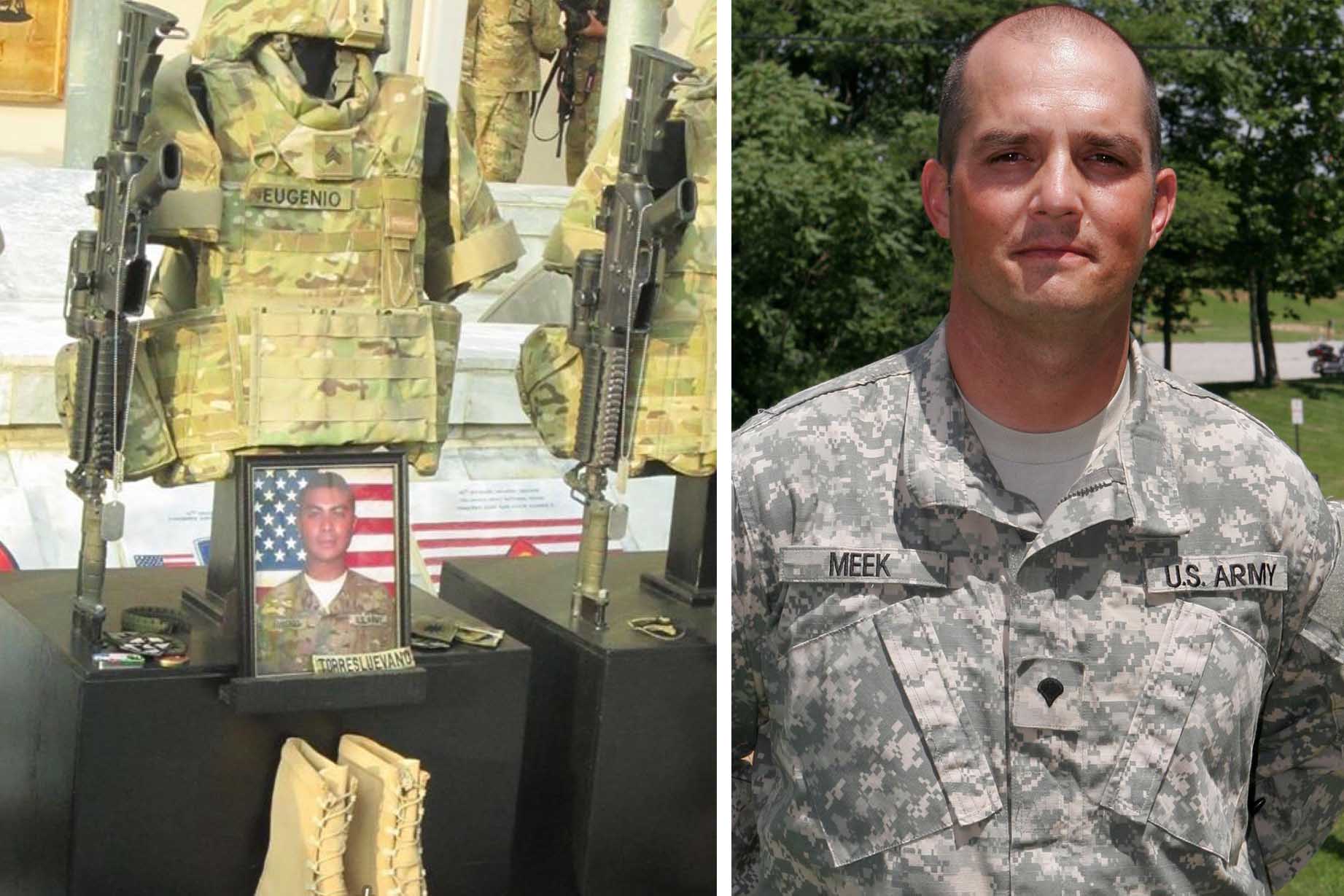 (Left) A photo showing a tribute to the servicemen who died in a suicide bomb attack in Kabul in 2011; (Right); Army veteran David Meek. (Courtesy of David Meek)
The armored bus, known as a Rhino, was regarded in Meek’s unit as a weak link in security, he says. Meek was responsible for scheduling the bus’s daily stop requests. He was wary and knew to stagger its stops throughout the day. The enemy was looking for patterns to exploit and targets to bomb, so Meek randomized the stops. He perused schedules from army records and used their strategies.
“It screamed high-value target,” Meek told The Epoch Times, referring to the bus. “It didn’t have a turret with a gunner on top to provide security. There had been a lot of concern about using it outside the bases. Everybody knew it was a passenger vehicle; you could have Googled it online.”
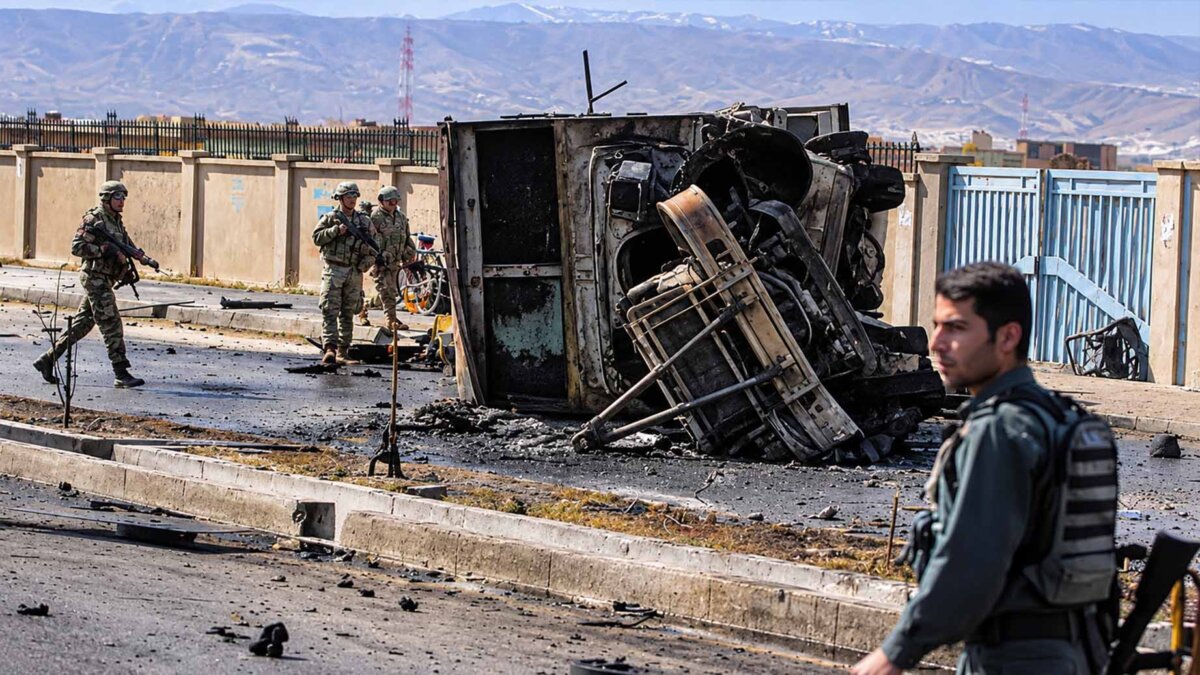
It was morning on Oct. 29, 2011, when Meek, then just 45 days in-country, got the call. A Taliban suicide bomber had infiltrated the bus’s convoy and detonated an explosive device near an old Russian-bombed palace. Meek rushed to the battle room and saw the smoldering vehicle via aerostat blimps—their “eyes in the sky.” The casualty numbers fluctuated for those first crazy hours. Meek and his team raced to answer an influx of calls and get a handle on the situation.
Ultimately the death toll rose to 17. Thirteen were personnel on the bus, including a soldier from Meek’s unit, and four were locals on the street.
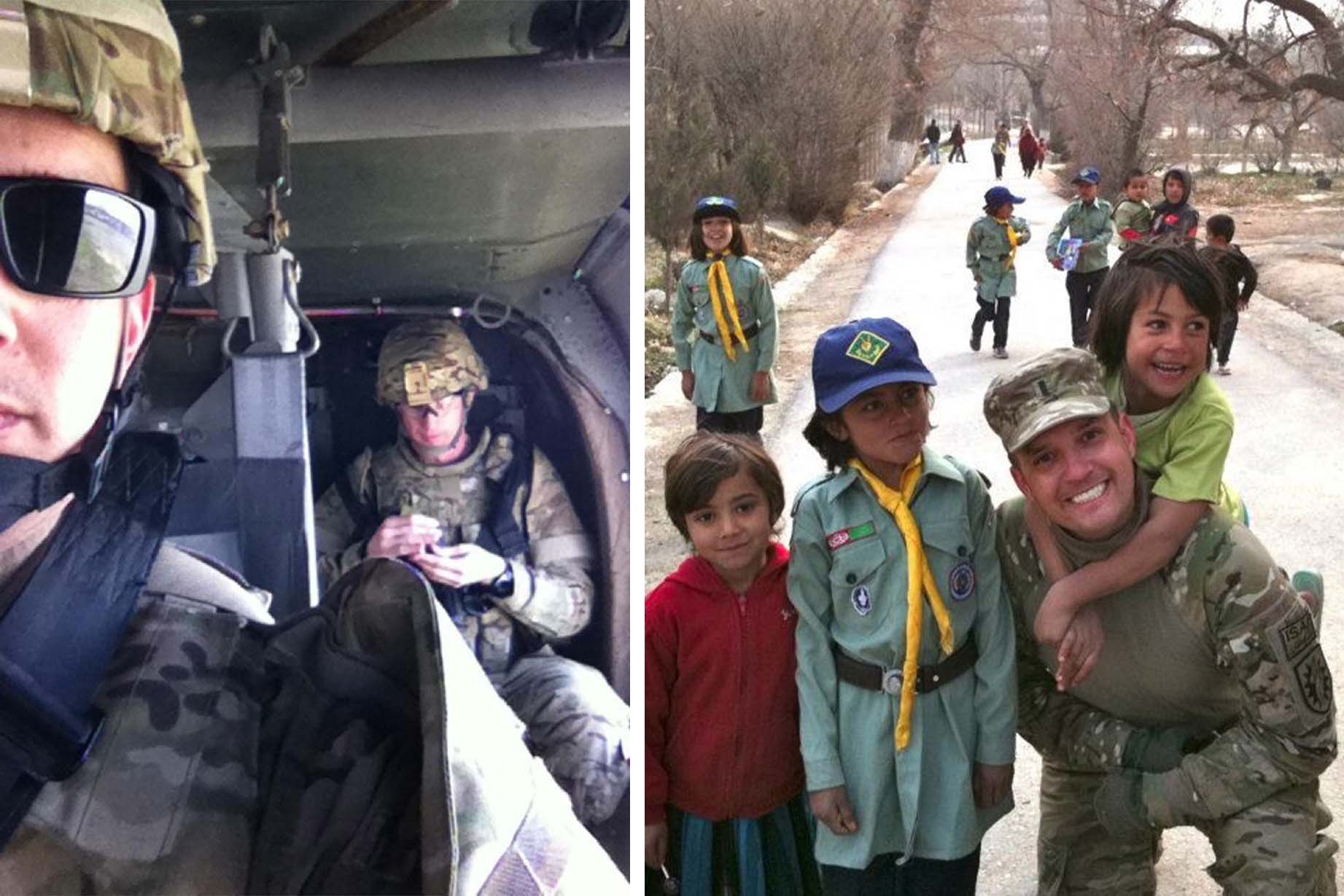 (Left) David Meek (L) takes a selfie while deployed; (Right) David Meek engages with local children in Kabul. (Courtesy of David Meek)
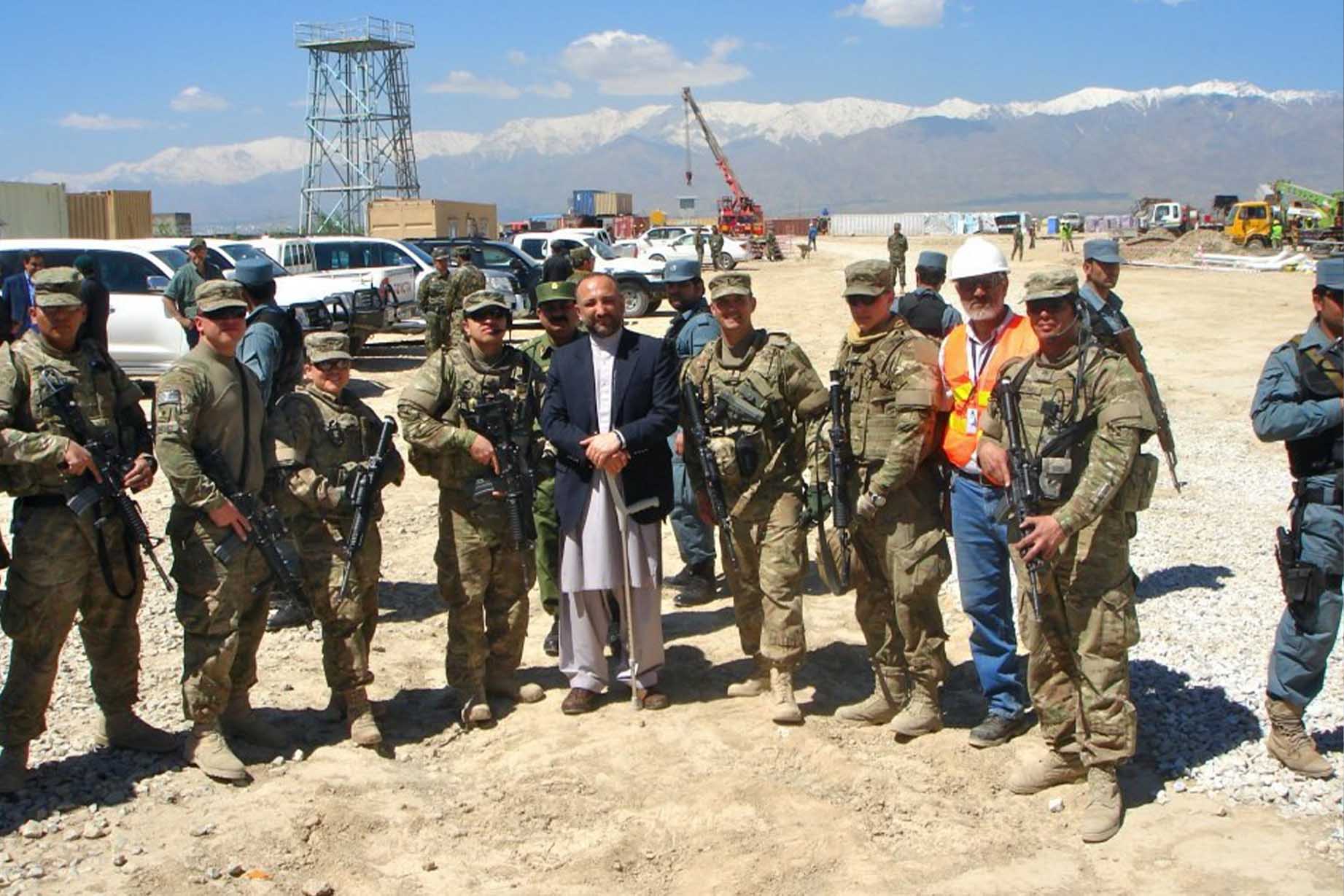 David Meek (sixth from L) stands with members of his unit in Kabul, Afghanistan. (Courtesy of David Meek)
Hours later, Col. Kurt Ryan ordered Meek and his unit off duty for 48 hours. Ryan knew they needed a mental reset. “You could tell he’s smart,” Meek says. Any shorter time would have pushed them past the brink; any longer time spent in their “Lego-land” six-by-six-foot shipping container bunks would dull their nerve to soldier on.
The brief rest was followed by a sharp change in policy. The Rhino was decommissioned permanently, Meek said, and he revamped security. No more day-time transport missions. Night missions only. This let them ban civilian cars from merging into their ranks. Rounds would be discharged non-lethally into any vehicle that got too close. He devised a scheduling system based on airline-style manifesting. No more vague, casual head counts. Names and seat numbers were locked strictly into the system. And no more abusing the system for trips to the bazaar.
Ripple Effects
But while the logistical impacts were resolved in short order, the ripple effects of the 13 deaths and the internal scars they inflicted on Meek’s psyche far outlasted his tenure.
He had survived, and living with that nearly cost his life.
“I blamed myself. I felt like if I would have chosen different times, lives would have been spared,” Meek says, speaking from his home in the Paso Robles area of California, after retiring from the army as a major in 2025.
“For years, I would look at a rock thrown into the water and try to count the endless ripples going out. I saw those ripples as the lives I had destroyed—thinking of a kid somewhere who grew up without his dad because of my schedule.”
Meek’s tenure did not end after the 2011 incident. For more than a decade, he was driven by the classic combat paradox: he felt out of place stateside—everything at home felt like slow motion. He found comfort on the edge, in the fast-paced environment of a combat zone.
In 2012, comfort found him in the form of a wounded German shepherd-wolf mix named Zina. She was a former bomb-detection dog and became a mascot on the base in Kabul. Zina brought healing to Meek and other soldiers. She was Meek’s emotional lifesaver. Her death in 2020 tore his heart apart.
Whenever Meek returned home after a deployment, he fell into decline. He says that for years after serving, he woke each morning and checked the weather on the base. He felt frustrated by the trivial complaints of civilians. His eyes darted inside of restaurants and public spaces—distressing friends and relatives.
Meek didn’t realize it yet, but he was suffering from post-traumatic stress disorder (PTSD). He was experiencing survivor’s guilt.
“My family said when I came back that I became a recluse,” he recalls. “I would always make an excuse to stay home and cancel plans.” The distance took a toll on his children. His sixth-grade son, Samuel, began acting out.
“His dad left him,” Meek says. “[Sam] had behaviors that he picked up that I had never seen when I was around.”
The trauma eroded him inside and out. “I would wake up, and I would have blood all over my pillowcase,” he says. “In my sleep, I would scratch my scalp to the point of breaking my skin and bleeding pretty heavy.”
Tremors of the PTSD also rocked Meek’s relationships. By the tenth year after the attack in 2011, his marriage had broken down. He returned home from work on Nov. 5, 2021, and found the house gutted of his wife’s possessions. She had left him.
Weeks later, he survived a suicide attempt. He had tried to overdose on Trazodone, but he didn’t die after downing the bottle of pills. He sought help from his Vietnam veteran neighbor, Glen, who had lent a shoulder for years.
Meek recalls his mind spinning like a top. His mouth fumbled and failed to speak one night while mingling with friends during an outing. Nothing came out. He later learned on “60 Minutes” about a veteran with the same symptom—it was typical in PTSD sufferers. But there was also a treatment: Stellate Ganglion Block. An injection to his neck would “put the brakes on his spinning brain.”
“It was one of the best decisions because it opened the door for therapy to actually begin to work,” Meek says of the injections.
He underwent treatment, and slowly everything started to get better.
His achievements were also a barrier to his healing. “I came from a rough childhood, defied the odds, became a principal,” he says. “Then I go into the military and I was awarded the Bronze Star. I never felt like I had space to let my [inner feelings] out because I was always on this pedestal.”
Seeing regular therapists, he let his guard down. Not every day had to be an eight out of ten; he would admit when today was a two.
“They can’t help you if they don’t know what the problem is,” he says. “I began to bring the good, bad, and ugly to every session, even when it was humiliating. Once they got the big picture, we started making progress.”
Then, in November 2022, on the streets of Orange County, death knocked. A group of men waited for him outside a restaurant. They wanted revenge after he stood up to them for harassing a young woman inside the establishment. They ambushed him and stabbed him several times, from below the naval up to his chest. The incident had the effect of freeing Meek of his deep-seated survivor’s guilt.
The attack was a wake-up call, “the best thing that ever happened to me,” he said. The soldier—who had been clinging to the battlefield, who secretly wanted to be dead, and who had numbed himself with alcohol at home—finally snapped out of it. He flipped his perspective around. He found joy in simple moments.
“I get to wash the dishes this week. Instead of dreading it, I look out the window,” he says.
Today, Meek has survived, and he is thankful for it. His passion for education still thrives, and he now works with at-risk and autistic children facing their own battles. He wants to give back.
“I’ve had people from up on top yell down, ‘Man, you fell far,’” he says. “I want to be that person that crawls down in there, sits by them, and waits for them to talk. And when they’re ready, I want to help them get one foot at a time to crawl up that ladder out of there.”
Next spring, Meek will tie the knot again. Her name is Kendra.
“I’ve thrown every single good, bad, and ugly story at her—things that would make most people run,” he says. “She’s just full of grace and believes in who I am becoming each day.”
David Meek is the author of “Soldier On: An Afghanistan War Memoir of Leadership, Loss, and the Long Road Home.” It tells of his raw account of the 2011 Kabul attack and its psychological aftermath, based on his deployment newsletter emails home. Its companion memoir, “Still Being Written,” chronicles his path from troubled youth to high school principal and decorated veteran. Both are available online.