SEARCH


Among all the holidays, Christmas is truly special. It’s not just a day; it’s a whole season—a feeling, even. One that, for North Americans, is absolutely replete with sensory joy, beloved sights and smells and sounds, and so much more.
Just close your eyes and think “Christmas.” What do you see in your mind’s eye and memory, just with the mention of that one word? Perhaps stockings over a crackling fire, glowing lights on the tree, the sound of jingling bells, the taste of hot cocoa (or eggnog), and the feel of big flakes of snow falling slowly onto your face.
As I’ve traveled around the world, to more than 100 countries, I’ve learned that not all nations celebrate in the same way. In some cases, I’ve actually experienced these strange (to me) and wonderful traditions, and in others, I’ve only heard about them.
Christmas in Japan
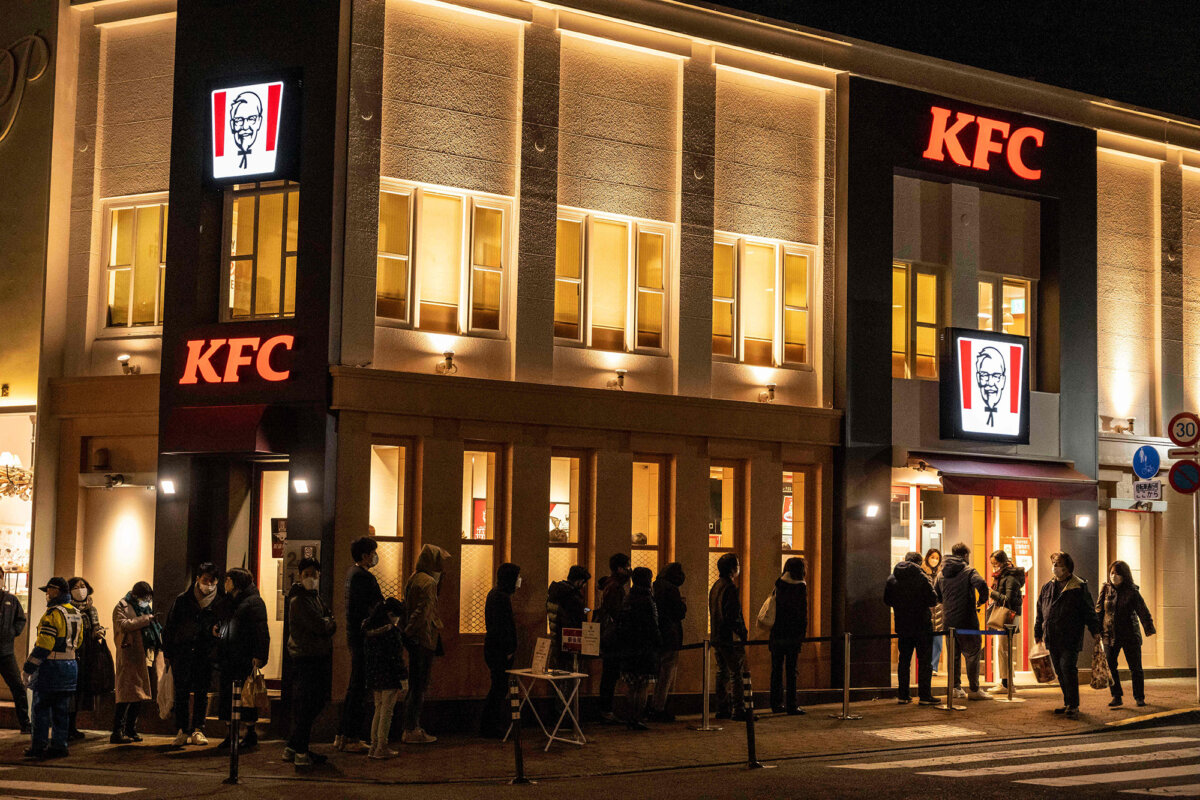
In Japan, a country with scant Christian heritage, families don’t host a home-cooked feast. Instead, I was told on my last visit, they, quite sensibly, head to KFC. Doing a little more research, I learned that fried chicken has become an essential part of the holiday there.
Apparently, it all started in the early 1970s, when a single franchise owner heard a couple of Western customers bemoaning the fact that they couldn’t have a steaming turkey dinner. He had an idea: market his drumsticks and thighs as a suitable alternative. It was so successful that “Kentucky for Christmas” became a national ad campaign in 1974.
Today, the Japanese order their holiday meal packages weeks in advance or stand in line for hours. And the colonel? He’s always decked out in a Santa Claus costume.
Meet Santa Claus
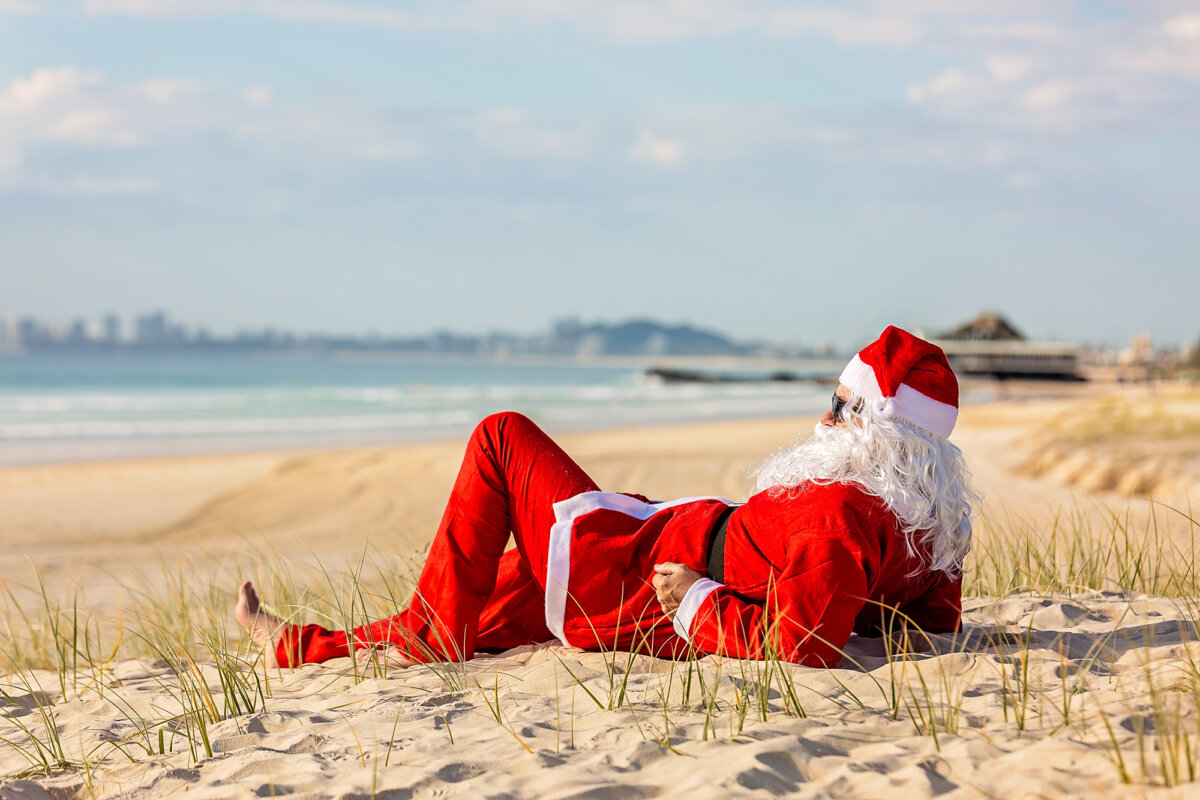
Speaking of Santa, he takes all sorts of different forms all over the globe. In Australia, in the Southern Hemisphere, Christmas is a summer holiday. So seafood is often grilled on the “barbie” beachside whenever possible.
And old St. Nick? He’s often decked out in flip-flops and board shorts. Sometimes, he arrives on the scene by surfboard or even pulled by a team of kangaroos. (There’s even an Aussie Christmas carol about it, called Six White Boomers.)
Which reminds me of the time I met Santa Claus. For most North Americans, we picture him surrounded by reindeer and elves at the North Pole. But spoiler alert—the actual geographic pole is simply a stretch of the Arctic Ocean, at 90 degrees North. It’s a cold, usually frozen, forlorn place.
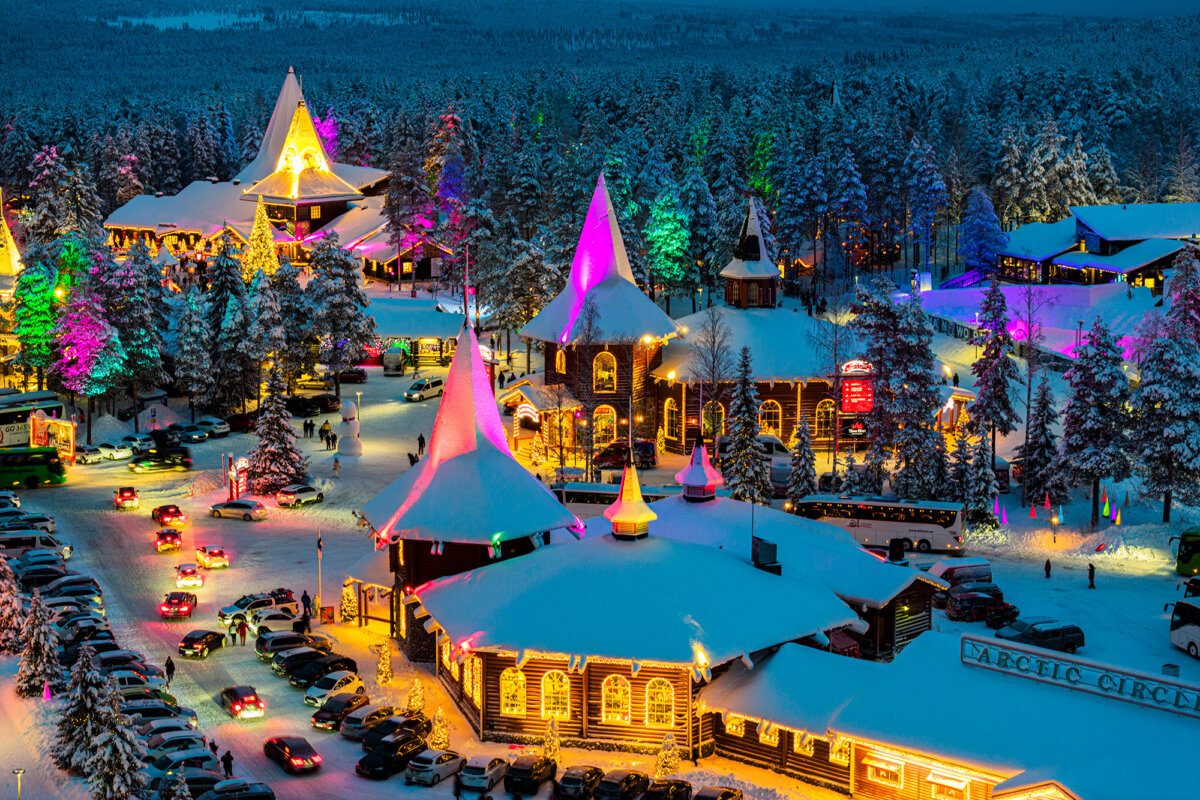
The European Santa is much happier. They’ve placed him in a Finnish town right on the Arctic Circle. The EU has recognized Rovaniemi as “the official hometown of Santa Claus.”
A few years ago, I visited in the summer. The sun shone almost 24 hours a day, and I was there researching an article on Finland’s strong sauna culture. (For the record: there are more saunas per capita in this Nordic country than anywhere else, and saunas form a cornerstone of their culture.)
It was a very pleasant trip, sitting with friendly reindeer farmers by a rushing stream in their private sauna on one day and enjoying a long soak in hot tubs at a luxury spa the next. But a visit to Mr. Claus was definitely the highlight.
Rovaniemi has built a whole village for St. Nick. I walked across the imaginary line of the Arctic Circle, marked here as a white slash. After that, I visited the village’s post office, which gets about half a million letters to Mr. Claus every year.
Then, I was treated to a session with Santa himself. Sitting next to him, I was well aware that this was just a regular man in a red suit. But somehow, he emanated warmth and life, perhaps conjuring some childhood sentiments from somewhere deep within me.
Christmas Markets
All that being said, my absolute favorite international festive tradition is cruising Christmas markets along the Rhine and Danube. While these markets have made their way in limited fashion across the Atlantic, in Europe they’ve been celebrated for centuries.
Each one has its own feel, specialties, and character. In general, they offer the pleasures of warm, mulled wine, sizzling sausages, twinkling lights, and dozens of wooden stalls selling local handicrafts.
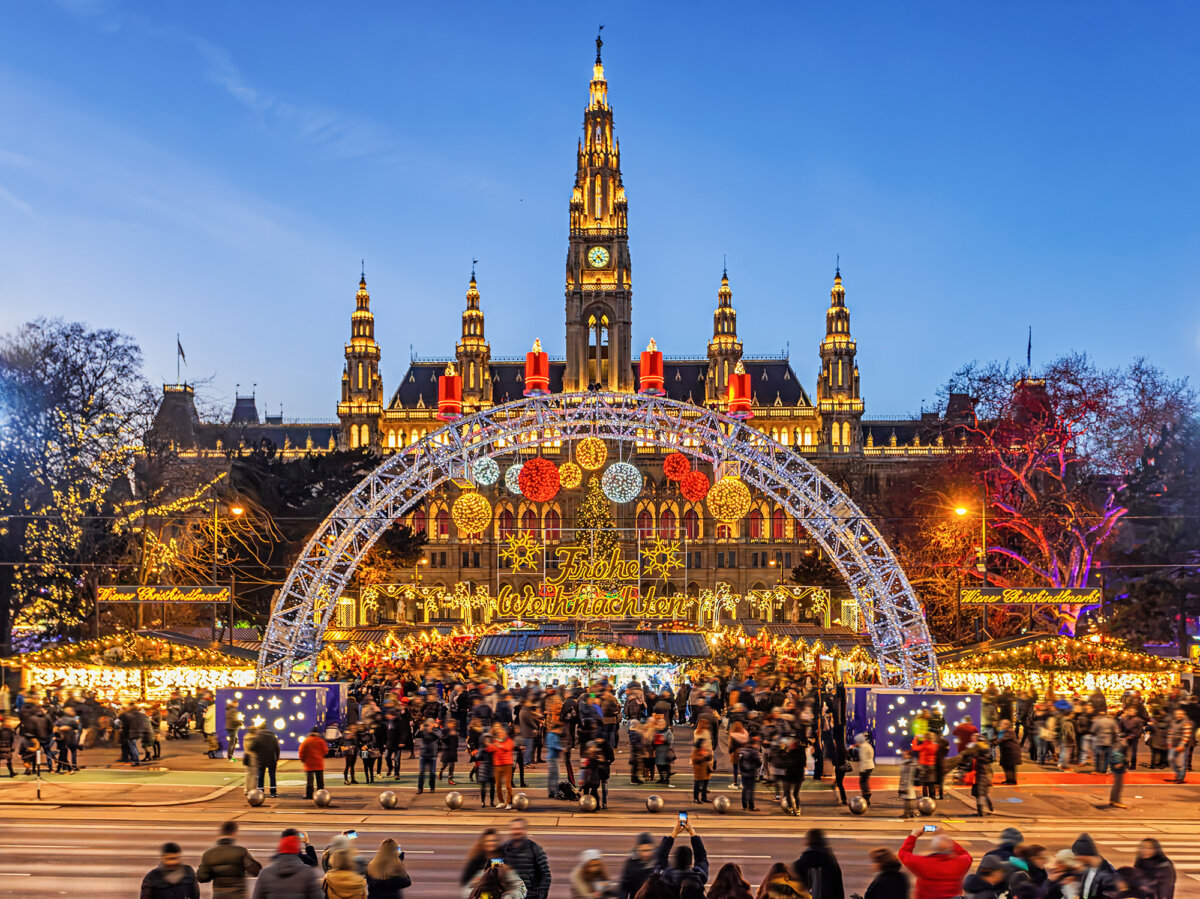
In Vienna, at the flashy main market at Rathausplatz, I skated along the Ice Dream, a looping, frozen course. In Salzburg, Mozart’s hometown, I joined in sing-alongs and listened to choirs sing lovely carols. In Budapest, I chowed down on goulash and stuffed cabbage, finished off with the most desirable local dessert: chimney cake, made in a fire, right before my eyes.
At the mother of them all, the Christkindlmarkt in Munich, people have been gathering at Marienplatz since the 14th century. I marveled at the hundreds of stalls surrounding a seven-story Christmas tree adorned with thousands of candles. Merry, and bright, in every way imaginable.
______________________
International Names (and Conceptions) of Santa
We don’t all picture St. Nick the same way. Here are a handful of names and stories for Santa from around the globe.
Finland: Joulupukki, which translates to “Christmas goat,” is rooted deep in Nordic and Lapland traditions.
Italy: La Befana, a kindly, witch-like woman covered in chimney soot who rides a broomstick, dropping either gifts or lumps of coal for kids. (Some versions of the story say she is, to this day, trying to help the Magi find the Baby Jesus.)
Hawaii: Kanakaloka, a joyful figure who wears an aloha shirt and often arrives paddling an outrigger canoe.
Iceland: Jólasveinar, actually a total of 13 mischievous trolls, or “Yule lads,” who come down from the mountains to reward good children with a candy in their shoe and bad ones with a rotten potato (rather harsh).
Japan: Hotei, a fat, smiling Buddhist monk and one of the Seven Lucky Gods, who, they say, has eyes on the back of his head to keep a constant view on whether children are being naughty or nice.