SEARCH


Johannes Vermeer’s “Girl With a Pearl Earring” has captivated viewers for centuries, yet the story of the paint that brought her to life remains largely untold.
The blue of her turban began as lapis lazuli, a stone mined in the mountains of Afghanistan and carried thousands of miles to a Dutch studio. The gleam of her pearl, by contrast, is lead white, a pigment prized for its opacity and brilliance but poisonous to those who handled it. Other pigments came from common minerals, plants, or chemical processes. Before modern paint manufacturing, an artist’s palette depended not only on imagination but also on geography, trade, and scientific knowledge.

Colors That Traveled the World
Some of history’s most prized colors came from distant places, making them symbols of wealth, power, and devotion. Ultramarine, the pigment ground from that same lapis lazuli, takes its name from the Latin ultramarinus, “beyond the sea,” reminding us of the long voyage it made from Asia across the Mediterranean, before it reached a European artist’s studio. Producing it required grinding the stone and separating its vivid blue component from unwanted minerals, a labor-intensive process that made it expensive. In medieval and Renaissance Europe, ultramarine was so costly that patrons sometimes specified its quantity in contracts, and painters often reserved it for the most sacred subjects, such as the Virgin Mary’s robes.
Tyrian purple had an even stranger origin. Prized by the ancient Romans for its deep, enduring hue, it was a rare dye extracted from sea snails. Because thousands of snails were needed to yield a single gram, the color became a symbol of royalty and status, closely associated with emperors and senators.

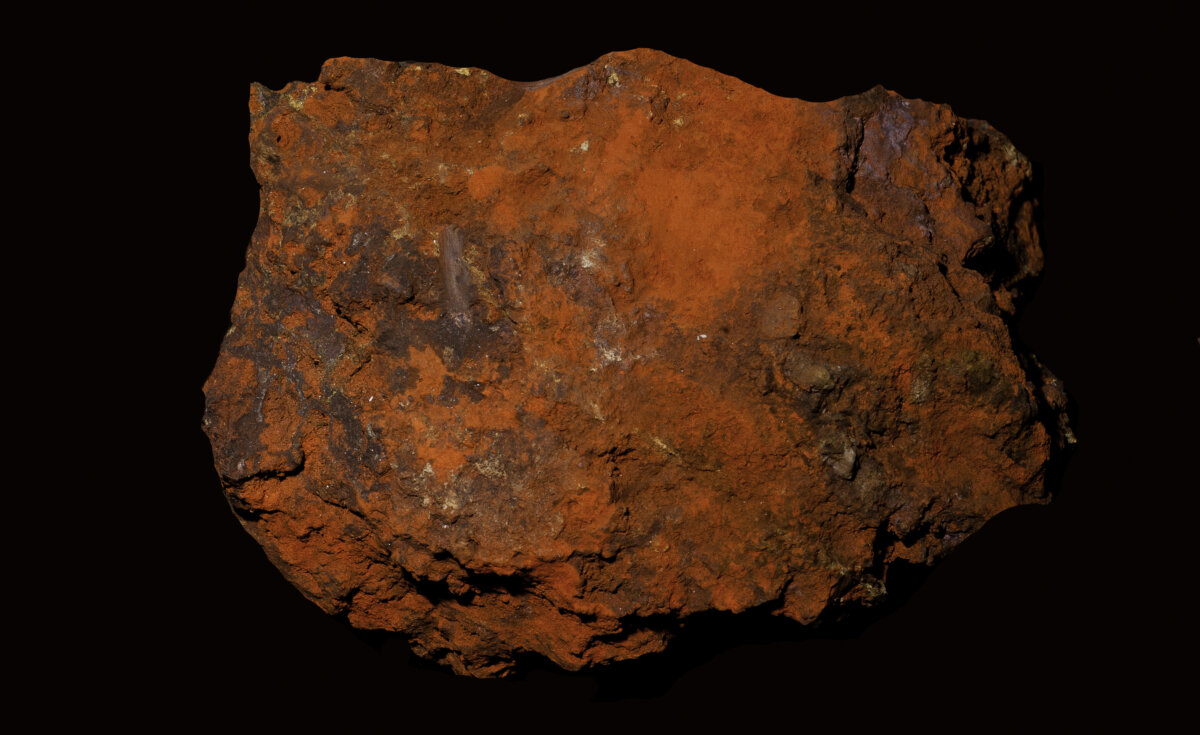
By contrast, red and yellow ochres were easy to find in iron-rich earth. Both are clays colored by iron minerals, and could be dug directly from the ground. Yellow ochre forms over time as air and groundwater react with the iron in soil, leaving a yellow-to-tan layer. Heating yellow ochre drives off its water and turns it red, one way red ochre was made.
Also found in the earth is raw umber, a rich brown pigment made from natural clay containing iron and manganese compounds, which give it a deeper, cooler brown than ochre. It is thought to be named after Umbria, a region of Italy where it was mined. The earth pigments provided oil painters with cost-effective, dependable colors.
The Chemistry Behind the Color
A pigment’s color was only one factor painters had to consider. Because earth pigments varied by location, artists needed to understand how each material behaved, from its opacity and texture to its durability and drying time. To make oil paint, they ground pigments into fine particles and mixed them with a drying oil, most commonly linseed oil, which remains widely used today. Unlike water-based paints, which dry as water evaporates, oil paints harden through a chemical reaction with oxygen. Though often associated with the Renaissance, oil painting has a much longer history. As early as the 7th century, Buddhist monks in Bamiyan, Afghanistan, used oils derived from walnuts and poppy seeds to bind pigments in cave murals.
Artists also had many options within a single color family. Alongside ultramarine, they used azurite, a copper mineral, and smalt, a blue glass colored with cobalt, each differing in appearance, cost, and working properties. Black pigments varied as well: Carbon black came from charred organic materials or soot, while bone black came from carbonized animal bones. Their differing undertones affected the shadows and tonal contrasts that painters could create.
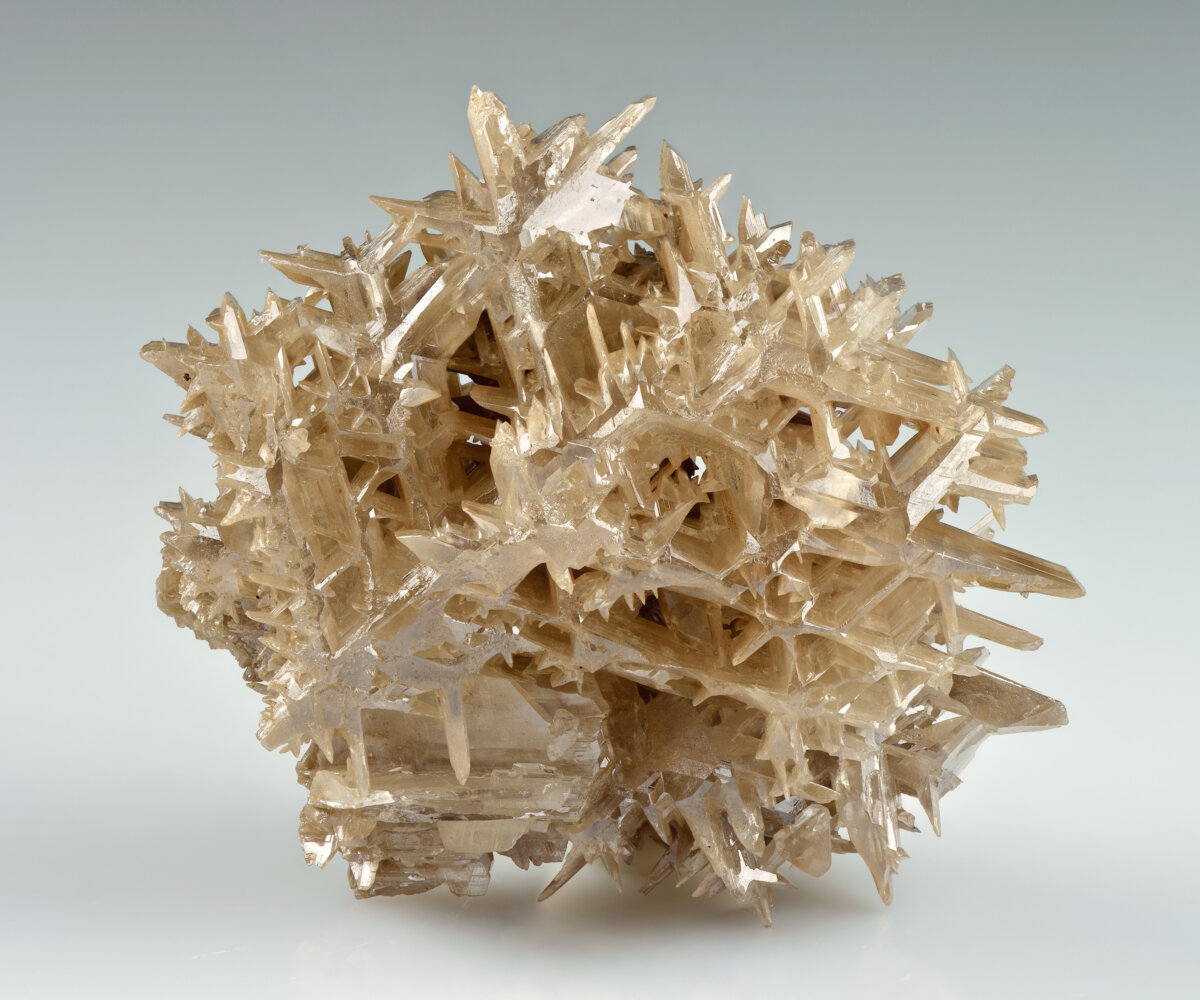
Yet some of the most valued pigments were hazardous. Vermilion, a vivid red, was made from cinnabar, a toxic mercury sulfide mineral. Lead white, one of the most important whites in European oil painting, was just as useful as it was dangerous. Its opacity made it ideal for highlights and pale flesh tones, and when layered with colored pigments, it helped artists create luminous effects.
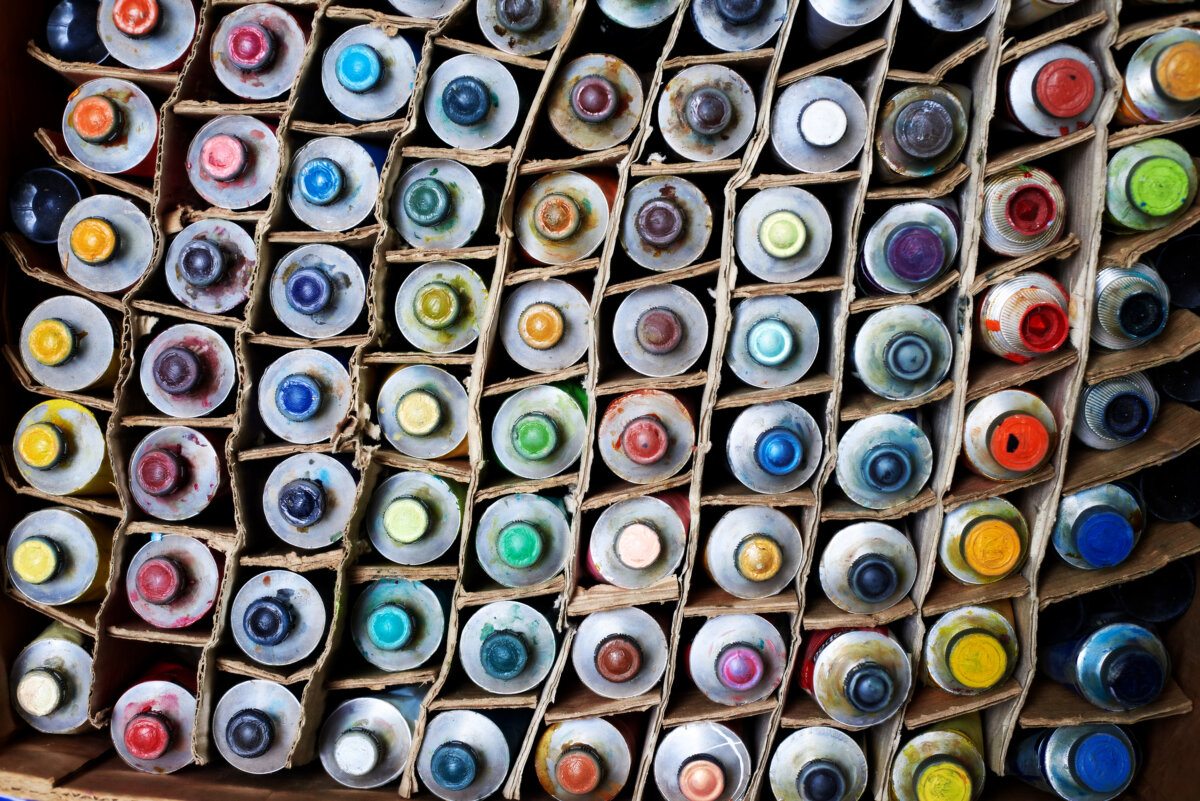
For centuries, oil painters relied on naturally sourced pigments, but advances in chemistry eventually brought new colors and reduced dependence on scarce, harmful materials. Prussian blue, discovered in Berlin in 1704, is considered the first modern synthetic pigment. Its creation offered an affordable, vivid alternative to natural ultramarine. Further developments in the 18th and 19th centuries, including cobalt blue, chrome yellow, and viridian, broadened the artist’s palette. Synthetic ultramarine, developed in 1828, was another major breakthrough, giving more artists access to a brilliant blue that had once been prohibitively costly. Together, these innovations let artists use chemically manufactured pigments instead of relying solely on natural materials.
From the Studio to the Landscape
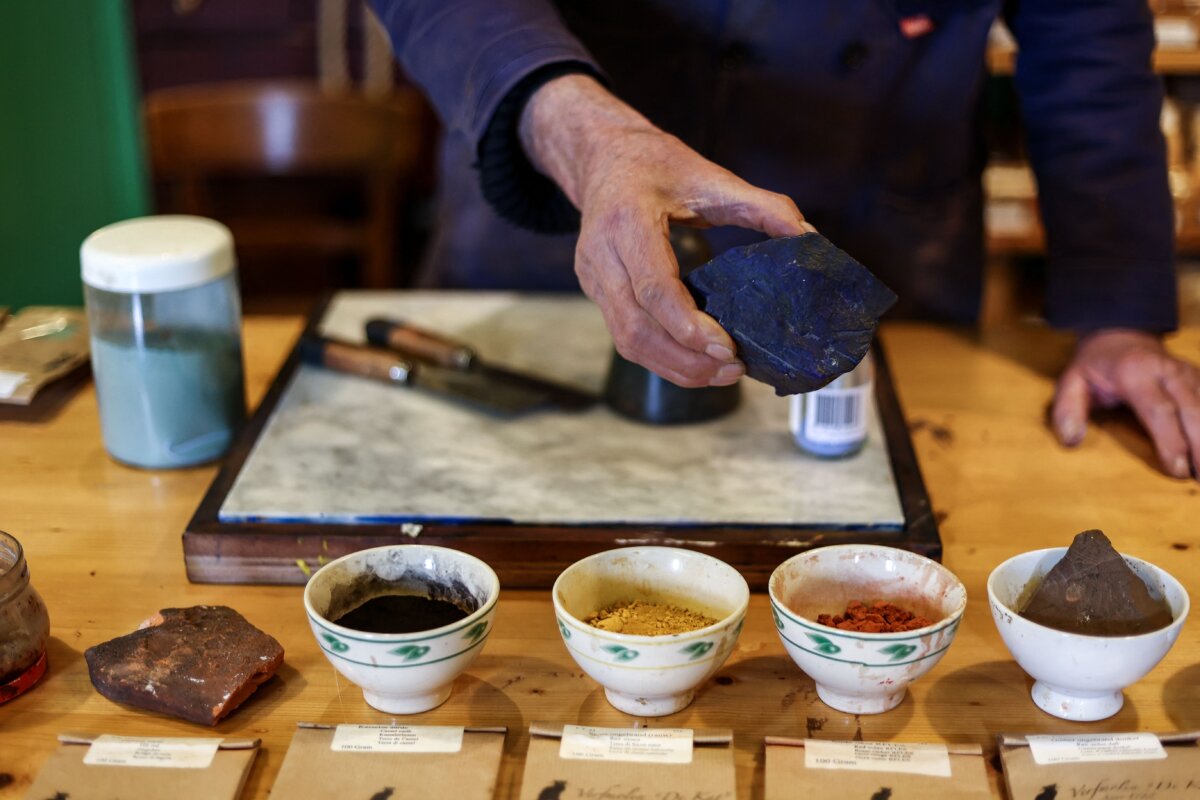
Advances in paint technology also changed how artists worked. Before commercially manufactured paints became widely available, artists or their assistants prepared pigments in the studio, a process that required specialized equipment and experience. The quality of the finished paint depended on both the pigment and the skill of the person preparing it, and carrying those materials beyond the studio was often inconvenient. In 1841, American painter John Goffe Rand patented a collapsible metal paint tube, which allowed artists to carry ready-made paints and work outdoors without preparing every color themselves. This portability helped landscape painters respond directly to changing light and atmosphere. The paint tube did not create outdoor painting, but it made the practice considerably more convenient.
Learning the history of oil paint reveals the effort required to make a work of art. Like an architect balancing a client’s budget against the stone, brick, or timber at hand, a painter chose every material with care, guided by natural resources, commerce, and a patron’s wishes.
What arts and culture topics would you like us to cover? Please email ideas or feedback to features@epochtimes.nyc.