SEARCH


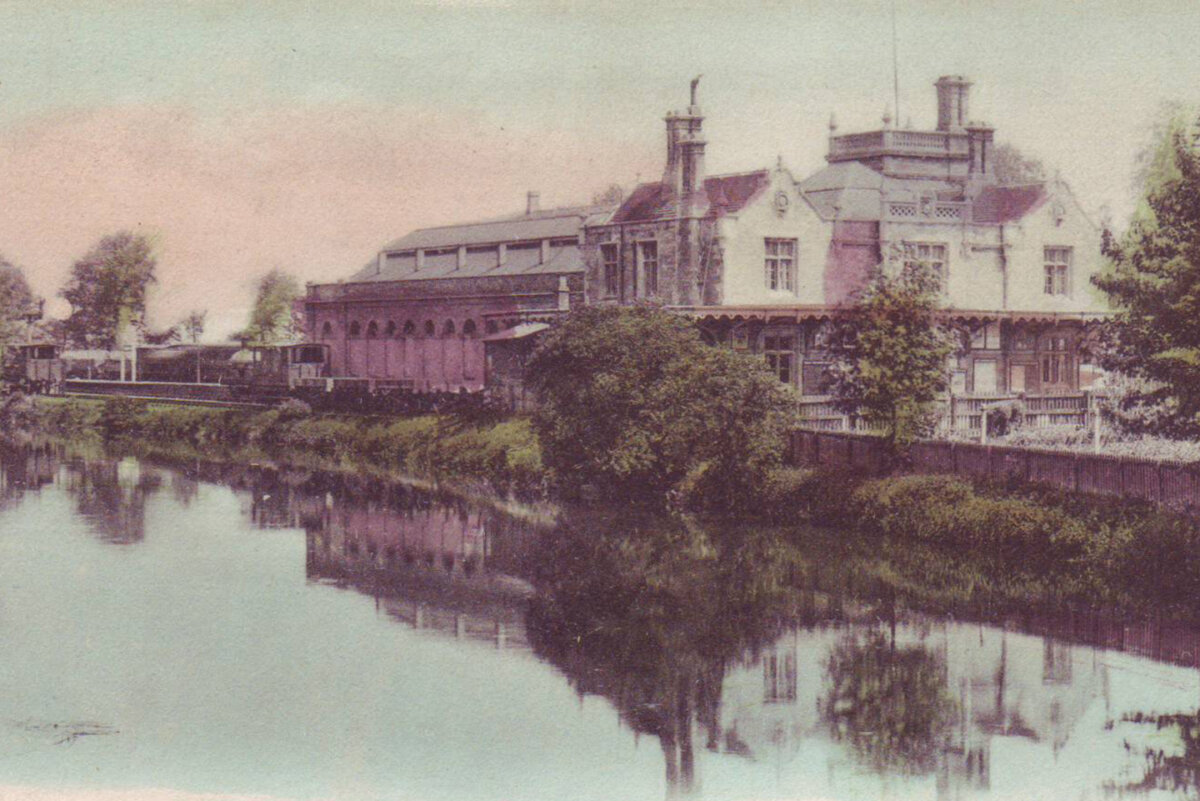
This November marks 170 years since Stamford Water Street railway station opened in England. With its modern railway technology and dignified Tudor stonework, the station embodied a pivotal moment when railways reshaped the world and industry met tradition.
By the mid-19th century, railways had spread across Europe, North America, India, and beyond, binding distant regions together. A coach journey that once took four hours now took less than two by train, and goods, mail, and newspapers moved faster and more affordably. Coastal resorts boomed, and cities thrived as food and building materials arrived in bulk. Stamford was soon to join them.
A World on Rails
What mattered was not just the individual lines but how they connected. As Wolfgang Schivelbusch notes in “The Railway Journey,” by 1842 British companies had recognized that traffic passing across more than one line was becoming vital to the national economy. They created a joint body to coordinate it, even though the competitive economic thinking of the day pulled against such cooperation. A town’s fortunes therefore depended on whether it sat on the lines carrying “through traffic” or merely beside them.
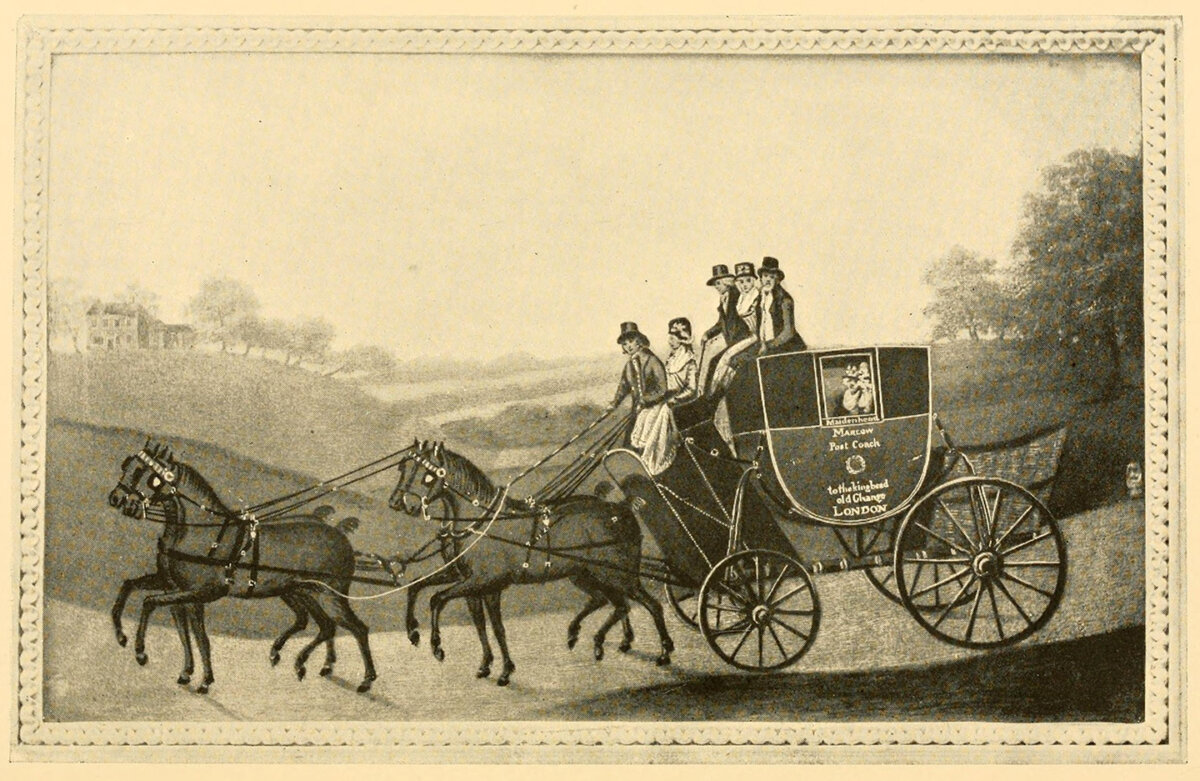
Stamford had good reason to fear being bypassed. For centuries, the town had thrived on the Great North Road, England’s principal route to Scotland and later a busy corridor for mail coaches between London, York, and Edinburgh. The Midland Railway reached Stamford in 1848, but it didn’t connect the town with London or the north. The line that mattered was the Great Northern’s main line, later part of the East Coast Main Line. It followed the corridor that the coaches had served and was bound to draw away the traffic and trade that had sustained the town for generations. Yet it passed by some four miles away.
Some residents were dismayed, having hoped the railway would boost Stamford’s economy. Others had actively wanted the main line kept at a distance, wary that heavy industrialization would ruin the town’s traditional economy of agriculture, leatherworking, and brewing. Stamford was, after all, a rural market town. With the railway nearby, the town had to weigh its benefits against its costs: it could avoid the smoke and crowding of the Victorian age, or it could forgo the industrial growth reshaping the country.
As fears of economic decline grew, townspeople proposed a branch line connecting Stamford to the main line at Essendine. After much deliberation, the independent Stamford and Essendine Railway opened in 1856, with the Great Northern agreeing to operate it in return for half the gross income. The line was modest: single track, no intermediate stations, and four trains each way daily. The ambition behind it was not, and it showed most clearly in the station itself.
Stone, Gables, and Civic Pride
The station stood on Water Street, beside the river, where medieval wool merchants had built their homes to trade easily with ports across Western Europe. When the wool trade declined, the street fell into disrepair, and by the 19th century it was a mix of cottages, pubs, and workshops, dominated by two great breweries: Hunts and Phillips. Construction of the station began in this corner of town in 1855.
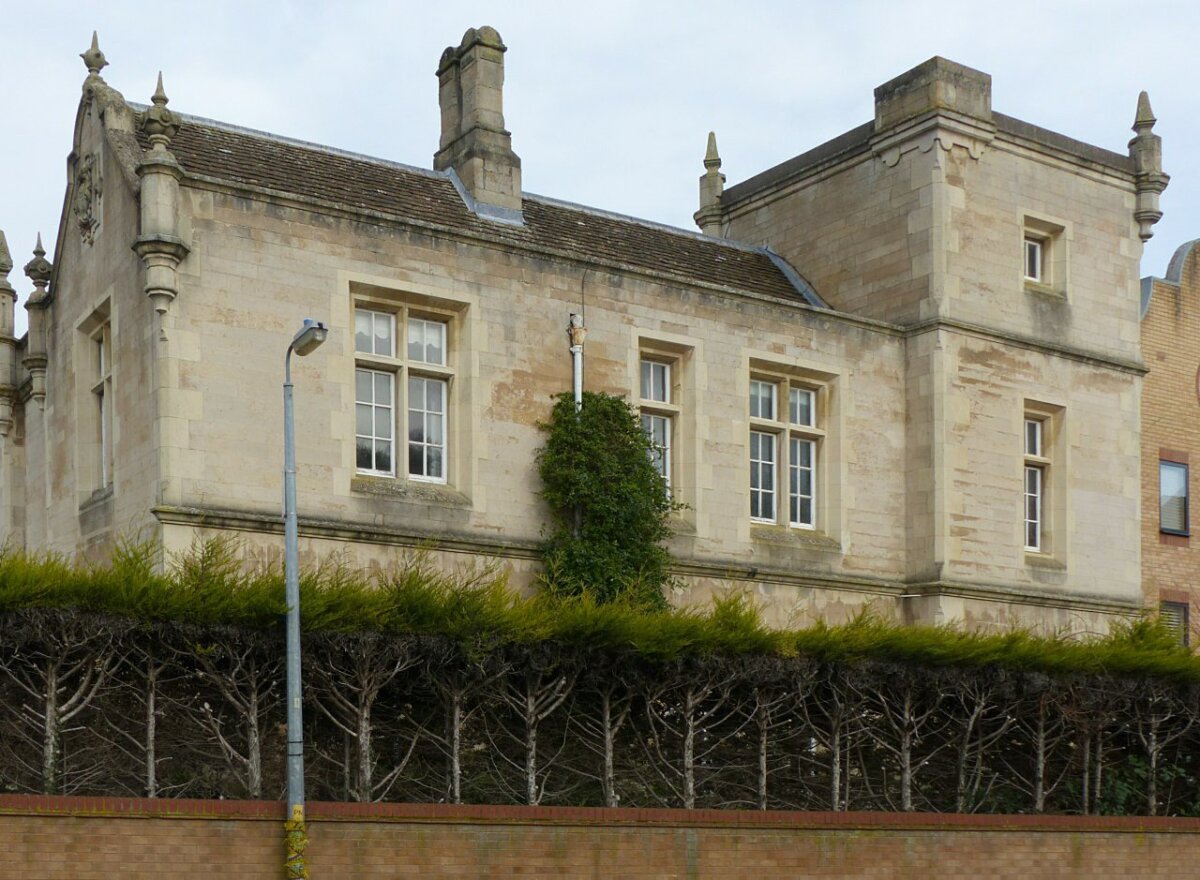
Though it served only a small market town, the station’s architect, William Hurst, refused to settle for a plain design. He built it of finely cut ashlar stone in a Tudor style. Historic England’s record describes a largely symmetrical composition: a central entrance hall flanked by waiting rooms in projecting gabled wings, joined by a screen wall with an arched entrance. At the south-eastern end rose a taller, three-story square section, giving the building a memorable silhouette.
Yet a train station is a working building, not just a monument. In the late 19th century, it would have seen the town’s daily business: a farmer or merchant stepping down from the train with a bag and a parcel of papers, a family waiting on the platform for the Essendine train, and a main-line connection. The work was ordinary and constant, giving the town its regular rhythm.
The End of the Line
That daily rhythm lasted about a century, but it depended on a branch line that the wider network no longer needed. The Great Northern took it on a permanent lease in 1886, ending its independence. After nationalization, the station was renamed Stamford East in 1950, but changing travel habits did the rest: Passenger services ended in 1957 and goods traffic in 1963, part of the wider retreat of Britain’s branch lines.
Unlike many abandoned railway buildings, Hurst’s station survived. Tracks and platforms gave way to housing, but the main building was converted into two houses that kept much of their original character, a fine example of adaptive reuse that let a building outlive its purpose.
The town around it has fared well too. Stamford kept the main line at a distance, reached for a branch line, then lost it again, and each change left its mark. When a transportation connection is created, improved, or removed, what changes for the community? In Stamford’s case, the answer is found in the town’s stone: The same wariness of industry that helped keep the main line away left its medieval and Georgian streets largely intact. In 1967, Stamford became England’s first designated Conservation Area. Today, it pairs that heritage with independent shops, artisan cafés and cultural events, and its elegant streets have made it a favorite filming location, with productions including “The Crown” and “Middlemarch.”
The last train left Water Street decades ago, but the building still speaks for the town that built it, a place that honored tradition even as it switched onto the track of modernity.
What arts and culture topics would you like us to cover? Please email ideas or feedback to features@epochtimes.nyc.