SEARCH


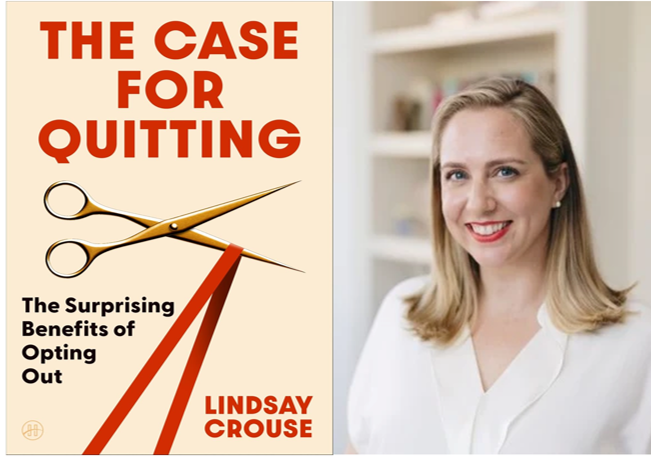
A winner never quits, and a quitter never wins. How many times have we heard words to that effect? In today’s culture, perseverance is almost law, or it’s at least a fundamental principle.
But how far should we take this principle and is there sometimes courage in quitting? Journalist and filmmaker Lindsay Crouse flips that advice on its head in her debut book, “The Case for Quitting: The Surprising Benefits of Opting Out.” She’s not suggesting that we should opt out of responsibilities or abandon projects and goals. Nevertheless, she suggests that giving up may be exercising good judgment and not admitting defeat.
Her premise is simple: The “never give up” mantra can be more detrimental to our physical and emotional health than we realize. Crouse covered women’s endurance sports for a major newspaper for many years; she had a front row seat to witness the costs of sticking it out no matter what.

Not Abandoning the Quest
Crouse describes a variety of familiar scenarios where quitting seemed impossible, but, through careful reflection, it proved to be the healthy choice.
She presents personal anecdotes from colleagues, athletes, and celebrities that keep readers engaged. In the chapter entitled “The Perseverance Problem,” she describes how star gymnast Simone Biles withdrew from several events during the 2020 Tokyo Olympics for her mental health; she made what Crouse defines as an “investment in her longevity and legacy.” Returning stronger in 2024, Biles led the USA gymnastics team to gold and became the most decorated gymnast in history.
By quitting, we can return to the task refreshed, with a clearer perspective on what we’re looking to achieve and, in Biles’s case, enjoy even greater success.
Sometimes it’s a relationship that we need to quit. In the chapter “Why We Slide,” a couple who had similar interests and liked being together, eventually “slid” into marriage. It was easy, casual, familiar, and comfortable. The husband felt that the relationship was stuck and remained unhappy and conflicted for years.
In the end, they did divorce. He found the courage to “take on an uncertain future instead of continuing to accept an unsatisfying one.” Quitting the marriage, in this case, led them to new partners and marital happiness. Once free, he says, “everything has changed for the better.”
Redefining Identity
In “The Identity Trap,” we see how some become too attached to an identity, a title, or a talent and can’t consider a life without it. Take the examples here of a novelist, an actress, and a ballet dancer who find themselves in a crisis, unhappy in their professions but terrified of giving them up.
Tennis legend Andre Agassi writes in his memoir that he hated tennis but continued playing. He was often conflicted, alternating between wishing for his career to be over but not ready for the loss of his tennis identity.
Crouse includes her own “never quit” story: a demanding full-time job during the week, while training and running grueling marathons on the weekend. She was proud of handling it all, though it meant working through sickness and missing important family events.
She never considered making a change because of the “comfortable reassurance” her busy life gave her. Proud of her productivity, she was constantly on the go; it was who she was. However, as the years passed, she saw that her life wasn’t moving forward, and she had her “aha” breakthrough: the idea that maybe letting go could be an opportunity for something new.
Fear of the Unknown
It’s understandable that we persevere no matter what. Maybe we’ve put too many hours into a project to leave it, or we’ve spent too many years moving up the career ladder to walk away. There’s also the fear of the unknown or that nothing better will come along. Some like to wear the badge of courage, whose whole identity is wrapped around the “never quit” attitude.
For some, it’s the dopamine rush from the pursuit of a goal, a job, or an award that prevents them from stepping away. Crouse covers this in depth in the chapter aptly titled “Never Enough.” Commenting on a quote from the book “Dopamine Nation,” the author explains that, when humans experience something pleasurable, dopamine is released from the hypothalamus region in the brain.
As that enjoyment continues time after time, so does the high, the euphoria, and the relief. “We can get hooked on any activity that provokes a rush, even things we think are good for us, like work, ambition, and success,” she wrote.
A Successful Book
Crouse writes with an easy-going, conversational style that makes this an enjoyable read. It’s packed with the wisdom she’s culled from notable books on success, addiction, psychology, and endurance, which adds to the book’s credibility.
In its conclusion, she delves into ways to quit addictive activities and step off paths that harm rather than help. She also suggests how to make these life-changing decisions and warns readers to expect a period of grieving after doing so.
There are very few weaknesses in Crouse’s suggestions and theories. Perhaps some scientific research could’ve strengthened the assertions made. However, the intention here is a simple and practical one: pay attention. If readers come away with that, then Crouse has done an admirable job.
As for the author, she continues to run but takes different routes; she leaves her watch at home because she found she didn’t need one and that “just going was enough.” By doing so, she says she never “felt so free.”
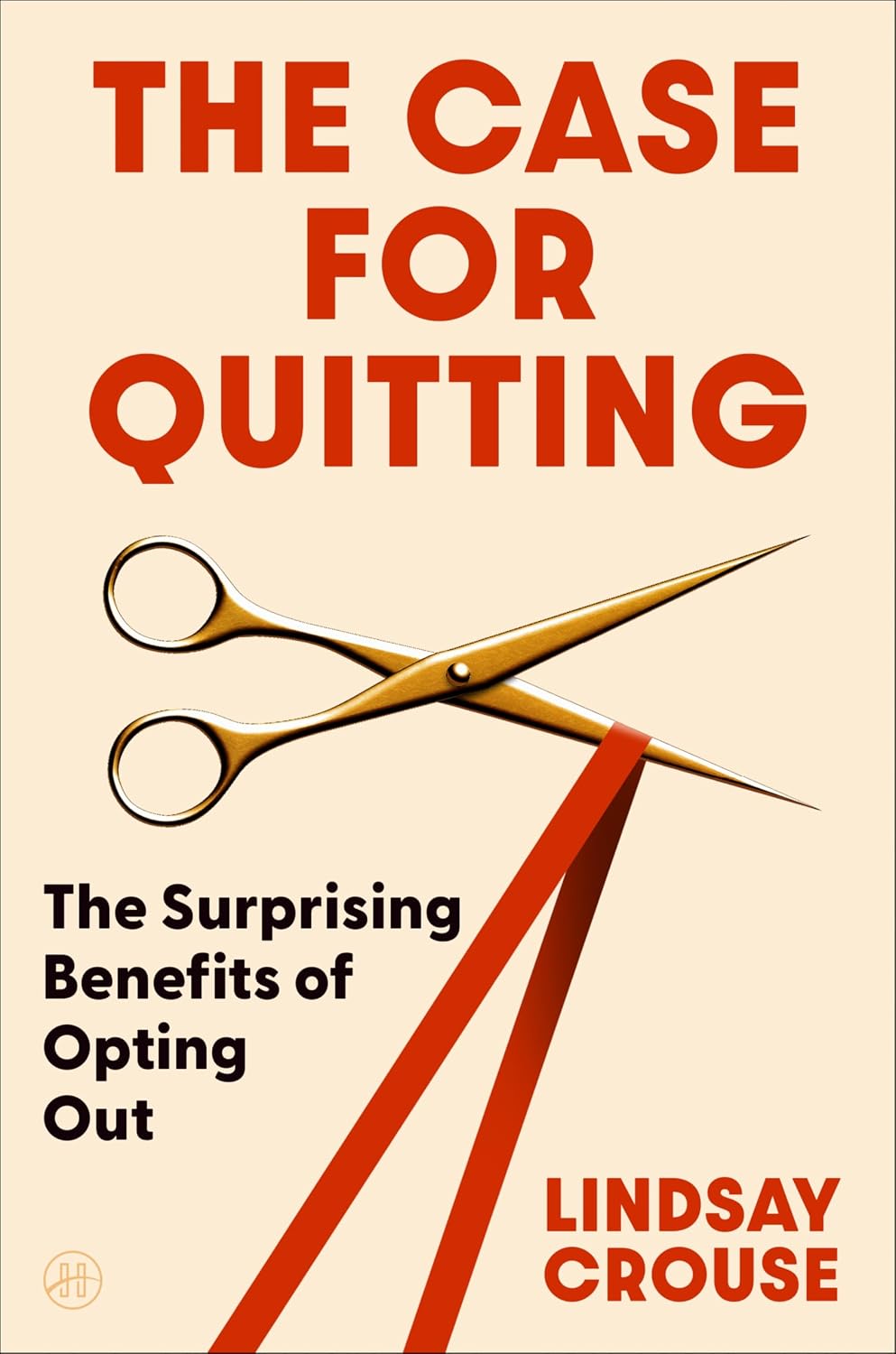
‘The Case for Quitting: The Surprising Benefits of Opting Out’
By Lindsay Crouse
HarperOne: Sept. 8, 2026
Hardcover, 304 pages
What arts and culture topics would you like us to cover? Please email ideas or feedback to features@epochtimes.nyc.