SEARCH


NR | 1h 49m | Comedy, Drama | 1952
Before Charles Dickens became the name that generations of schoolchildren met in assigned reading, he was a young journalist writing for deadlines and trying to make people laugh.
“The Pickwick Papers” began its run as a series of inexpensive monthly installments in 1836 before being published as a novel in 1837, and its success helped make Dickens (then publishing under the pen name Boz) famous. The 1952 film keeps that comic spirit alive, filling nearly every scene with pompous manners, misunderstandings, and people talking themselves into trouble.
That gives this film a particularly delicious flavor among the many Dickens adaptations. Its England is crowded with lots of waistcoats, coaches, country roads, drawing rooms, and people who treat social decorum with near-religious seriousness.
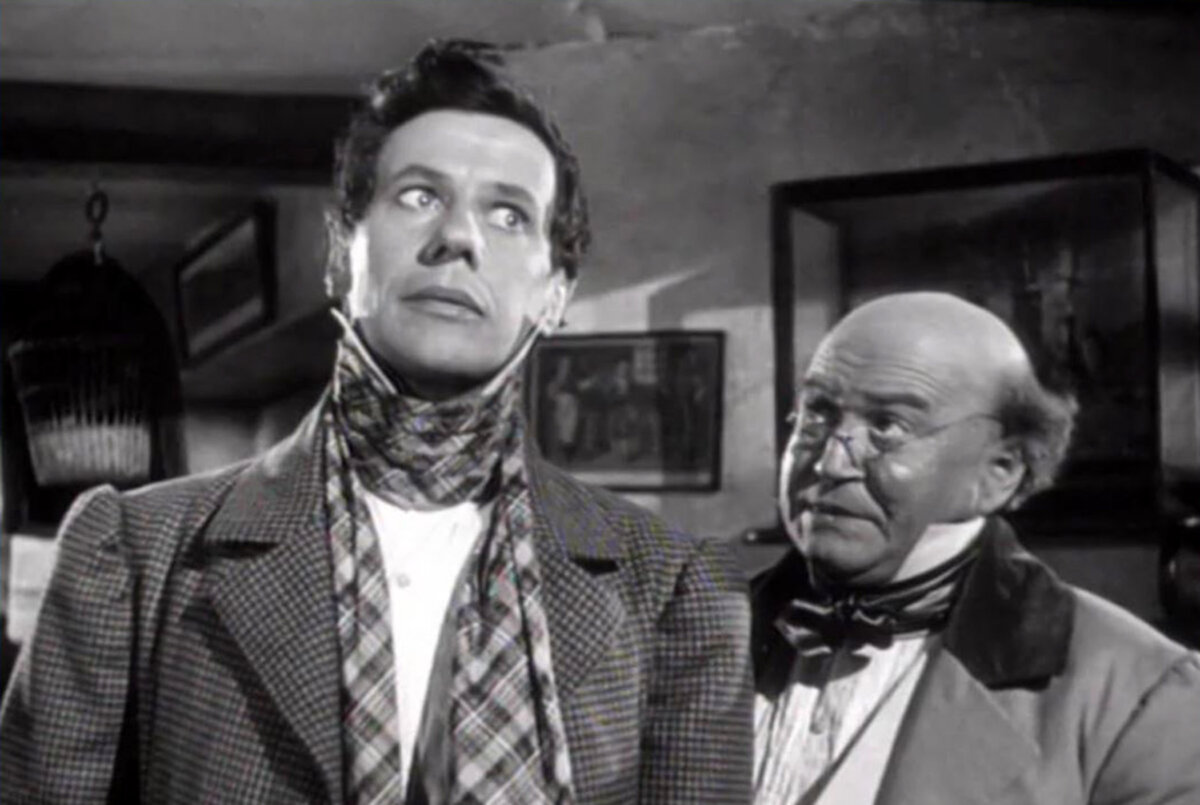
Writer and director Noel Langley clearly enjoyed the English language. He’d already adapted Dickens for “Scrooge” (1951), and his earlier screenwriting credits also include “The Wizard of Oz” (1939).
He handles “The Pickwick Papers” with verbose exchanges, expressive reactions, and eccentric personalities (to put it lightly). Beatrice Dawson’s costumes add plenty to the period flavor, and her work received an Academy Award nomination for Best Costume Design, Black-and-White.
Dickens was still near the beginning of his career when he wrote this serial, years before he filled his work with orphanages, prisons, workhouses, and Christmas ghosts. Here, he seems especially amused by pomposity, social rules, and the seemingly endless human urge to look respectable while making a complete fool of oneself.
The Incorrigible Mr. Jingle
Samuel Pickwick (James Hayter) has a grand plan. He intends to travel throughout England, observe human behavior, and report his findings to the Pickwick Club. Along for the ride are Nathaniel Winkle (James Donald), Tracy Tupman (Alexander Gauge), and Augustus Snodgrass (Lionel Murton).
The adventures of these three gentlemen give Pickwick plenty more material than he probably expected. Soon, Winkle gets pulled into a duel, and Tupman becomes enamored with Rachel Wardle (Kathleen Harrison). It seems that an innocent outing can turn into a headache with remarkable speed.
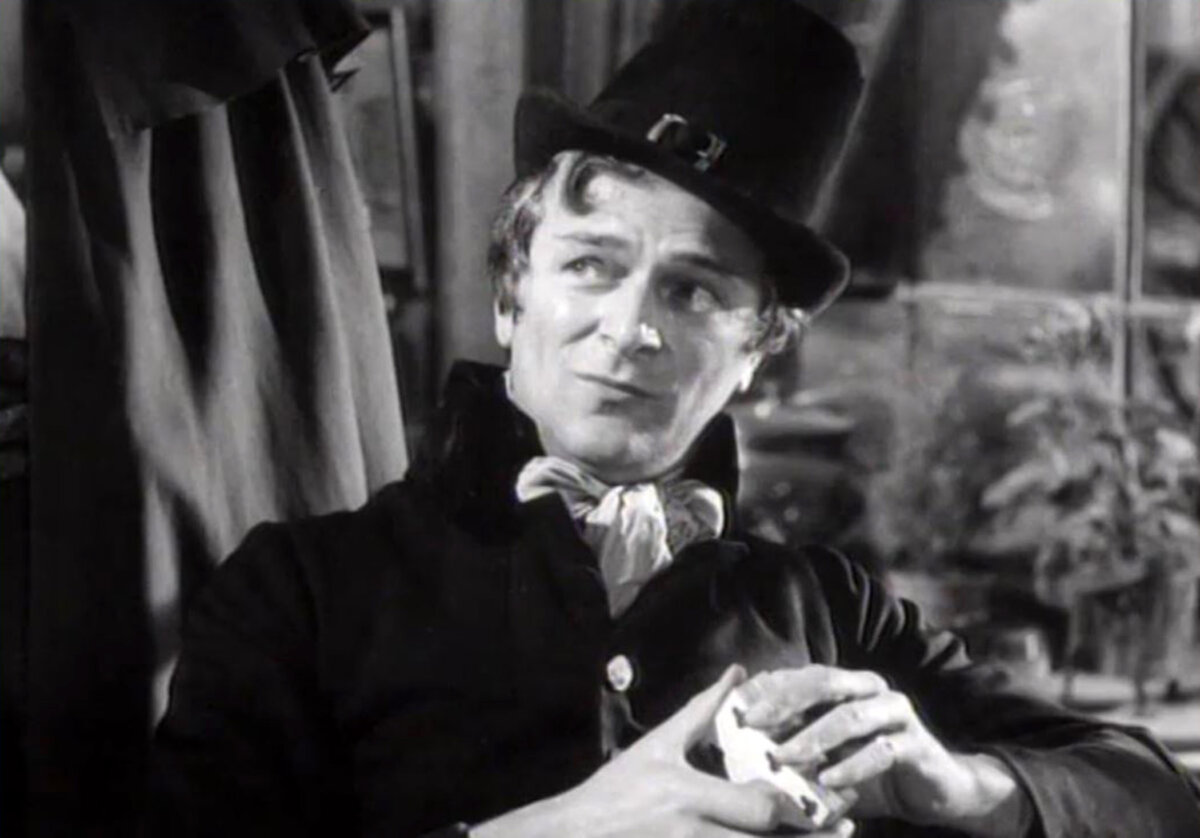
Then there’s Mr. Jingle (Nigel Patrick), a fast-talking “strolling actor”; he has an answer for everything and few objections to lying whenever it suits him. Jingle talks in strange, clipped bursts. He invents whatever story helps him at the moment and has a habit of disappearing after everyone else is left with the messes he creates.
Jingle keeps crossing paths with the travelers at inns, parties, and country houses. The arrival of Sam Weller (Harry Fowler) finally gives Pickwick a companion with some practical sense.
Back in London, a misunderstanding with Mrs. Bardell (Hermione Baddeley) leaves Pickwick facing a breach-of-promise lawsuit. By then, his tidy little study of human behavior has become anything but.
Mishap After Mishap
Most moviegoers might not expect a nearly two-hour British period comedy about four respectable gentlemen roaming around early 19th-century England to be pleasant, much less funny.
The humor builds gradually. Soon, the oddball situations begin stacking up until some later scenes are hilarious precisely because of everything these men have already managed to get themselves into.
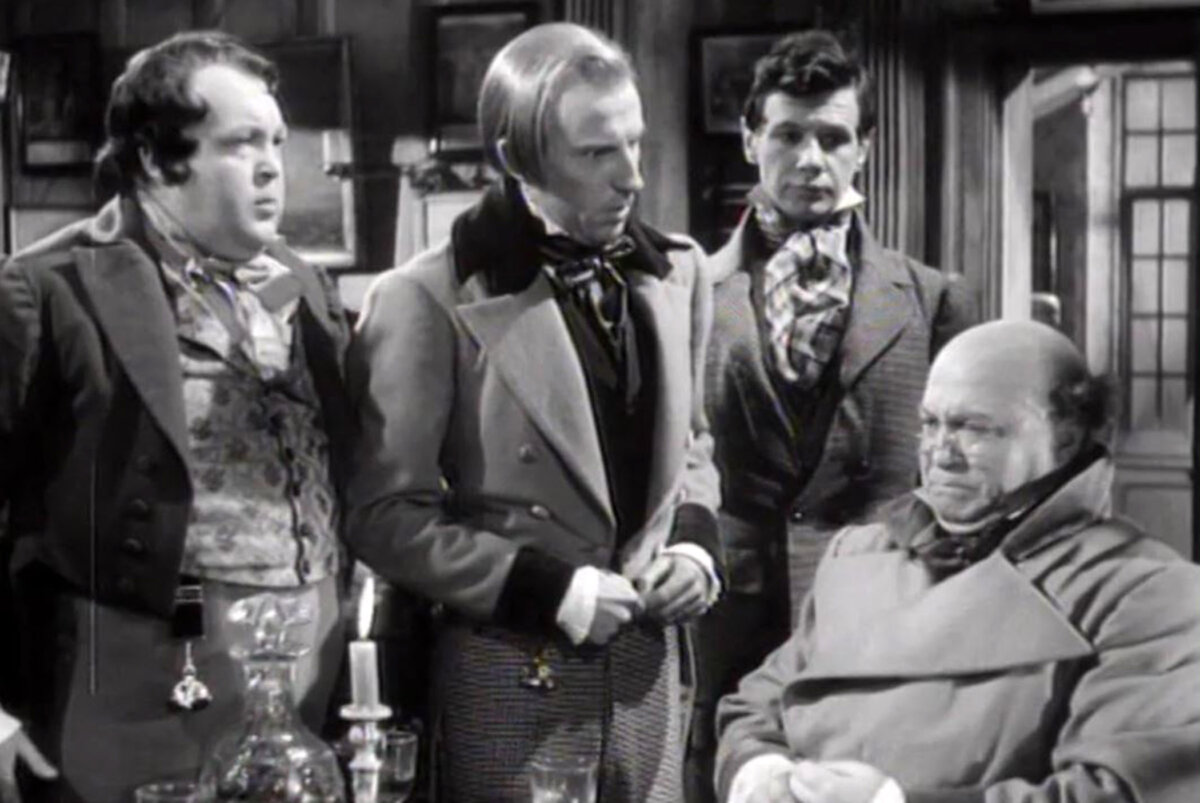
Much of that comes from the cast treating the ridiculous circumstances with complete seriousness. Hayter gives Pickwick a genial dignity through misunderstandings, Jingle’s schemes, and assorted public embarrassments.
Patrick is especially funny as Jingle, whose clipped machine-gun chatter makes every appearance risky for anyone gullible enough to believe him. Fowler gives Sam Weller the practical instincts Pickwick sorely needs, while Baddeley and Donald Wolfit, who plays counsel for the plaintiff Serjeant Buzfuz, get some of the biggest laughs once Mrs. Bardell’s case makes its way into court.
The verbal pace can be almost ridiculous. Subtitles may save some American viewers from rewinding the same exchanges several times. Jingle takes this the furthest, spitting out clipped phrases so quickly that the people around him barely have time to sort through whatever stories he’s just concocted.
By the time the various hijinks have played out, the whole thing has developed a wonderfully ridiculous momentum that finishes with a happy ending full of “good will, good hope, good nature,” as Mr. Pickwick himself puts it.
Many will expect to watch an agreeable old British comedy in “The Pickwick Papers” and wind up laughing far more than they would have guessed.
“The Pickwick Papers” is available on GanJingWorld.
‘The Pickwick Papers’
Director: Noel Langley
Starring: James Hayter, James Donald, Nigel Patrick
Not Rated
Running time: 1 hour, 49 minutes
Release Date: May 5, 1954
Rated: 4 1/2 stars out of 5
What arts and culture topics would you like us to cover? Please email ideas or feedback to features@epochtimes.nyc