SEARCH


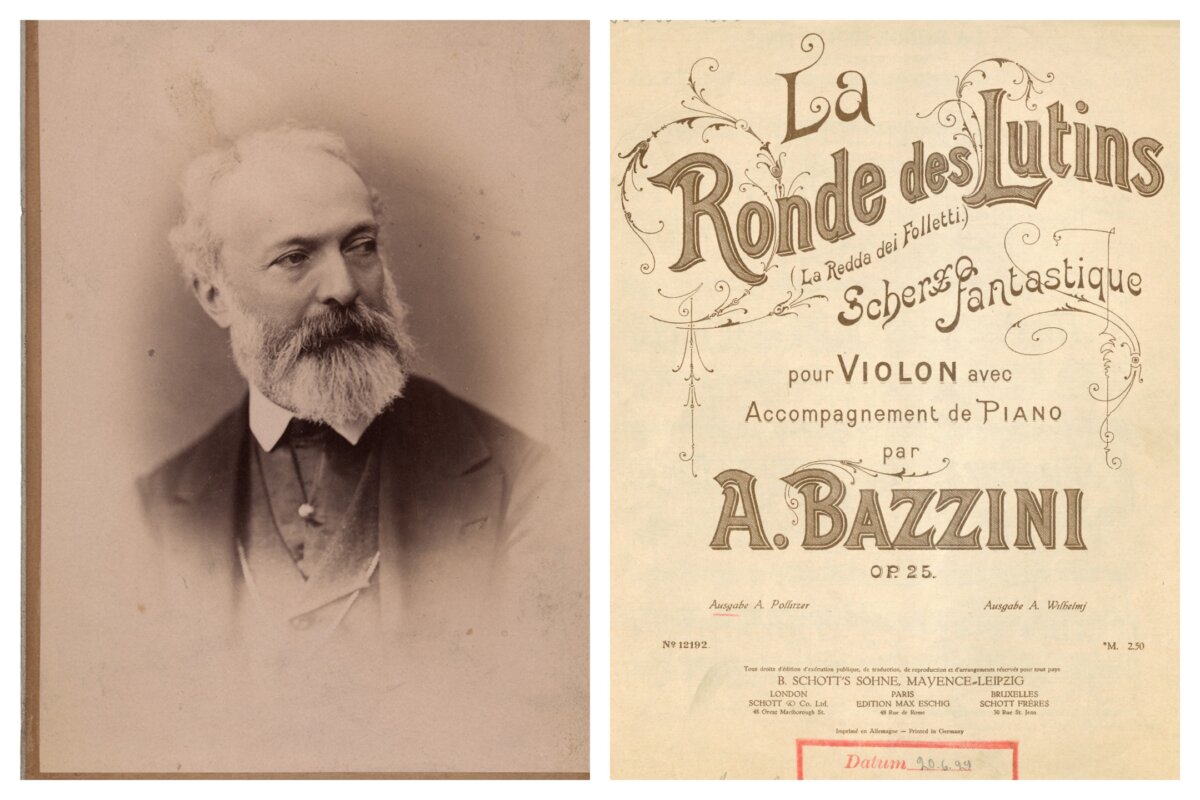
Antonio Bazzini was a respected composer during the 19th century. As professor of composition at the Milan Conservatory, he taught the likes of Alfredo Catalani, Pietro Mascagni, and notably, Giacomo Puccini. Bazzini’s earlier opera “Turanda” may have inspired Puccini’s masterpiece “Turandot.”
Bazzini’s fame as a composer has waned since his death in 1897. While he produced an array of symphonic poems, dramatic cantatas, and chamber music, few of his works have stood the test of time.
However, there is a notable exception. For violinists in particular, one work from Bazzini’s youth towers above the rest in terms of popularity. This work is none other than his “Scherzo fantastique: La ronde des lutins,” or as more commonly known, “The Dance of the Goblins.”
A Virtuoso Violinist
Bazzini actually began his career as a concert violinist. After beginning violin studies at around age 8 with local teacher Faustino Camisani, he had the fortune to meet the great virtuoso Niccolo Paganini at 18. Paganini, considered by many to be the greatest violinist to have ever lived, inspired Bazzini with his showmanship and virtuosic style.
Paganini encouraged the young Bazzini to embark on a career as a soloist, and the young violinist obliged. Bazzini toured Europe, finding great success. He lived in Germany from 1841 to 1845, performing with the Leipzig Gewandhaus Orchestra with composer Felix Mendelssohn conducting. He even gave the first private performance of Mendelssohn’s Violin Concerto for the composer. It is now a beloved staple of the repertoire.
It was during his time performing that he composed “The Dance of the Goblins” in 1852. This violin showpiece draws upon a wide range of string techniques, encapsulating the essence of the virtuosity of the early Romantic period.
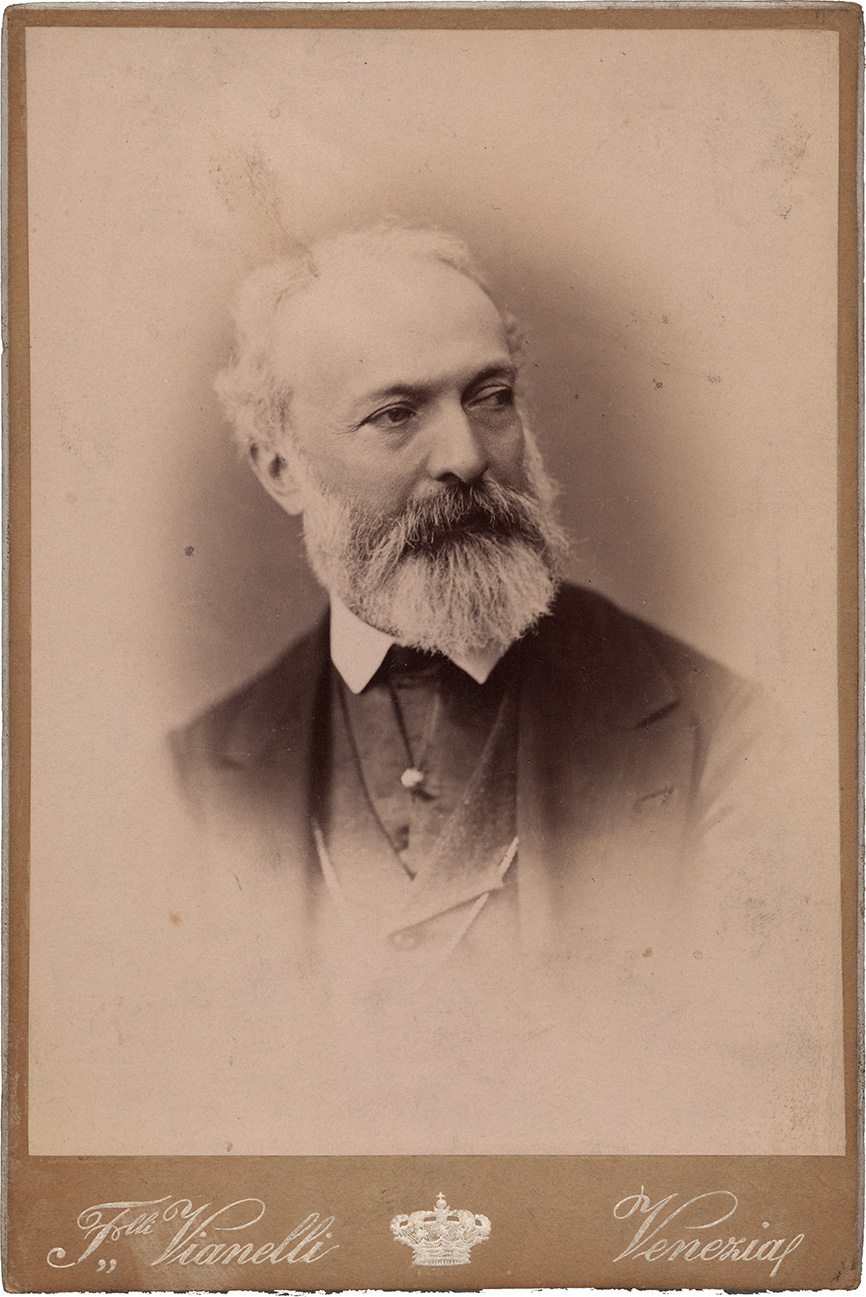 Antonio Bazzini before 1897. (Archivio Storico Ricordi/CC BY-SA 4.0)
‘The Dance of the Goblins’
Today’s recording is “The Dance of the Goblins” by Antonio Bazzini, performed by Christian Li and Timothy Young. (Listen)
Abrupt piano chords serve as a brief introduction to this whimsical piece. Right off the bat, the violin enters with the main melody, a short and bouncy series of ricocheting notes. By rebounding the bow on the string, the violinist brings to life the image of a capricious and hectic dance.
“The Dance of the Goblins” reflects one of the hallmarks of Romantic period music, that being the interest in the supernatural. Take none other than Paganini’s “Le streghe,” another fiendishly difficult showpiece which has the evocative title of “The Witches” or the dazzling “Faust Fantasy” of Henryk Wieniawski.
The violin continues at 0:40 with double-stopped trills, a technique in which multiple notes are played together and rapidly fluttered. The pyrotechnics serve a musical purpose; they suggest the cackling laughter of the goblins.
Many of the techniques used were popularized and standardized by Paganini. Take, for example, the unorthodox fingering at 2:01. The violinist races across the fingerboard, playing the same pitch across all four strings for pure embellishment.
The music reaches a fever pitch at 4:00 when it suddenly dips into a new key. The dance gets faster, reaching a climax at 4:37. Here the violinist dazzles with a series of left-hand pizzicato, a stream of plucked notes which cap off this mischievous work.
What arts and culture topics would you like us to cover? Please email ideas or feedback to features@epochtimes.nyc.