SEARCH


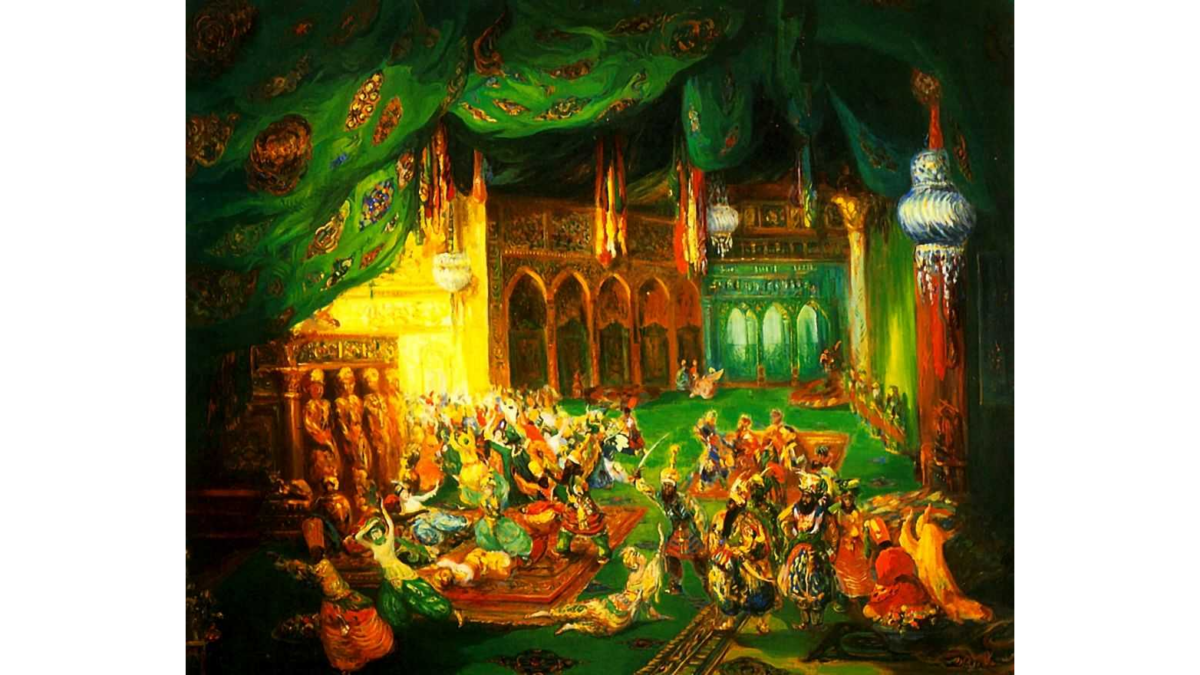
In the late 1850s, a group of five Russian composers—Cesar Cui, Aleksandr Borodin, Mily Balakirev, Modest Mussorgsky, and Nikolay Rimsky-Korsakov—banded together to shrug off European influence and create a national school of Russian music. They were affectionately known as The Five, or the Moguchaya Kuchka (Mighty Little Heap).
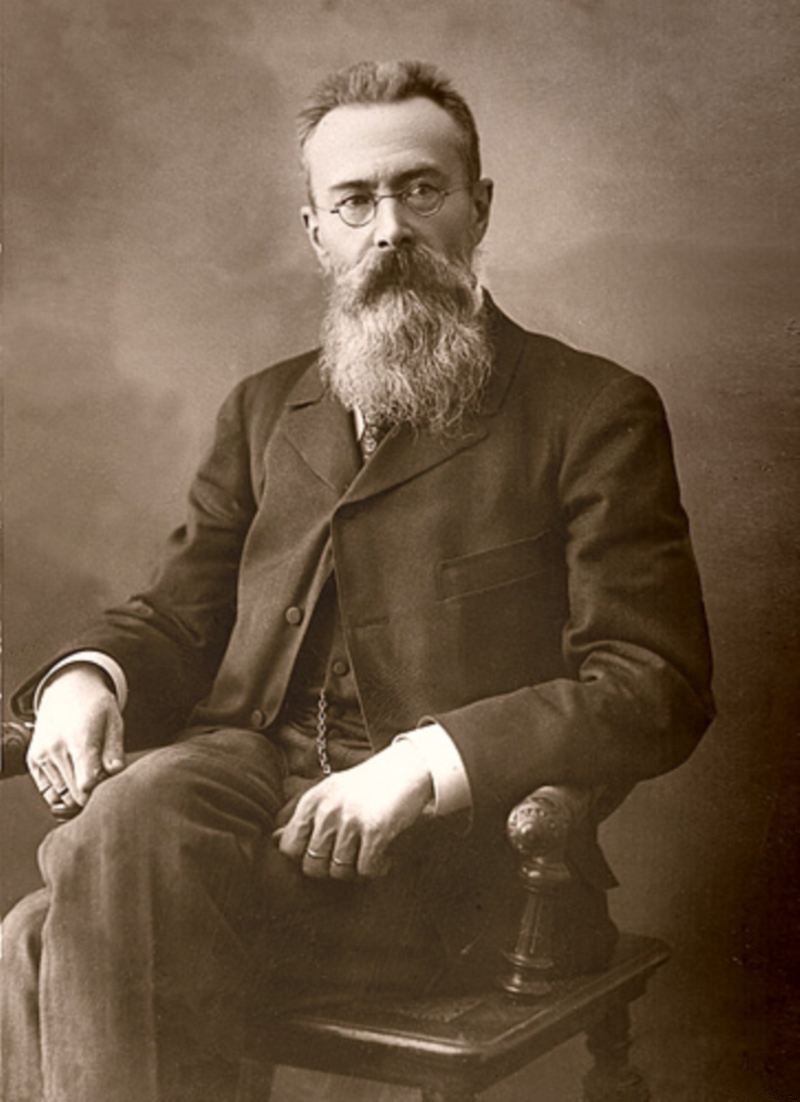
Among them, Rimsky-Korsakov was the most musically educated and established. Having become editorial head of a publishing company solely dedicated to Russian compositions, he assumed the de facto role as editor and publisher for many of the group’s compositions.
As the deaths of its members began to disband the group, Rimsky-Korsakov took it upon himself to preserve his friends’ legacies and compositions. After Borodin’s sudden death, Rimsky-Korsakov began completing the late composer’s unfinished works. He collaborated with fellow musician Glazunov, to finish “Prince Igor” in the winter of 1887.
Rimsky-Korsakov was perhaps inspired by his late friend’s imagination and vision, as that very year, while traversing the exotic world of “Prince Igor,” he found inspiration for his own fairy-tale work: “Scheherazade.”
The Storyteller
“Scheherazade” was completed in the summer of 1888. Imbued with orientalism and mysticism, the four-movement orchestral suite was based on the fairy tales from “One Thousand and One Nights,” an Arabic collection of stories bound by one overarching narrative.
A sultan, betrayed by his first wife, vows to marry a new bride every night before beheading her at dawn. The vizier has a daughter named Scheherazade who has a plan to end the bloodbath. She voluntarily marries the sultan, and on the nuptial night begins to tell him a magical tale.
At sunrise, however, she leaves the story unfinished. Unable to take the cliffhanger, the sultan decides to let her live another night. Scheherazade keeps this up for a thousand-and-one nights until the sultan—who had been removing heads from their heels—finds his own head over heels instead, and calls off the execution.
Rimsky-Korsakov deliberately avoided associating the movements with specific plots. Rather, they were given thematic names that were meant, as explained in his memoirs, to “direct but slightly the hearer’s fancy on the path which my own fancy had traveled, and to leave more minute and particular conceptions to the will and mood of each.”
The Sea and Sindbad’s Ship
The movement was originally titled “Prelude” before later being renamed as “The Sea and Sindbad’s Ship.” It begins by introducing two principal recurring themes: The domineering Sultan’s theme (00:19), played on lower-register instruments, gives way to Scheherazade’s delicate, winding melody on a solo violin (01:02).
At the end of the violin solo, the orchestra enters and evokes the waves of an ocean (01:35). The lower strings play a rocking motif as the upper voices conjure melodies with dramatic flourishes.
After the dense opening textures, the piece thins into a chamber-like section. The ocean motif passes from the lower strings to a single instrument. It first appears in the cello (03:27), and when the section returns, the clarinet takes up the motif (05:58). Various instruments dance above the accompaniment, but who they represent and what they say is left to the listener.
The movement ends with the ocean motif in the lower strings suddenly cutting into a single cello (08:32), playing the same lulling accompaniment, before the glowing chords in the French horns and woodwinds conclude Sindbad’s journey.
The fourth movement runs from 30:31 to 41:40, and at the end of the final movement, the Sultan’s motif and Scheherazade’s violin solo appear in a transformed character. Scheherazade’s violin rises gently above the orchestra
while beneath it, a quiet, subdued sultan’s theme emerges beneath a sustained violin note (40:23).
The sultan, humbled by Scheherazade’s stories, has fallen in love.
What arts and culture topics would you like us to cover? Please email ideas or feedback to features@epochtimes.nyc