SEARCH


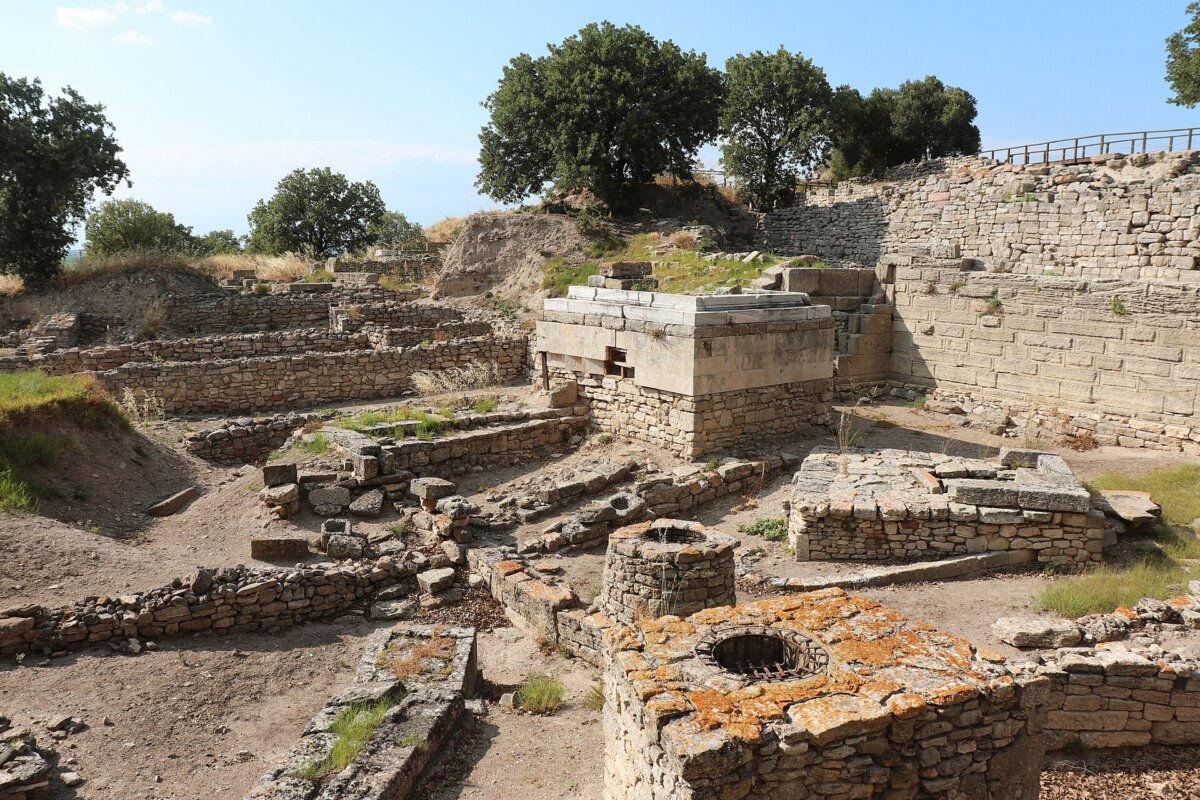
Through the power of Homer’s poetry, generation upon generation has felt the allure of “the ringing plains of windy Troy.” No other city—not even Arthur’s Camelot—raises its many-towered citadels more imposingly from the mist of legend and imagination. Troy, appearing at the very dawn of Western culture, is the “first city,” the archetype of all other cities.
Yet for millennia, this glorious, doomed city—the shining backdrop for our most foundational work of literature—was considered nothing more than myth.
That finally changed in the 1870s, through the work of a businessman and amateur archeologist named Heinrich Schliemann.
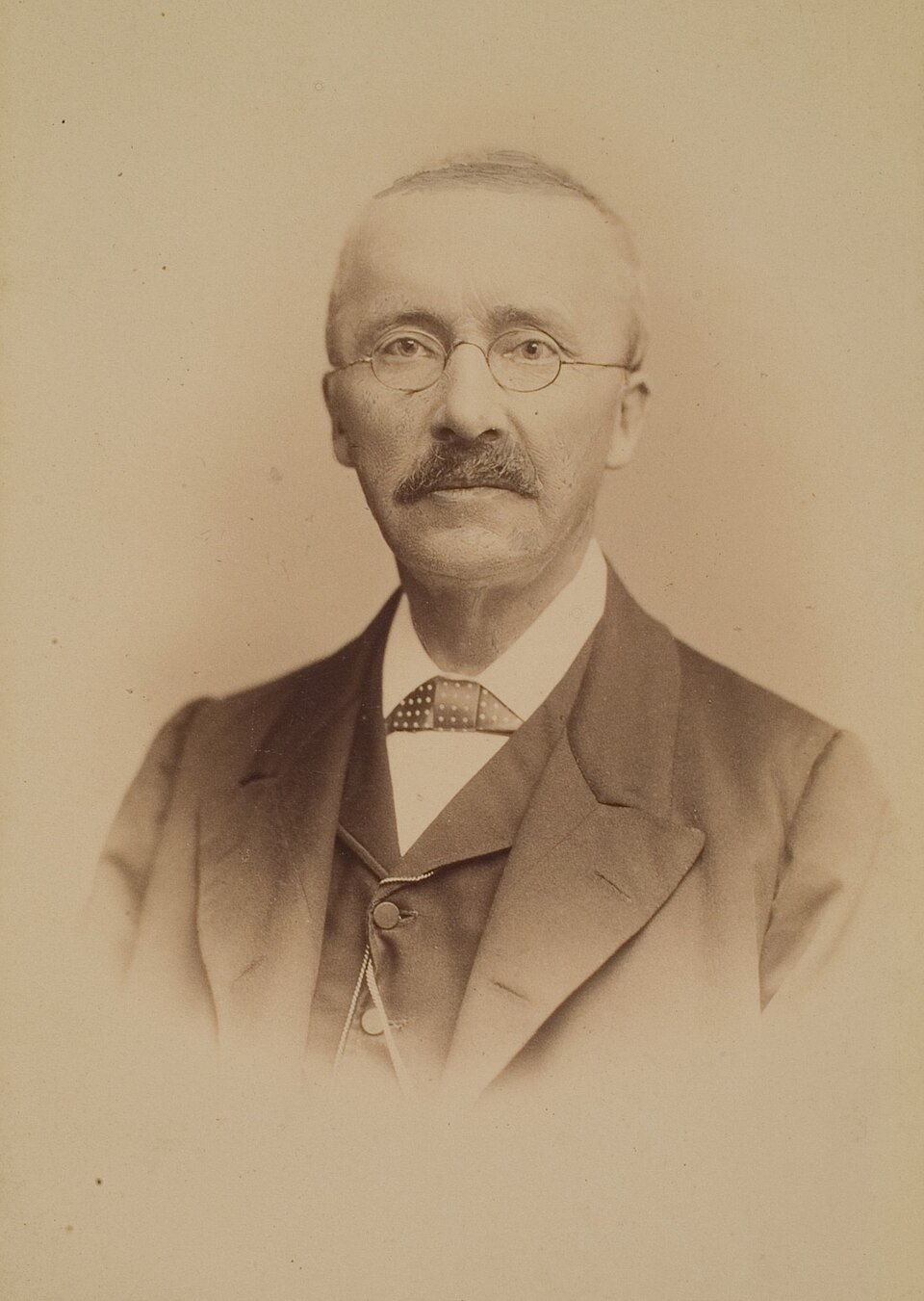 Schliemann, circa 1868. Heidelberg University Library. (Public Domain)
The Determined Excavator
Schliemann was born in 1822 in Neubukow, Mecklenburg-Schwering, which was part of the German Confederation, to Luise Therese Sophie Schliemann and Ernst Schliemann, a poor Lutheran pastor. According to Schliemann’s autobiography, when he was 7 years old he saw a picture of a flaming Troy in a history book given him by his father. This image burned itself into his consciousness, sparking his belief that there were historical elements to Homer’s story of the Trojan War and the “high-walled city” that gave it its name.
As a teenager, Schliemann worked for a grocer until he decided to emigrate as a cabin boy aboard a ship bound for Venezuela. When the ship was wrecked off the Dutch coast, he ended up in Amsterdam working as an office assistant. The smart, young lad developed a talent for languages, learning to read and write several fluently, including Russian and Greek.
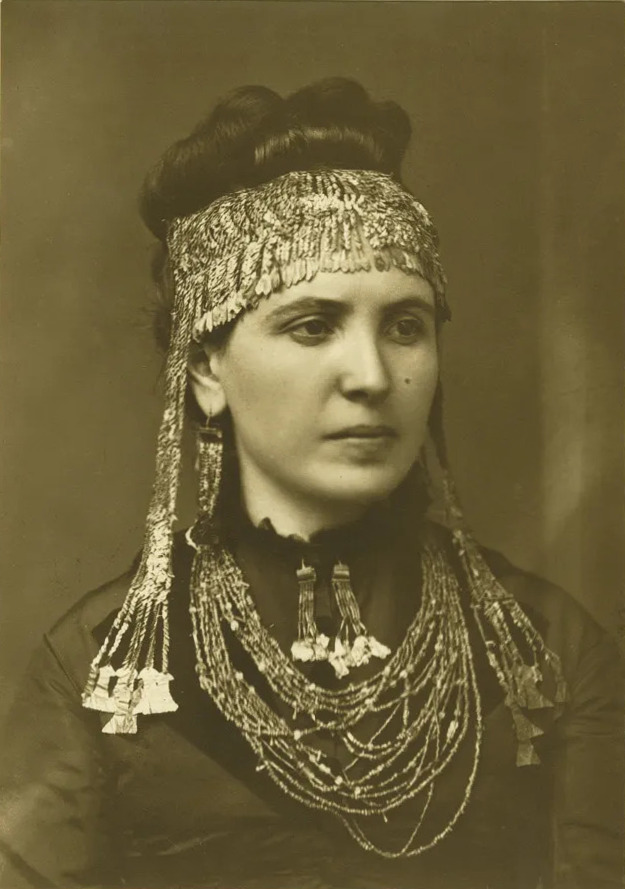 Sophia was Schliemann’s second wife. She posed wearing Priam’s Treasure, which her husband discovered. (Public Domain)
Schliemann climbed through the firm’s ranks, bolstering his business acumen. He eventually made his fortune as an indigo dye trader and a military contractor during the Crimean War. He married a Russian woman named Ekaterina Lyschin in 1852.
According to his memoirs, Schliemann was able to retire at the age of 36. At that juncture, he decided to dedicate his time to discovering the real site of ancient Troy. However, the reliability of Schliemann’s accounts has been called into question, as he had a tendency to embellish his stories.
The Real Site of Troy
We do know that Schliemann traveled extensively in Greece, Italy, Scandinavia, Germany, Syria, India, China, and Japan and studied archaeology in Paris in preparation for his Trojan quest. An important step toward the discovery of the real Troy occurred when he met the English archaeologist Frank Calvert in 1868.
Calvert’s family owned a piece of land that contained a portion of Hisarlik, an ancient city site located on the coast of Turkey. Calvert believed Hisarlik was the actual site of ancient Troy. In part, he based his conclusion on the work of Scottish polymath Charles Maclaren (1782–1866), an editor of the Encyclopedia Britannica. However, he lacked the funds to launch a large enough excavation to prove his hunch.
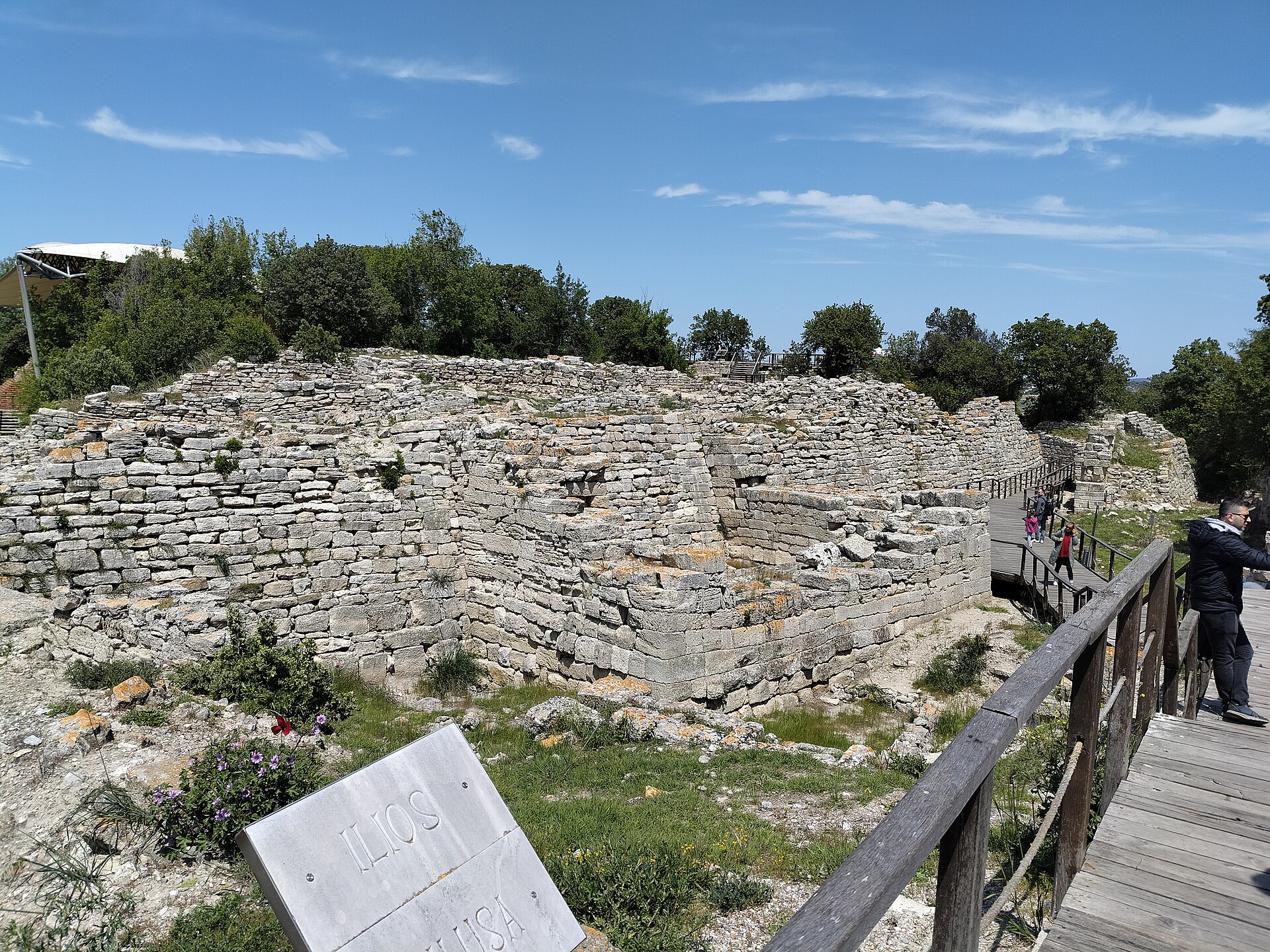 Hisarlk is the City of Troy, which is now a National Park in Turkey. (Ebru Sargın L./CC BY-SA 4.0)
Hisarlik was an archeological mound situated near the mouth of the Dardanelles River in Turkey, long known to contain the remains of a Hellenistic and Roman town called Ilion or Ilium. This town was Troy, and a clear linguistic connection to the fabled Ilium from which the “Iliad” got its name.
Moreover, Homer’s description of the city placed it on a hill between two rivers—just like Hisarlik. The poem also contains references to Mt. Ida, a real mountain only 20 miles south of Hisarlik. Calvert found all this evidence highly intriguing and he persuaded Schliemann that Hisarlik was probably the site of ancient Troy. Schliemann—who had plenty of funds—set out to prove the theory through archeological digs at the site.
Schliemann was not the first to conduct some digs at Hisarlik. Calvert himself had done some work there, but the prior findings had been merely preliminary. Schliemann began digging in earnest in 1871—after divorcing his Russian wife and marrying a Greek woman, named Sophia Engastromenos.
Hisarlik at this time was an immense man-made mound, containing not one but at least 10 cities, layered one upon another, each layer older than the one above, stacked like geological strata. Various occupants throughout the centuries had built their city atop the ruins of the previous residents’ buildings. The site was so old that it would have been ancient even to the Romans, the most recent tenants, who held it from about 85 B.C. into the third century A.D.
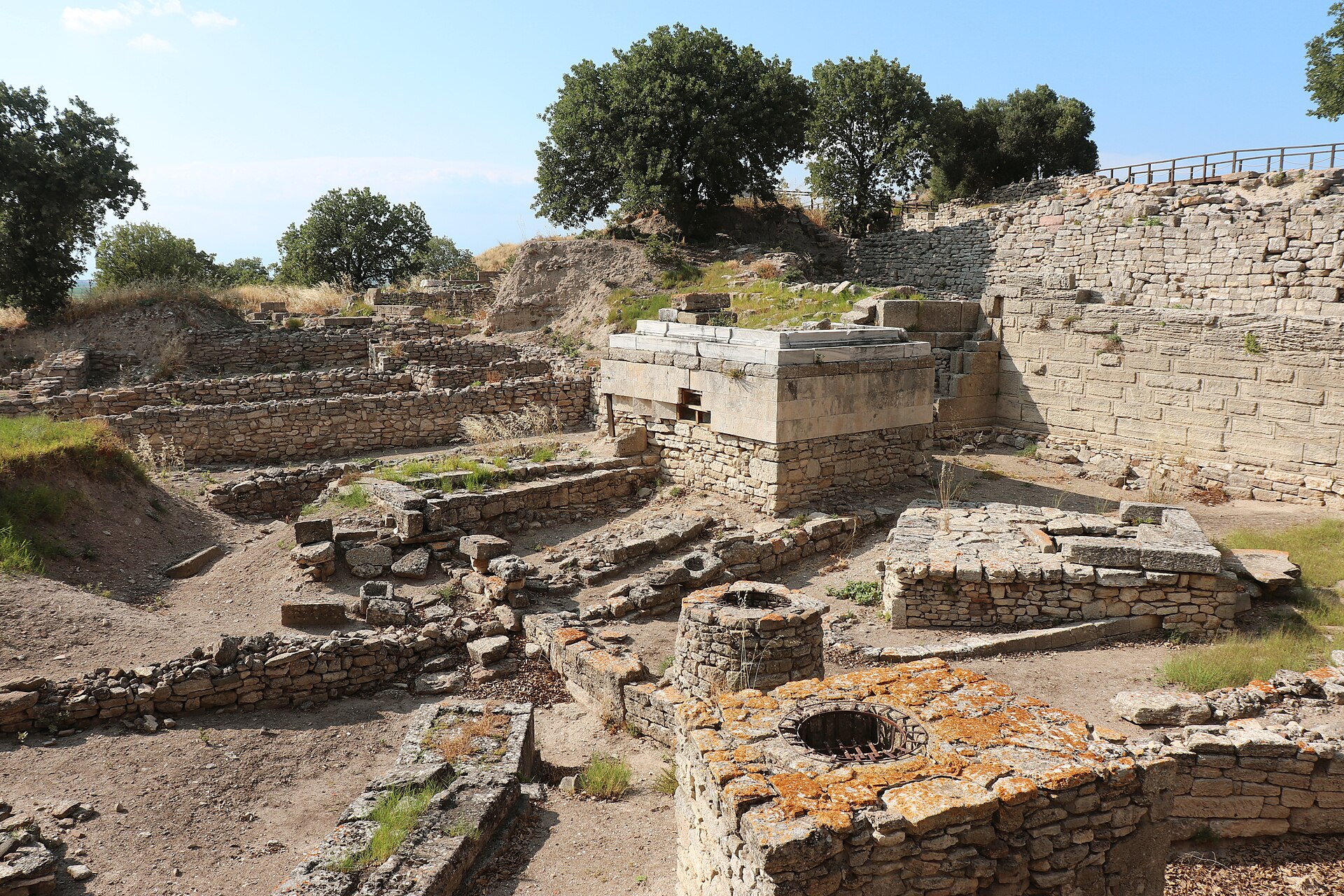 This sanctuary at the Troy National Park was built in the 8th century B.C. (Ebru Sargın L./CC BY-SA 4.0)
Layers of the Hisarlik
- Troy IX, Roman, 85 B.C.–A.D. 201–300
- Troy VIII, Hellenistic Greek
- Troy VII 1275 B.C.–1100 B.C.
- Troy VI 1800-1275 B.C., Late Bronze Age, the last sublevel is believed to be Homer’s Troy
- Troy V, Middle Bronze Age, ca 2050-1800 BC
- Troy IV, Early Bronze Age (EBA) IIIc, post-Akkad
- Troy III, EBA IIIb, circa 2400-2100 B.C., comparable to Ur III
- Troy II, EBA II, 2500-2300, during the Akkadian empire
- Troy I, Late Chalcolithic/EB1, circa 2900-2600 B.C.
- Kumtepe, Late Chalcolithic, circa 3000 B.C.
- Hanaytepe, circa 3300 B.C., comparable to Jemdet Nasr
- Besiktepe, comparable to Uruk IV
Schliemann believed the original Troy lay at the bottom of all these encrusted layers of history, so he swiftly punctured through the upper strata of dust, dirt, and stone in search of the oldest ones—damaging and destroying some of the upper levels in the process. He descended through layer upon layer of city, the accumulation of thousands of years of stories of rising and falling, battles and betrayal, mostly lost to us now.
In 1873, Schliemann unearthed fortifications and treasures of immense antiquity. He illegally smuggled them out of Turkey, believing he had successfully found Troy. He called the treasure cache “Priam’s Treasure” after Priam, the king of Troy in the “Iliad.” In fact, he had dug much too deep—the layer in question predated the historical Troy. The real Troy was actually Troy VI (the sixth layer)—later dated to about 1800 B.C.–1275 B.C., the late Bronze Age.
After working through a lawsuit brought against him by the Ottoman government, who objected to they way he had divided up (or rather, not divided up) the spoils from the site, Schliemann recommenced excavations in 1876, following the publication of his book “Troy and Its Ruins.” This round of work led to the discovery of five shaft graves with 16 bodies and a hoard of gold, silver, bronze, and ivory treasures. Schliemann believed this was the tomb of Agamemnon—a character who figures prominently in Homer’s “Iliad”—and his wife Clytemnestra. This identification is not generally accepted today.
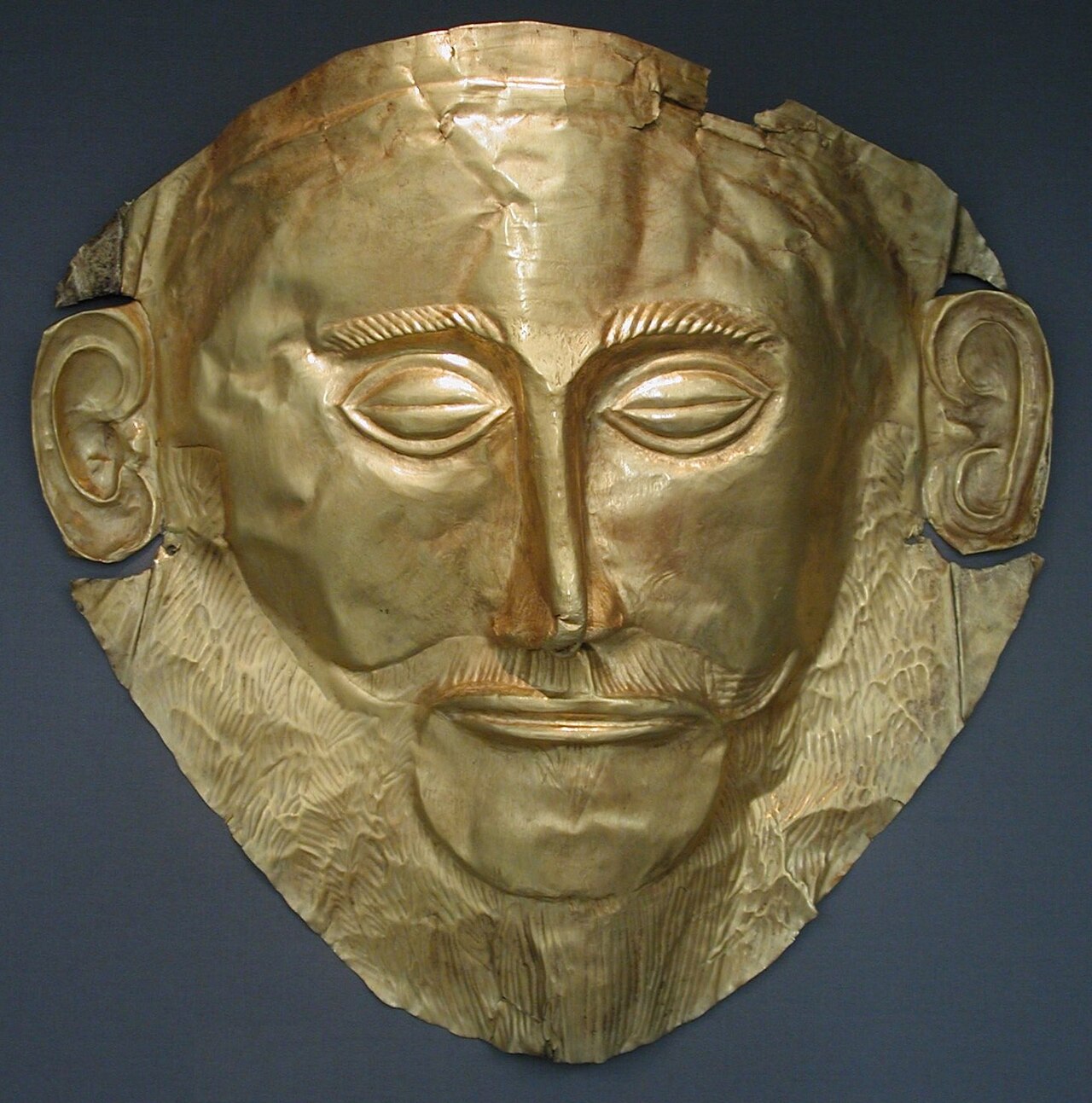 In 1876, Heinrich Schliemann excavated the golden “Agamemnon Mask” from Tomb V in Mycenae. It dates from the 16th century B.C. National Archeological Museum, Athens. (Public Domain)
Troy, Confirmed
Schliemann conducted further digs in the 1880s, later assisted by Wilhelm Dörpfeld, a German archeologist and architect who had worked on the excavations of Olympia, and who helped bring new efficiencies to Schliemann’s “brutal” methods of excavation. Schliemann’s work was eventually cut short, however, by an ear affliction for which he could not find a cure. On Dec. 25, 1890, as he crossed a square in Naples, he collapsed. He passed away the following day.
The work initiated by Calvert and Schliemann was carried on by many successors, such as Dörpfeld, and even continues up to the present day.
In the 1930s, American archaeologist Carl Blegen found evidence of a lengthy siege that had taken place at Hisarlik during the Bronze Age—the right time period for the Trojan War of legend.
Another important discovery that helped to confirm Calvert and Schliemann’s hypothesis didn’t occur until the 1990s. The problem archeologists had been wrestling with was this: How could the sixth layer of Hisarlik be the legendary Troy, a city supposedly of immense size, given the small dimensions of the ruins?
The answer came from digs conducted by Manfred Korfmann in the 1990s. He revolutionized the understanding of the site by discovering that the original hilltop ruins that Schliemann excavated were merely the central, walled citadel of Troy, which a much more expansive outer (or lower) city had surrounded. The discovery of the outer city revealed that Hisarlik had indeed been a large city in the Bronze Age—with perhaps 6,000–10,000 residents—matching up with the legends about Troy.
Our fascination with this legendary city and the historical threads that may intertwine with Homer’s monumental poem aren’t likely to fade any time soon—nor should they.
In Western legends, the fall of Troy is the primeval cataclysm that sets in motion the founding of Rome, Britain, France—in some sense it is the fountainhead from which springs all the defining stories of the West—half history, half legend—its tale written in immortal words by Homer and Virgil with a terrible beauty that haunts us still.
Troy—or Hisarlik—is not like other cities. Rome may be the Eternal City, but Troy is precisely the Temporal City: Troy is the poetic symbol of our past and our future because its shuddering, flaming collapse reverberates throughout all the ancient poems and legends. It reminds us that every human city, in the end, must fall.
 Cropped image of “Aeneas Tells Dido About The Fall Of Troy,” circa 1815, by Pierre Narcisse Guérin. Oil on canvas. Louvre Museum, Paris. (Public Domain)
What arts and culture topics would you like us to cover? Please email ideas or feedback to features@epochtimes.nyc.