SEARCH


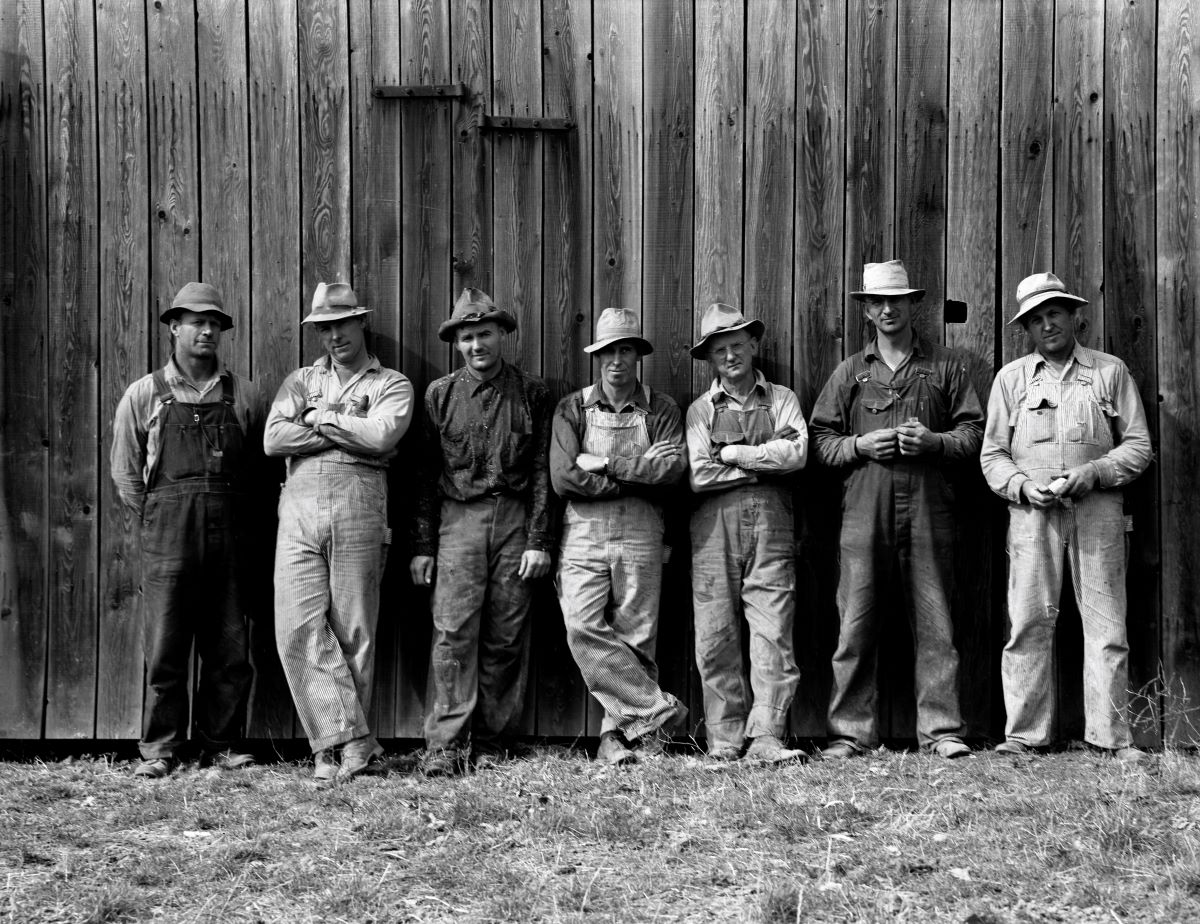
When Americans look back at the 1930s, certain images come to mind. Breadlines in the cities, the Dust Bowl, tramps riding the rails while looking for work, Franklin Delano Roosevelt’s 1933 Inaugural Address when he delivered that famous line “There is nothing to fear but fear itself,” the alphabet soup of federal agencies he and his administration created in a fruitless attempt to end the Depression—the WPA, CCC, TVA, and more: These receive near universal mention in any history of that decade.
Some may also recollect the mirrors by which the arts reflected the culture and society of that time. John Steinbeck’s classic “The Grapes of Wrath” and “Of Mice and Men” were only two of many written stories about the plight of farmers and the working class. The photographs of Walker Evans that accompanied James Agee’s “Let Us Now Praise Famous Men” preserved in bleak detail the utter poverty of three Alabama families. Grant Wood’s “American Gothic” became an iconic painting of the Midwest, whose meaning remains controversial even today. The 1930 song “Brother, Can You Spare a Dime?” by lyricist E.Y. Harburg and composer Jay Gorney became the unofficial anthem of that time.
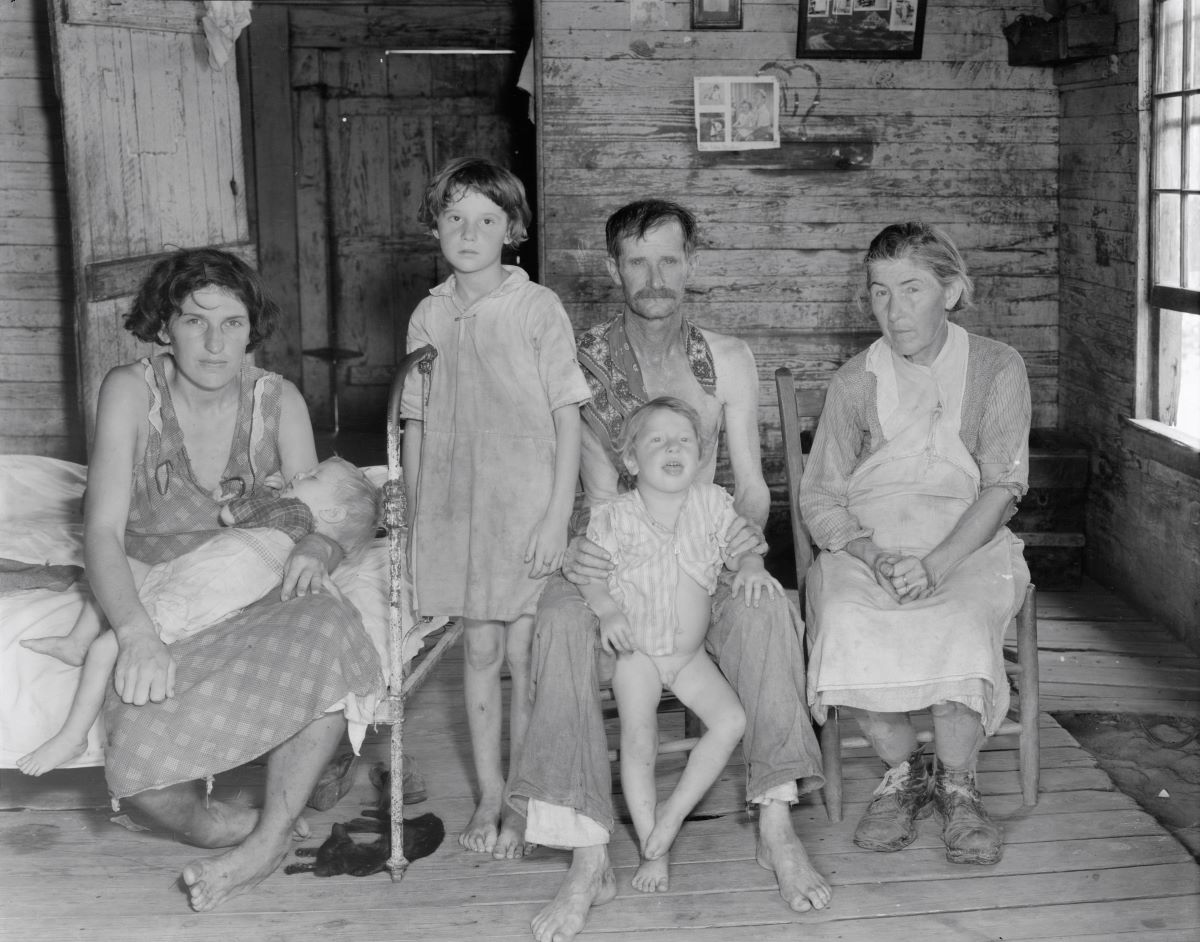
All these varied notions and renderings of the Depression era are valid and standard in history textbooks. But there’s another side to that story, less easily seen and so less well-known, that also deserves our attention.
Shame Is a Sign of Character
As a boy, I enjoyed listening to stories of family history. Once on a summer visit during those long-ago days, I listened as my grandparents and their two grown sons, my dad and my uncle, both physicians in private practice by then, discussed the grinding poverty they had endured in their Depression boyhood.
My uncle spoke of living for part of a Pennsylvania winter in a shack with only a dirt floor. More entertaining were his memories of the time his dad, my grandfather, worked for an ice cream plant. He would arrive home before dawn, wake the boys, and, before it melted, feed them a breakfast of ice cream given him by the plant.
“We were poor,” my uncle concluded.
Rarely did I witness my grandmother’s Scots-Irish temper, but that day it detonated like a charge of TNT. “We were never poor!” she said. “We were never poor! We were just like everyone else!”
That shushed my uncle up quicker than a slap to the face.
Like millions of other Americans from that era, my grandmother considered being described as poor an insult. Those going on public relief faced even worse mortification. In historian Amity Shlaes’s book, “The Forgotten Man: A New History of the Great Depression,” she writes of that era’s famous “forgotten man”:
“He was the man who paid for the big projects, who got make-work instead of real work. He was the man who waited for economic growth that did not come. As an editorialist in Indiana wrote in 1936, ‘Who is the “forgotten man” in Muncie? I know him as intimately as I know my own undershirt. He is the fellow that is trying to get along without public relief and has been attempting the same thing since the depression that cracked down on him.’”
Dignity Mattered
In his 1970 book, “Hard Times: An Oral History of the Great Depression,” Studs Terkel brought readers the verbatim words of Depression-era Americans collected from hundreds of interviews. Here, too, we find many examples of pride in the face of poverty. Peggy Terry, a pregnant teenager married to a teenage husband, recounts hitchhiking around the country in search of work and sleeping in a haystack one night. The farmer’s wife who found them, saw her condition, and insisted she come to the house for milk.
“She had a lot of rugs hanging on the clothesline because she was doing her housecleaning. We told her we’d beat the rugs for giving us the food. She said, no, she didn’t expect that. She just wanted to feed us. We said, no, we couldn’t take it unless we worked for it. And she let us beat her rugs. I think she had a million rugs, and we cleaned them. Then we went in, and she had a beautiful table, full of all kinds of food and milk. When we left, she filled a gallon bucket full of milk, and we took it with us.”
Salesman Ben Issacs told Terkel, “Finally people started to talk me into going into the relief. … I didn’t want to go on relief. Believe me, when I was forced to go to the office of the relief, the tears were running out of my eyes. I couldn’t bear myself to take money from anybody for nothing. If it wasn’t for those kids—I tell you the truth—many a time it came to my mind to go commit suicide. … But somebody has to take care of those kids.”
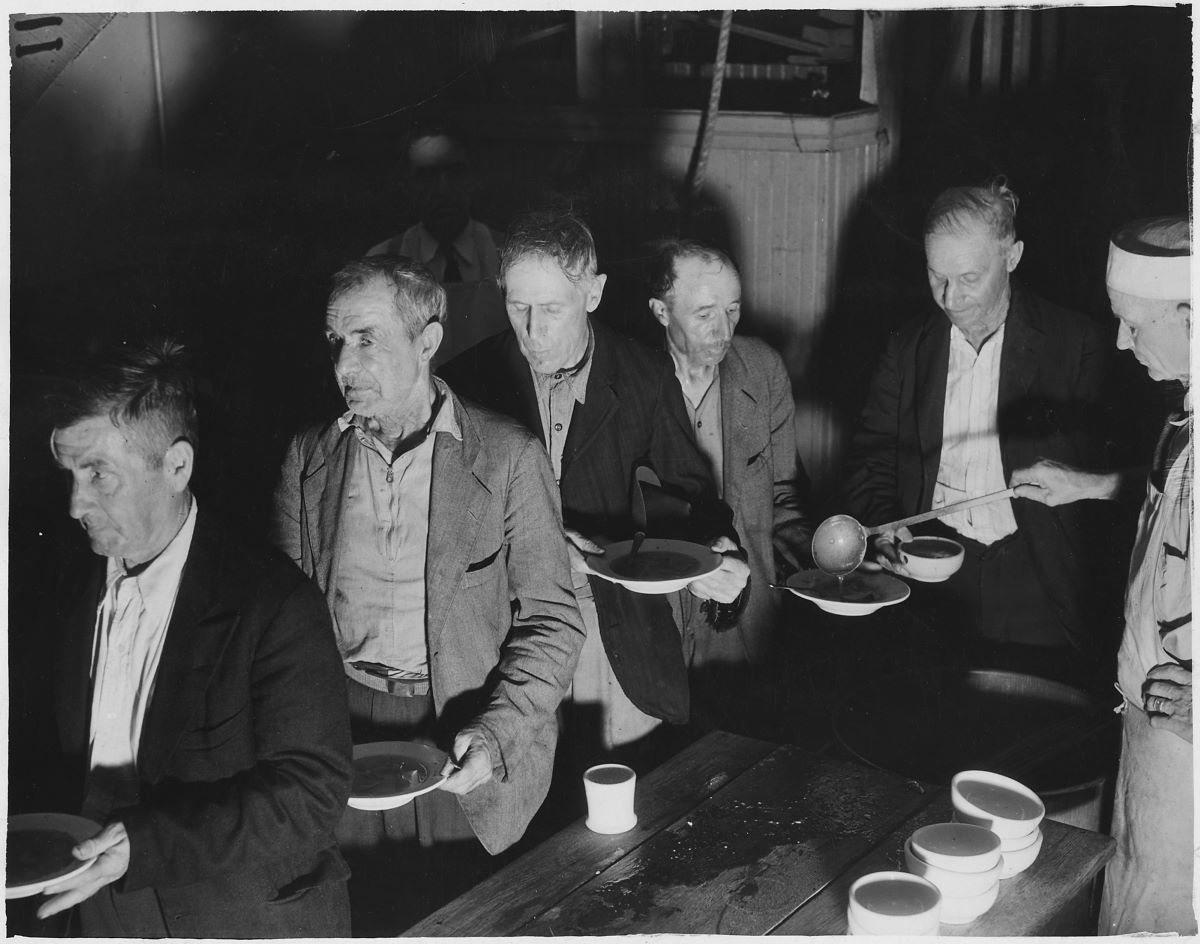
Eileen Barth, a county social worker, emotionally recollected the part she’d played in wounding the dignity of a man decades earlier.
“I’ll never forget one of the first families I visited. The father was a railroad man who had lost his job. I was told by my supervisor that I really had to see the poverty. If the family needed clothing, I was to investigate how much clothing they had at hand. So I looked into this man’s closet (pauses, it becomes difficult)—he was a tall, gray-haired man, though not terribly old. He let me look in the closet—he was so insulted ( she weeps angrily). He said, ‘Why are you doing this?’ I remember his feeling of humiliation … this terrible humiliation. (She can’t continue. After a pause, she resumes.) He said, ‘I really haven’t anything to hide, but if you really must look into it.’ I could see he was very proud. He was so deeply humiliated. And I was, too.”
Making Do and Making It Through
This same pride and spirit of independence exhibited itself countless times daily all around the country. The old locker room saying “When the going gets tough, the tough get going” was a commonplace truth for millions of Americans. Rural families raised crops, gardened, and bartered for services. City families had Dad taking on odd jobs, Mom patching up hand-me-downs and finding creative ways to serve up hash, and the kids earning nickels here and there whenever they could.
Though regrettably out of print, a volume in the “Good Old Days” series, “We Survived—And Thrived,” featured essays and stories by elderly adults about their experiences as Depression-day youngsters. Here are accounts of parents struggling to keep food on the table, of wearing feed sack clothing, of Christmases where Mom and Pop made the day special with only oranges and hard candy serving as gifts, of barn dances and potlucks, and much more.
In the book’s Introduction, editor Ken Tate, who had himself lived through the Depression, wrote, “We had everything but money. We didn’t know we were poor because the good Lord had given us strong backs and good imaginations. We learned the art of making ends meet through the old Depression-era proverb: ‘Use it up, wear it out, make it do, or do without.” And like so many of the book’s contributors, Tate wrote of the love and kindness of neighbors, friends, and family.
Hard times can bring out the worst in people, cruelty and indifference to suffering, yet as the Depression revealed, disaster also breeds kindness. Stories like the farmer’s wife and the teenage couple are repeated throughout “We Survived—And Thrived” as well as in other accounts of that long crisis. Neighborhoods organized block dinners that filled the stomach and tightened community bonds, good-natured bartering of services was common, and advice and a helping hand were welcome when needed. Then as now, people who saw others in dire straits rose to the occasion and offered their assistance.
A Message for Today
Many of those who lived through the Depression retained the habits it taught for a lifetime, instructing the children born in the 1950s and 1960s to turn off the lights when leaving a room and to keep long distance calls to a minimum to avoid additional charges. This hard-earned virtue of thrift accounts in part for the wealth of the post-World War II generation.
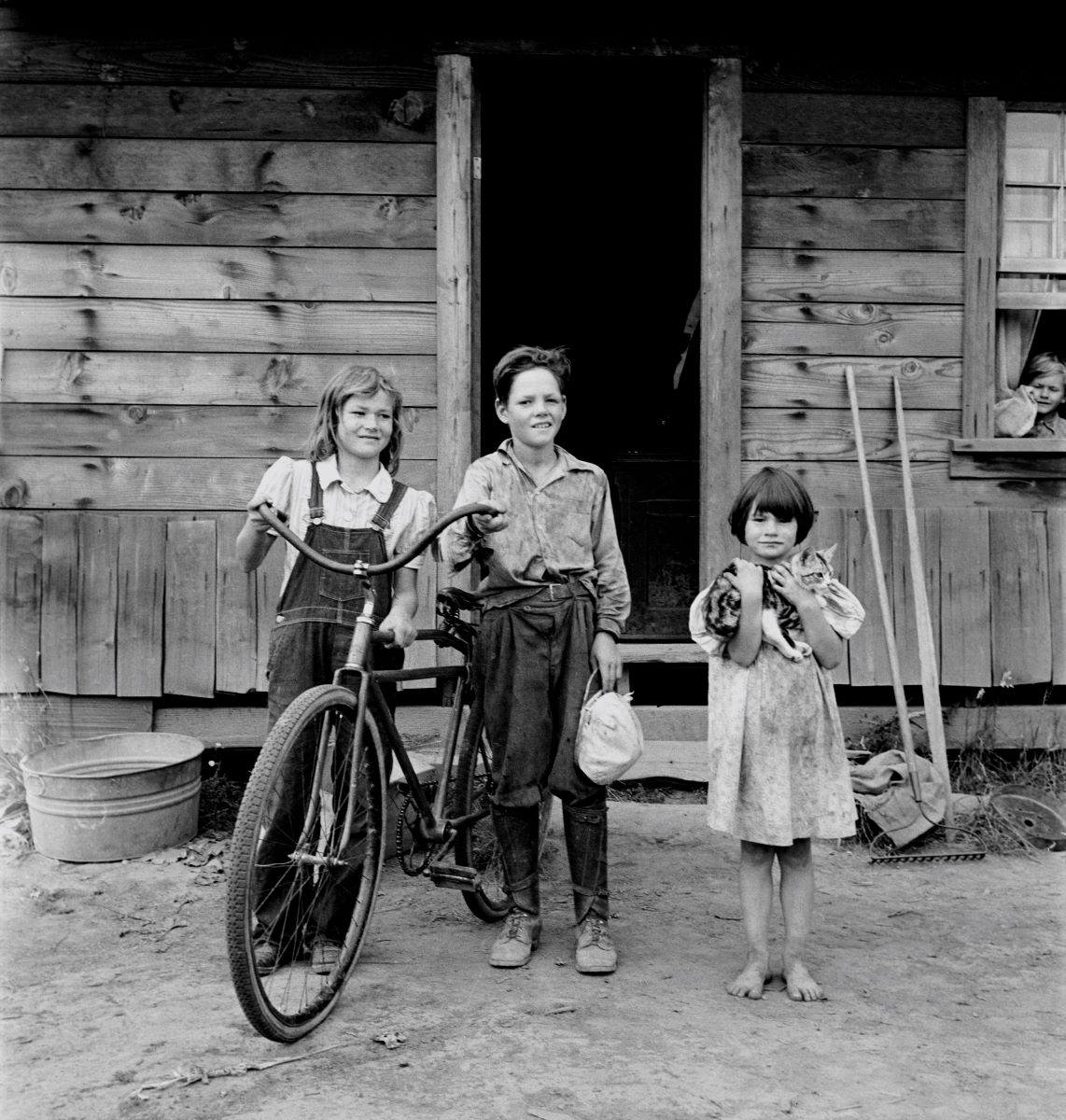
Some of today’s writers and commentators who have studied that era encourage their contemporaries, particularly the Millennials and the Gen-Z crowd, to take lessons from these men and women and apply them to their own lives, to refuse, for example, to spend money by credit card when the bank account’s empty, to go easy on luxuries like expensive cappuccinos, and especially to understand the difference between “I want” and “I need.”
The Great Depression broke banks and emptied wallets, but it never broke or emptied the American spirit. It would be one of those great ironies of history if the relative wealth and luxuries Americans enjoy today were to poison that same spirit.
What arts and culture topics would you like us to cover? Please email ideas or feedback to features@epochtimes.nyc.