SEARCH


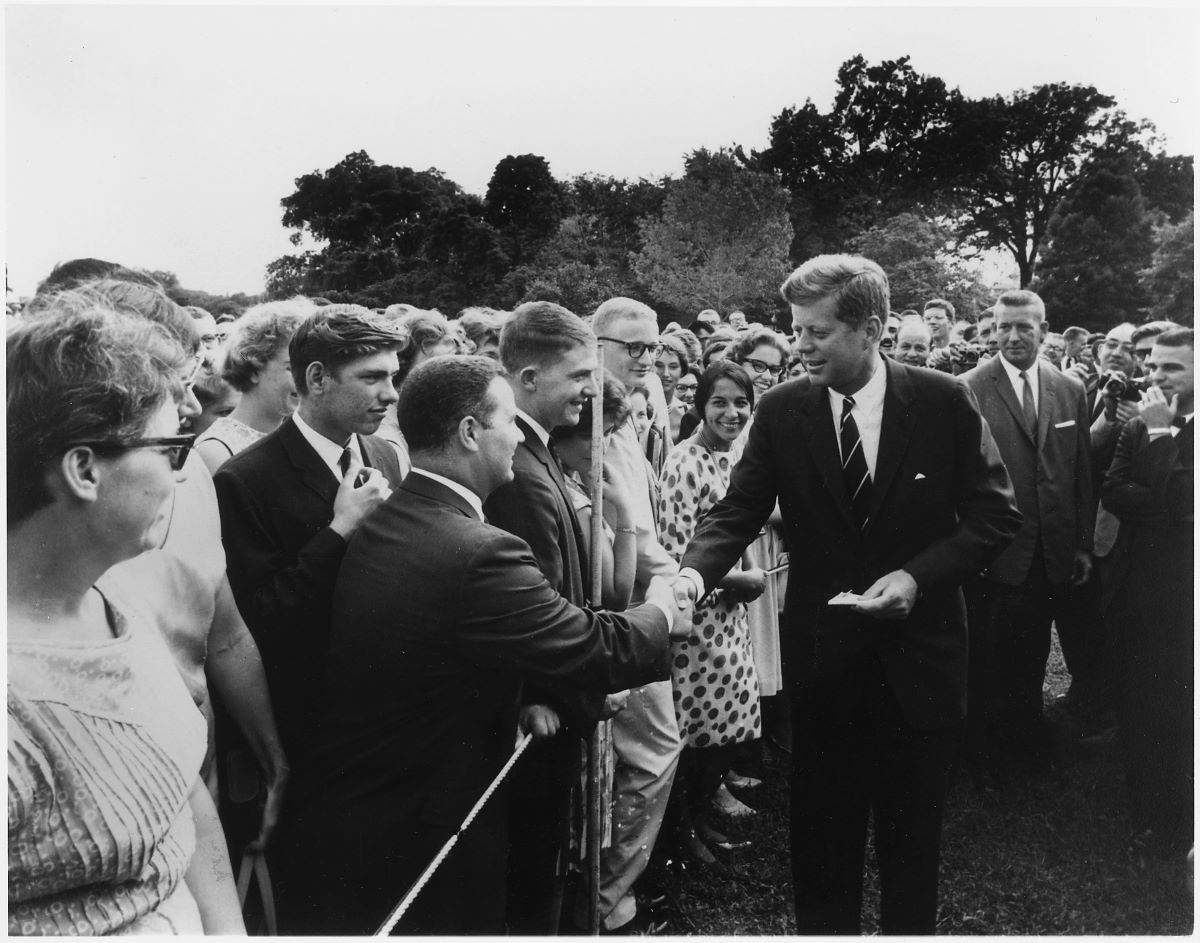
John F. Kennedy announced his candidacy for the upcoming 1960 presidential election on Jan. 2. He had served as a Democratic representative and senator from Massachusetts, and would have to face down other politicians, specifically Lyndon B. Johnson. Johnson was longer in tooth in both age and time served in politics. At the Democratic National Convention in Los Angeles, it took only one ballot for Kennedy to win the nomination for the Democrat Party. Two days after winning the nomination on July 13, he formally accepted the party’s nomination.
During his acceptance speech, he referenced the new decade as a “New Frontier.” Amid numerous scriptural references and warnings of “the single-minded advance of the Communist system,” Kennedy claimed that his presidency would not be one built on promises to the American people but rather challenges to them.
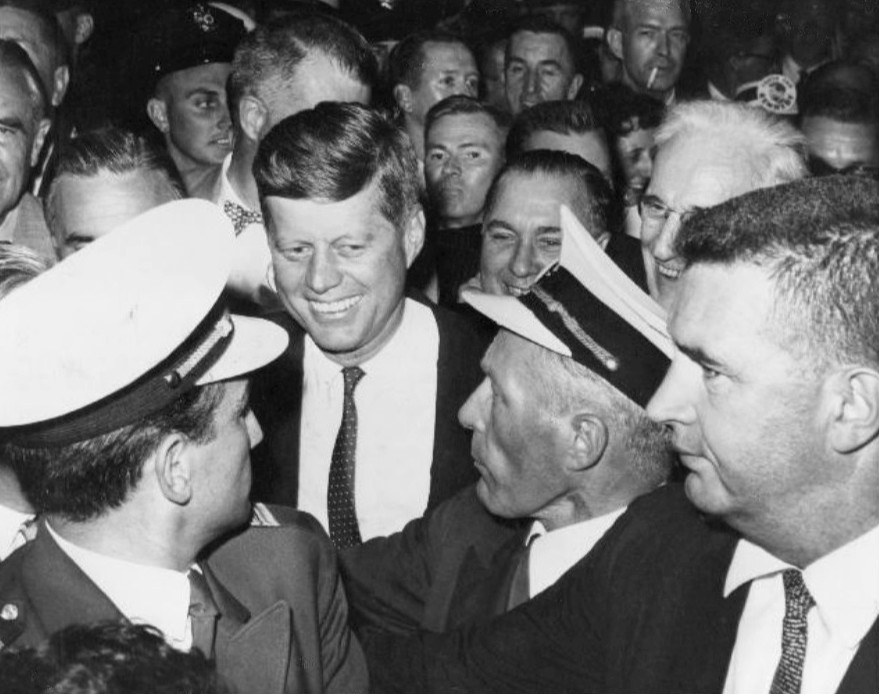
“It sums up not what I intend to offer the American people, but what I intend to ask of them,” he said. “It appeals to their pride, not to their pocketbook—it holds out the promise of more sacrifice instead of more security.”
Unlike several veteran Democrat politicians, like Johnson who had waited for the convention to receive the nomination, Kennedy had already been marching through that new frontier during the primaries. The march had paid off, and he now returned to the campaign trail with a new running mate, Johnson, in tow.
A Bit of Improv
Kennedy’s campaign was organized by his more serious brother, Robert, who had never been a politician but had served as a staff member on several senatorial subcommittees. It was an effective duo, and all the more effective thanks to John’s capacity for clever off-the-cuff lines and oratory skills.
As Kennedy speechwriter Arthur Schlesinger Jr. recalled, “The Kennedys were not long-distance planners, but they were brilliant improvisers.”
With only a few weeks before the election, that improvisation would be on display during a late October night when Kennedy’s campaign reached Ann Arbor, Michigan. The improvisation had a far-reaching and historic impact.
On Oct. 14, at the University of Michigan, thousands of college students began to gather near the steps of the Michigan Union building, many holding signs, some wearing Kennedy straw boaters. Kennedy’s multi-vehicle caravan arrived around 2 a.m. Two speechwriters, Theodore Sorensen and Richard Goodwin, looked out one of the car windows and told each other that Kennedy was bound to make a speech.
“He won’t just let them stand there,” Sorenson said.
They were right. Kennedy stepped out of his vehicle and walked up the steps. A microphone was placed before him. The long-suffering students got their speech—an improvised one. But as Kennedy had stated three months prior, he would not be a candidate who made promises but, instead, made challenges.
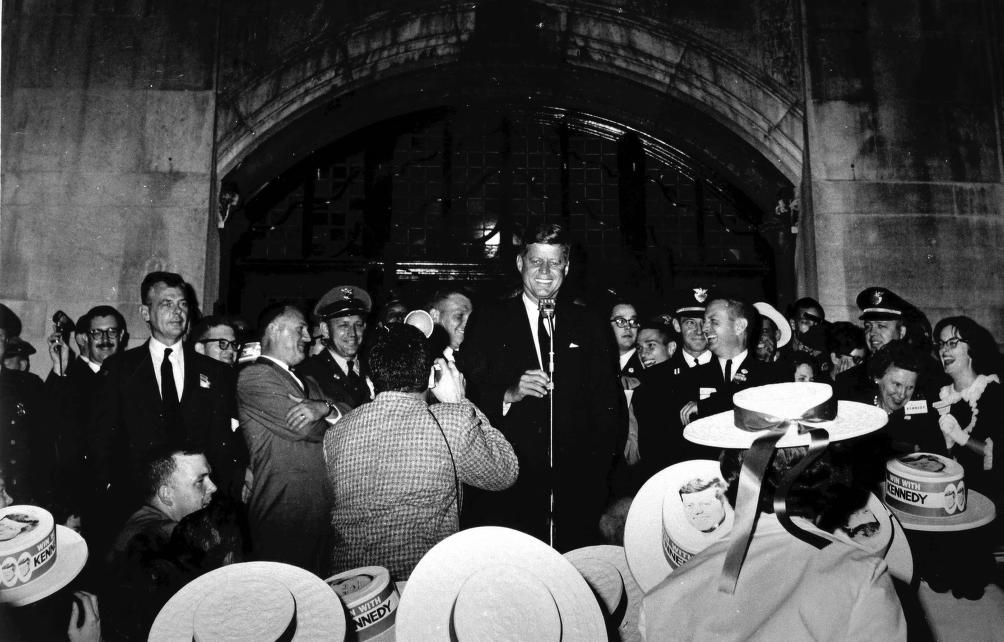
“I come here tonight to go to bed!” he told the students, which got a laugh from the crowd. “But I also come here tonight to ask you to join in the effort.”
That effort had been mentioned earlier in what he called “the longest short speech I’ve ever made.” That effort was the challenge he suddenly put forth to the gathered students regarding their “willingness to contribute part of [their] life to this country.”
“How many of you who are going to be doctors, are willing to spend your days in Ghana? Technicians or engineers, how many of you are willing to work in the Foreign Service and spend your lives traveling around the world?” he asked.
Accepting the Challenge
The speech only lasted a few minutes, but it left a lasting impact on several members of the late-night audience. A few days later, Chester Bowles, the representative from Connecticut and Kennedy’s foreign affairs advisor, came to speak at the Michigan Union, and proposed a very similar challenge to the students. A married couple, Alan and Judy Guskin, who were also students at Michigan, took up the challenge and proposed it in the student newspaper, The Michigan Daily, calling upon “those … who have been fortunate enough to receive an education will want to apply their knowledge through direct participation in the underdeveloped communities of the world.”
By the end of October, several hundred students signed their name to a petition declaring their willingness to meet the challenge Kennedy had put forward. There may have been a willingness, but what were they signing up for? Nothing had been established. Furthermore, the election had yet to take place to indicate whether Kennedy would be in a position to create such an opportunity for those doctors, technicians, and engineers.
Formulating the Peace Corps
With less than a week before the election, Kennedy found himself far from Michigan and in the state where it had all begun: California. On Nov. 2 at the Cow Palace in San Francisco, Kennedy stood before a crowd and again cited Scripture and warned about the spread of communism; but this time he identified how Moscow was sending “teachers, doctors, technicians and experts desperately needed in a dozen fields by underdeveloped nations.”
The Soviets were beating the Americans to the punch. They were advancing “the cause of world communism” in Africa, Asia and South America, while democracy was taking a backseat. Kennedy iterated that the only way to counter communist advancement was to send “Americans equally skilled and equally dedicated.”
The Cold War between the Americans and Soviets had been broiling from nearly the moment the world entered the nuclear age in August 1945. The arms race had been going on for about as long. Kennedy advocated the path of peace.
“We can push a button to start the next war, but there is no push-button magic to bring a just and lasting peace,” he said. “To be peace loving is not enough. For the Sermon on the Mount saved its blessing for the peacemakers. The generation for which I speak has seen enough of warmongers. Let our great role in history be that of peacemakers.”
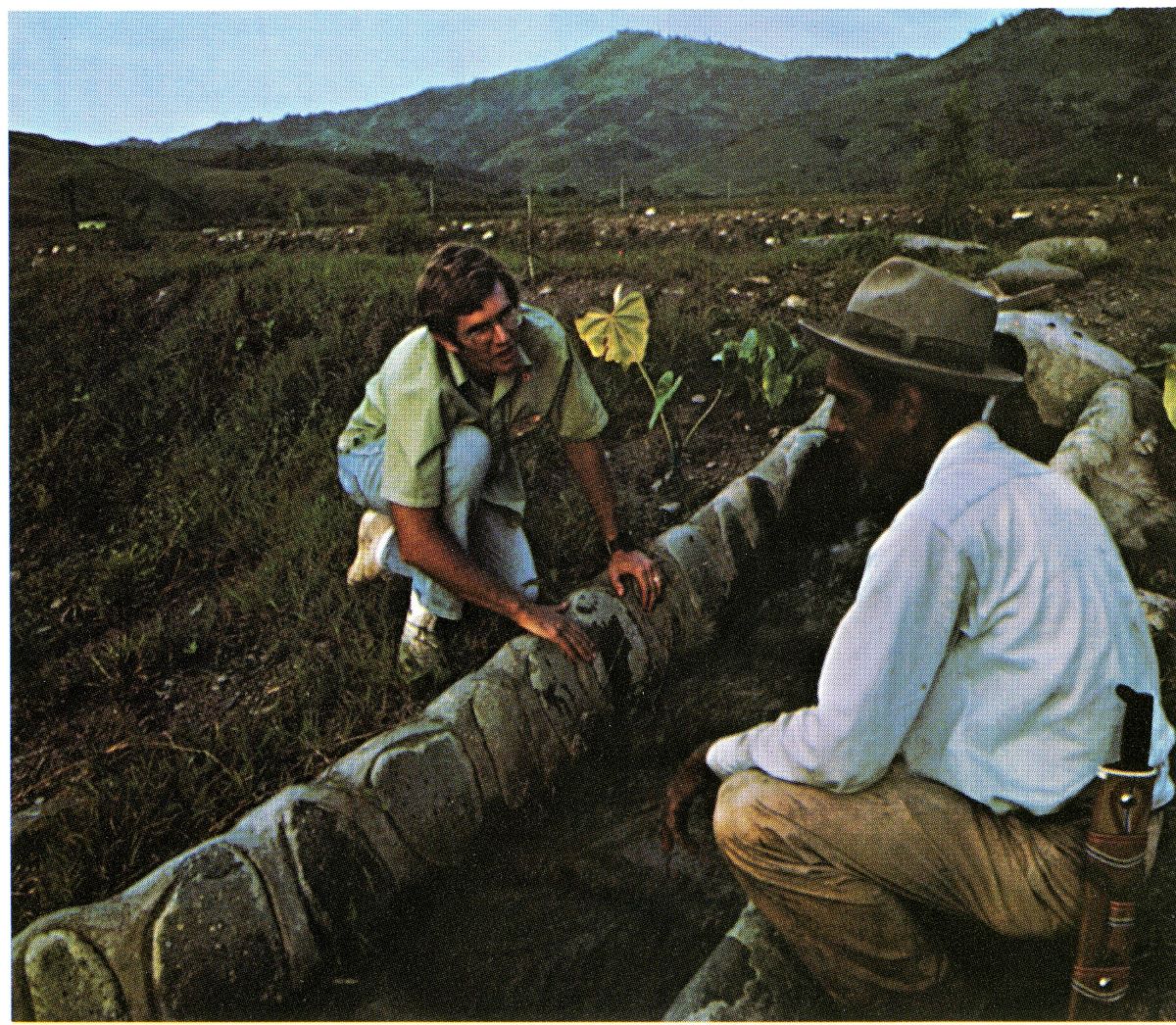
He then put a name to such peacemakers—the Peace Corps. Originating from an improvised speech, the idea had taken root in his mind, and he now formulated what it would look like. It would be a volunteer corps of men and women “from every race and walk of life” who would serve for three years. The goal was to achieve peace in regions throughout the globe by sending skilled persons “to help those nations help themselves.”
Creating the Peace Corps
A few days later on Nov. 6, while in Toledo, Ohio, Kennedy was met by several carloads of students from the University of Michigan, including the Guskins. They showed him the signed petitions. They had taken Kennedy at his word. Alan Guskin then asked the presidential hopeful if he was truly serious about the Peace Corps.
“Until Tuesday, we’ll worry about this nation,” he replied. “After Tuesday, the world.”
On Tuesday, Nov. 8, Kennedy defeated Nixon in the 1960 election. The Electoral College was 303 to 219, but it was much closer than that. Kennedy had won by the slimmest of margins — approximately 120,000 votes—making it one of the closest in U.S. history.
After taking office, one of Kennedy’s first decisions was to sign an executive order on March 1, 1961, establishing the Peace Corps. The order stated one of its goals was to have at least 500 volunteers in the Peace Corps by the end of the year. Kennedy’s brother-in-law, R. Sargent Shriver, had helped the president outline the new organization. Three days after signing the order, Kennedy named Shriver as its first director.
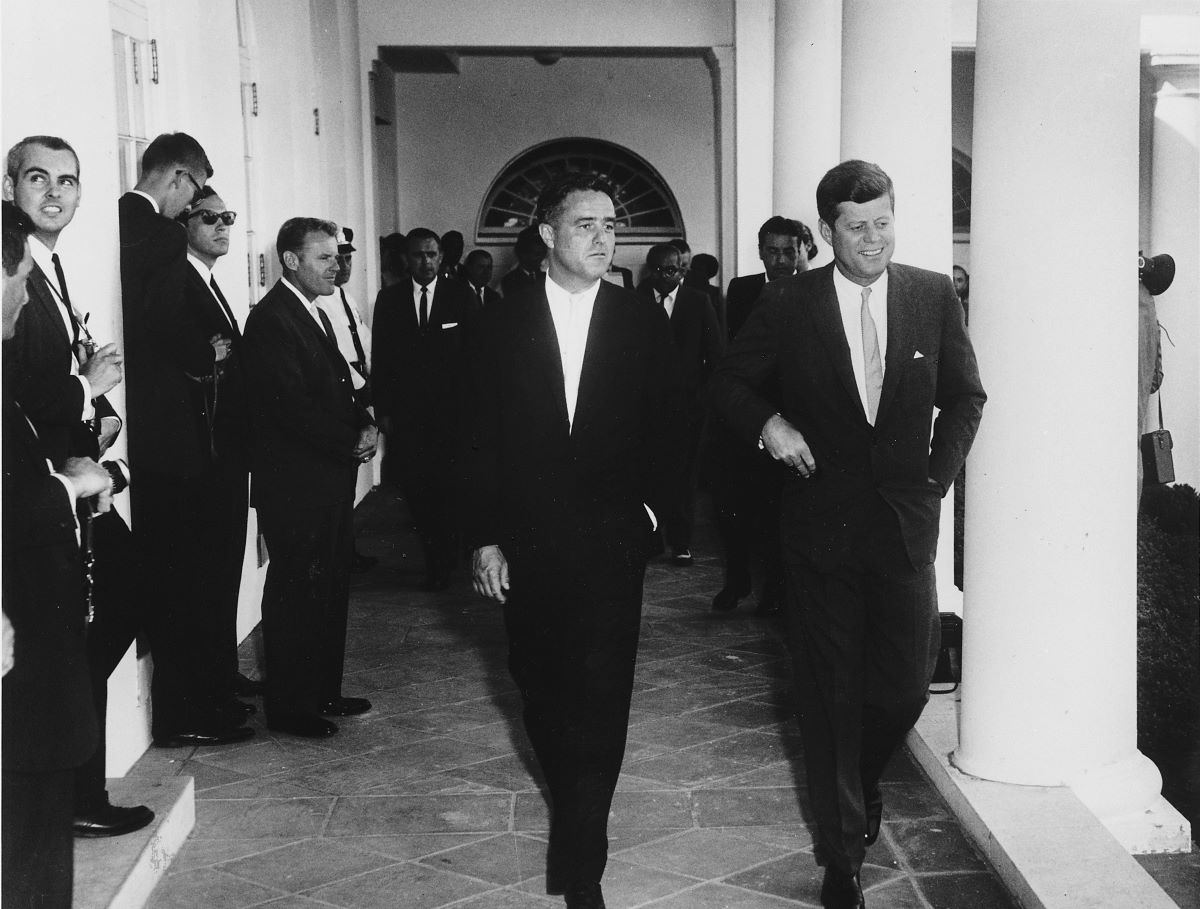
The candidate who drove a bargain of no promises made two promises to future volunteers. He promised that “life in the Peace Corps will not be easy. … But if the life will not be easy, it will be rich and satisfying.”
Legislation for the Peace Corps came before Congress on June 6. It was during this week in history, on Sept. 22, 1961, that Congress passed the Peace Corps Act, and Kennedy signed it into law.
For 65 years, the Peace Corps has continued to send skilled Americans abroad in the name of peace and in the effort “to help those nations help themselves.” Approximately 250,000 Americans have served in the Peace Corps in 144 countries. The organization currently serves in 60 countries. The traditional method of service is a 27-month commitment, which has been the route chosen by 96 percent of its volunteers. Another 4 percent has served in the more flexible and short-term version called Peace Corps Response. Since 2020, there has been a virtual version of the Peace Corps, which is often used for places too dangerous to venture, like Ukraine.
Never miss a This Week in History story! Sign up for the American History newsletter here.
What arts and culture topics would you like us to cover? Please email ideas or feedback to features@epochtimes.nyc.