SEARCH


When the Civil War began in the spring of 1861, it was predicted by many that it would be a brief, though somewhat costly, conflict. Secretary of the Treasury Salmon P. Chase held that opinion. He predicted the war would cost the Union approximately $320 million (nearly $12 billion today).
Via tariffs and taxes, the federal government projected raising $70 million, and Congress authorized the Treasury to sell $250 million worth of bonds. Chase’s prediction quickly proved woefully inadequate, as the Union faced bankruptcy by the war’s first winter.
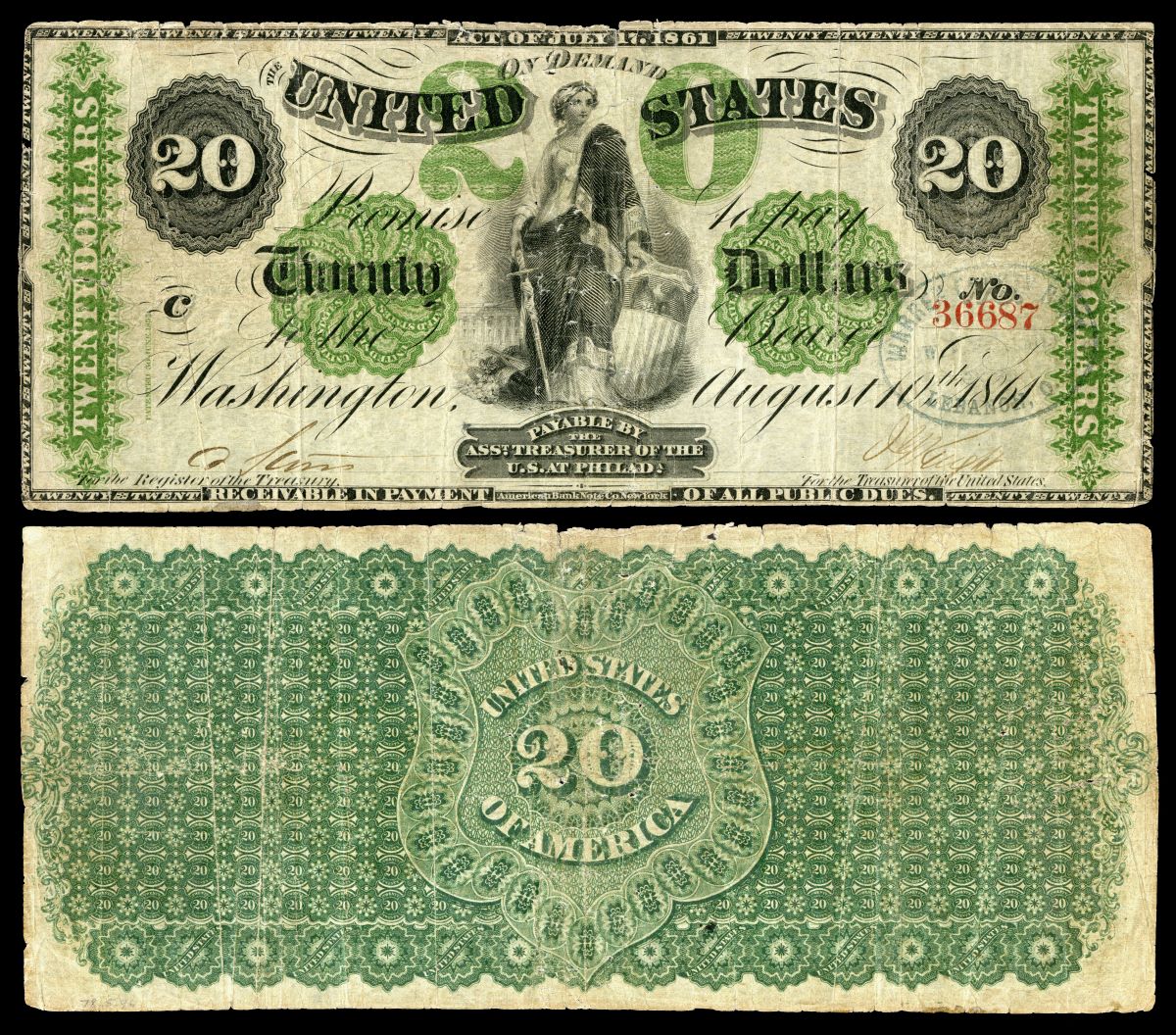
Chase was reticent about inserting paper currency into the country’s gold-backed monetary system, but there seemed little alternative. Congress agreed to Chase’s recommendation of a legal tender, resulting in the Legal Tender Act of 1862. By war’s end, approximately $450 million worth of paper currency called “greenbacks” flooded the monetary system. There was fear that doing so would create hyperinflation, but the introduction of the green-colored paper currency staved off bankruptcy and enabled the Union to fund the war.
The government-backed currency created inflation but not hyperinflation. By the end of the war, inflation had reached 80 percent—in stark comparison to the Confederacy’s 9,000 percent inflation rate.
Retiring ‘Greenbacks’
In December 1865, Secretary of the Treasury Hugh McCulloch issued his first annual report about the state of the country’s finances with a specific eye on decreasing the amount of paper currency. He stated that the legal tender acts “were war measures,” passed in a “great emergency”; that they “should be regarded only as temporary”; “that they ought not to remain in force a day longer than shall be necessary to enable the people to prepare for a return to the [gold standard]”; “and that the work of retiring the notes which have been issued … should be commenced without delay, and carefully and persistently continued until all are retired.”
Congress agreed and, two weeks later, passed a resolution that set the retirement of those notes into motion. In April, Congress passed the Contraction Act of 1866, authorizing the Treasury Department to begin retiring the greenbacks. The swift retirement of this paper currency, however, caused deflation, which affected a number of groups, specifically farmers who had leveraged their business with the currency. Public outcry caused Congress and President Andrew Johnson to suspend the actions of the Treasury until the economy recovered from the deflation.
Honoring a Promise
In his inaugural address, on March 4, 1869, President Ulysses S. Grant promised to resume the retirement of greenbacks. “A great debt has been contracted in securing to us and our posterity the Union,” he stated.
“The payment of this, principal and interest, as well as the return to a specie basis as soon as it can be accomplished without material detriment to the debtor class or to the country at large, must be provided for. To protect the national honor, every dollar of Government indebtedness should be paid in gold, unless otherwise expressly stipulated in the contract.”
Two weeks later, Grant signed the Public Credit Act of 1869, which subsequently turned his words into law. It required the government to pay off its debt “in coin, or its equivalent,” and provided the government a 10-year window to return to the gold standard.
Enter the Robber Barons
By the time Grant had taken office, Jay Gould and James Fisk had become wealthy businessmen in New York City. Gould and Fisk belong to a collection of wealthy businessmen from the late 19th and early 20th centuries who became known as “robber barons.” Indeed, Gould and Fisk were not squeamish about making money in unscrupulous ways, even teaming up to keep Cornelius Vanderbilt from controlling their Erie Railroad by issuing fraudulent stocks. To avoid prosecution, they bribed members of the New York legislature.
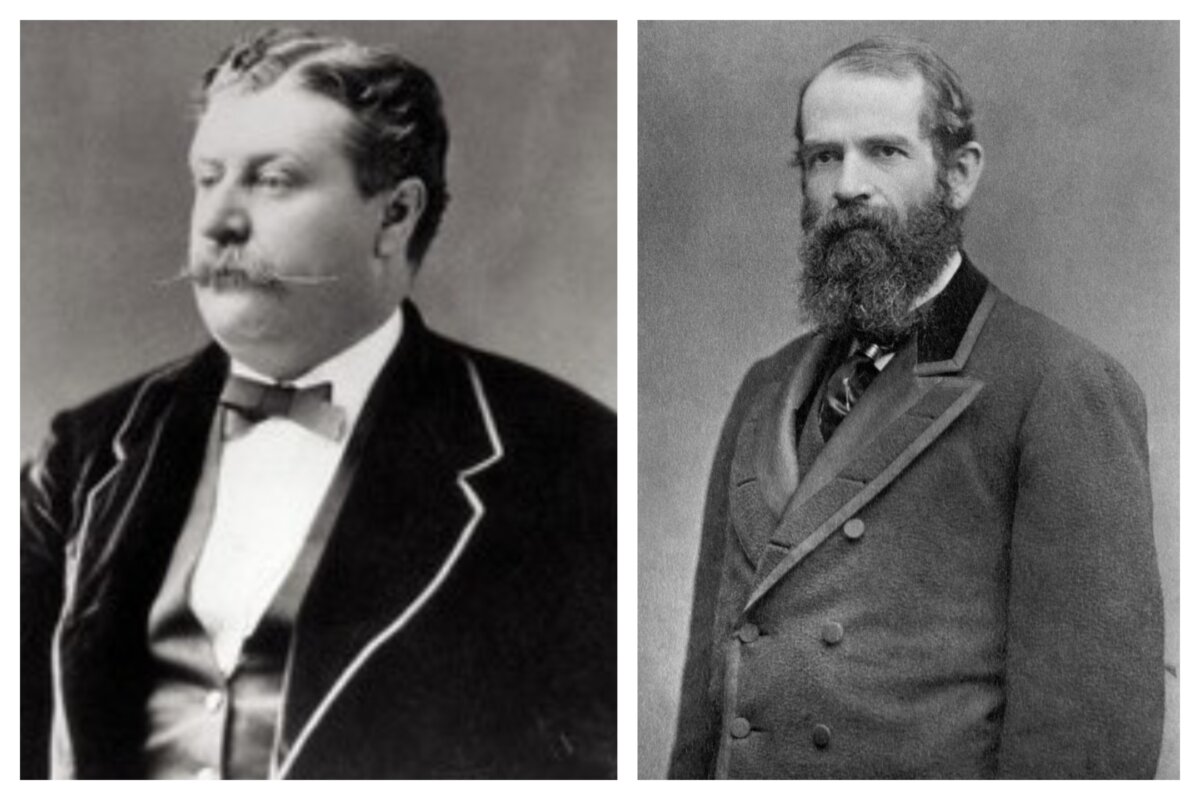
When Gould and Fisk heard that the federal government was selling its gold in order to retire the greenbacks, the two saw an opportunity to make a fortune by cornering the gold market. They came up with a scheme that, from an economic perspective, made sense. The plan was to convince the government to halt its selling of gold; raise the price of gold, which would lower the cost of crops, and therefore boost exports.
Of course, as major shareholders with the Erie Railroad, they would benefit from their “crop movement” theory. Now, the plan just needed to be presented to President Grant.
Assembling the Plan
When Abel Corbin, a banker, married Grant’s sister, Virginia, on May 13, 1869, Gould and Fisk saw their moment. The two brought Corbin into the scheme, and Corbin helped coordinate occasions for the two to encounter the president, and therefore present their ideas. Furthermore, Corbin convinced his brother-in-law, President Grant, to name Gen. Daniel Butterfield as assistant treasurer. Butterfield had agreed to keep tabs on any decisions regarding the government’s gold and to keep Gould and Fisk informed in return for kickbacks.
Although Grant told Gould and Fisk that he would never manipulate the gold market, and he never hinted at whether he considered their idea worthy of consideration, it appears the “crop movement” idea made sense to the president. Grant mentioned to Treasury Secretary George Boutwell about halting gold sales to benefit exports for farmers. From this suggestion, Boutwell decided to halt the sales. Butterfield informed Gould and Fisk.
Gould and Fisk had been slowly purchasing gold, but with Butterfield’s inside information, the two greatly accelerated their purchases. Their goal was to purchase a large percentage of the available gold on the U.S. market and then sell it back after the price surged. Gold prices, during the summer of 1869, had decreased, making the purchases relatively cheap. But as Gould and Fisk increased their rate of purchase, other financiers and traders followed suit, causing the price of gold to surge.
The Jig Is Up
For the robber barons, the scheme appeared to work perfectly—that is, until they showed their hand. Concerned that Secretary Boutwell might resume selling off government gold, which would bring the price of gold back down, Gould and Fisk told Corbin to write President Grant about keeping the price of gold high. Grant was immediately suspicious. He told his wife, first lady Julia Grant, to write his sister and inform Corbin that if he was involved in the scheme to back out of it immediately. Grant discussed the matter with Boutwell, and the two agreed to end Gould and Fisk’s scheme by flooding the gold market with $4 million worth of gold.
Gould, however, found himself in the right place at the right time. He visited the Corbin house on Sept. 22, 1869, the same day Grant’s warning letter arrived. Gould knew the scheme had been discovered, but with this particular insider information, he beat Fisk and the other investors and traders to the punch. Gould, in fact, offered to pay Corbin $100,000 to not sell his gold in order to stave off a panic. He, however, planned to sell his own.
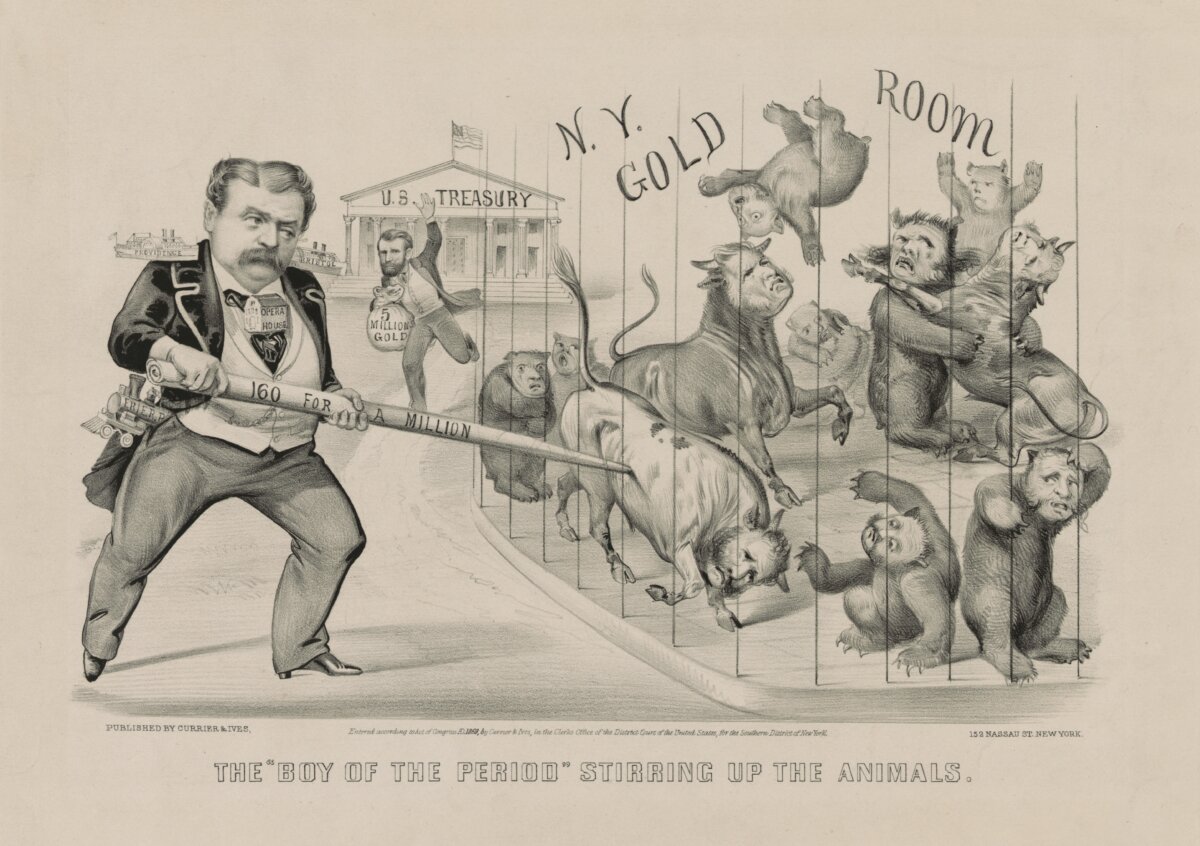
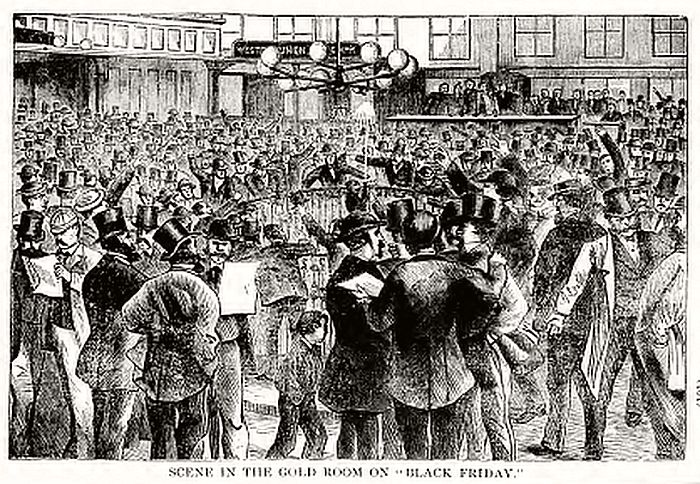
Fisk, unaware of Gould and Corbin’s information, continued buying gold and encouraging others to do so. It was during this week in history on the evening of Thursday, Sept. 23, 1869, that the Treasury Department was authorized to release $4 million worth of gold into the market. The decision led to what has become known as Black Friday.
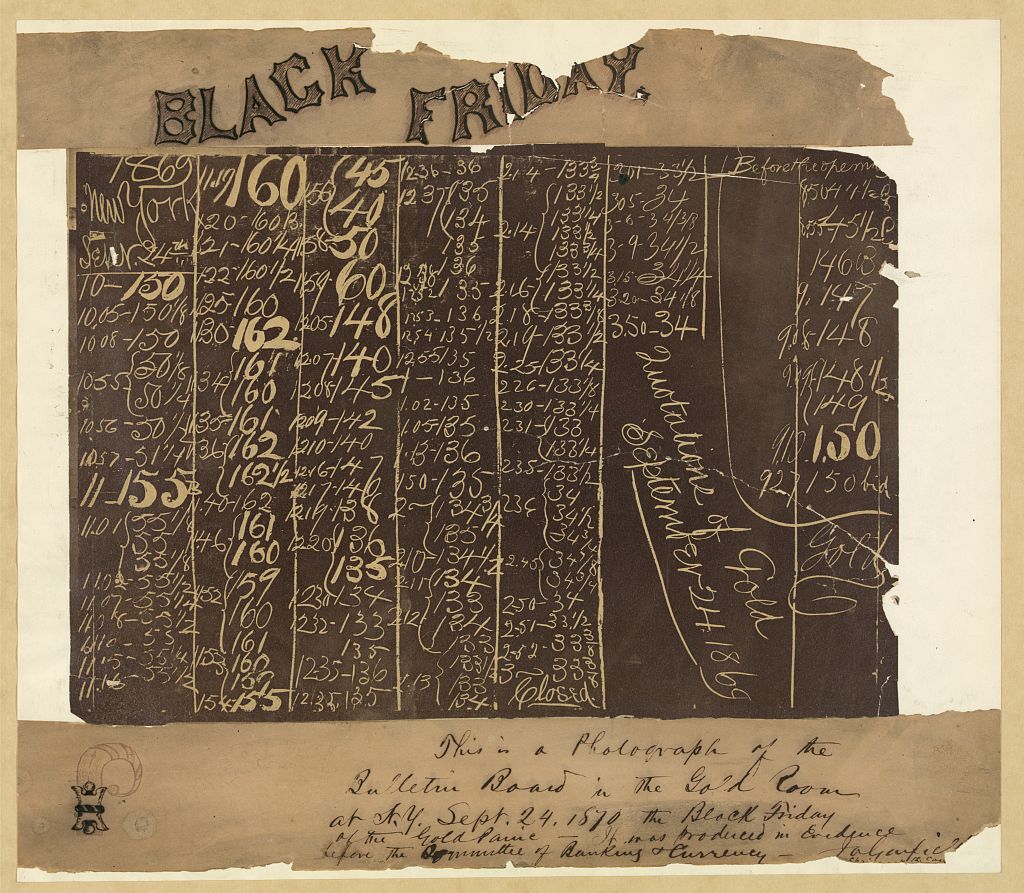
For about two hours the following day, the price of gold continued to rise from $143 to $162 an ounce. Fisk and others continued to buy, while Gould continued to sell—sneakily, as he had some of his brokers continue to make small purchases to give the illusion that he was still in on the scheme. Shortly after noon, the price of gold plummeted to $135, and its overall market value fell by approximately $100 million.
Many brokerage firms, as well as individual investors, some of whom had borrowed in order to get in on the ground floor of this gold speculation, were ruined. Gould, however, made a profit of $12 million (about $285 million today). Sept. 24, 1869, or Black Friday, set off the weeks-long Gold Panic of 1869. The panic halted foreign trade as the price of stocks fell by 20 percent, and, interestingly, considering Gould and Fisk’s “crop movement” idea, the price of grain was cut in half, harming the farmers they had suggested would be helped.
Unlike today, the unscrupulous scheme, with its governmental corruption and insider trading, actually broke no laws. For those involved, Butterfield was forced to resign as assistant secretary. Grant found himself the center of political scrutiny, though it apparently faded, as he won a second term in 1872. Fisk fared well despite losing money in the Gold Panic. A love triangle, however, led to his murder in 1872. Gould continued to be a dominant business figure in America, ultimately controlling the interests of the Union Pacific Railroad, the Manhattan Elevated Railroad, and the Western Union Telegraph Company.
Never miss a This Week in History story! Sign up for the American History newsletter here.
What arts and culture topics would you like us to cover? Please email ideas or feedback to features@epochtimes.nyc