SEARCH


Throughout the summer of 1877, a band of the Nez Perce tribe engaged in a 1,170-mile-long flight and running battle with forces of the U.S. Army. Driven from their homeland of the Wallowa Valley in northeastern Oregon Territory, and led by several chiefs, they fled across the Idaho Territory. Men, women, children, and horses crossed into Montana as they sought escape across the Canadian border. Exhausted and hungry, with their numbers diminished by pitched battles, they made a final stand in the Bear Paw Mountains. They were still in Montana—only 40 miles from Canada.
The American public followed this exodus through the newspapers of the day. Readers reacted differently to this war between U.S. troopers and Indians than to other conflicts fought in the Great Plains over the previous 40 years. Many Americans, including members of Congress and the soldiers engaged in these battles, came to admire the Nez Perce for their endurance, bravery, and humanity.
One man among them captured the American imagination.
The Making of a Leader
In-Mut-Too-Yah-Lat-Tat was born in 1840 in northeastern Oregon, the son of a chief of the Wallowa band. He was appropriately named. His name translates as “Thunder Rolling in the Mountains.” Approximately 37 years later, he would bring thunder from the mountains to the troops in pursuit of him and his people.
After Thunder Rolling’s father was christened “Joseph” by a visiting missionary, the boy became known as Young Joseph (1840–1904). From the time of Young Joseph’s adolescence, settlers poured into the land, and his family and others of the Nez Perce tribe found themselves increasingly cut off from their old ways of hunting and gathering.
From 1855 on, the U.S. government made territorial promises to the Wallowa that proved unenforceable. Determined to maintain tribal customs, the elder Joseph was dead set against these incursions. While on his deathbed in 1871, he told his son: “When you go into council with the white man, always remember your country. Do not give it away.”
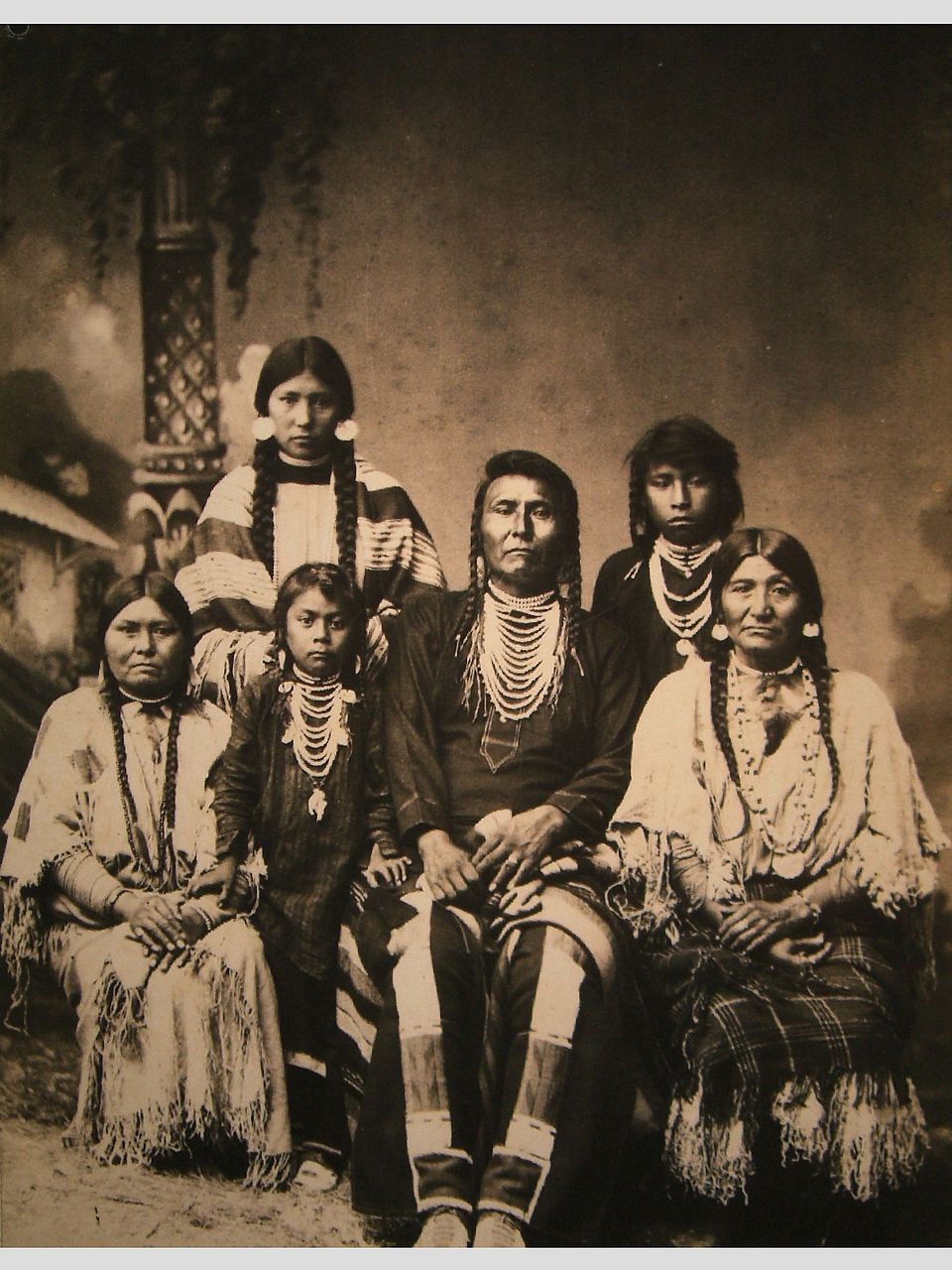 Chief Joseph poses with his family in an 1880 photograph by F.M. Sargent. (Public Domain)
From his early years, young Thunder Rolling had attended councils and meetings with his father, both with representatives of the United States and with other Nez Perce bands. There he watched, listened, and absorbed the fine arts of negotiation and trust.
War Clouds
Though tall, strong, and well-proportioned, Joseph was neither an outstanding warrior nor a renowned hunter. Other Nez Perce leaders would direct the fighting and develop the tactics that American soldiers came to admire. Jim Kershner of Historylink wrote that Joseph “was valued more for his counsel and his strength of purpose, and his commitment to the old ways on the band’s ancestral lands.”
When the Nez Perce tribe split between those willing to accept a treaty with the government and those unwilling, Joseph gained prominence as a man who refused to give up tribal ways and lands. Later, he successfully negotiated a treaty permitting him and his people to remain on their land.
In May of 1877, however, backed by the government, Gen. Oliver Howard met Joseph and other chiefs and ordered them to pack their belongings and move to an Idaho reservation. They had a month to leave, and Howard threatened force if they failed to meet that deadline.
With tensions growing, Joseph prepared the Nez Perce to leave and seek new lands elsewhere. The Nez Perce attempted to find shelter and escape with several other tribes, but that didn’t work out well. It was then that they turned to Canada. But before this plan could be implemented, fighting broke out. Avoiding war with the United States was no longer possible.
 A 2013 photograph memorializes the peaceful Wallowa Mountains and Wallowa Lake at the Nez Perce Traditional Site. (Visitor7/ CC BY-SA 3.0)
Mercies Along the Way
In June, Joseph put his plans into action to lead his people to a new land. Some 800 Nez Perce set out on this exodus. Through the summer and into the early fall, they walked or rode their horses for miles every day, fending off attacks by the Army.
Of the 800 number, no more than 300 were warriors; the rest were women, children, and the elderly. Looking Glass, one of the chieftains, directed the warriors in the fighting while Joseph took charge of the care and protection of the rest.
It was during this trek that Joseph and his followers became known not only for their skillful battle tactics, but also for their treatment of those they encountered along the way. Rather than conduct bloody raids on homes and towns for supplies, they bartered for whatever goods they could obtain.
However, when they entered the borders of the recently founded Yellowstone National Park, several young Nez Perce killed two tourists. Joseph and some older men intervened, preventing further deaths and making sure that the female tourists were not “insulted.”
Prisoners taken temporarily into custody that day were treated with care and respect, and Joseph’s tender approach to women and children, both those in his band and those they chanced across on their march, became well-known.
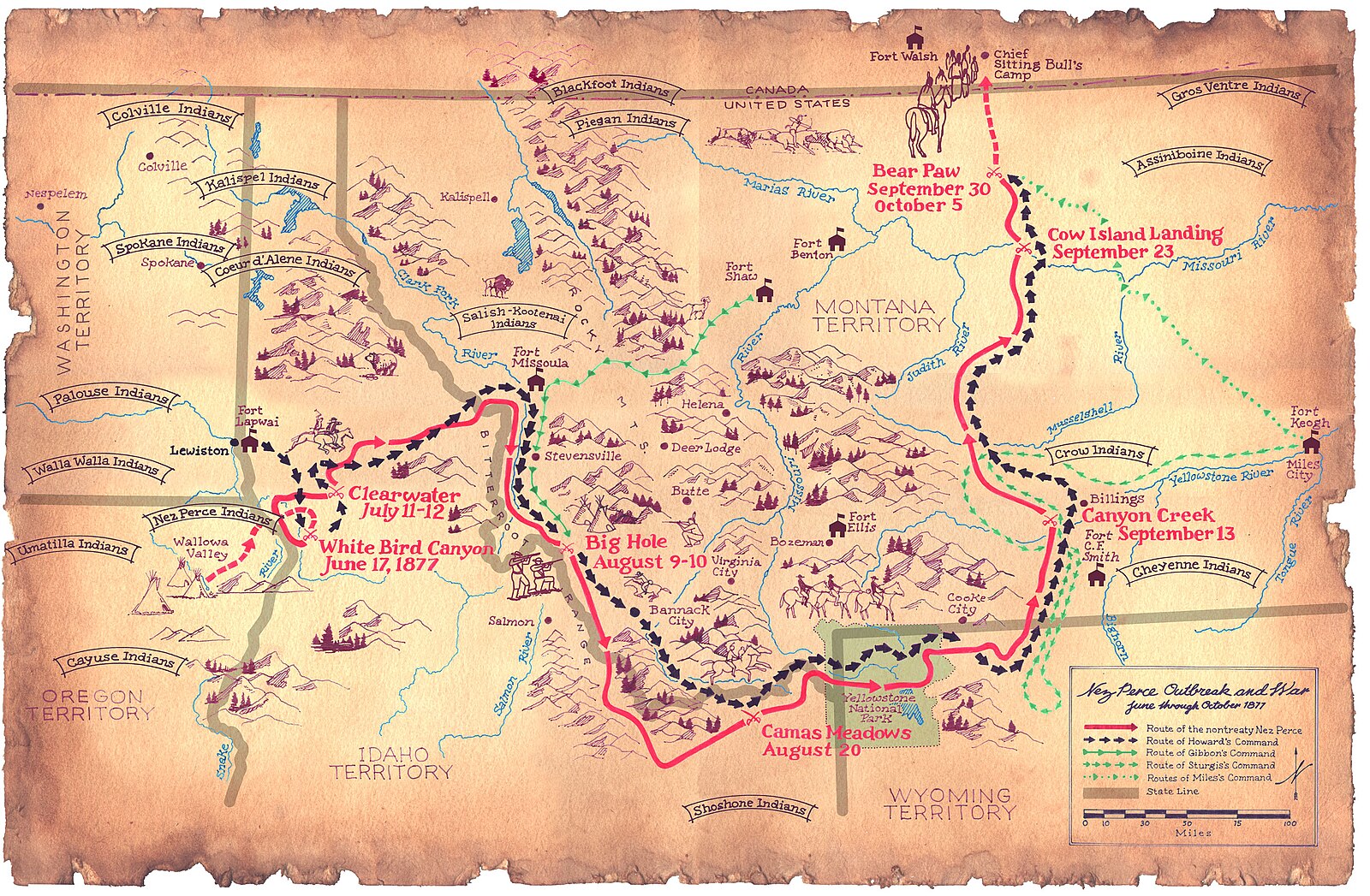 A map of the path taken by both Joseph’s Nez Perce tribe and opposing U.S. forces in 1877. (Public Domain)
An Advocate to the End
After a fierce fight at Bear Paw, on October 5, 1877, Chief Joseph surrendered what was left of his band. Some had escaped to Canada, some had died in the recent battle, many were sick, and all were exhausted and cold. It was then that he delivered what became an iconic American speech, though some scholars question the accuracy of translation into English:
“It is cold and we have no blankets. The little children are freezing to death. My people, some of them, have run away to the hills and have no blankets, no food; no one knows where they are—perhaps freezing to death. I want to have time to look for my children and see how many I can find. Maybe I shall find them among the dead. Hear me my chiefs. I am tired; my heart is sick and sad. From where the sun now stands I will fight no more forever.”
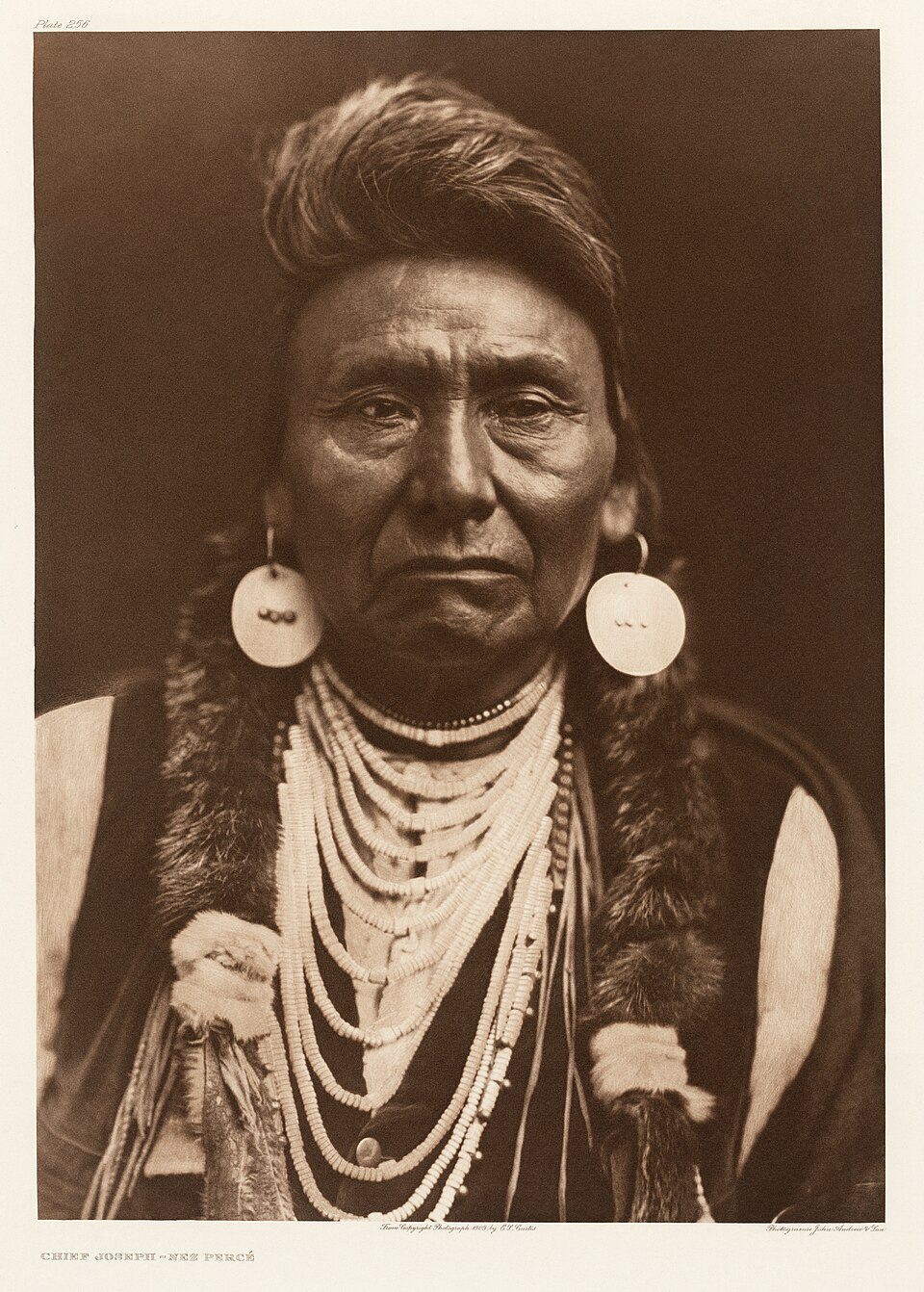 A 1903 photograph of Nez Perce Chief Joseph by Edward Sheriff Curtis. The long-suffering Chief Joseph may not have achieved his goal of returning the Nez Perce people to their ancestral land, but he maintained his integrity and honesty despite repeated betrayal. (Public Domain)
Yet Joseph did continue to fight, with words rather than with bullets. Buoyed by his reputation, he tried again and again to get back the tribal lands for his people, but in spite of the admiration felt for him—one paper reported that “a more noble captive has never graced our land”—he failed to achieve his objective.
Today Joseph is remembered for his moral courage and his attempts, whether in war or in peace, to do the right thing and to seek the welfare of his people.
What arts and culture topics would you like us to cover? Please email ideas or feedback to features@epochtimes.nyc