SEARCH


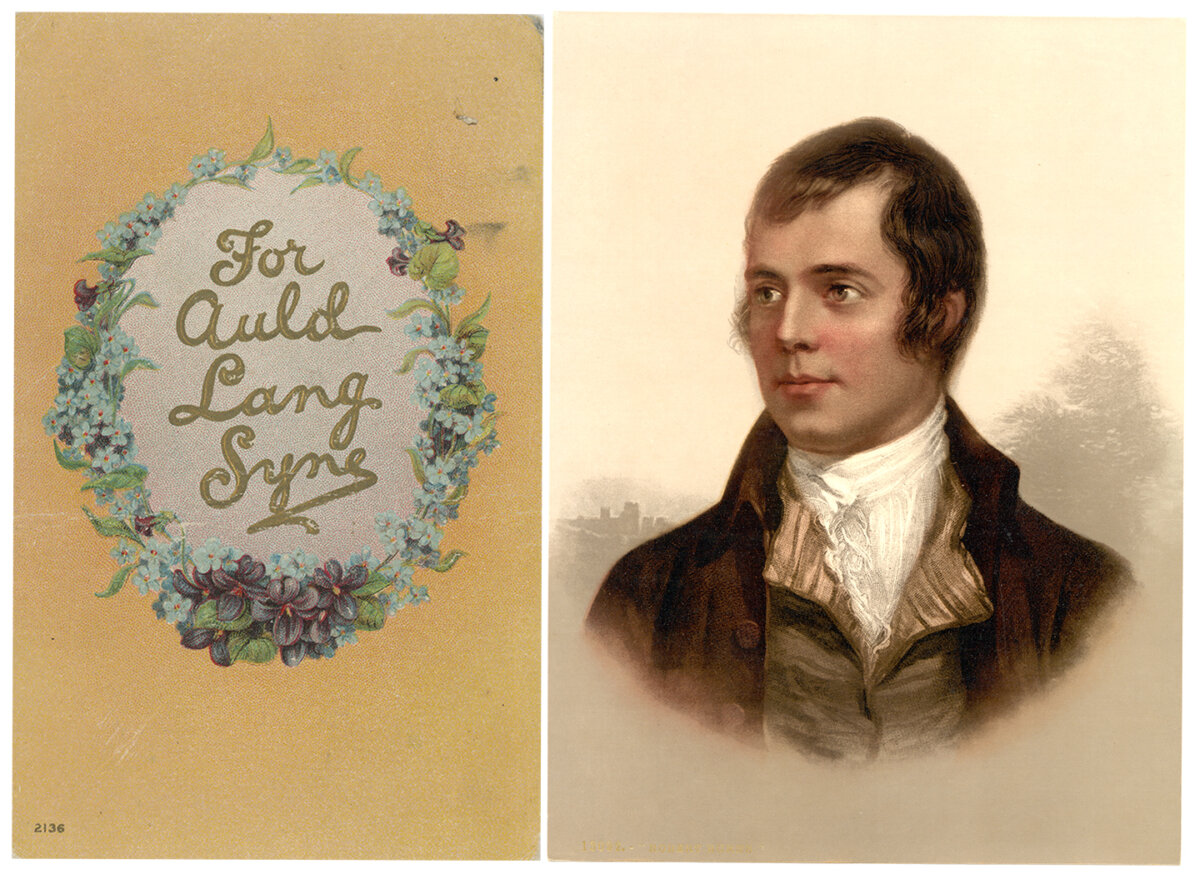
For auld lang syne, my dear
For auld lang syne
We’ll drink a cup of kindness yet
For the sake of auld lang syne
Each holiday season, people around the world sing the words to the famous Scottish folk song, “Auld Lang Syne,” as they celebrate the arrival of a new year. Its last verse, listed above, encourages fond remembrance of the past and joy for the future.
The singing of the sentimental “Auld Lang Syne” is America’s perennial New Year’s Eve musical tradition. But its creation traces back to Scotland, where a renowned 18th-century poet first penned the verses.
For ‘Old Time’s Sake’

The song’s three-word title, “Auld Lang Syne,” can be translated to English as “old,” “long,” and “since.” Over the two centuries since the song was first officially published, its title has been translated to mean, “old time’s sake,” “time gone by,” and even, “once upon a time.”
The first line of the song, “Should old acquaintance be forgot,” has been used different times throughout history in Scottish works. One of the earliest accounts of the phrase is found in a private notebook of a nobleman from the 1660s. The line is part of a ballad revolving around a lover’s quarrel.
Another mention of the famous line comes from lyrics written by poet Allan Ramsay in 1724 for a song titled “Auld Lang Syne.” Ramsay greatly influenced fellow Scotsman Robert Burns (1759–1796), an aspiring poet born just a year after Ramsay died. Now considered the national poet of Scotland, Burns became one of the world’s most significant 18th-century writers.
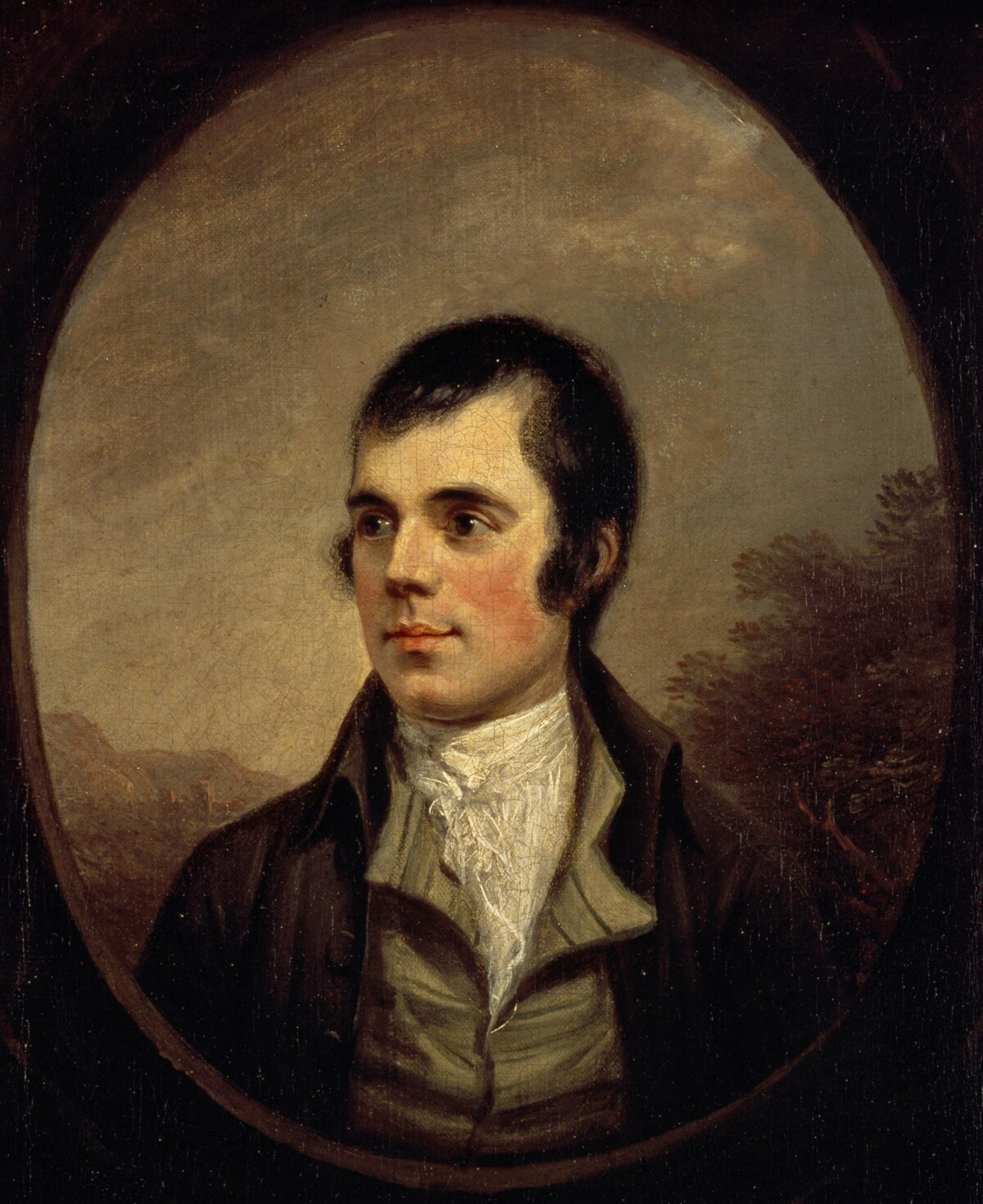
During the 1700s, it was common for poets to take the melodies of popular folk songs and pair them with lines from their poetry. Since Burns was influenced by Ramsay’s work, his first sparks of inspiration for his own “Auld Lang Syne” stemmed from his predecessor’s song.
The timing of old Scottish songs worked well with the metrical poetry of his time period. This penchant for pairing poetry with music set Burns on a course to create one of America’s most beloved holiday songs.
Like today’s “Auld Lang Syne,” Ramsay’s song features the first line, “Should auld acquaintance be forgot.” His lyrics are in keeping with the sentimental theme that runs through our modern version:
Since your return, the sun and moon
With brighter beams do shine,
Streams murmur soft notes while they run,
As they did lang syne.
Preserving Traditional Scottish Music
Burns’s work focused on preserving the history of Scotland’s traditional folk music. He often looked through old manuscripts. Sometimes he even traveled the Scottish countryside looking for music to add to his growing collection. A book published in the 1760s, “Collection of Scots Reels or Country Dances” by Robert Bremner, was one of his favorite sources to turn to for inspiration.
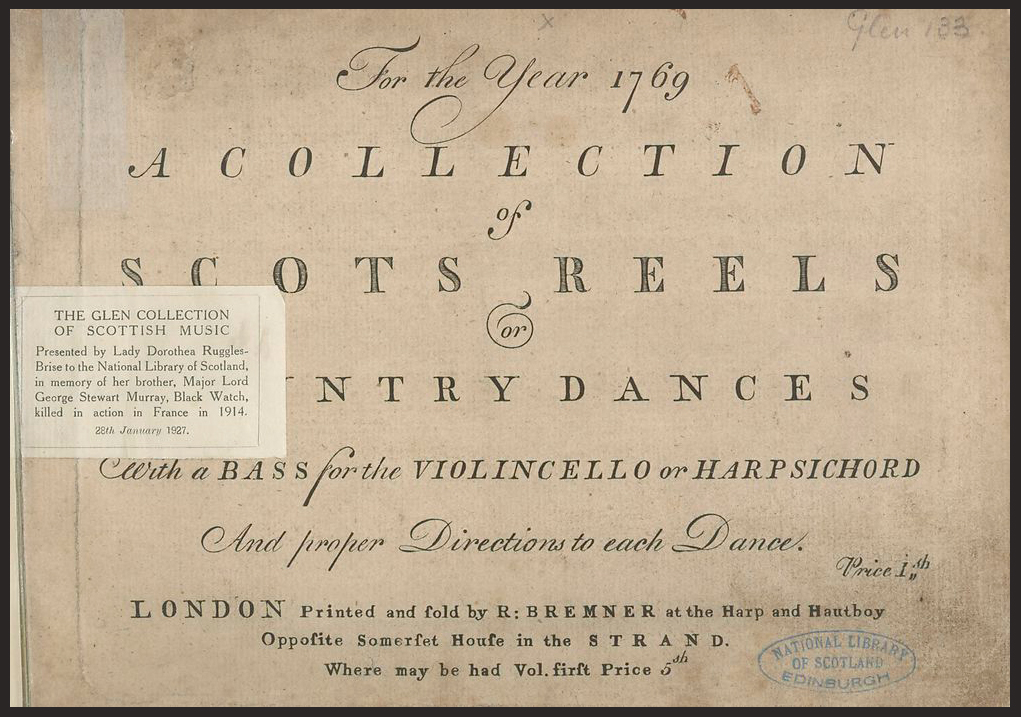
“The Miller’s Wedding” is a song featured in the book. It’s named after a popular, old-time Scottish dance. The melody contains an early form of what would become the melody to Burns’ “Auld Lang Syne.” Other musicians used the popular “The Miller’s Wedding” dance melody for their works as well. It was loosely featured in William Shield’s 1782 opera, “Rosina.” Before it was discovered that Burns spearheaded the creation of “Auld Lang Syne,” some scholars speculated that Shield wrote it.
One of Burns’s biggest undertakings was a definitive historical collection of Scottish music known as “The Scots Musical Museum.” He published the collection with the help of his friend James Johnson, a fellow author who was also a music seller and publisher.
In 1792, verses by Burns titled “O Can Ye Labor Lea, Young Man” were published in “The Scots Musical Museum,” with a melody set to an unnamed traditional Scottish dance song. The melody mirrors that of today’s “Auld Lang Syne.” In 1796, the words to Burns’ “Auld Lang Syne” were published in the fifth volume of “The Scots Musical Museum,” but they were set to a different melody entirely than the one we associate with the song today.
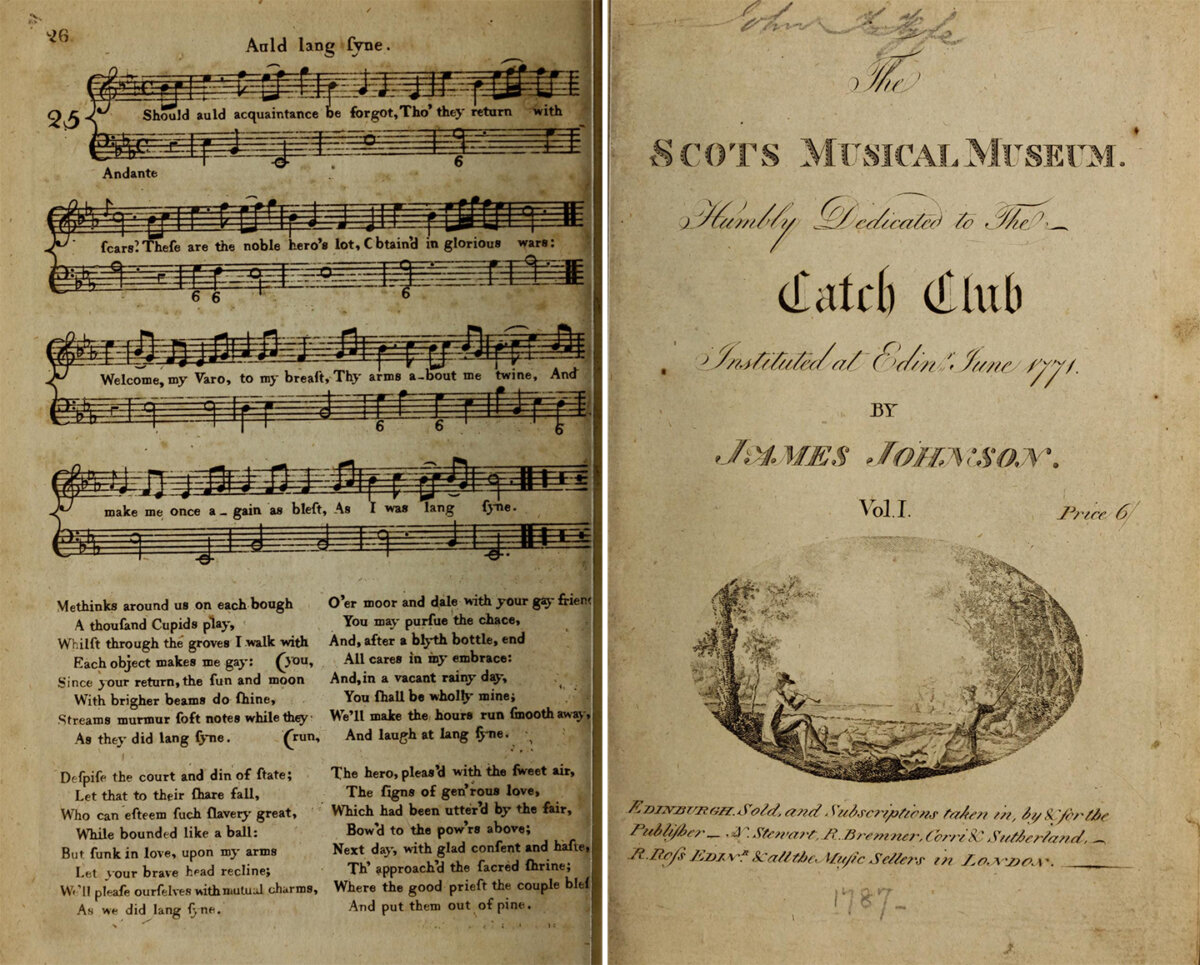
Though Burns wrote the words to “Auld Lang Syne” in 1787, its final form, with lyrics and melody combined, wouldn’t be published until 1799, three years after Burns passed away.
‘The Old Song of the Olden Times’
In 1793, Burns wrote to editor George Thomson (1757–1851) regarding a music anthology they were working on together. It was in this letter that Burns made his first direct mention of the song. The letter was 20 pages long and filled with Burns’s notes on the songs they were including in the anthology. “Auld Lang Syne” was the final one he listed.
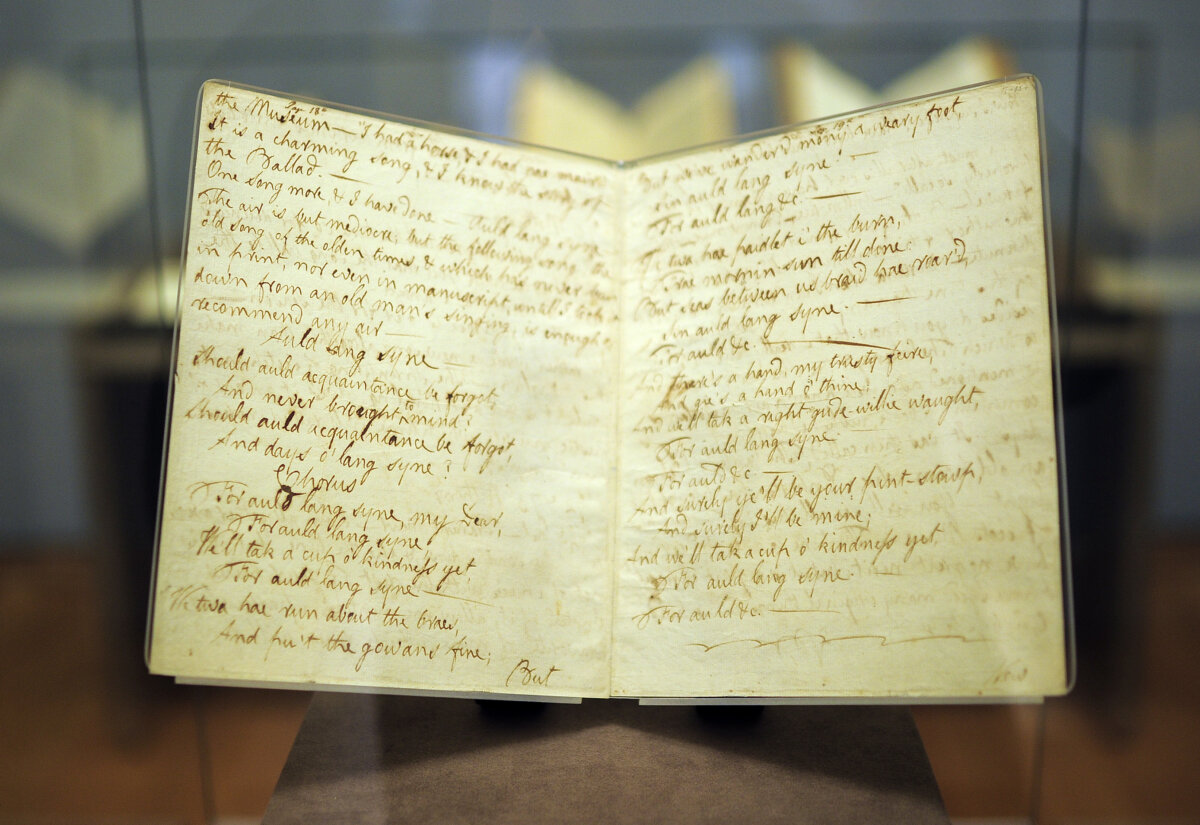
In his letter, Burns told Thomson that he wrote down the words to the tune while listening to an old man sing its melody. However, this claim would later come into question. Burns also called the melody, or the “air,” paired with the song “mediocre”:
“One Song more, & I have done. Auld lang syne—The air is but mediocre; but the following song, the old Song of the olden times, & which has never been in print, nor even in manuscript, untill I took it down from an old man’s singing; is enough to recommend any air.”
The word “air” is derived from the Italian musical term “aria.” “Aria” means a song that is performed as a solo by a singer who is usually accompanied by an orchestra. “Air” is used to describe an interchangeable melody often associated with traditional folk music.
When Thomson included “Auld Lang Syne” in their anthology in 1799, he switched out the melody included in Burns’s letter for another common Scottish folk melody. That melody is the one we sing today.
Humor and Mystery
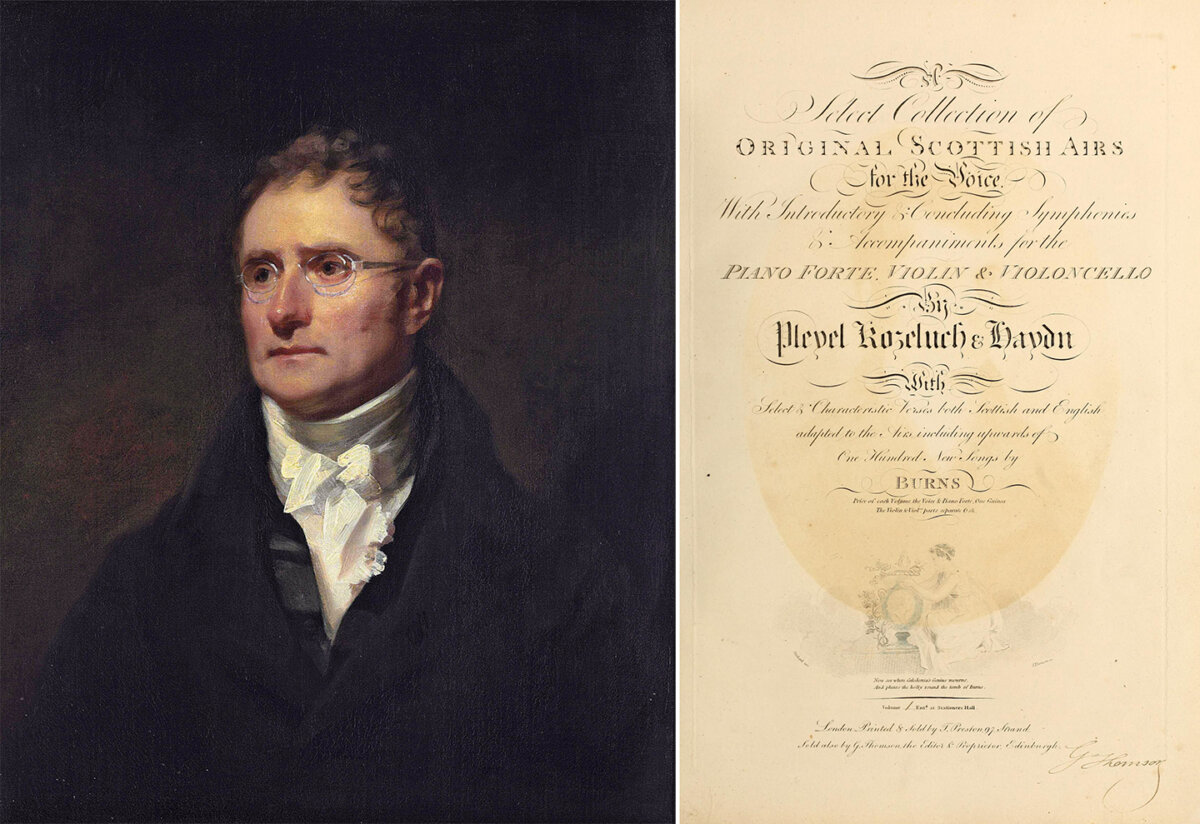
The version of “Auld Lang Syne” we sing each year was first published by Thomson in 1799 in the anthology he collected with Burns, “A Select Collection of Original Scottish Airs for the Voice.” In 1817, Thomson published another edition of the anthology. This version included the melody to “Auld Lang Syne” set to piano by Czech composer Leopold Kozeluch.
Throughout Burns’s life, he often liked to work without much fanfare. This meant he sometimes downplayed his role in many of the music collections he heavily contributed to. In the 1817 printing, Thomson addressed this tendency and called into question Burns’s claim that he transcribed “Auld Lang Syne” as an old man sang it. For Thomson, he thought Burns’s comment about the song’s origin story might have been made in jest:
“It seems not improbable … that he said this merely in a playful humour; for the Editor cannot help thinking that the Song affords evidence of our Bard himself being the author.”
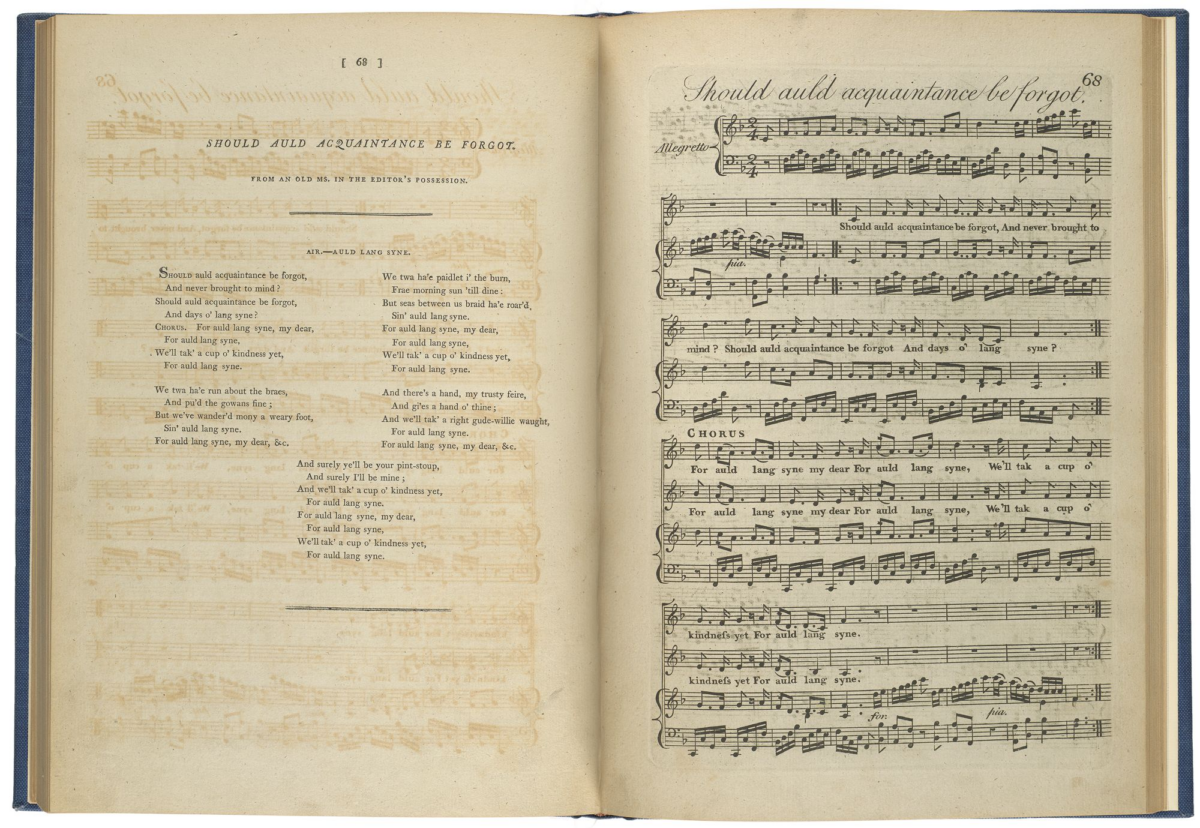
Today, the song’s official writer is listed as Robert Burns. The Morgan Library & Museum, which houses a collection featuring manuscripts and historical documents relating to the origin of the composition, stated:
“When Burns turned his attention to “Auld Lang Syne,” he claimed merely to have transcribed the words from “an old man’s singing.” But from the time his version of the song was first printed … it has been understood that Burns lent more than a trace of his distinctive artistry to the now-famous verses.”
Today, millions sing along to the folksy song as they celebrate the final days of the holiday season. It remains the pinnacle of New Year’s Eve musical tradition, when families look back fondly on years past and greet the new year with joyful anticipation and excitement for the possibilities to come.