SEARCH


It is the most important collection of Chinese porcelain ever assembled, with the collection pieced together over 50 years and made up of works from the 14th to 18th centuries.
“The epitome of quality and rarity, The Meiyintang Collection was acquired piece by historic piece over the course of half a century. Discerning and disciplined, the collector sought only the most significant objects from each reign and worked closely with the foremost experts in the field, leading dealers E.T. Chow and Giuseppe Eskenazi,” said Nicolas Chow, Sotheby’s deputy chairman, Asia, and international head of Sotheby’s Chinese Ceramics and Works of Art in a press release.
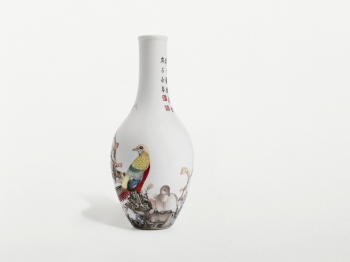
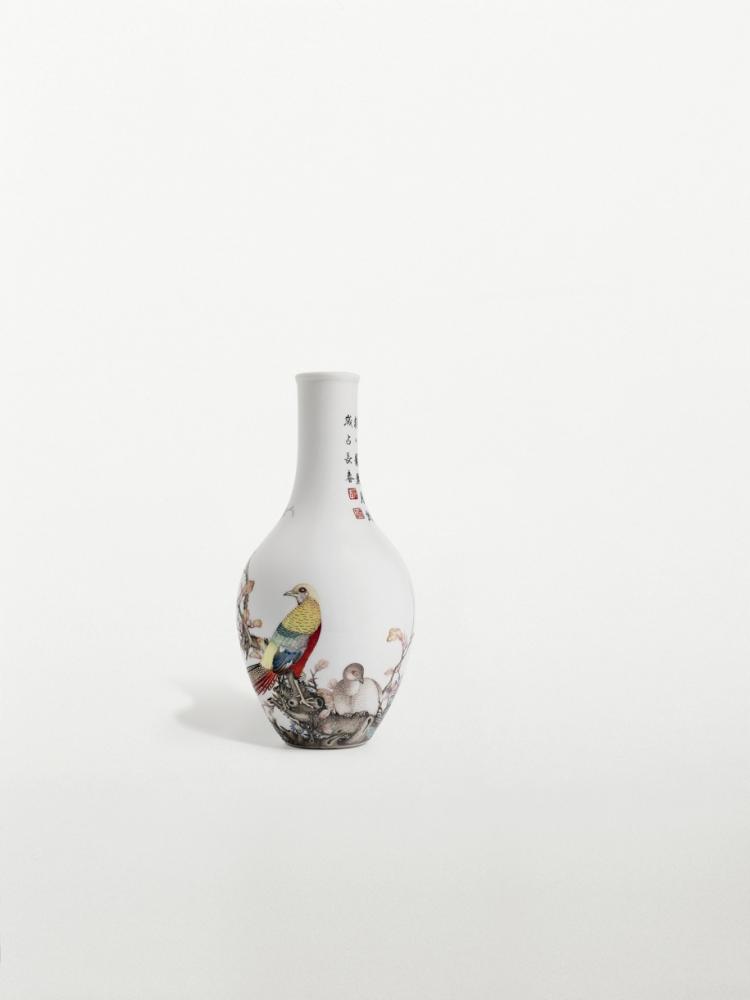
The highlight of the sale is a Falangcai (“foreign color”) vase with golden pheasants from the Qing dynasty, A.D. 1736–1795, which is likely to reach or exceed the staggering price of US$24 million.
The evening sale is during Sotheby’s Spring Sale Series in Hong Kong, and will have around 80 lots with estimated total takings to reach between US$81 million and $121 million.
Descriptions From Sotheby’s
The following are descriptions of highlights from Sotheby’s catalog.
Falangcai vase with golden pheasants from the Qing Dynasty, 1736–1795, estimated at US$23 million: In its sensitive handling of the nature scene, the outstanding brushwork and the wide range and delicacy of the enamel colors, this bottle displays one of the finest paintings ever achieved on porcelain. This vase is unique and works of art such as this are rare even in the former palace collections now in Beijing and Taipei.
Blue-and-white vase with a dragon from Jiangxi Province, Yuan Dynasty, early to mid–14th century, estimated price US$1 million to $1.5 million: This vase belongs to the earliest pieces of blue-and-white from Jingdezhen, China’s foremost producer of fine porcelain from the 14th century until today. It comes from two famous English collections formed in the first half of the 20th century, that of Charles E. Russell and Mrs. Alfred Clark.
Turquoise gourd vase with Buddhist emblems, from Jiangxi Province, Ming Dynasty, 1522–1566, estimated at US$1.3 million to $1.9 million: Gourd shapes, with their Daoist connotation—as attributes of immortals and receptacles of elixirs of long life—were particularly popular during the Jiajing reign because of the strong Daoist beliefs of the emperor. Although the imperial kilns experimented with a wide range of colors at the time, turquoise features very rarely on imperial porcelain.
Source: Sotheby’s