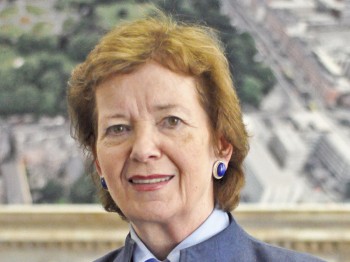

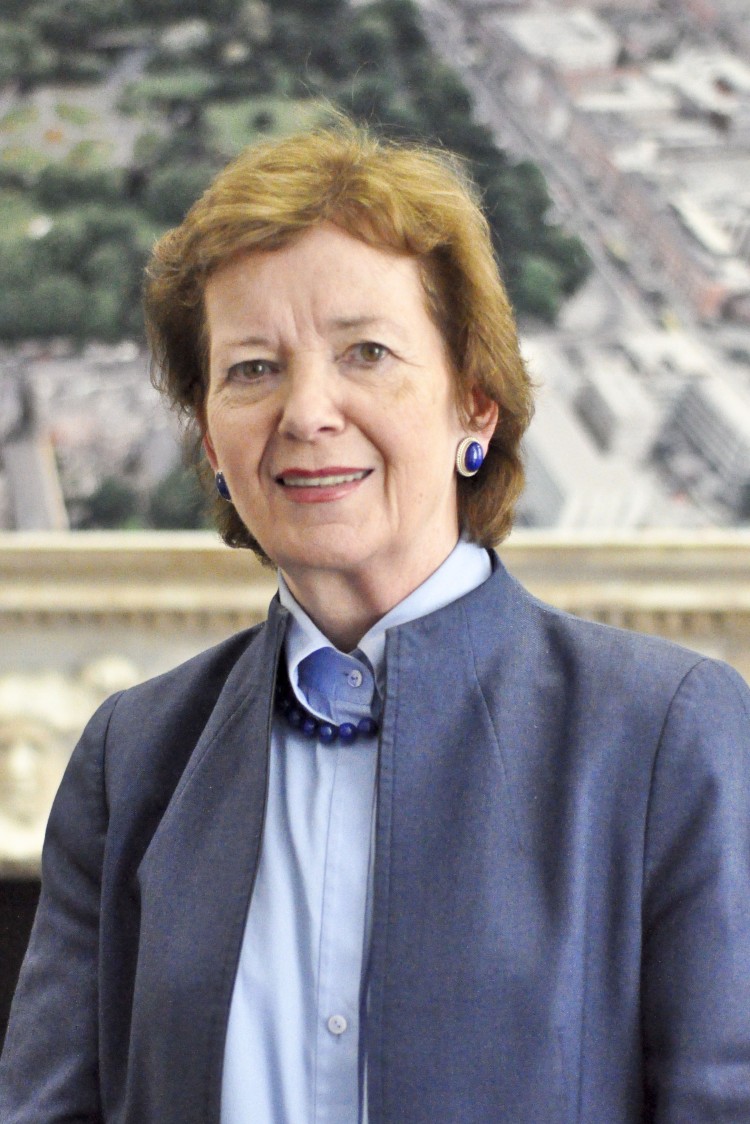
Ireland, through its greatest asset, its people, has also touched many countries in the developing world through humanitarian efforts. The Epoch Times recently had the opportunity to speak with one of Ireland’s greatest ambassadors, Mrs Mary Robinson, who spoke about her latest efforts to address the inequalities of climate change through the Mary Robinson Foundation for Climate Justice (MRFCJ).
The MRFCJ has been working on a business plan that will carry them forward in the coming years. The main area that they focused on initially was women’s leadership, leading up to the climate change conference in Cancun, Mexico last year. The foundation was established formally in February of last year and launched in September, with Mrs Robinson coming on board full time in January 2011. The MRFCJ has received a leadership grant from The Rockefeller Foundation to enable change regarding women’s leadership on climate, and in particular on the gender dimensions of climate change.
Commenting on the change of focus from human rights to climate change, Mrs Robinson said that it was a “natural progression”. When she was serving in the United Nations (UN) as High Commissioner, Mrs Robinson said she was trying to encourage a better balance between civil and political rights, and on the other side the international human rights agenda. “When I finished that term as High Commissioner in September 2002, I established “Realising Rights”, the ethical globalisation initiative, where we said that we wanted to take the promise that was made in the millennium assembly, that globalisation must serve all the world's peoples.”
While working and travelling with the 'Realising Rights' initiative, Mrs Robinson came to realise that the language had changed with respect to human rights, and what people were now talking about was climate change, and how it was impacting their lives.
“I decided for that reason that when I returned to Ireland, which I was planning to do at the end of 2010, that I would have a foundation that would focus on linking human rights development and climate, and we decided that the term ‘climate justice’ brings that home because the undermining of the poor is caused by our lifestyle.”
Mrs Robinson decided on a foundation model because she was aware that the Realising Rights organisation was an initiative that was for a fixed time, whereas now she wanted something that could “carry on indefinitely, that was independent”, and the charitable foundation structure seemed to fit best.
Mrs Robinson said she was delighted at the agreement that the charitable foundation would be part of the alliance of innovation between Trinity College Dublin (TCD) and University College Dublin (UCD). “We have that kind of framing of being linked to two of the key universities in their research, but we have already signalled that we are open source to all third level institutions on this island.”
“To have that organic link with two universities is helping us to signal that we will stay very small, we will be a lean, mean, charitable foundation,” said Mrs Robinson smiling, and added that the MRFCJ would try to add value and act as a catalyst. It would also focus on new ways of leadership and, in particular, promote the concept of climate justice.
This link with the universities is very important, said Mrs Robinson, because both were asked to give a certain leadership in the masters courses in development practice. Trinity and UCD are two of twenty five universities across the globe that are developing masters courses in development practice. With support from MRFCJ, both have been developing a module within their framework on climate justice, which has attracted a lot of interest from other universities.
“The reason why it is a good university module is because it brings the sciences, the humanities, lawyers, philosophers together, it is a very holistic subject and it is probably better not to see it as an entirely new subject but rather link existing courses around concepts of climate justice.”
Continued on the next page…