
NEW YORK—The public comment period on the fate of a controversial gas line expansion is winding down, ending Oct. 31. The Federal Energy Regulatory Commission (FERC) will review the public feedback and issue their final Environmental Impact Statement (EIS) by January 2012, determining if a permit for the project will be approved.
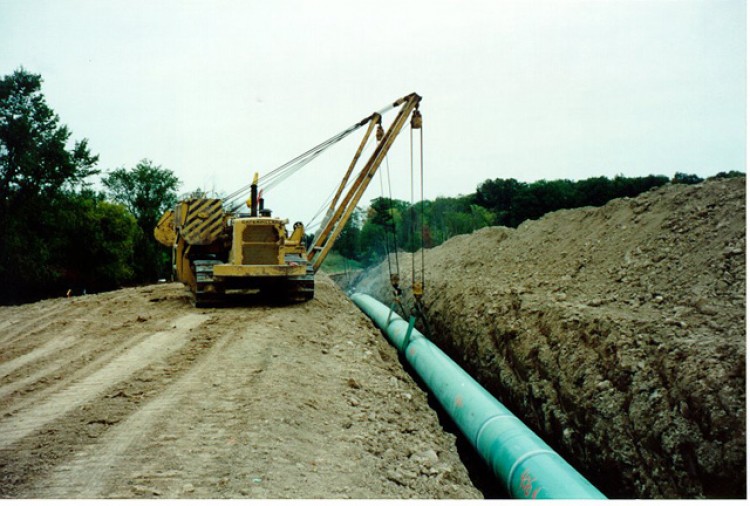
Texas Eastern, a subsidiary of Spectra Energy, applied for the permit to construct 19.8 miles of new and replacement pipeline from New Jersey through Staten Island and into Manhattan back in December 2010. The gas company claims the line would benefit New Yorkers by bringing an additional source of energy, though some opponents assert the risks don’t justify the benefits.
At a public comment session before FERC officials on Staten Island on Monday, residents expressed concerns they felt were not addressed in the draft EIS released in September.
Paul Saryian, former NYPD captain, cited the 1994 explosion of a gas line in Edison, N.J. The National Transportation Safety Board ruled that Texas Eastern failed to properly monitor the line. Other causes included an excess of operating pressure and a gouge in the pipeline.
The impression left by this disaster remains vivid in Saryian's memory, as his friend, Henry, was one of the first residents in the area to be rescued. Saryian cited 100 people lost their homes, 1 person died, and 15,000 emergency phone calls were made to 911 within 15 minutes.
Saryian also recalled the gas line explosion in San Bruno, Calif., that killed eight people in September 2010.
“Here's my first question you can't answer,” said Saryian. “How can you guarantee this won't happen again in Staten Island?” He is skeptical that one shut-off valve in the center of the pipe, as the proposal indicates, is enough.
FERC representatives were not there to answer questions, only to listen to comments, and FERC spokeswoman Tamara Young-Allen later said in a phone interview that such questions will be addressed as FERC reviews public comments to inform its final EIS.
A few residents brought up the controversial issue of hydraulic fracturing, or hydrofracking, but Young-Allen maintained that it is absolutely unrelated to the pipeline.
“We will not need a pipeline if we do not have hydrofracking,” said Susan Chew, founder of New Yorkers for Clean Water. Young-Allen said Texas Eastern's desire to expand the line is unrelated to an expectation of higher natural gas yields should hydrofracking proceed in the state.
Beryl Thurman, president of Staten Island's North Shore Waterfront Conservancy (NSWC), listed demands in the name of the Staten Island environmental justice community. If Texas Eastern gets its permit, she wants to see the gas company financially support environmental justice groups in the region to provide independent oversight. She suggested four full salaried employees at market value for every environmental justice group in the area at Texas Eastern’s expense.
“This community has been overwrought with environmental projects that have not always been in the interest of residents,” said Staten Island Councilwoman Debbie Rose, who attended the meeting to hear the concerns of her constituents.
She has met with Texas Eastern representatives, who she says naturally showed the project “in the best light.” She will schedule a meeting with them again in the near future with a better idea of what potential problems to discuss.
A construction worker was the only resident who came to express his support rather than concern. He says laying the pipeline will create jobs, but Saryian was skeptical.
"How does the economic impact improve if developers shun this area?" asked Saryian.