
The Treasury Department is targeting the alleged middlemen the Iranian regime used to sell its oil.
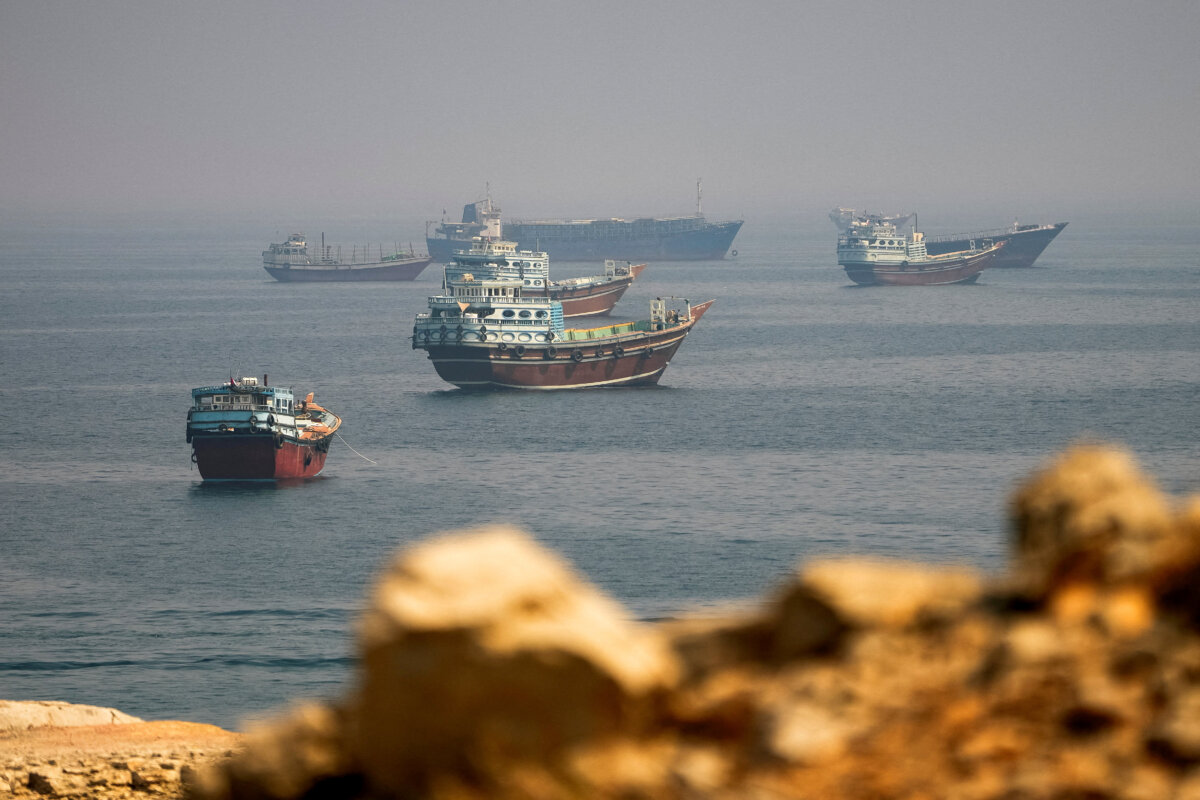
The department shared a list of the regime’s alleged “oil trustees” on Friday, alleging that Iran relies on them to facilitate oil sales in other countries while a U.S. naval blockade tried to limit Tehran’s oil exports.
The Nov. 20 press release listed the sanctioned individuals as Mohammad Javad Bavand, Majid Taj, Mohammadhossein Servati, and Mojtaba Arabnejad.
Bavand, a former Islamic Revolutionary Guard Corps (IRGC) intelligence officer, and Taj, the brother of the Iranian Football Federation’s president, are being targeted under the petroleum-sector order. Both are believed to be part of a group of insiders trying to recoup Iran’s oil funds in other countries.
Servati is accused of supporting a military front company that sold Iranian oil. Arabnejad was called out for allegedly overseeing oil sales that helped fund Mahan Air, an Iranian airline.
The United States suspected that some of the trustees were corrupt and pocketed the oil revenue.
“Iran’s tyrannical regime never fails to put its own interests before those of its own citizens, even as ordinary Iranians face shortages of bread and fuel,” Treasury Secretary Scott Bessent said. “The regime has exhausted its seaborne oil supply, and it may never see the revenue from the oil it has already sold. The ship is sinking.”
The department says the latest crackdown efforts are part of Operation Economic Outcast, which began in August. The operation aims to cut the economic lifeline that sustains the regime.
“The designations imposed today are being taken pursuant to Executive Order (E.O.) 13902, which targets the Iranian petroleum, petrochemical, and aviation sectors, among other key sectors of the Iranian economy, and E.O. 13224, as amended, a counterterrorism authority,” a press release from the department read.
Iran has not loaded oil onto vessels since the operation started.
The Treasury has warned that bad actors involved in facilitating money laundering or sanctions evasion to help Iran will risk being cut off from the U.S. financial system.
The U.S. blockade of Iran has turned around 147 vessels and disabled five merchant ships that refused to comply since July.
On Nov. 11, U.S. Central Command said it was also working around the clock to keep the Strait of Hormuz open for commercial shipping, enforce the naval blockade against Iran, and to prevent the IRGC from using land routes and the Caspian Sea to move advanced weapons systems, dual-use tech, sanctioned materials, and illegal revenue streams.
The Iran conflict, which started in late February when the United States and Israel launched strikes against the Iranian regime, and the Strait of Hormuz disruption have caused the biggest oil and gas supply shock in history, cutting off about 2.8 billion barrels of oil so far in 2026, according to a new analysis by the International Energy Agency.
On Nov. 19, the Senate voted 48–51 against a war powers resolution that would have directed President Donald Trump to end U.S. military action against Iran.
The president acknowledged that higher fuel prices caused by the war contributed to Republicans losing the U.S. Senate and House in the midterm election. Meanwhile, he has defended his decision to attack Iran, saying the terrorism-backing regime had to be stopped from having a nuclear weapon.