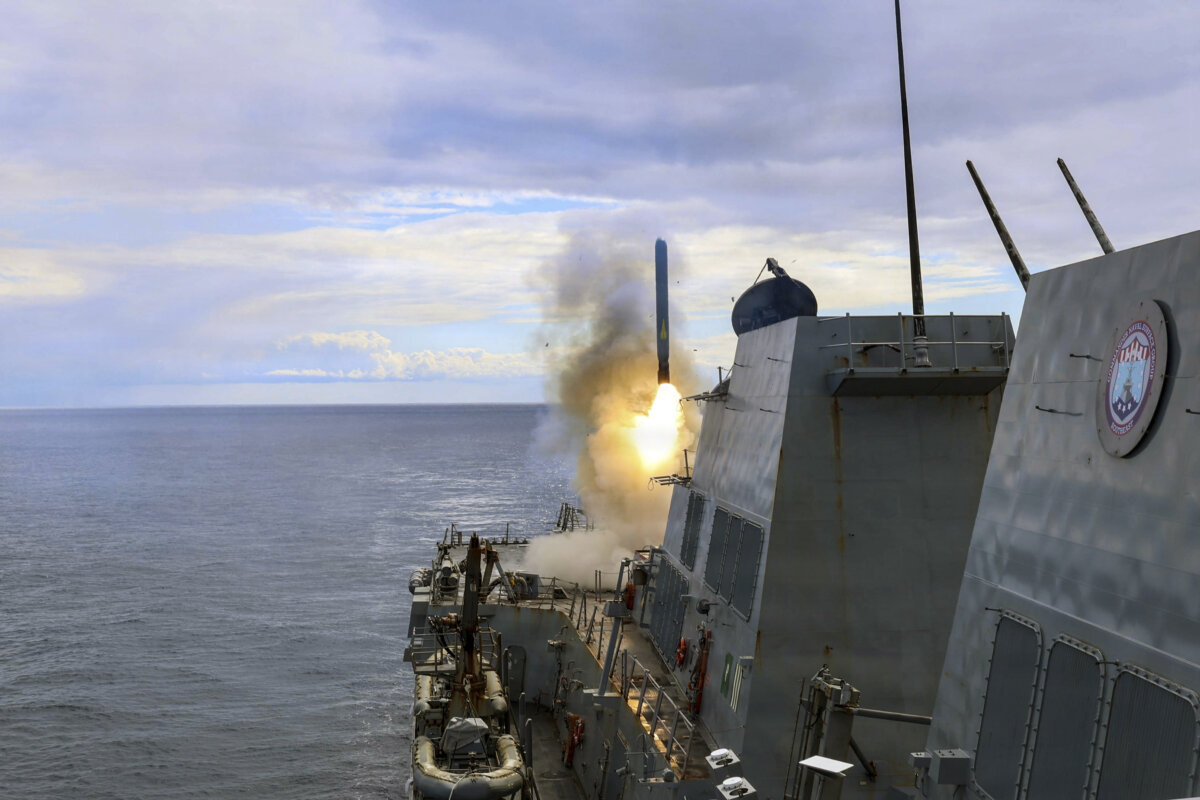

This year’s slowdown of oil through the Strait of Hormuz has choked off more than twice as much oil from the world supply as the Iranian Revolution, its closest historical competitor, displaced.
In fact, over an eight-month period, the Hormuz disruption has cut back more supply than both the Iranian Revolution and the Arab oil embargo of the 1970s put together, according to a new report by the International Energy Agency (IEA), a Paris-based intergovernmental energy authority.
The tanker embargoes and slowdowns—enforced by navies of both Iran and America, missiles, and attack drones—have shortened the world’s oil supply by some 2.8 billion barrels of Gulf oil and have shorted world markets about 60 billion cubic meters of natural gas, the Nov. 19 report, “World Energy Outlook 2026,” documents.
By contrast, the Iranian revolution reduced the worldwide oil supply by a little over 1 billion barrels in 1978 and 1979. The bite taken by the Arab oil embargo of 1973 and 1974 was in the 600-million-plus barrel range.
The IEA also notes that Hormuz is one among several global disruptions of oil this year due to conflicts and wars.
“Supplies of diesel, the workhorse of the global economy, have come under extreme pressure, with prices hitting record levels above [$]200/barrel,” the report says.
Oil transit through the Red Sea has been affected by the conflict between Saudi Arabia and Iran-backed Houthi terrorists in Yemen, and disruptions to Russian oil supply in the country’s war with Ukraine also added to the strain.
The rising prices of gasoline, diesel, and jet fuel have increased transportation costs by land, sea, and air, and hiked many other prices as well. Goods cost more to transport, and that cost is being seen in the sticker prices people must pay for those goods.
Energy shocks have slowed the growth of gross domestic product in most nations. In June, the World Bank revised its projections for worldwide gross domestic product growth down to 2.5 percent largely because of heightened fuel prices.
Asian countries were deeply affected by the slowdown, as much of the oil and natural gas that flowed through Hormuz went to that region.
Many Middle Eastern countries were also affected, in terms of both lost short-term revenues and damaged energy infrastructure that may take years to repair, the report found.
Americans have felt the pinch of higher fuel prices, both directly and indirectly.
The Iran War Energy Cost Tracker, by Brown University, is a running total of estimated increased costs Americans are paying for gas and diesel. On the evening of Nov. 19, the cost had come to more than $162 billion, including almost $89 billion for regular gas and more than $73 billion for diesel.
Increased fuel prices hiked the price of a huge basket of goods and boosted the price of air travel, with jet fuel being one of the things that the tracker does not account for.
The IEA foresees more short-term pain, paired with long-term restructuring. High fuel prices are forcing a hunt for possible savings and a reevaluation of the reliance on fossil fuels. Solar power is punching well above its historical weight, with new-generation solar much better at harnessing the power of the sun than previous panels.
“Previous energy shocks, from the 1970s onwards, all left lasting marks on the energy world,” the report says.
“This one will too, and the longer the crisis lasts, the deeper these marks will be.”