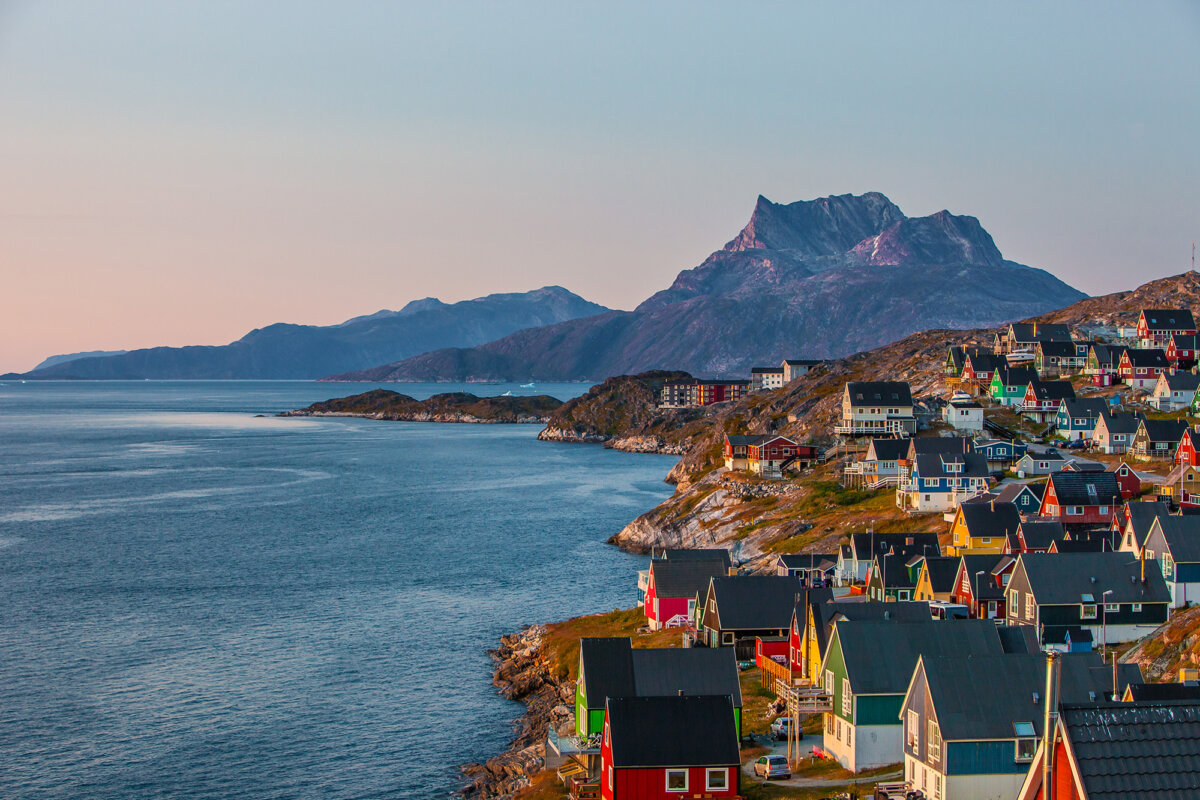

Denmark’s parliament approved on Thursday the security agreement that will allow a larger U.S. military presence in Greenland, a key Arctic territory.
The deal amends the 1951 Defense Agreement signed by the United States and Denmark.
While the 1951 agreement already granted the United States sweeping military rights in Greenland, the new deal strengthens certain access rights and allows the United States to expand its military footprint on the Arctic island.
But what prompted this new deal? What does it involve? What could it mean for U.S. security?
Here’s a breakdown of what we know.
What Prompted This?
Greenland is part of the Kingdom of Denmark and home to 57,000 people. It straddles key sea lanes, including trans-Arctic shipping corridors, and is rich in rare earths and critical minerals.
Since returning to the White House in January 2025, President Donald Trump has repeatedly said that the United States must purchase or annex Greenland “for the purpose of national security” before Russian or Chinese interests are entrenched in the area.
Then, following negotiations between U.S., Danish, and Greenlandic officials, Trump announced a security deal on Sept. 18.
Trump signed the deal with the leaders of Greenland and Denmark at a ceremony on Sept. 22 at the United Nations General Assembly in New York City.
Lawmakers in Greenland then approved it on Nov. 3, with Danish lawmakers backing it on Nov. 19.
The executive agreement takes effect once Denmark’s foreign ministry tells the United States in a diplomatic note that procedures are complete. It does not need approval from the U.S. Senate.
What Does the Agreement Entail?
Trump’s security concerns appear to be acknowledged in the agreement.
The document, published on the White House’s website on Sept. 22, highlights the security challenges in the Arctic and High North “posed by adversaries’ increased military activity and growing strategic interest in the region.”
It notes that the security situation in the Arctic is changing “and that more efforts are needed to ensure security there in the future.”
The agreement says the parties support stronger NATO engagement in the Arctic region. This includes increasing presence, exercises, and joint intelligence gathering.
It says the United States can expand and modernize its activities at the Pituffik Space Base, as well as establish new defense areas at Mestersvig and Narsarsuaq.
“The United States may establish additional defense areas in Greenland and strengthen its military operations or facilities,” it said.
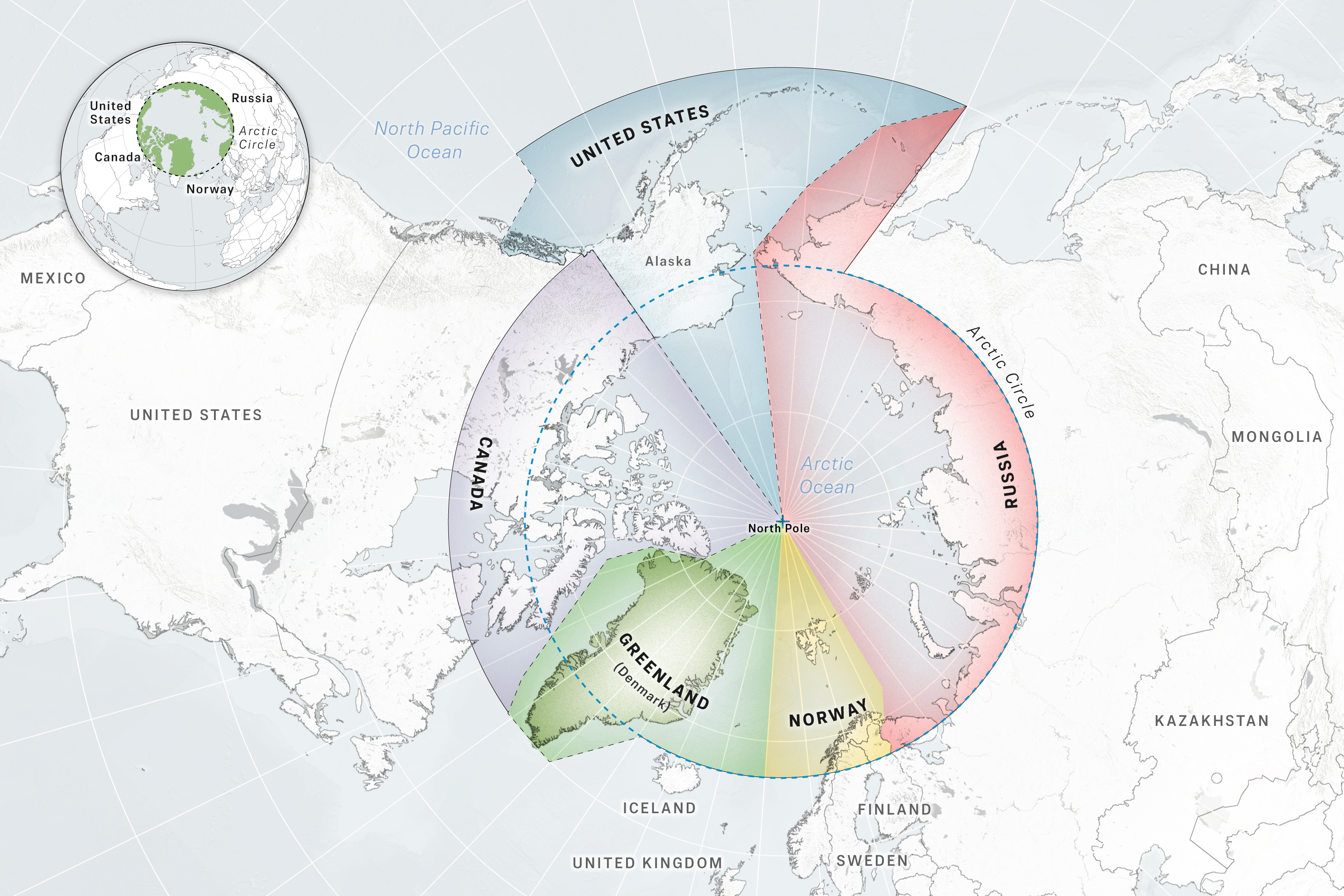 (Illustration by The Epoch Times)
The agreement also explicitly mentions the Golden Dome missile defense system as part of efforts to bolster security in the region.
Non-NATO countries will not be allowed to establish their own military installations or to have a persistent military presence in Greenland without agreement by the United States, Greenland, and Denmark.
It also outlines what would happen if Greenland becomes independent of Denmark. In that scenario, Greenland must agree to remain a member of NATO and assume Denmark’s commitments under the agreement.
What Is Different From Previous Deals?
Analysts at the Center for Strategic and International Studies (CSIS) said in September that the agreement holds significance for the United States, Canada, Denmark, and Greenland—but that it is “less groundbreaking than headlines suggest.”
The deal amends and supplements the 1951 Defense Agreement, which already granted the United States a wide range of military rights on Greenland, the CSIS said in the Sept. 30 analysis.
 U.S. President Donald Trump, Danish Prime Minister Mette Frederiksen, and Greenlandic Prime Minister Jens-Frederik Nielsen hold up the proclamations during the signing of a security pact between the United States, Denmark, and Greenland in New York City on Sept. 22, 2026. (Chip Somodevilla/Getty Images)
First, access rights: the agreement enables the United States to expand its military footprint immediately with the new defense areas, with the preamble of the agreement mentioning the Golden Dome.
Second, duration: unlike the 1951 agreement, which is tied to the North Atlantic Treaty, this new deal is permanent and can only be amended by mutual consent.
Third, limits on future foreign investment: not only does it bar non-NATO states from establishing military installations on Greenland without trilateral consent, but Washington will have a formal say over whether non-NATO, non–NATO partner, and non-European Union states can invest in critical and strategic sectors on the island, including extracting natural resources.
What Could This Mean for US Security?
U.S. Secretary of State Marco Rubio said in a Nov. 19 post on X that the ratification by the Danish Parliament of the agreement “will make us all safer, stronger, and more secure.”
“This agreement modernizes the United States-Denmark-Greenland defense partnership and bolsters the national security of the United States and our allies in NATO,” he said.
The U.S. Ambassador to the Kingdom of Denmark, Kenneth Howery, also hailed the agreement as an accomplishment, saying in a Nov. 19 post on X that it will modernize the partnership for the security challenges of the future.
Mikkel Vedby Rasmussen, a political science professor at the University of Copenhagen, said the agreement was more likely a beginning than an end.
“With the treaty in hand, the US will be able to demand greater influence on decisions that have security policy implications and on part of the extraction of strategic resources,” Rasmussen said.
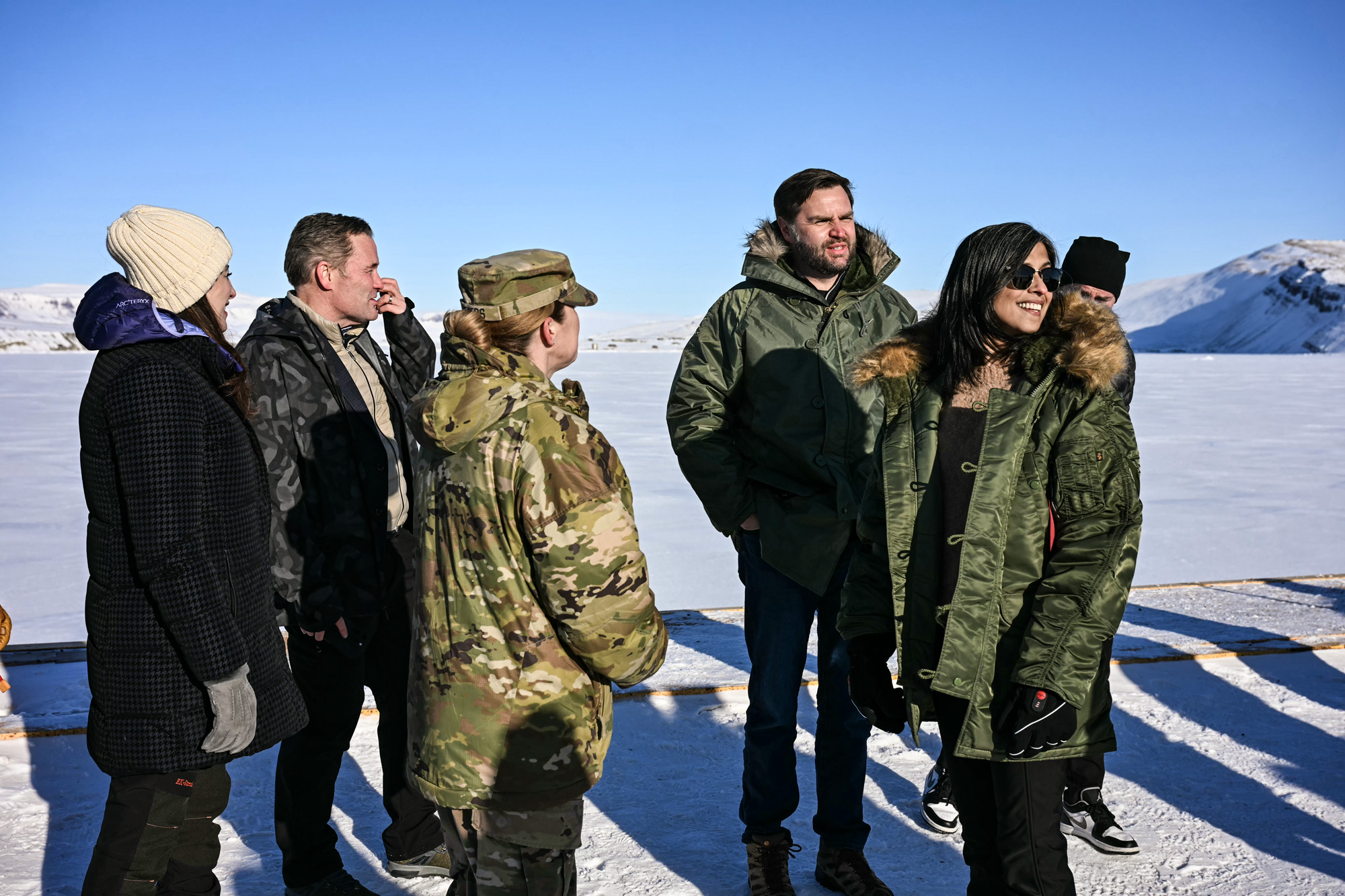 Vice President JD Vance (2nd R) and Second Lady Usha Vance (R), joined by national security adviser Mike Waltz (2nd L), tour the U.S. military’s Pituffik Space Base in Greenland on March 28, 2025. (Jim Watson/Getty Images)
Analysts noted that Greenland has been a vital part of the American homeland defense architecture since the Cold War, and that the deal could signal U.S. interest in expanding that role in terms of missile defense.
“At a minimum, the deal serves as an important signal of U.S. interest in carving out a greater role for Greenland in homeland defense,” CSIS said.
“As missile threats evolve from ballistic systems to more maneuverable platforms such as hypersonic glide vehicles and cruise missiles, a rethink of the requirements for sensors and air defenses will be necessary in order to protect North America.
Analysts added that the new bases at Mestersvig and Narsarsuaq provide a chance for the three partners to expand threat detection capabilities in Greenland.
They also suggest that while Greenland’s role has been primarily in the detection and tracking of adversarial activities, the potential establishment of a Golden Dome defense system “could open the door for the installation of more kinetic interception systems in Greenland.”
Chris Summers, Tom Ozimek, and Reuters contributed to this report.