
Lawmakers in Denmark—which administers Greenland—on Nov. 19 approved a security agreement between the Arctic island and the United States to bolster security.
The deal, which U.S. President Donald Trump signed in September with the leaders of Denmark and Greenland, was formally ratified in a Nov. 19 vote in the Danish Parliament, with 109 lawmakers voting for and none against.
With their vote, Danish lawmakers gave parliamentary consent to an agreement among Greenland, Denmark, and the United States that amends a 1951 agreement on Greenland’s defense, established under NATO.
While the 1951 agreement already granted the United States sweeping military rights in Greenland, the new deal strengthens certain access rights and allows the United States to expand its military footprint on the Arctic island.
“The agreement is rooted in NATO cooperation, establishes U.S. military access to Greenland, allows for new defense areas and includes provisions on environmental considerations and foreign investment, among other matters,” a Danish parliamentary summary of the ratified resolution states.
In addition to expanding the U.S. military footprint in Greenland—including permission to establish a Golden Dome missile defense system—it also reaffirms Danish sovereignty and Greenlanders’ right to self-determination.
Following the vote in Copenhagen, the agreement will take effect once Denmark’s Ministry of Foreign Affairs formally notifies Washington that the required procedures are complete.
The Parliament of Greenland, a self-governing Danish territory home to 57,000 people, approved the deal earlier this month, with 16 in favor, none against, and seven abstentions.
Kenneth Howery, the U.S. ambassador to Denmark, praised what he described as strong support from Danish lawmakers for ratifying the deal.
“The agreement is a tremendous accomplishment, one that modernizes our partnership for the security challenges of the future and bolsters the security of the United States, the Kingdom of Denmark, including Greenland, and all of NATO,” he wrote in a post on X.
U.S. Secretary of State Marco Rubio said that the agreement updates the U.S.–Denmark–Greenland defense partnership and enhances the national security of both the United States and its NATO allies.
“Today’s ratification by the Danish Parliament of the agreement on Greenland will make us all safer, stronger, and more secure,” he said in a statement on X.
Analysts at the Center for Strategic and International Studies (CSIS) said in September that the agreement is “less groundbreaking than headlines suggest” because the 1951 deal and a subsequent 2004 Igaliku Agreement already granted the United States extensive military rights in Greenland.
Three elements of the new deal stand out, according to the analysts.
For one, the new agreement expands U.S. military access to Greenland, allowing new defense areas at Narsarsuaq and Mestersvig and expanded activities at Pituffik.
It also grants unrestricted undersea access within Greenlandic territorial waters and explicitly mentions establishment of the Golden Dome missile defense system as part of necessary efforts to bolster Arctic security.
“The naval domain is a particularly fruitful area for increased NATO engagement, as Greenland, together with Canada and Iceland, controls key approaches from the Arctic to the north Atlantic,” CSIS analysts wrote.
The deal is also permanent, with any changes requiring mutual consent.
Unlike the 1951 pact, which is tied to the North Atlantic Treaty’s duration, the new agreement has no end date and requires Greenland to retain NATO membership and assume Denmark’s commitments if Greenland exercises its right to self-determination and becomes independent.
“At a minimum, the deal serves as an important signal of U.S. interest in carving out a greater role for Greenland in homeland defense,” CSIS analysts wrote.
“As missile threats evolve from ballistic systems to more maneuverable platforms such as hypersonic glide vehicles and cruise missiles, a rethink of the requirements for sensors and air defenses will be necessary in order to protect North America,” they added, highlighting the security gap that the Trump administration’s Golden Dome missile defense shield seeks to fill.
The agreement also gives Washington a formal say over investment in Greenland’s strategic sectors by entities from countries outside NATO, its partner network, and the European Union. It also bars non-NATO military installations unless all parties agree.
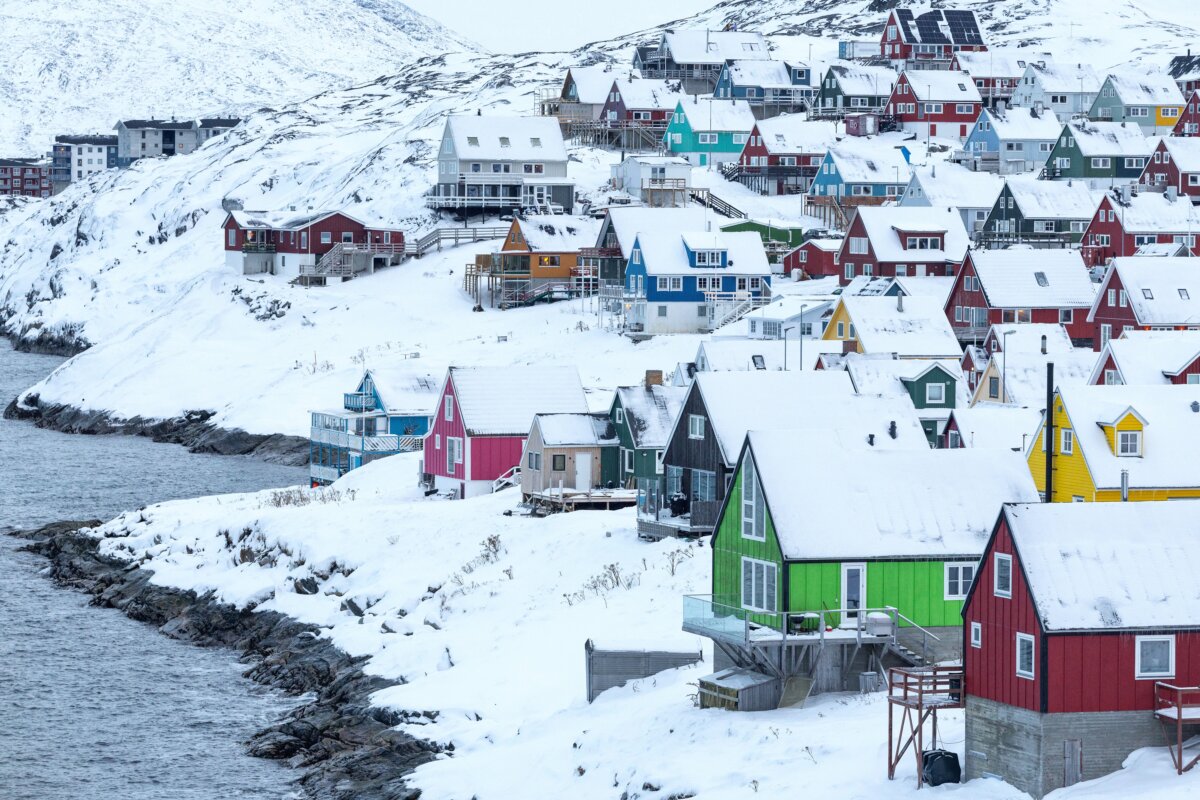
Greenland lies along the shortest route between Europe and North America and already hosts the northernmost U.S. military base.
Correction: A previous version of this article mischaracterized the Greenland parliamentary votes. The Epoch Times regrets the error.