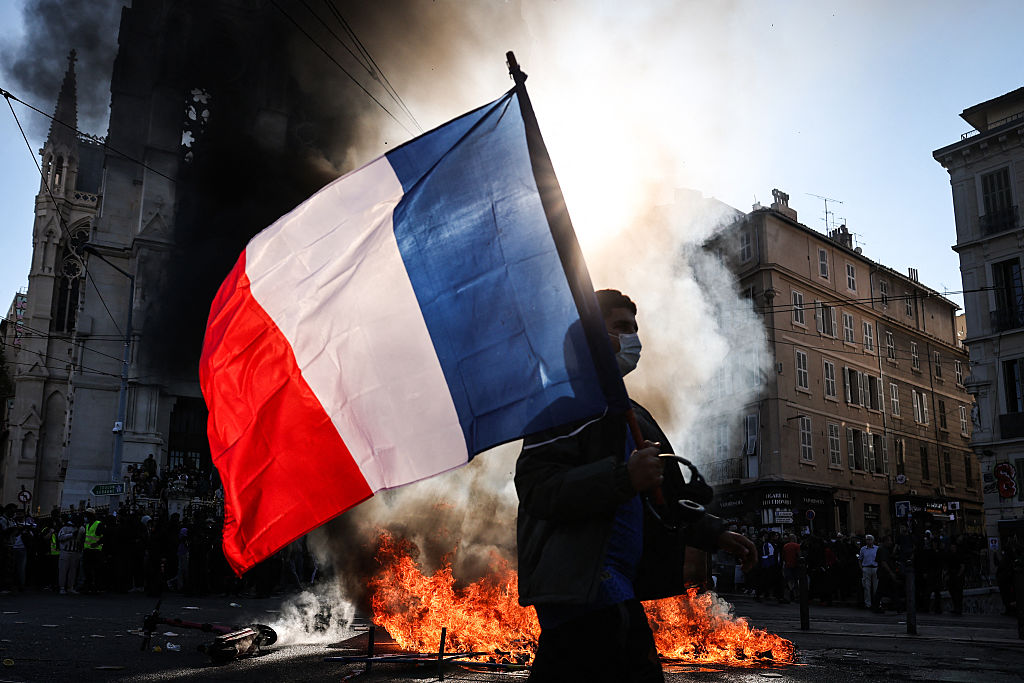

France will launch a major security operation and deploy troops to reinforce police during protests planned for the weekend, the government has said, acknowledging failures in its response to recent riots.
French Prime Minister Sébastien Lecornu told fellow lawmakers in the National Assembly on Oct. 20 that the immediate priority was restoring order after rioting and looting in Paris, Marseille, Lyon, and other cities.
Interior Minister Laurent Nuñez told Parliament that soldiers would take over some static duties to free up police to respond to unrest, while the government pledged to change tactics following widespread criticism that city centers had been left vulnerable.
Lecornu blamed far-left groups for violence during the protests.
“A certain number of violent individuals from the radical far left and the ultra-left have chosen to operate in a swarm, to sow violence in a methodical way, with the help of digital tools,” he said.
Left-wing lawmakers accused the government of failing to address anger over deteriorating public services and the high cost of living.
France’s main student union, UNEF, has called for further protests on Oct. 24 and vowed to keep piling pressure on President Emmanuel Macron’s government over what it says is an underfunded, deteriorating education system.
Separately, groups identifying themselves as “gilets jaunes” (yellow vests) called for protests over rising fuel costs.
Largely dormant in recent years, the yellow vest movement sprang up in 2018 during Macron’s first term over plans to raise petrol taxes, forcing the government to make concessions after months of road blockades.
‘Violence and the Republic’ Choice
The prime minister characterized the crisis as a choice “between violence and the Republic,” with the country left reeling because of both the scale of the unrest and the apparent inability of police to contain it.
The unrest began building in late September, when students blockaded high schools in Seine-Saint-Denis, an area just north of Paris with a large immigrant population. The protests then spread nationwide.
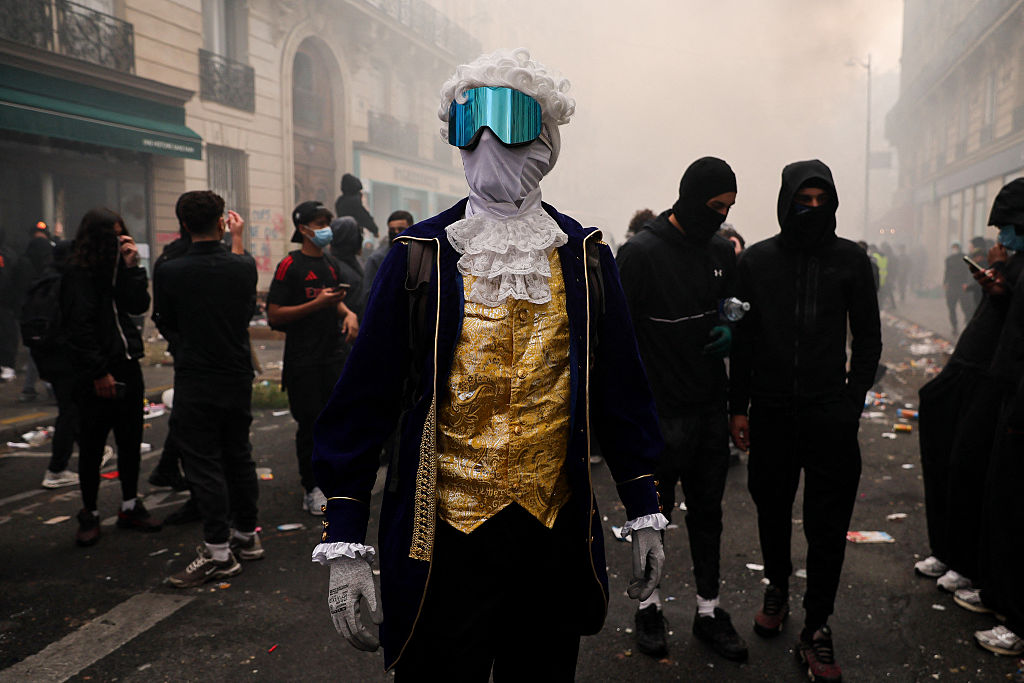 A protester wearing a period costume stands during a demonstration in Paris on Oct. 17, 2026. (Kiran Ridley/AFP via Getty Images)
Relative calm in France followed targeted curfews imposed in several areas affected by the chaos, which the government said helped reassert control. Police said localized curfews, some directed at children and teenagers under age 18, were extended to the night of Oct. 20.
Intelligence Failings
Lecornu acknowledged that there had been intelligence failures in the national response to last weekend’s violence; the deployment of police had not been swift enough and authorities failed to immediately cancel leave taken by police officers.
“I deeply regret what happened. I accept my share of responsibility,” Nuñez said.
Macron refused his resignation offer on Oct. 19.
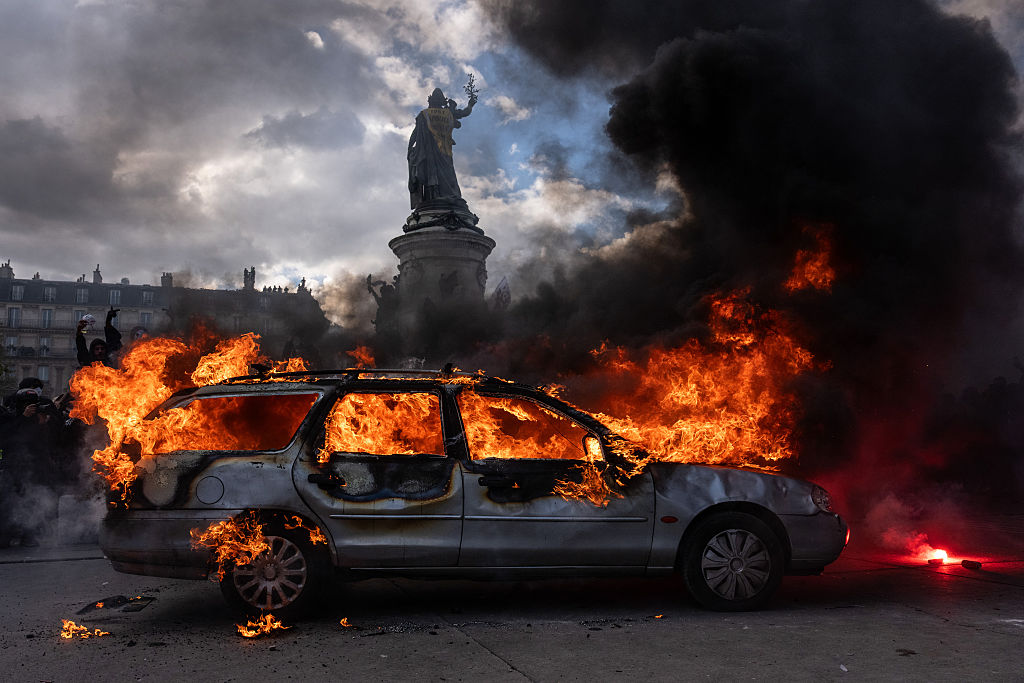 A car is set ablaze during demonstrations in Paris on Oct 17, 2026. (Carl Court/Getty Images)
Parliament is setting up an inquiry to determine the causes of the unrest, while authorities have assigned 200 investigators to identify and track those involved in the violence.
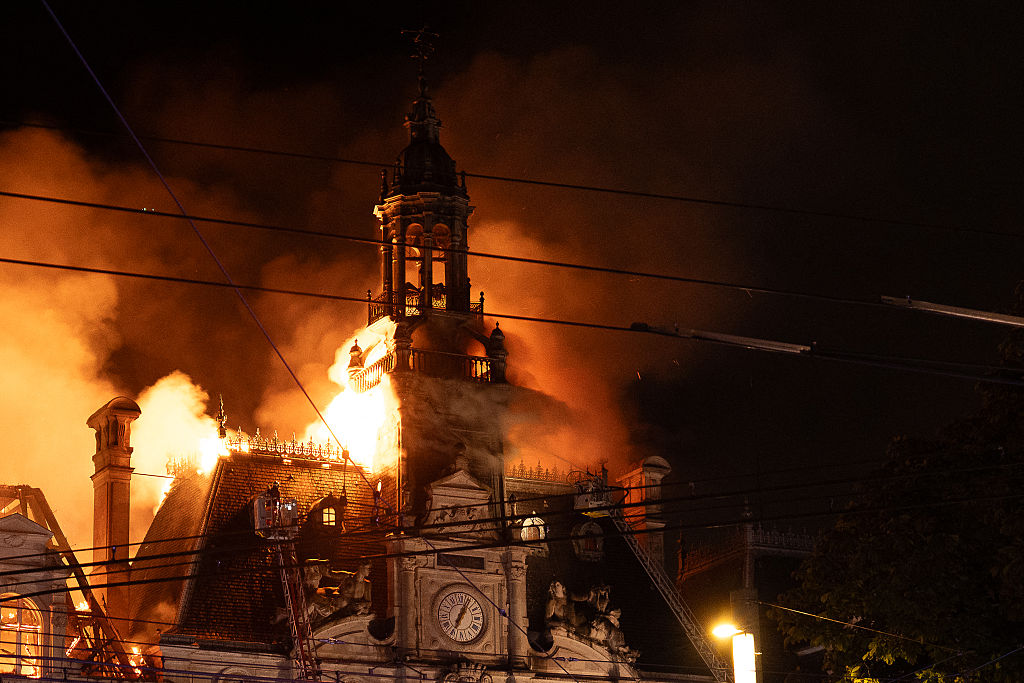 The bell tower of Limoges city hall after it was set on fire in Limoges Haute-Vienne in the Nouvelle-Aquitaine region of France on Oct. 17, 2026. (Elise Cabane/Hans Lucas/AFP via Getty Images)
The government estimates that at least 3,000 businesses were damaged or looted. Authorities have reported about 2,400 arrests, while 997 police officers, gendarmes, and firefighters were injured, seven of them seriously.
Public buildings and stores were attacked. Police on Oct. 20 arrested a man suspected of starting a blaze that destroyed the town hall in the central city of Limoges during the rioting. Officials said he belonged to an ultra-left group and had been on a security watch list.
Reuters and Etienne Fauchaire contributed to this report.