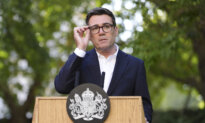
The UK and the European Union agreed to relax rules on food trade and youth mobility at a summit on Friday, as London pushes to reset ties with the bloc a decade after the Brexit referendum.
At a press conference with European Commission President Ursula von der Leyen and President of the European Council António Costa, British Prime Minister Andy Burnham said, “We can all confidently say this is a good day for Britain and this is a good day for Europe. The agreement that we’ve reached together is a win-win.”
The two sides reached an accord on food checks, youth mobility and an emissions trading scheme at the talks in Brussels; however, other issues, such as university tuition fees, remain unresolved, with negotiations to continue.
A joint statement by the UK and EU on Friday outlined the summit’s areas of coverage.
The agreement on food checks includes a Common Sanitary and Phytosanitary Area, allowing most animal and plant products to move between Great Britain and the EU without certificates or checks as of Mar. 1, 2028.
The “Youth Experience Scheme,” which emerged from the summit, is set to start no later than 2030, and will allow 100,000 young people per year from each side to live, work or study in the other for up to three years. Additionally, Britain will rejoin the Erasmus+ exchange program in 2027, with a tuition-fees agreement to be negotiated within six months.
London and Brussels also agreed to link their Emissions Trading Systems from Jan. 1, 2028, allowing mutual recognition of allowances and exemptions from carbon border measures.
Security and defense cooperation was also on the table, with both sides committing to work more closely on hybrid threats, maritime security and Ukraine, and pledging to collaborate on limiting illegal migration to the UK via the English Channel, among other commitments.
The summit comes after Burnham said he wants to pursue a “reset” with the EU, arguing that, in his view, the UK was worse off a decade after the vote to leave the EU.
“It’s like the Emperor’s new clothes—where no one is prepared to say the obvious truth. Well, I do try to say things as I see them. And to be frank, we have lost more than we have gained in the last 10 years,” he said at a speech in London on Nov. 16.
“[The] hard Brexit we were given is not good enough for Britain.”
Burnham’s approach marks a contrast to his predecessor as prime minister and leader of the Labour Party, Keir Starmer, who said returning to the EU’s customs union or single market, and the reinstatement of freedom of movement were “red lines” his government would not cross in the Labour manifesto for the 2024 election.
Burnham said any agreement reached at the summit would respect those red lines while improving the Brexit deal.
The next British general election will be in 2029, unless Burnham chooses to call it earlier.
“What we are announcing today is probably the limit of what we can achieve in this parliament, given what needs to be done to implement it,” Burnham said at the Friday press conference, the Standard reported.
Von der Leyen called the deal a “turning point” in post-Brexit relations, according to British outlet ITV News, while Costa opened his remarks by telling Burnham he was “always welcome in the European Union.”
“The progress we have made since our first summit is delivering tangible benefits for our citizens and businesses. Today we are going even further. And we will build on this momentum. There is much more we can achieve together,” he said.
Costa added that, though the EU regretted the UK’s departure from the bloc, it respected the country’s decision, and said Brussels will “equally respect whatever decision” Britain takes about its future relationship with the bloc.
“Of course, we follow with great interest the debate you have relaunched about our common future. As you know, we remain open to having the closest possible relationship,” he said.
Reform UK leader Nigel Farage, who campaigned for decades for Britain to leave the EU, however, criticized Burnham’s deal, saying it was in “direct contradiction of the Labour manifesto,” in remarks on Nov. 20.
“Today was not a reset. It was a reversion back to pre-2016 referendum ideas. It was an overturn, more than a reset,” he said, adding that Burnham had breached Labour’s manifesto allowing the UK to be accepted back into a “large chunk of the single market,” and calling the move “utterly shameful in every regard.”