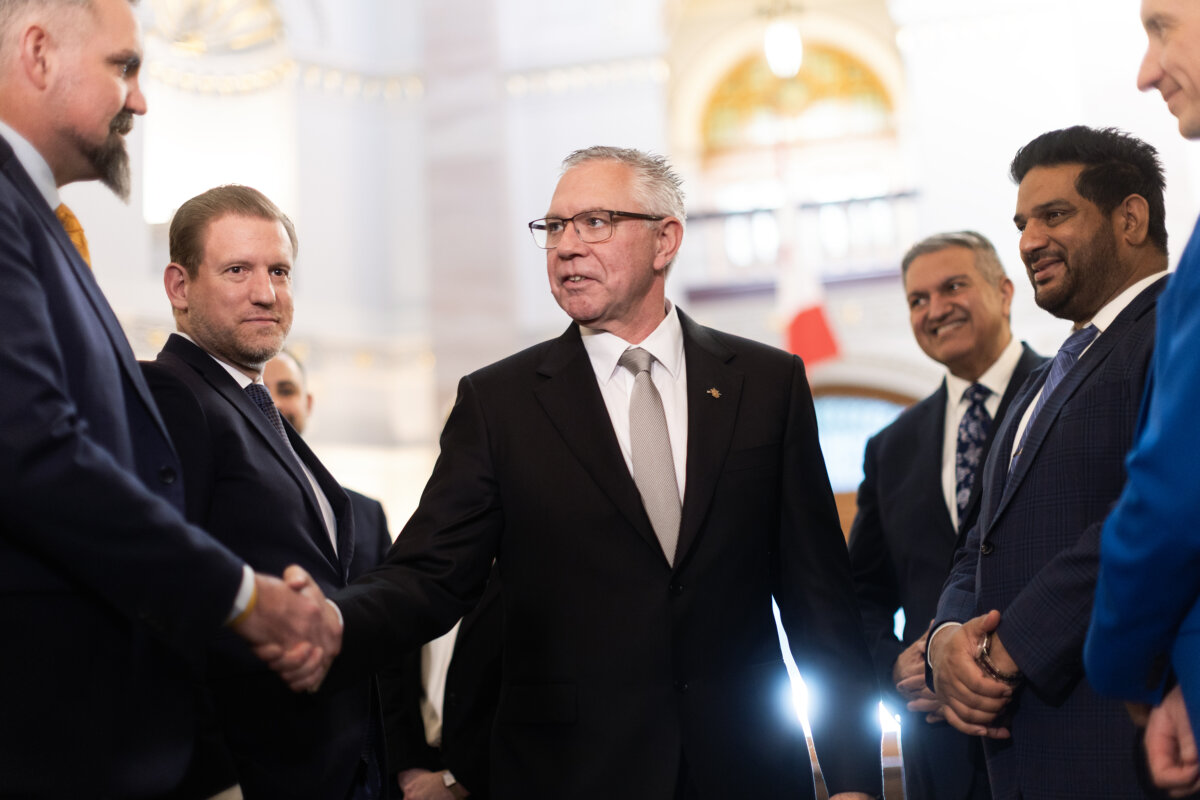

B.C. Premier Lorne Doerkson has issued mandate letters to his newly appointed Conservative cabinet ministers, instructing them to eliminate sexual orientation and gender identity (SOGI) 123 resources, repeal Declaration on the Rights of Indigenous Peoples Act (DRIPA), and end the “safer supply” drug program.
The province announced the release of the mandate letters on Nov. 24, four days after the premier and his cabinet were sworn in. The government identified five overarching priorities: affordability, economic prosperity, health care, public safety, and provincial pride.
Doerkson instructed each minister to establish measurable objectives and deadlines, emphasizing that all ministers were responsible for controlling government spending. New funding requests would require Treasury Board approval.
“These mandate letters make clear what British Columbians expect each minister to accomplish,” Doerkson said.
The mandate letters also outlined plans to strengthen property rights, reduce taxes, improve health-care delivery, increase police resources, and expand natural gas production.
Education and Health
Doerkson instructed Education and Child Care Minister Lynne Block to eliminate the Sexual Orientation and Gender Identity (SOGI) 123 program while strengthening measures to prevent bullying and harassment, increasing parental transparency and choice, and improving student safety.
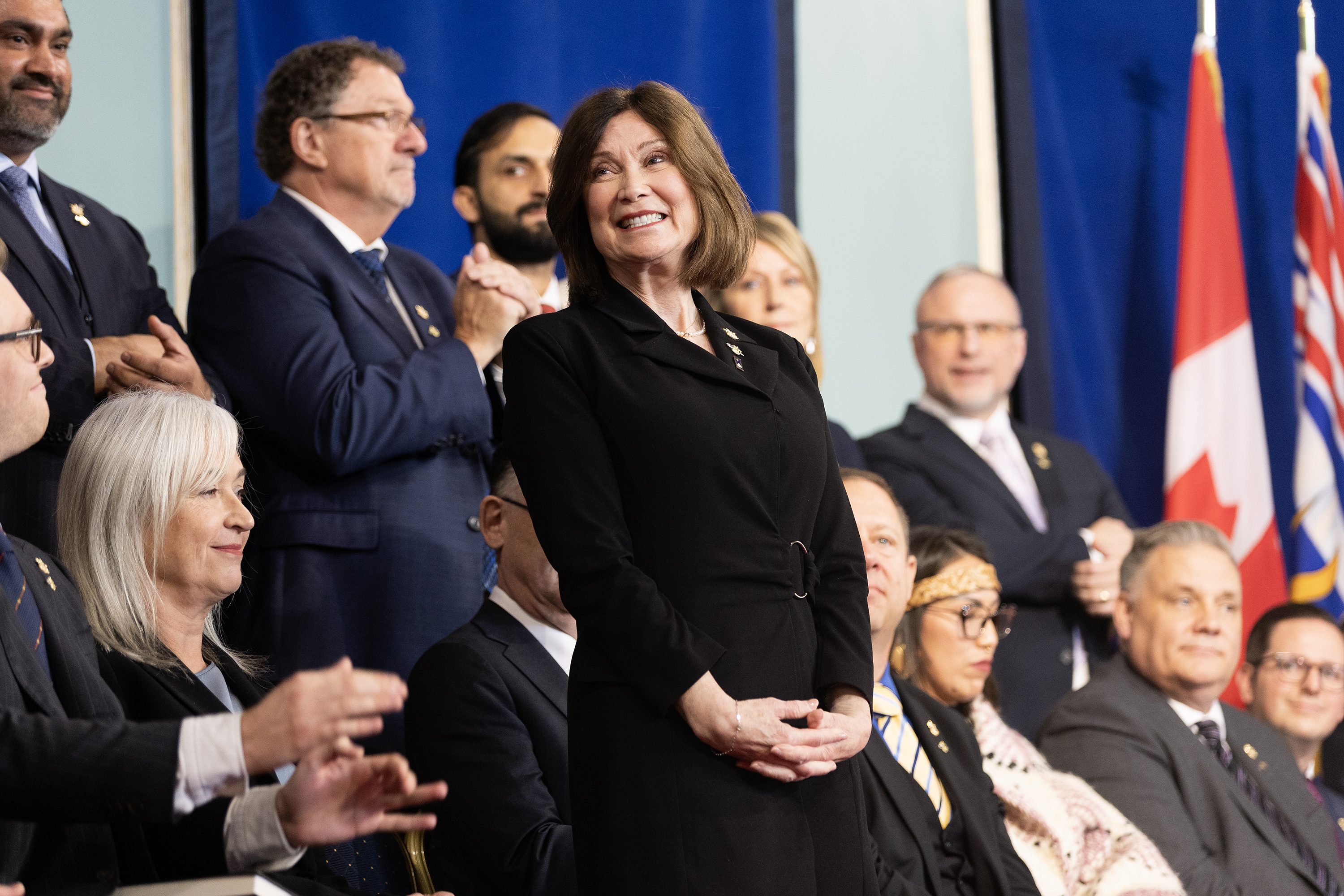 Minister of Education and Child Care Lynne Block looks towards Premier Lorne Doerkson during a swearing-in ceremony at Government House in Victoria, on Nov. 20, 2026. (The Canadian Press/Chad Hipolito)
Doerkson also instructed Block to restore shop classes and expand opportunities for students to pursue trades training and earn dual credits.
Doerkson directed Health Minister Ryan Peterson to work with other ministries to end the “safer supply” approach to drug use, expand drug courts, redirect funding toward prevention, treatment, and recovery, and review and reform overdose prevention and supervised injection sites.
Other priorities included establishing a $50 million Rural Health Emergency Fund to keep rural emergency departments and maternity wards open, conducting a 100-day review of health-care delivery in other jurisdictions, and introducing a Universal Health Care Guarantee.
The guarantee would enable patients to receive publicly funded treatment from another provider if their wait times exceeded established limits.
Doerkson also instructed Peterson to expand addiction treatment and detoxification services, introduce mandatory care where appropriate, and establish safeguards against coercion involving medical assistance in dying.
Public Safety and Justice
Doerkson instructed Public Safety Minister and Solicitor General Jessy Sahota to address repeat and violent offending by strengthening bail and warrant enforcement, establishing a dedicated court stream for repeat offenders, and expanding electronic monitoring.
The premier also directed Sahota to increase policing capacity over five years by adding 250 police recruits, 500 RCMP officers, 30 sheriffs, and 150 civilian support staff.
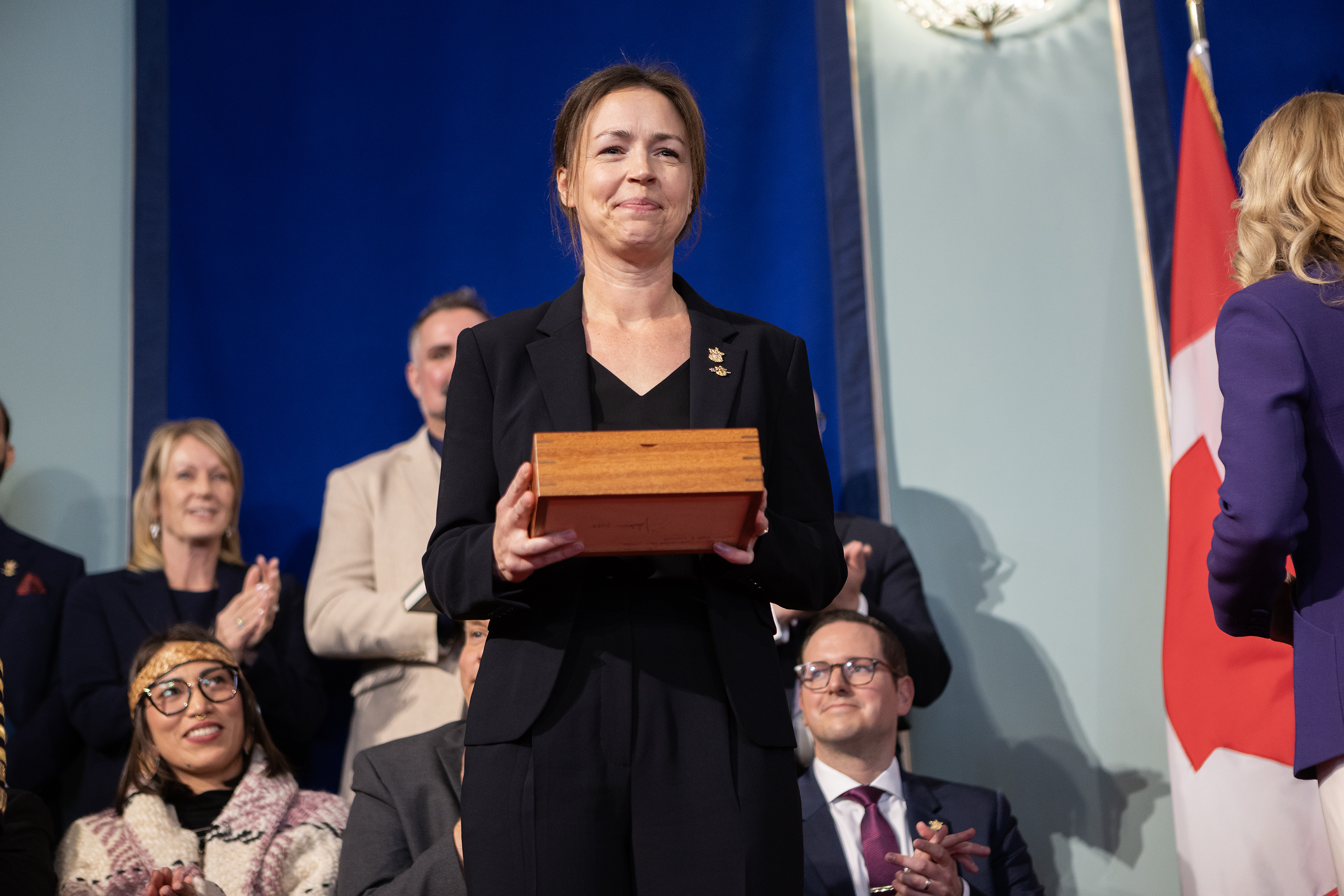 B.C. Attorney General Caroline Elliott holds the great seal of British Columbia during a swearing-in ceremony at Government House in Victoria, on Nov. 20, 2026. (The Canadian Press/Chad Hipolito)
The premier directed Attorney General Caroline Elliott to repeal the DRIPA and Section 8.1 of the Interpretation Act while developing a transition framework respecting the province’s constitutional obligations to First Nations.
Doerkson also directed Elliott to introduce legislation protecting property rights and increasing transparency around aboriginal title claims, negotiations, and agreements affecting land before those agreements became binding.
He also tasked her with hiring 50 additional Crown prosecutors, pursuing the appointment of 20 additional trial judges, and introducing a pilot project involving seven-day trials.
Meanwhile, Doerkson instructed Indigenous Relations and Reconciliation Minister Scott McInnis to support the proposed legislative changes while advancing reconciliation through treaties, economic partnerships, and revenue-sharing agreements with First Nations.
Finances and Energy
Doerkson directed Finance Minister Peter Milobar to immediately appoint an independent panel to assess the province’s financial position and publicly release its findings, develop a plan to balance the budget, and review the province’s capital spending plans within six months.
The premier also instructed Milobar to realign government staffing levels with population growth since the 2016–17 fiscal year while protecting front-line services.
Other priorities included introducing personal income tax relief worth approximately $1,000 per person starting in 2027, temporarily exempting business equipment, software, and Canadian-produced alcoholic beverages from provincial sales tax, and establishing a panel to review the provincial tax system.
Doerkson instructed Energy, Mines and Petroleum Resources Minister Larry Neufeld to make B.C. the fastest jurisdiction in North America in approving permits for mines and liquefied natural gas facilities.
Doerkson also directed Neufeld to double provincial natural gas production by 2032 and triple it by 2035, remove barriers to natural gas-fired electricity generation, protect consumers’ ability to choose their home heating source, and strengthen incentives for mining and critical mineral development.
Children and Family Development Minister Kristina Loewen was instructed to extend the existing Autism Funding Program, protect families’ ability to choose service providers, reduce financial barriers to adoption, expand services in rural and northern communities, and introduce respite care vouchers.