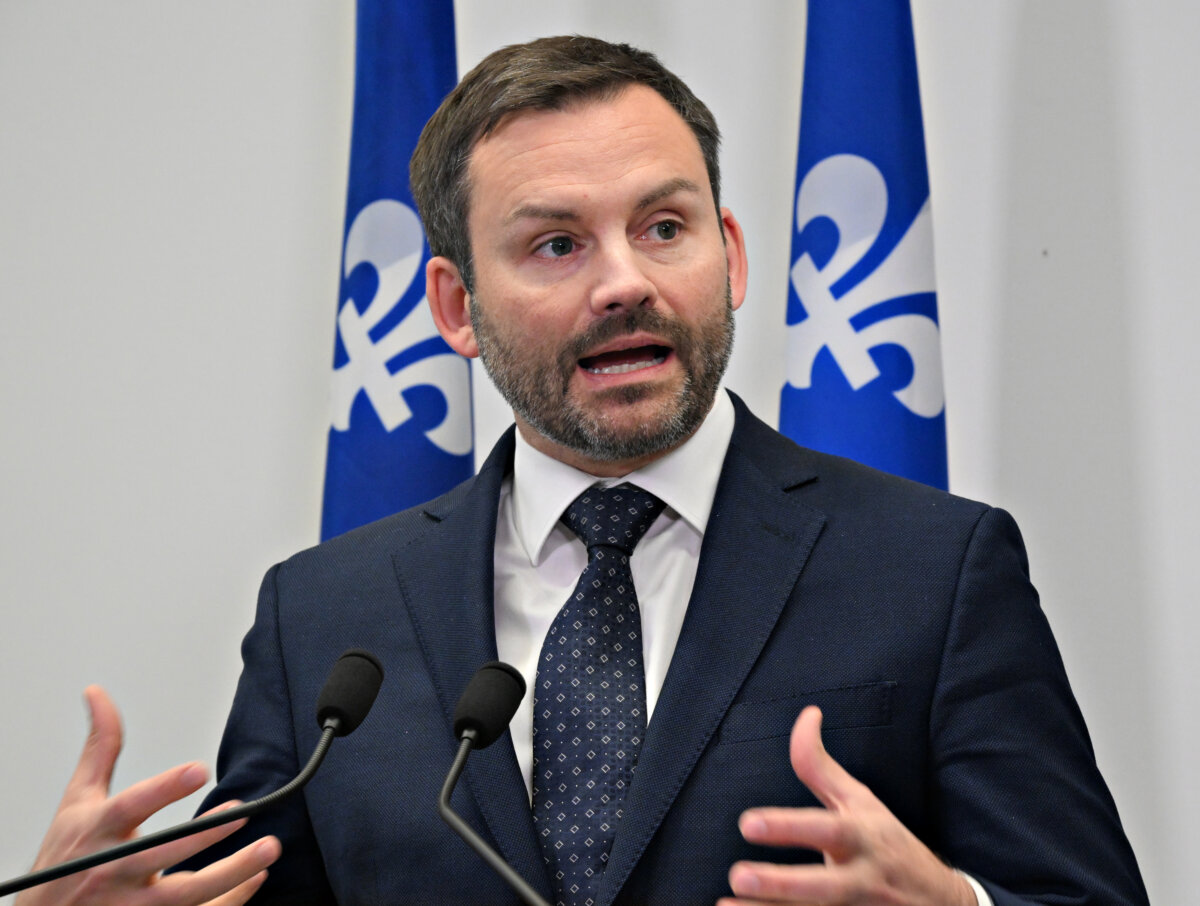

Quebec Premier Paul St-Pierre Plamondon has condemned Manitoba Premier Wab Kinew’s characterization of Quebec’s 2019 secularism law as “legislative racism,” calling on him to retract the remarks.
Kinew made the remarks following the Supreme Court of Canada’s ruling upholding Quebec’s use of the notwithstanding clause to shield its secularism law, known as Bill 21, from constitutional challenges.
Bill 21 prohibits certain public officials, including public-school teachers, police officers, and judges, from wearing religious symbols while performing their duties. These symbols may include hijabs, turbans, kippahs, crucifixes, and kirpans. Subsequent amendments have expanded the restrictions to some employees in childcare and other settings.
“These are all cultural symbols that would be banned by Bill 21, which I think is legislative racism,” Kinew said during a Nov. 27 press conference in Winnipeg.
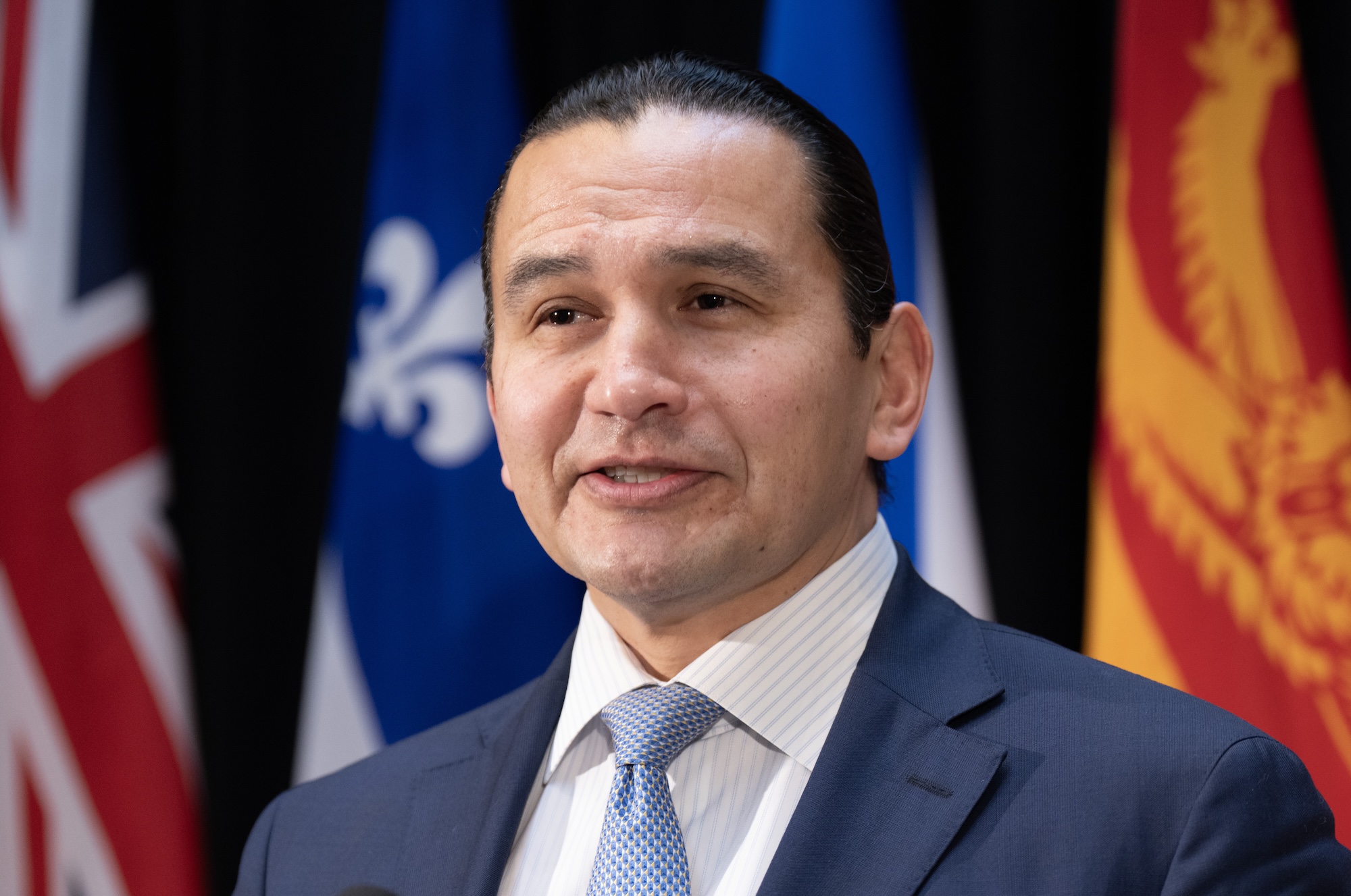 Manitoba Premier Wab Kinew speaks with reporters before the First Ministers Meeting in Ottawa, Jan. 29, 2026. (The Canadian Press/Adrian Wyld)
In a post on social media, St-Pierre Plamondon responded to the Manitoba premier’s characterization of the law.
“I strongly condemn the Manitoba premier’s remarks describing Bill 21 as legislative racism,” he wrote.
“Not only does the Supreme Court uphold the validity of Quebec’s secularism, it affirms the legitimacy of our distinct approach to this issue.”
The Quebec premier added that Kinew should be “ashamed of his disrespectful and intolerant remarks about Quebec.”
“I call on him to retract them,” St-Pierre Plamondon said.
Premier Smith’s Response
During his Nov. 27 press conference, Kinew also criticized the use of the clause by other provincial governments on gender issues, in an apparent reference to Saskatchewan’s and Alberta’s use of the clause to shield legislation dealing with gender identity and pronoun use in schools.
“And there’s a whole other phenomenon where some provincial governments are going even further in using Section 33 to try and go after LGBT folks in our society, which again I think is wrong,” Kinew said.
Saskatchewan used the clause in 2023 to protect a law requiring parental consent before students under 16 can use different names or pronouns at school. Alberta invoked it in 2025 to protect laws restricting gender-transition treatments for minors, requiring parental consent for certain school-related decisions, and limiting transgender individuals’ participation in female sports.
When asked about Kinew’s remarks, Alberta Premier Danielle Smith defended her government’s legislation at a press conference on Nov. 28, saying it is aimed at protecting children and women’s sports.
“This is the difference I think between a socialist government run by the NDP and a conservative one,” she said. Kinew leads an NDP government in Manitoba, while the Alberta NDP is the main opposition party in Smith’s province.
“A conservative government is very concerned that young children would be making decisions that could potentially permanently affect their fertility, and so that was the reason we wanted to ensure that those types of decisions, whether it’s hormone therapy or surgery, take place when they’re grown-ups.”