
The federal government’s $1.6-billion investment in Canadian artificial intelligence company Cohere will be financed with borrowed money, the parliamentary budget officer confirmed to MPs.
The measure is part of the government’s stated strategy to spur economic growth and strengthen Canada’s technological capacity.
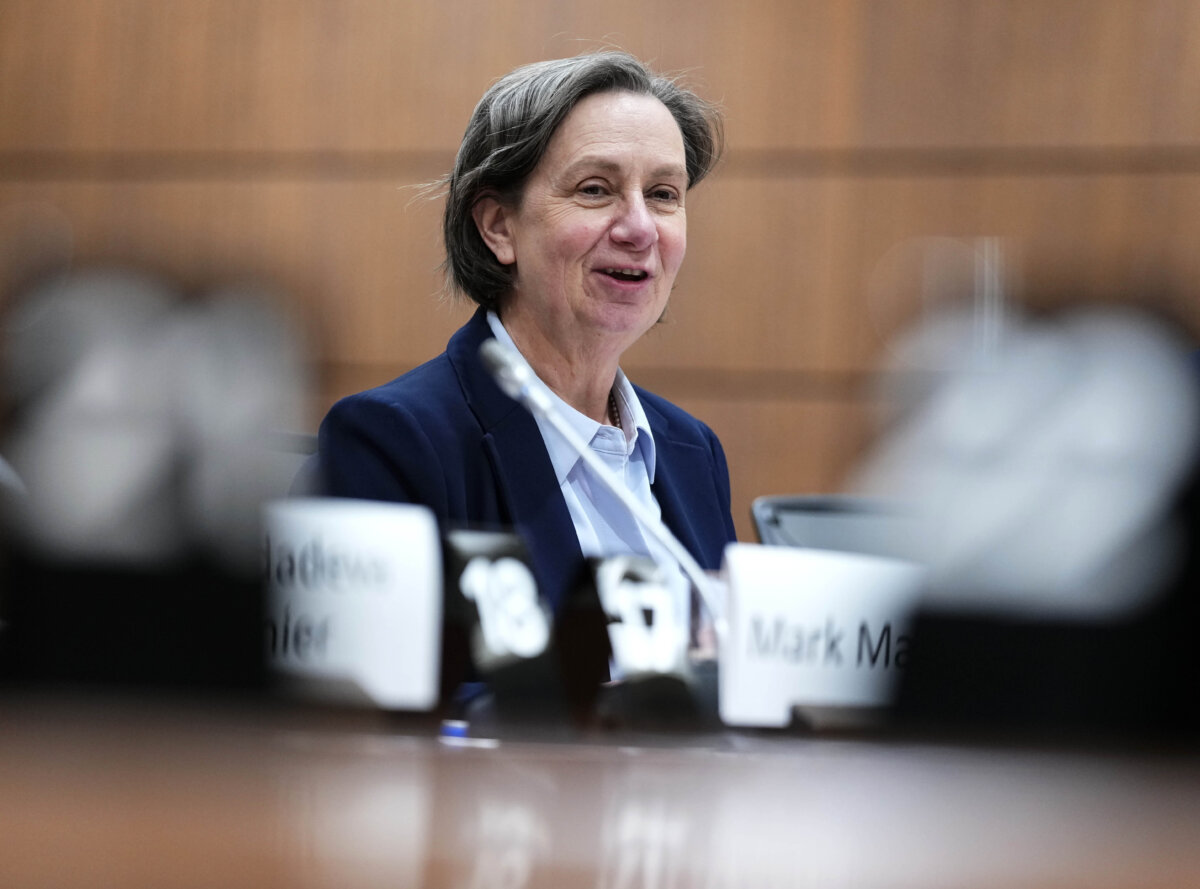
PBO Annette Ryan appeared before the House of Commons Standing Committee on Government Operations and Estimates on Nov. 26. She addressed Ottawa’s growing borrowing requirements, rising debt-servicing costs, increased spending on professional services, and potential cost overruns on major infrastructure projects.
Ryan confirmed that 100 percent of Ottawa’s $1.6-billion equity investment in Cohere would be financed through incremental borrowing, since the government was already running a deficit.
She said she did not know how Ottawa planned to categorize the investment but the equity purchase would appear on the government’s financial statements as an asset equivalent to its purchase price.
Since Cohere is privately held, her office understood that the recorded value of Ottawa’s investment would not be adjusted until the asset was sold.
“On balance, [it] won’t show up as essentially either a capital or an operating expense, but certainly will start the clock ticking on debt service charges via the required federal borrowing,” Ryan said.
Asked whether the government’s fiscal anchors limited Ottawa’s ability to borrow money to buy shares in private companies through Crown corporations, Ryan said there would be “very limited interaction” with those measures, although her office had not conducted a specific analysis.
She said there would be a secondary effect on the government’s deficit-to-GDP fiscal anchor because the purchase would generate debt-servicing costs.
Conservative MP Dan Mazier said the Business Development Bank of Canada and Export Development Canada had previously acquired equity stakes in Cohere and asked how Canadians could determine whether they were making or losing money on those investments.
A PBO official said that would be “very difficult to track,” although he believed the Crown corporations would have to disclose unrealized gains and losses.
Ryan said her office had neither received nor requested an investment analysis specific to Cohere and that she was unaware of any statements outlining Ottawa’s expected returns on the investment. She also noted that Budget 2026 contained relatively few references to the investment.
Federal Contracts
Mazier also questioned whether Ottawa’s position as both a shareholder and customer of Cohere created a conflict between awarding federal contracts at the lowest cost and increasing the value of its equity investment.
“I think that there is a risk that if the government has invested so heavily, there may be a tendency to award more contracts to the company that has a different exposure for the government,” she said. “In that way, there may not be sufficient distance with that company.”
However, she acknowledged during a separate exchange that Ottawa could argue its investment in Cohere served broader policy objectives, given the technology’s implications for Canadian sovereignty and national security.
Federal Investment Strategy
Prime Minister Mark Carney announced on Oct. 29 that Ottawa would acquire an equity stake of up to $1.6 billion in Cohere, saying the investment would help the company expand its operations and compete globally.
Under the agreement, Cohere committed to creating at least 1,000 technical jobs in Canada and investing at least $1.7 billion in additional domestic computing infrastructure by 2030.
The Liberal government has defended its increased spending and borrowing, saying it intends to shift federal expenditures from day-to-day operations toward investments that stimulate private-sector spending, improve productivity, and strengthen Canada’s economy.
Finance Minister François-Philippe Champagne said following the Nov. 5 release of Budget 2026 that Ottawa was “kick-starting an investment supercycle,” while maintaining that the federal deficit would decline over the coming years.
Meanwhile, Conservative MP and finance critic Michael Chong said the government had failed to establish a “credible fiscal anchor to reduce the debt and balance the budget,” arguing that increased borrowing was contributing to inflation and affordability challenges.
Previous Investments
Conservative MP Greg McLean asked Ryan for examples of the federal government successfully investing in private corporations.
The PBO pointed to Ottawa’s purchase of Air Canada shares during the COVID-19 pandemic, which was intended to help the airline weather the pandemic’s economic effects.
Ryan said the share purchase generated a profit of roughly $43 million, although that amount did not cover the government’s borrowing costs during that period.
She also pointed to Ottawa’s previous bailout of automakers General Motors and Chrysler, which resulted in a financial loss for the government but was intended to help the automotive sector survive.
Ryan added that Ottawa’s cumulative borrowing requirements over the next five years were projected to reach $765 billion, compared with cumulative deficits of $289 billion, with debt-servicing charges representing the fastest-growing line item in Budget 2026.