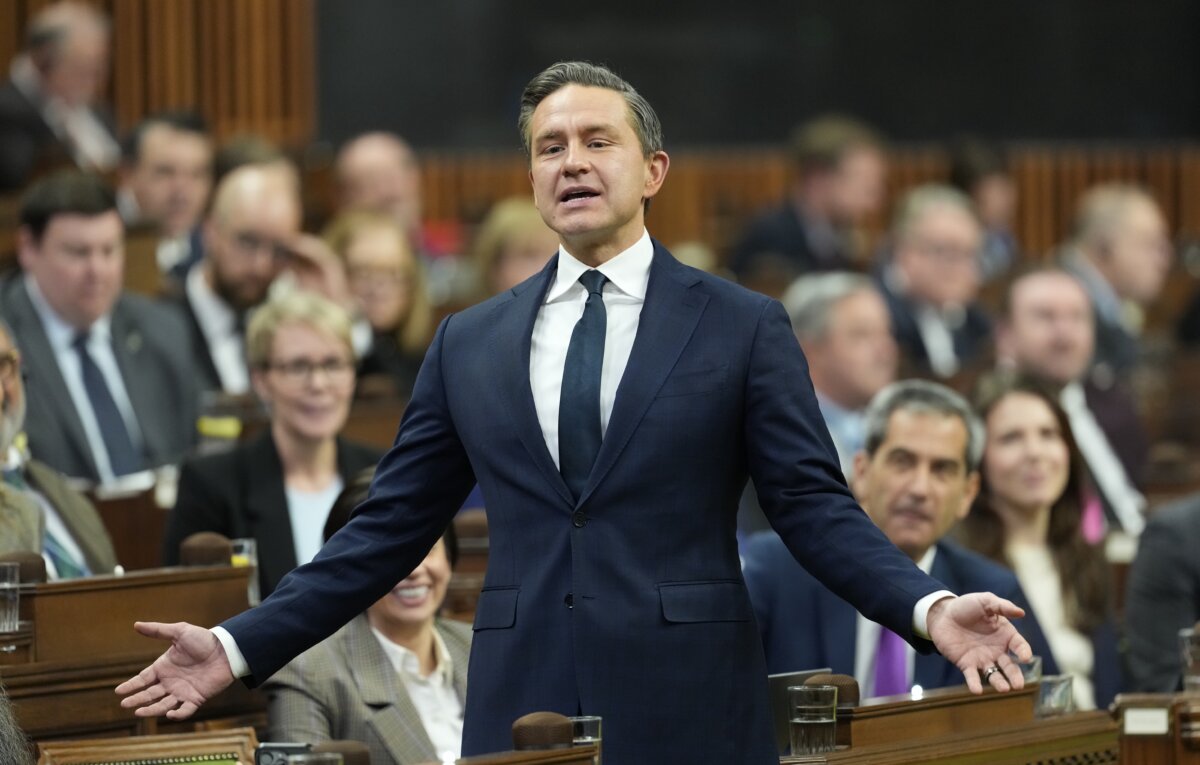

A Tory motion to reject the federal government’s immigration targets for 2027 failed in the House of Commons on Nov. 25.
The motion received 175 “Nay” votes and 154 “Yea” votes, with the Liberals, New Democrats, and Green Party voting against it, and the Conservatives and Bloc Québécois voting in favour of it.
The motion’s text read that in order to ensure housing, healthcare, jobs, and wages keep pace with Canada’s population growth, the House would “reject the Prime Minister’s plan to increase permanent immigration next year to the highest levels in history.”
Conservative MP and immigration critic Michelle Rempel Garner told reporters shortly after the vote that the Liberal Party voted to keep “breaking the promise of Canada: … come here legally, work hard, play by the rules, and you can build a good life.”
“That promise worked because Canada welcomed people at a pace that we could keep up with,” Rempel Garner said.
She said the Liberals’ vote would also hurt newcomers to Canada, young people looking for work, and Canadians waiting for specialized healthcare. “The Liberals just voted to make their lives harder. But who won? Corporate lobbyists who profit from suppressed wages created by immigration levels that have been set too high,” she said.
Conservative Leader Pierre Poilievre said the vote came the same day that a report showed almost 30,000 Canadians died on a waiting list in 2025–26.
“Enough is enough. We need to get immigration under control. Get rid of the temporary foreign worker program, bring the numbers down, ensure that everybody has a doctor, a job, and a home,” Poilievre said.
The federal government’s immigration levels plan, outlined in Budget 2026, sets annual targets of 380,000 permanent residents and 370,000 new temporary residents for 2027, 2028, and 2029.
The government has also announced a one-time measure to provide permanent residency to up to 200,000 people already living in Canada by the end of 2027. The measure includes up to 100,000 workers and up to 100,000 people under humanitarian and family-related provisions, including up to 32,000 Hong Kong residents and 18,800 Ukrainians who are already in Canada.
The 2025 budget called for 380,000 permanent residents for 2026, 2027, and 2028, as well as 385,000 temporary residents in 2026, followed by 370,000 in both 2027 and 2028.
During Question Period earlier in the day, Prime Minister Mark Carney said the government had “taken back control of immigration” by bringing down asylum seekers and foreign students by two-thirds, and temporary foreign workers by one-half.
Carney noted that one in three nurses and one in four doctors in Canada are immigrants. “We’re bringing in medical professionals, we’re building this country strong,” Carney said.
When Poilievre asked how Ottawa would be able to house an additional 665,000 people when the Parliamentary Budget Officer recently said the Liberal government was not on track to meet its housing goals, Carney said Canada’s population is growing at the slowest pace since World War I.
“We are working with the provinces to bring in the people that this country needs,” Carney said.