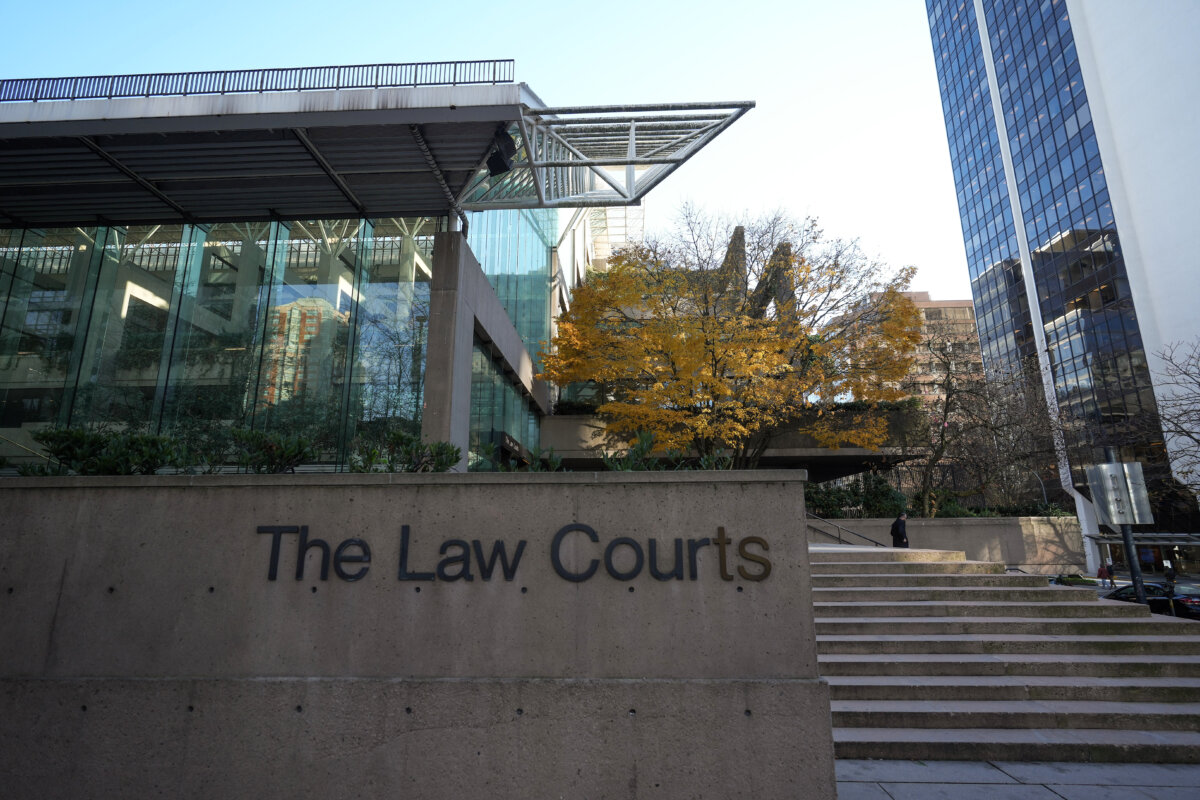

A Supreme Court hearing for a B.C. woman challenging a $10,000 human rights fine for comments she made in a private conversation with a transgender friend is set to wrap up on Nov. 20.
Kirsten Olsen appealed a February 2025 finding of the B.C. Human Rights Tribunal that she had discriminated against longtime friend and former tenant Theresa Wiebe based on gender identity.
The tribunal ordered Olsen to pay $10,000 for injury to dignity to Wiebe, who identifies as transgender, and is now known as Terry.
Wiebe lived in a motorhome on Olsen’s property from 2014 to 2018, according to tribunal documents.
Wiebe told Olsen in 2017 about her plans to get “top surgery” to remove her breasts, the documents said. Olsen responded that she was worried about Wiebe undergoing the surgery, given her own mother’s battle with breast cancer and her concerns about the procedure’s medical risks.
Olsen said she was uncomfortable with the decision and did not support it, but the friendship continued, according to the Justice Centre for Constitutional Freedoms (JCCF), which is representing Olsen.
“Olsen allowed Wiebe to remain on the property for $200 per month and even paid for Wiebe to return to British Columbia from the Yukon after Wiebe was hospitalized following what appeared at the time to be complications related to hormone therapy,” the JCCF said in a press release.
Olsen asked Wiebe to leave her property in 2018 after she became involved in several disputes with other people living there, according to court documents.
Olsen has maintained that the decision had nothing to do with Wiebe’s gender identity or transition. Wiebe disagreed, and filed a complaint with the tribunal in 2019. Wiebe alleged in her complaint that her plan to change her gender was a factor in the eviction.
Wiebe alleged she asked more than “a dozen times” before June 2018 if she would be “safe on this property” if she went through with plans for a mastectomy. The tribunal’s ruling said Olsen would only say she was uncomfortable with it or she did not support it.
Olsen denied that Wiebe asked if her tenancy would be safe if she had the surgery.
The tribunal sided with Wiebe, saying Olsen discriminated regarding tenancy by refusing to reassure Wiebe her housing situation was safe.
The ruling stated that Olsen had urged Wiebe not to proceed with the surgery, saying she was “fine as a lesbian” and did not need to “mutilate” her body. Olsen denied using the word “mutilate,” but the tribunal concluded that it was “more likely than not” that she had used it.
The tribunal said it did, however, accept that Olsen was genuinely worried about Wiebe’s safety and the risks of the procedure.
Olsen’s petition asks the BC Supreme Court to overturn the decision, arguing that the tribunal incorrectly concluded a tenancy relationship existed under the Human Rights Code and did not adequately consider her Charter-protected right to freedom of expression.
The petition further argued that Olsen was not hostile toward Wiebe’s gender identity and that the tribunal had sanctioned private conversations between the two women about their friendship.
Lawyer Marty Moore called the tribunal’s ruling “very concerning.”
“A comment of concern for a friend is very different than evicting someone from their home on the basis of their race, religion, sex or other protected personal characteristic,” he said in the JCCF statement. “The BC Human Rights Tribunal should focus on combatting genuine cases of discrimination rather than policing speech.”
The hearing is expected to wrap up on Nov. 20. The court’s ruling will likely not be published for several weeks.