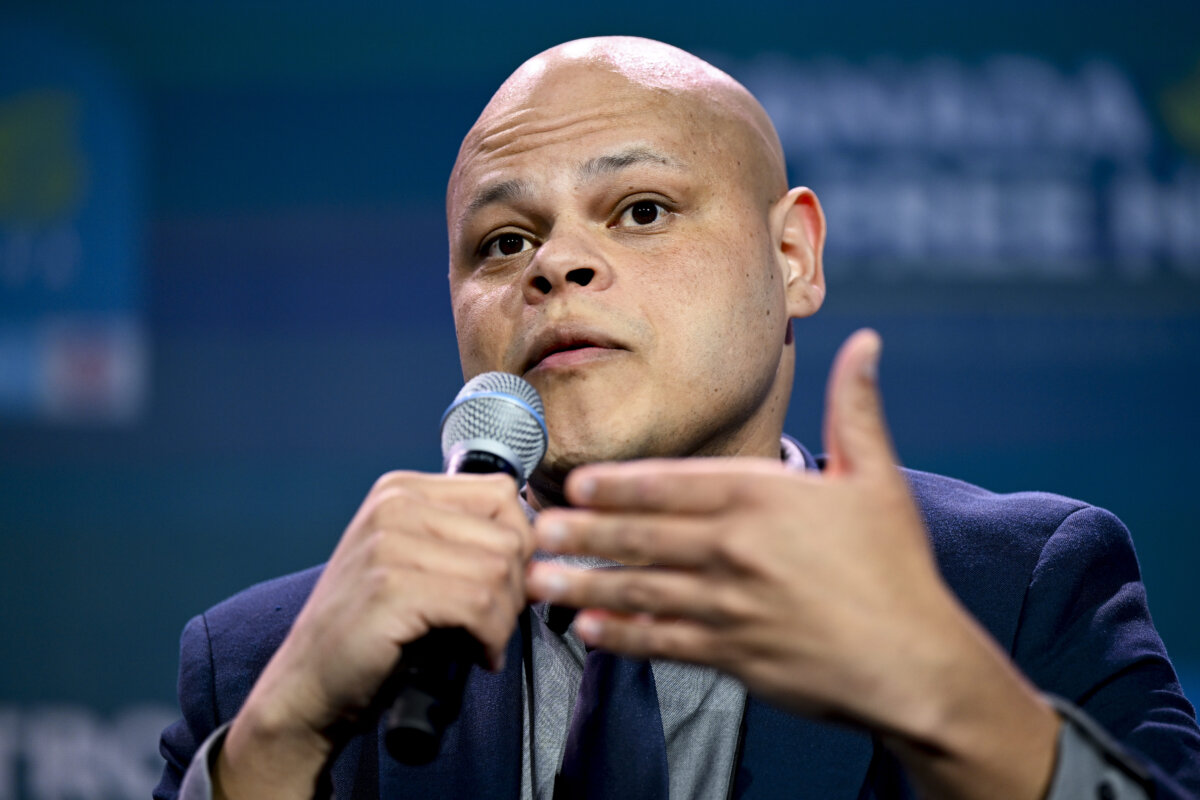

Conservative MP Jamil Jivani says Prime Minister Mark Carney’s ongoing efforts to deepen trade ties with Beijing will harm Canadian businesses and workers, and increase Ottawa’s dependence on a communist regime that has a record of human rights abuses and foreign interference.
Jivani’s criticism comes in the wake of Carney’s Nov. 17 meeting with Chinese leader Xi Jinping on the sidelines of the Asia-Pacific Economic Cooperation (APEC) Leaders’ Meeting in Shenzhen, China, during which the two leaders agreed to further tariff relief between the two nations.
“This is not good for our country,” Jivani said of the deal in a Nov. 19 video posted on social media, particularly criticizing Ottawa’s decision to reduce tariffs on 32 categories of Chinese steel and aluminum.
“All it is going to do is flood cheap, potentially slave-made products into Canada, and put more Canadian workers and businesses at a disadvantage,” the Bowmanville-Oshawa North MP said.
Under the Nov. 17 agreement, Ottawa agreed to extend tariff exemptions on various Chinese steel and aluminum products until the end of 2028, in addition to tariff relief for 23 categories of Chinese steel and nine categories of Chinese aluminum products.
Ottawa says the expanded tariff relief is for aluminum and steels products where “supply is insufficient or unavailable” in Canada.
“We have unlocked billions in new export orders for Canadian farmers, ranchers, and fish harvesters – for workers and businesses across the country,” Carney said in a Nov. 17 statement.
“We’re making it easier to travel, study, and do business between our nations to create more opportunity and prosperity for all.”
In return, Beijing agreed to provide tariff relief on roughly $400 million worth of Canadian agricultural, seafood and meat exports, including shrimp, prawns, halibut, and pork.
Jivani said the decision to exempt more Chinese steel and aluminum from tariffs will harm Canada’s economy and workers.
“There’s a reason why we had tariffs in place on Chinese steel and aluminum, so that it was harder for those very poorly run businesses in China that treat their workers terribly, and receive communist subsidies, to bring their cheap products into Canada and outcompete Canadian businesses that have a minimum wage and unions and treat people with dignity,” Jivani said.
“How is that building our country? How is that good for our sovereignty? It’s not. It’s not at all,” he added.
In addition to economic concerns, Jivani raised concerns with Carney’s pursuit of a “strategic partnership” with Beijing, saying it will make Canada “more dependent” on a hostile regime.
“A foreign regime with a track record of interfering in our elections, a foreign regime that has set up police stations to intimidate Canadian citizens, a foreign regime that shows no respect for the rule of law and the sovereignty of this nation,” Jivani said, describing China’s transnational repression and foreign interference efforts.
Jivani’s comments follow a recent report from human rights organization Safeguard Defenders which identified over a dozen “liaison” points in Canada that work with Chinese police, courts, and state agencies to allegedly engage in transnational repression on Canadian soil.
Carney said on Nov. 18 he raised human rights and foreign interference concerns during his talks with Xi, but declined to give specifics.
Carney, who had previously described China as Canada’s top national security threat during the 2025 federal election campaign, has defended his pivot to deepen ties with the regime as necessary for Canada’s future economic well-being and diversification.
Auto Sector Impacts
Jivani also brought up concerns of the impact of Chinese competition on Canada’s struggling automotive industry, which employs thousands in his riding and the surrounding area.
During Carney’s visit to China in January, Ottawa reached an agreement with Beijing to reduce its 100 percent tariff on Chinese electric vehicles (EVs), allowing up to 49,000 vehicles to enter Canada annually at a preferential tariff rate of 6.1 percent. In return, Beijing agreed to lower its combined tariffs on Canadian canola seed to approximately 15 percent and remove additional tariffs on Canadian canola meal, peas, lobster and crab.
Jivani pointed to recent comments from Brian Kingston, president and CEO of the Canadian Vehicle Manufacturers’ Association, in which Kingston said that Europe shed 104,000 automotive jobs over 2024 and 2025 amid growing competition from Chinese automakers entering their market.
Kingston told MPs on June 9 that Canada should scrap the Chinese EV agreement and focus on keeping unfettered access to the U.S. market.
Canada’s largest private-sector union, Unifor, has also criticized the Chinese EV agreement, with national president Lana Payne describing it in a Jan. 16 statement as “a self-inflicted wound to an already injured Canadian auto industry.”
At the time, the union said that scrapping the 100 percent surtax could cause Canada to become a dumping ground for Chinese-owned manufacturers and said it could also threaten Canadian jobs.