Civil liberties groups are warning of free speech and censorship dangers in the Liberal government’s online harms Bill C-34, which is currently being studied in committee after passing second reading last month in the House of Commons.
Representatives of the Canadian Constitution Foundation (CCF) and digital rights advocacy group OpenMedia testifying Nov. 17 before the House Committee on Canadian heritage said the bill could lead to social media companies banning some lawful speech on their platforms in order to comply with the new proposed regulations.
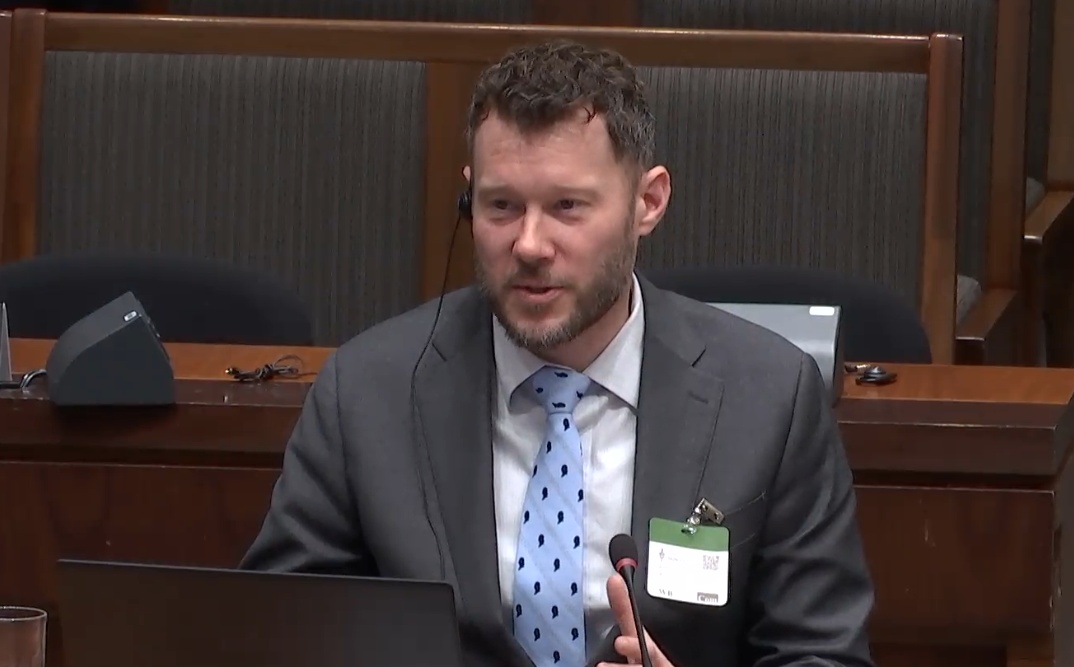
“The CCF believes that the proposed Safe Social Media Act uses valid concerns about keeping kids safe online as a Trojan horse to create a new censorship apparatus that will silence adults,” said expert witness Josh Dehaas, a lawyer who serves as interim litigation director with the CCF.
He said the legislation’s requirement for social media platforms and artificial intelligence (AI) chatbot companies to mitigate exposure to harmful content would encourage companies to remove lawful expression rather than risk substantial fines.
“It is not practically possible for social media and AI companies to stop the speech identified in the bill without also limiting a very large amount of controversial but lawful expression, precisely the type of speech that is protected by Section 2(b) of the Canadian Charter of Rights and Freedoms,” he said.
What Is the Bill?
Bill C-34, tabled June 10, proposes setting a minimum age of 16 for holding social media accounts, with exemptions for platforms that demonstrate adequate safeguards have been put in place for minors.
It also proposes requiring social media platforms and AI chatbots to reduce users’ exposure to harmful content, identified in the bill across seven categories including material that incites hatred, violence, terrorism, or extremism, intimate content shared without consent, and material that sexually victimizes children.
The proposed legislation would also create a new Digital Safety Act and Digital Safety Commission of Canada to ensure compliance.
Under the bill, the commission would be given the authority to develop further regulations, assess safety plans developed by platforms, carry out audits, and impose fines for non-compliance.
Ottawa says the legislation’s goal is to create safer digital platforms that reduce the risk of exposure to harmful online content for Canadians, especially minors.
Support for Legislation
During the Nov. 17 committee meeting, a number of witnesses also spoke in support of the bill, including Carol Todd, whose daughter Amanda Todd died of suicide in 2012 after being subjected to online cyberbullying and harassment.
“The strongest part of this bill is that it does not place the burden on children or parents. It places the responsibility where it belongs, on the companies creating and profiting from these products,” Todd said. “Children’s safety must come before corporate profits, and platforms must be held accountable.”
Robin Sherk of Raise the Age Canada also spoke out in support of the bill’s proposal to raise the minimum allowable age for having a social media account, but expressed concern that exemptions for some platforms that demonstrate adequate safeguards could let platforms still keep dangerously addictive features in place.
“A platform could earn an age exemption and keep infinite scroll, addictive algorithms, autoplay, streaks, disappearing stories, and features that let strangers target kids online,” she said.
Further support came from Jenny Yuen, executive vice-president at Kids Help Phone, who said the service receives a text from a young person in need approximately every 90 seconds and welcomed the bill’s proposed safeguards for users experiencing mental health crises involving AI chatbots.
“We are particularly encouraged by the bill’s recognition of the need for crisis intervention [and] escalation mechanisms,” she said, referring to a provision in the bill that would require AI chatbots to stop conversations and direct users to appropriate crisis intervention services if they express suicidal ideation or any intention to harm themselves or others.
‘Ministry of Truth’
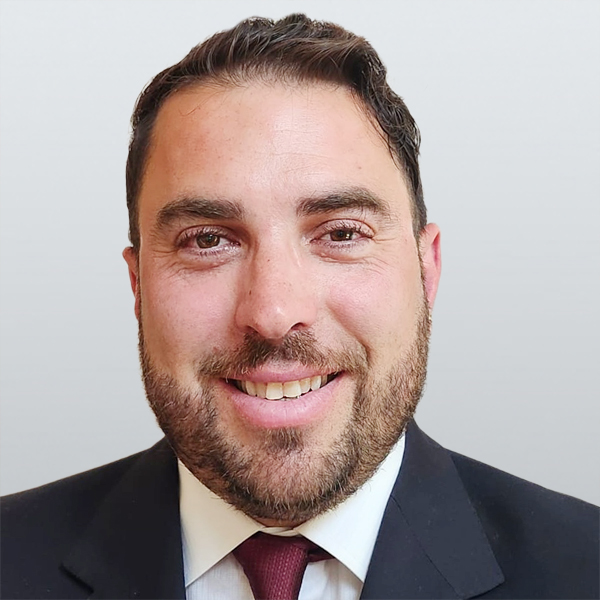
OpenMedia executive director Matthew Hatfield said that while his organization does support the legislation’s overall push for regulatory reform and increasing online safety, serious concerns remain about the bill’s potential to infringe on lawful speech.
The commission that would be created under Bill C-34 “will have extraordinary power to review, guide, and make binding decisions about how platforms moderate the expression of Canadians in the online spaces we use every day,” he said.
Hatfield said there should be stronger parliamentary oversight of appointments to a future commission to ensure it doesn’t become partisan or misuse its authority, as well as an obligation for companies to assess how safety measures they put in place could impact freedom of expression and privacy for users.
“It’s very important that the commission not be appointed by any one party; that it have real diversity of views and represent the broad views of Canadians, and not just whichever party is in power at the time,” he said.
Conservative MP Rachael Thomas questioned Hatfield about whether companies might use automated systems to remove lawful but controversial content such as by earmarking one potentially offensive word or term and automatically getting rid of all posts that used it, which Hatfield said was a “real concern.”
“It would also remove overwhelmingly lawful speech,” he said of the example where posts containing a certain word are automatically banned.
Dehaas went a step further, calling the proposed commission “a mild version of George Orwell’s Ministry of Truth,” in a reference to the propaganda arm of the totalitarian government described in Orwell’s dystopian novel “1984.”
“Where the law is unclear, social media and AI companies will err on the side of censoring more lawful expression,” he added.
Dehaas said Bill C-34 is modelled after the European Union’s Digital Services Act. The act, adopted in 2022, requires major platforms to assess and mitigate risks associated with harmful content, under the oversight of EU regulators who can impose penalties for non-compliance.
Dehaas cited a study—carried out in 2023 and published in 2024 by the Future of Free Speech think tank at Vanderbilt University—which assessed deleted comments in France, Germany, and Sweden and found that 99.7 percent of deleted Facebook comments and 98.9 percent of deleted YouTube comments examined in Germany were legally allowable speech, according to legal experts.
Thomas questioned Dehaas about a past assertion by the CCF that Bill C-34 could present one of the most serious threats to free speech in decades.
“The risk here is that we are creating a digital safety commission, and that is a regulator that will have all sorts of regulation-making powers to limit speech, not just the harmful content that we all would agree is genuinely harmful, but harmful content that they later perhaps define through regulations,” he answered.
Dehaas added that in his view protections for minors online can already be enforced via existing civil and criminal law or by giving constitutionally compatible responsibilities to a regulator who already exists, such as the Canadian Radio-television and Telecommunications Commission.
Defining Hate Speech
The precise definition of hate speech also came under discussion, with Dehaas telling Tory MP Andrew Lawton that Bill C-34 could end up restricting speech that falls below the definition of criminal hate speech.
“Despite working almost daily with this case law, I often struggle to see the line between expression that detests and that which disdains, or between words that vilify and those which merely discredit, hurt, humiliate, or offend,” Dehaas said.
“And research shows that automated systems struggle even more than I do,” he added, referring to the distinction drawn in the legislation between criminal hate speech and the constitutionally protected expression of merely offensive or hurtful sentiments.
Lawton also said that Canadians could experience significant difficulties in pursuing legal recourse if a private social media company took down their content in response to government-mandated requirements, something Dehaas largely agreed with.
“If there’s a law that requires Meta or Google to censor content, and as a result of that, that leads to your speech being limited, I believe that you could seek judicial review,” he said.
“But it would be much more difficult than if it [the alleged infringement] were done in a more obvious way through the government.”
The committee is continuing its examination of Bill C-34 before the legislation returns to the House of Commons for further consideration.