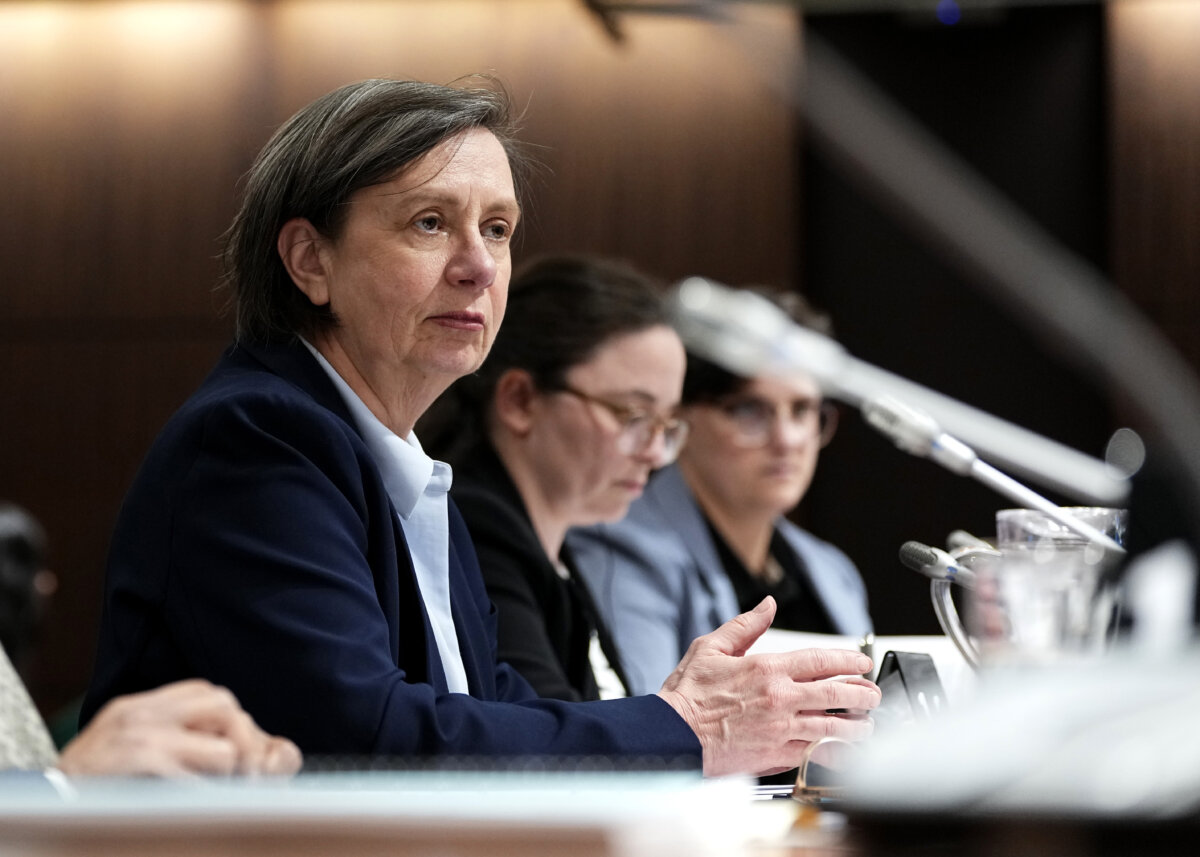

Parliamentary Budget Officer (PBO) Annette Ryan says the federal government used up nearly all of its $158.3 billion in fiscal room in Budget 2026 because of new spending commitments.
In a Nov. 17 report, the PBO said the government will spend an additional $151.5 billion over five years, compared to the $158.3 billion in new fiscal room previously outlined in this year’s spring economic update.
“The government gained $158 billion in fiscal room over five years, and committed 96 cents of every dollar to new spending. Almost none of the fiscal windfall went to reducing deficits,” Ryan said in a video accompanying the report.
The report said that since the 2024 fall economic statement, new spending measures of $324.8 billion are nearly twice the $176.7 billion in fiscal room created.
Ottawa forecasted in Budget 2026 that it would have a $62.3 billion deficit for the 2026–27 fiscal year, which was roughly $3 billion lower than the projection in its spring economic update. The government expects that the deficit will decrease to $52.9 billion by the 2030–31 fiscal year, but its overall debt will rise from $1.37 trillion to $1.59 trillion over the same period.
The budget said higher oil prices and stronger economic activity boosted corporate profits and wages, meaning the government would take in more income tax revenue. But it has chosen to channel those additional revenues into spending to boost long-term growth instead of reducing deficits.
The PBO report said Ottawa is on track to meet its two fiscal anchors: balancing day-to-day operating spending with revenues by the 2027–28 fiscal year, and maintaining a declining deficit-to-GDP ratio over the budget planning horizon.
The report said that without new tax and spending measures in Budget 2026, the operating balance would have reached surplus in 2026–27, two years earlier than the government’s original target.
The budget includes measures to boost investment and assist businesses, such as $36 billion in costs over five years to fund the Productivity Mega Deduction, which allows businesses to deduct the full cost of eligible equipment and technology in the year they are put into use.
Conservative MP Pierre Poilievre noted that despite all of the government’s expenditure, the PBO is projecting the economic growth for 2026 to be only 1 percent, the slowest it has been in a decade outside the pandemic years.
“How was [Finance Minister François-Philippe Champagne] able to spend so much to achieve so little?” Carney said in the House of Commons on Nov. 17.
Champagne said his government has a “generational plan” to build more infrastructure and homes to boost the economy.
“We have the budgetary firepower and the discipline, and we’re going to build the strongest economy in the G7,” he said.
Not on Track to Double Housing Starts
The report states that while the budget includes new measures to tackle homelessness and housing shortages, the federal government is not on track to meet its goal of doubling housing starts over the next decade. It said year-to-date housing starts are down 4 percent in 2026 compared to 2025.
The Liberal Party had promised in its 2025 election platform to increase housing investments so that home construction would double over the next decade to at least 500,000.
According to the Canada Mortgage and Housing Corporation, housing starts rose from 227,697 in 2024 to 241,171 in 2025. It projected that Canada would see 241,000 starts in 2026, 223,400 in 2027, and 211,900 in 2028.
The federal government has introduced several measures to spur new housing construction, including launching Build Canada Homes with an initial $13 billion in funding over five years. The agency has advanced six federal land projects toward construction, with the sites expected to provide up to 4,000 factory-built homes.
Budget 2026 also includes the goal of “ending homelessness within 10 years” through a new Integrated Supports Fund to support projects that would “bring together” housing with health and mental health and boost the development of supportive housing.