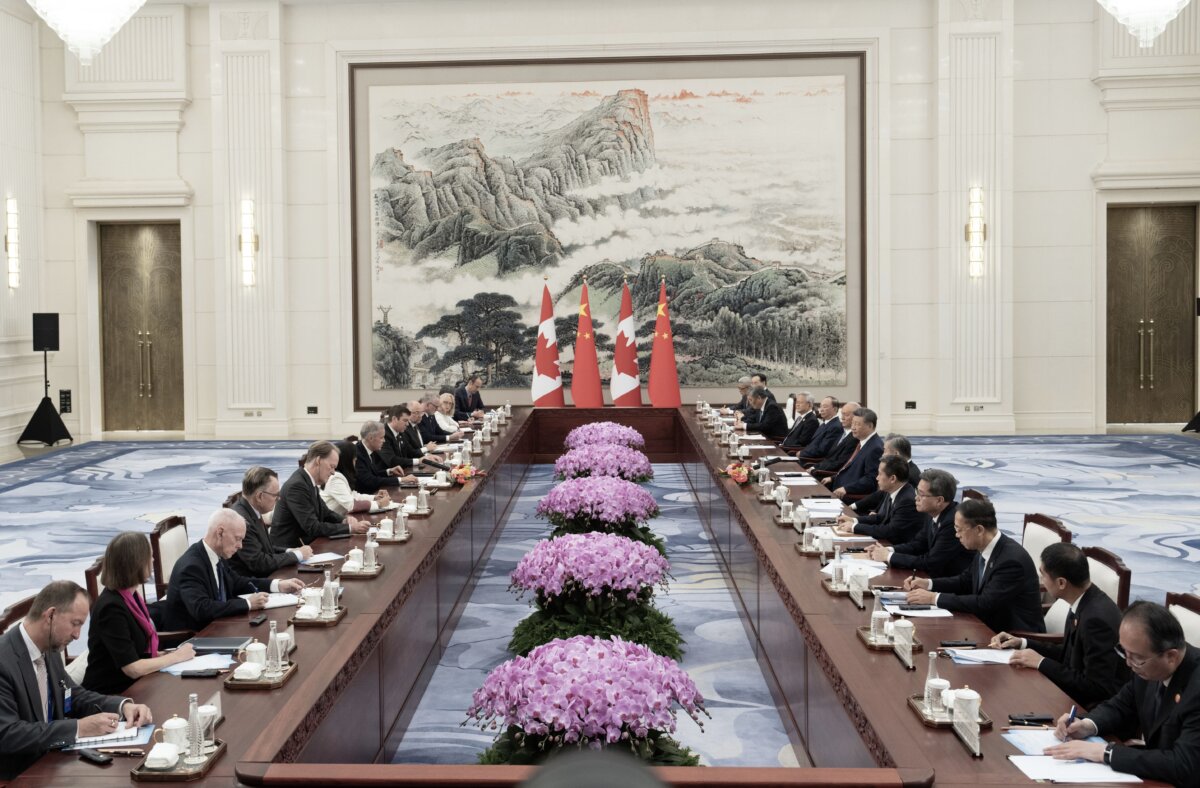
Prime Minister Mark Carney met with Chinese leader Xi Jinping on Nov. 17 in Shenzhen, China, where the two agreed to further roll back tariffs on Canadian pork and seafood exports in exchange for more Canadian market access for Chinese steel and aluminum products.
A statement from Carney’s office noted that besides trade issues, the two discussed recent cooperation on combating cross-border drug trafficking, as well as collaboration in the oil and gas, renewable energy, and nuclear sectors.
Carney is currently in China to attend the Asia-Pacific Economic Cooperation (APEC) Economic Leaders’ Meeting, scheduled for Nov. 18–19 in Shenzhen.
The Prime Minister’s Office (PMO) noted that the meeting builds on Carney’s last trip to China in January, adding that Carney has launched a “new Canada-China strategic partnership to stabilise trade, build out clean energy industries, and better connect our peoples.”
Ottawa says the tariff relief covers approximately $400 million in Canadian exports, including frozen pork cuts, cold-water shrimp and prawns, geoduck, sea cucumber, and Greenland halibut.
In exchange, Ottawa says it has agreed to extend tariff exemptions to an additional 32 types of Chinese steel and aluminum products for which Canadian supply is insufficient or unavailable.
Other agreements include Canada sending a “major trade mission” to China in 2027 and the two countries declaring 2027 the “Canada-China Year of e-Commerce,” with an initiative to increase e-commerce collaboration between Canadian and Chinese companies.
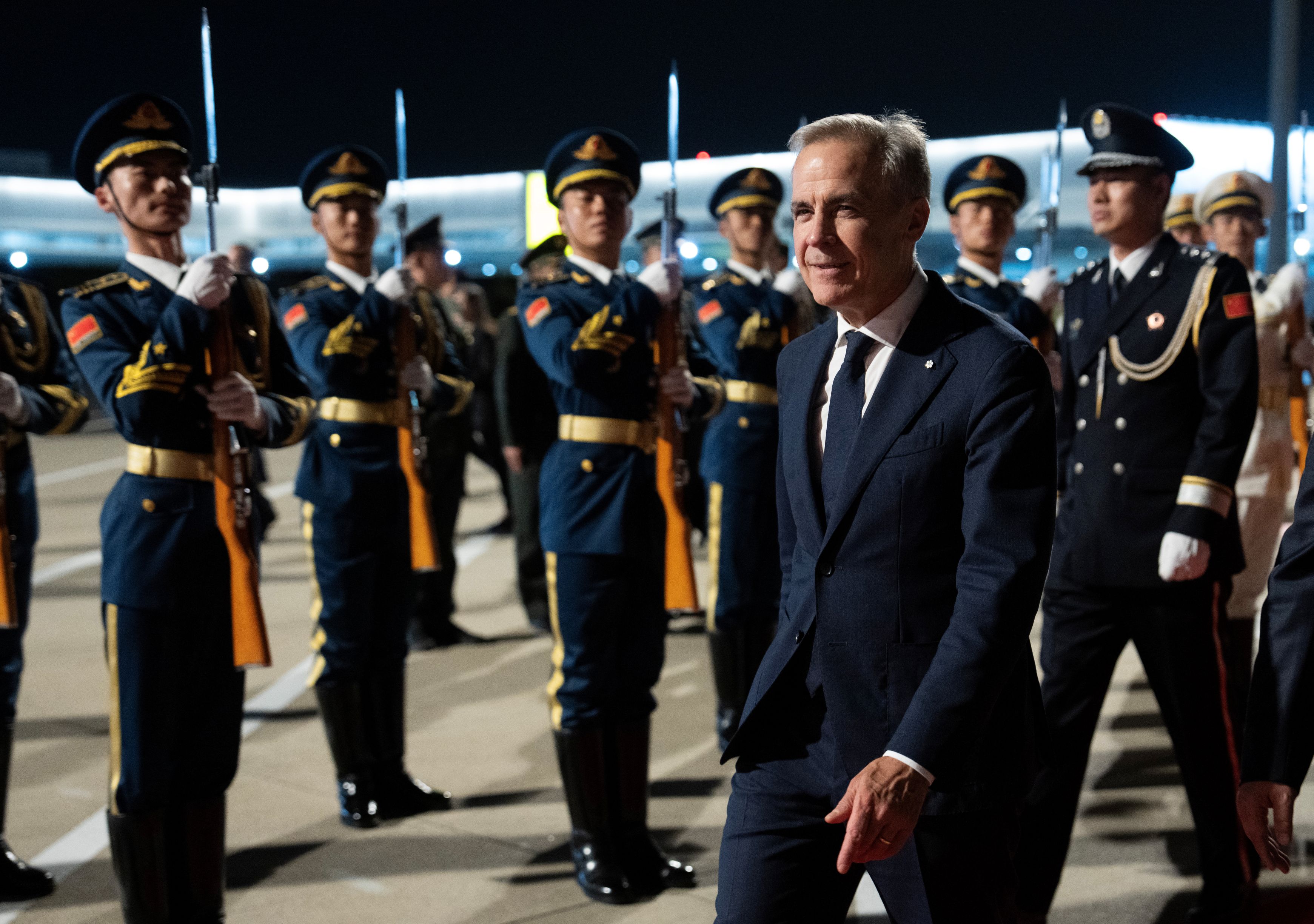 Prime Minister Mark Carney walks past an honour guard as he arrives in Shenzen, China, on Nov. 16, 2026. (The Canadian Press/Adrian Wyld)
Canada is also allocating $850,000 in scholarships under the Canada Learning Initiative in China to support 850 Canadian students studying at Chinese universities.
The government noted other recent agreements between the two countries, including new airline routes between Canada and China, $15 million in commercial agreements between Canadian and Chinese companies in the arts and culture sector, and an agreement between the University of Ottawa and Shanghai International Studies University to establish a new undergraduate dual-degree program.
During Carney’s visit to China in January, Ottawa signed a number of agreements with Beijing, including a police cooperation agreement and a deal allowing up to 49,000 Chinese-made electric vehicles to enter Canada at a reduced tariff rate of 6.1 percent, down from 100 percent, in exchange for China cutting tariffs on Canadian canola and other agricultural products.
Ahead of Carney’s trip to China this week, Ottawa and Beijing signed an agreement to extend the tariffs relief on Canadian agricultural products for another two years, in exchange for Canada maintaining tariff exemptions for certain Chinese steel and aluminum products.
Carney said on Nov. 16 that he may pursue further ties with Chinese automakers if there is a lack of progress in trade talks with the United States, adding that any potential Chinese investment in Canada’s auto sector would not be pursued as leverage against Washington.
“Great auto workers, important market, real assets … if they’re not fully utilized in a North American context that provides other opportunities, Canada is going to move forward either way,” he said.
Trump administration senior trade adviser Peter Navarro accused Carney of playing “China off the U.S.”
“You should be far more worried China is going to eat Canada alive,” he said.
Canada’s trade with China in 2025 amounted to $35.1 billion in exports and $90.5 billion in imports. Canada’s trade with the United States that year amounted to $561.1 billion in exports and $362.2 billion in imports.
Conservative MP Stephanie Kusie, her party’s international trade critic, criticized Carney for seeking a “strategic partnership” with Beijing, saying he should uphold Canadian values.
“A deal that allows 50,000 Chinese EVs onto Canadian roads, putting Canadian auto jobs and national security at risk,” she said. “Trade matters. So do Canadian values.”
NDP MP Jenny Kwan asked Carney to raise the issue of transnational repression and foreign interference when he meets with Xi.
“As we know, we had a public inquiry into this matter, and the commissioner has highlighted the fact that China is one of the most aggressive actors in attacking Canada’s democratic institutions,” Kwan said.
Dissident and human rights organizations have also called on Carney to raise the issue of human rights.
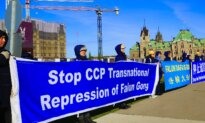
“We respectfully call on the prime minister to seek the release of six Canadians’ family members, prisoners of conscience in China for their Falun Gong faith,” said Grace Wollensak, national director of the Falun Dafa Association of Canada, adding that Carney should also ask Beijing to end its transnational repression in Canada.
Mimi Lee, a Toronto-based advocate for human rights in Hong Kong, called on Carney to demand the release of Hong Kong pro-democracy activists imprisoned by Beijing, including newspaper publisher Jimmy Lai and activist Joshua Wong.
Ahead of his trip to China, Carney said he would raise the issue of foreign interference when he met with Xi. The PMO has not indicated whether the two discussed foreign interference or human rights.