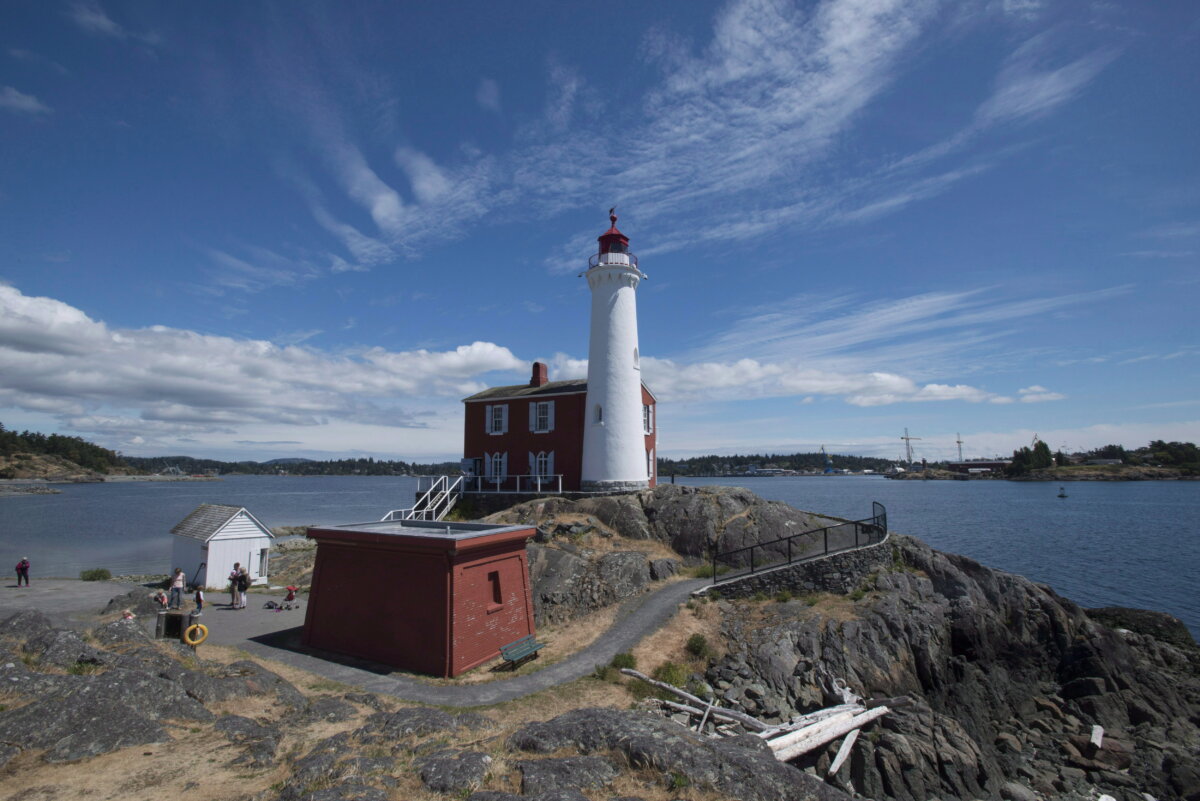

Forty-five percent of Crown-owned heritage buildings are in fair or better condition, says a federal government report.
Public Services and Procurement Canada’s departmental results report for 2025-26 says its target for the share of heritage buildings hitting those standards is at least 35 percent.
The target was 53 percent a year before. The department says the target changed to align with “funding reallocation and evolving priorities.”
The government’s directory of federal heritage designations shows there are almost 1,260 federal heritage buildings across the country, from northern Nunavut to Newfoundland.
Last year, the department said it worked on the rehabilitation of the Lester B. Pearson and the West Memorial buildings in Ottawa.
Public Services and Procurement Canada said in its report that it will continue to “rehabilitate and reinvigorate” heritage assets in the parliamentary precinct.
Public Works and Procurement Minister Joël Lightbound said in the report that investments in the rehabilitation of heritage and national buildings help to keep those assets safe, accessible, sustainable and valuable for Canadians.
The report says the overall percentage of Crown-owned buildings that are in fair or better condition is higher—almost 55 percent.
Chris Wiebe, manager of heritage policy at the National Trust for Canada, said he’d like to see heritage buildings maintained at a level more comparable with the rest of the federal portfolio.
“These are iconic buildings,” he said. “They’ve very important assets that are public facing and have a lot of public recognition. It’s important to keep them in good condition.
“The worry is that if you allow them to go too long with deferred maintenance, which they’ve indicated is also something that’s happening … it puts these buildings in a position where they may be further gone in terms of the deterioration and it may be more difficult to justify their upkeep and refurbishment down the road.”
Wiebe said the maintenance of heritage buildings is a “perennial problem” in Canada.
Canada’s auditor general found in 2018 that the federal agencies that owned most of Canada’s heritage buildings were not doing enough to preserve them.
It found National Defence, Fisheries and Oceans and Parks Canada didn’t have a handle on which buildings they owned, or on resources and strategies for conserving heritage sites.
The prime minister’s former residence at 24 Sussex in Ottawa has served as an example of the government’s neglect of heritage sites. It has been vacant since 2015 due to significant structural problems, including a rodent infestation, decrepit plumbing, faulty electrical wiring and a leaky roof.
Taxpayers have been shelling out tens of thousands of dollars per year to maintain the vacant property.
In June, Prime Minister Mark Carney laid out a plan to have a public fundraiser and design competition to restore 24 Sussex.
Carney said the winning design proposal will be announced by Canada Day of next year.
Wiebe said Canada is the only G7 country without legislation protecting its federal heritage buildings. He said a bill was tabled in Parliament in 2022 to lock in protections for federal heritage buildings but it did not pass second reading.
“It’s up to policy to protect and manage these buildings and ensure their kind of longevity for Canadians. In other countries, it’s codified, there’s particular restrictions put around things,” Wiebe said.
Wiebe said he’s also concerned about the government’s plan to sell off or lease surplus office space. April 2024’s federal budget said reducing the federal office footprint would generate “substantial” savings of $3.9 billion over the next 10 years, and $900 million per year after that.
“It’s indicative of a lot of things in the private sector where you run down these buildings with deferred maintenance and then you pass them off to another owner who may or may not demolish them for their land value,” he said.
Wiebe said the government has a responsibility to Canadians to manage “important, iconic” heritage sites, including those outside of the Ottawa area.
“I think some of the ones here in Ottawa they’re focused on quite a bit, but there’s others around the country that have equal importance that should be focused on as well.”