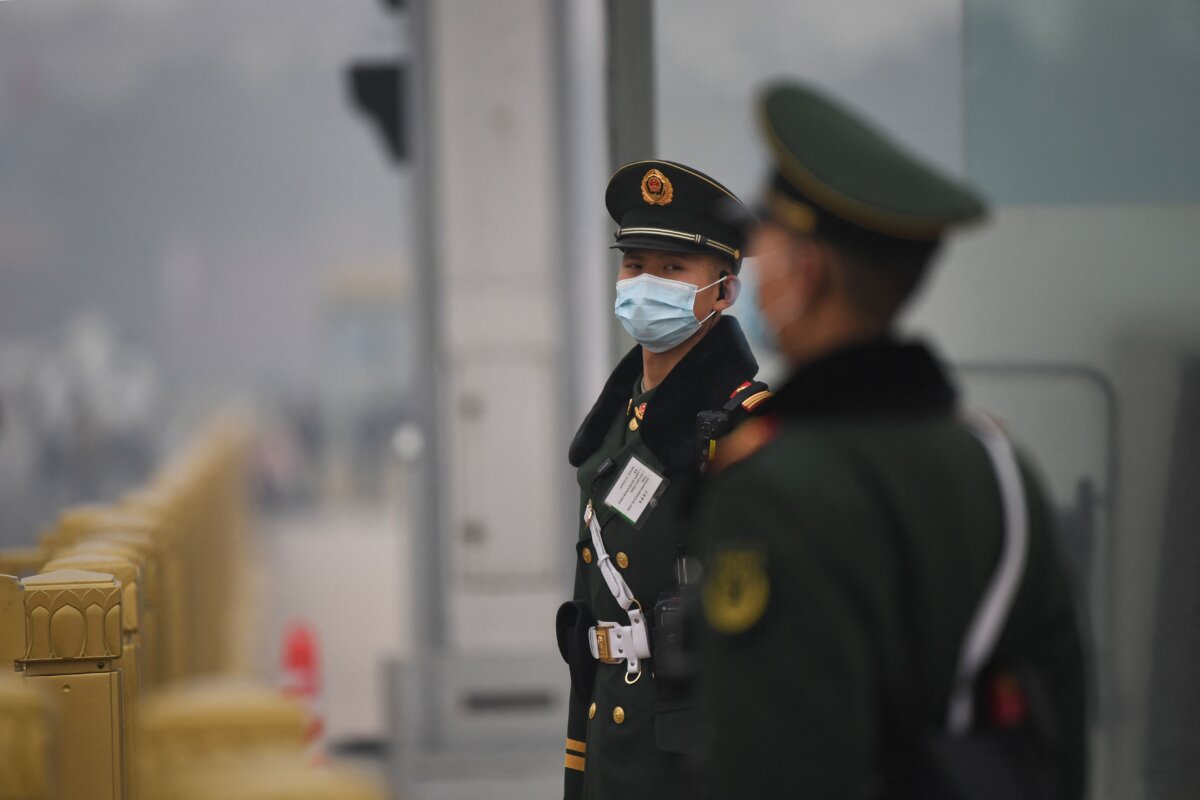

China is operating more than a dozen policing and judicial offices through liaison points in Canada, according to a report by the human rights organization Safeguard Defenders.
The report, titled “A Formula for Repression: China’s Global Grid for Community Control,” details 1,247 liaison points worldwide where the Chinese Communist Party (CCP) monitors the Chinese diaspora, gathers intelligence, suppresses dissent, and aids Chinese judicial authorities and law enforcement.
“Far from closing, the evidence shows expansion,” the report says of overseas liaison and policing facilities that were first widely exposed in 2022.
The Spain-based non-governmental organization adds that these facilities form part of a wider network of Chinese community associations in 91 countries linked to the CCP’s United Front Work Department. The department oversees a network of interconnected Party-affiliated organizations through which the regime extends its influence abroad.
“Beneath it all sits one structure: the Party’s united front, and its global network of affiliated associations,” reads the report.
In addition to allowing Chinese authorities to “extend their tentacles” overseas, these liaison points offer and engage in legal assistance, dispute mediation, administrative services, and assistance in finding and pressuring individuals wanted by Chinese authorities, according to the report.
While Safeguard Defenders’ previous reports focused on exposing secret overseas Chinese police stations, the organization’s latest report notes that the CCP uses these “liaison” groups not only to carry out the functions of the previously identified police stations but also to do work on behalf of prosecutors, courts, justice bureaus, and other Party organs.
Report author Laura Harth told The Epoch Times that the new report “is about the growing system and expanding policies by which the CCP aims to control and surveil the diaspora.”
“Police authorities are but one of those plugging into the network, at the heart of it all the united front and its ‘bridge and bond’ to the diaspora—the Overseas Chinese Federation,” Harth said.
“The Canadian liaison points—as for any other country—in the report are united front-affiliated associations or individuals that, over the course of the past decade and a half or so, were designated by authorities in China operating the grid-based management system abroad.”
Previous Reports on Police Stations
The conclusions in the Oct. 27 report build on two previous investigations by Safeguard Defenders published in September and December 2022 that identified at least 102 suspected Chinese overseas policing facilities in 53 countries.
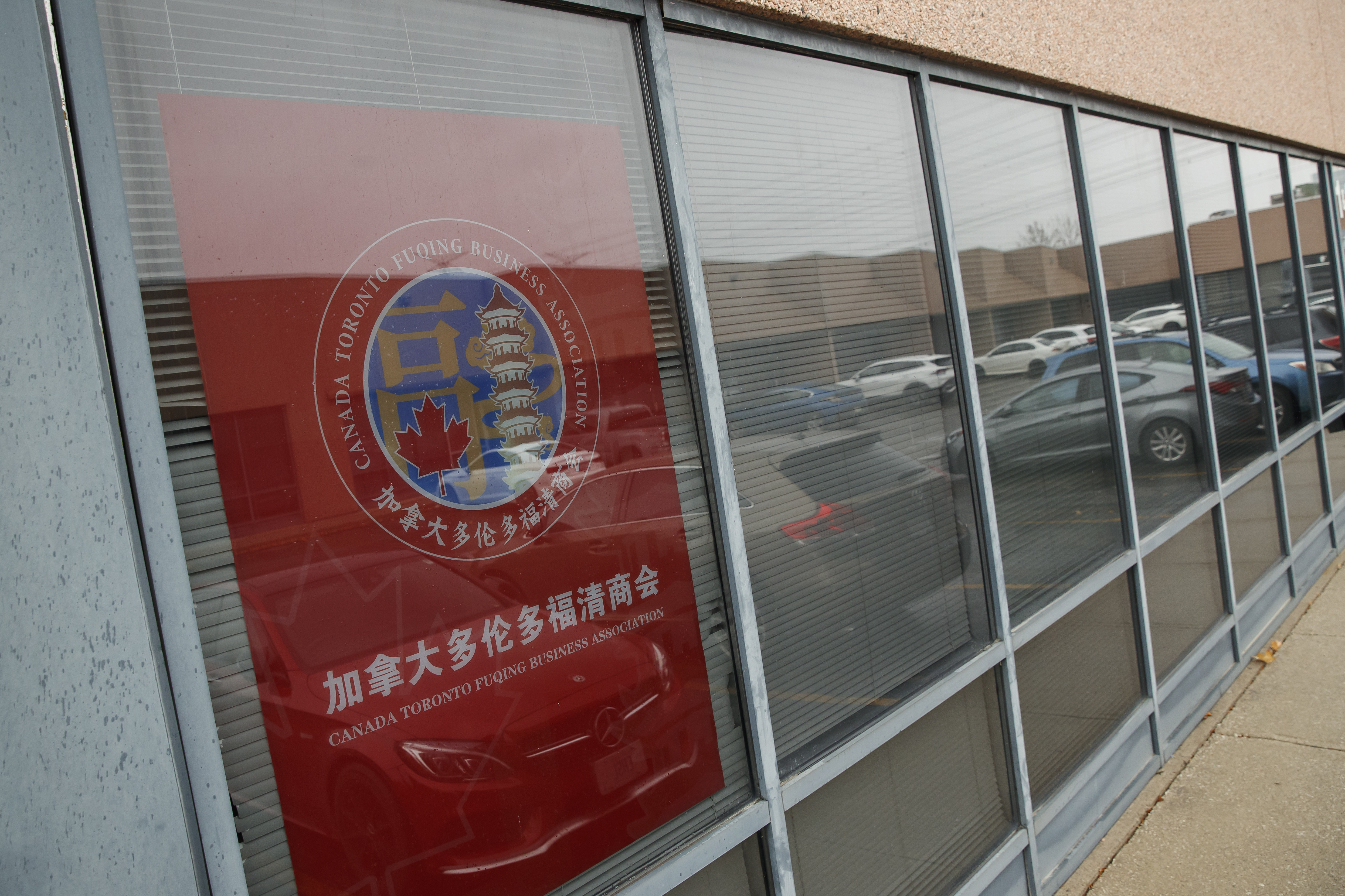 The RCMP is investigating “reports of criminal activity” related to Chinese police stations after Spain-based human rights group Safeguard Defenders reported that China is operating more than 50 overseas station including three in the Greater Toronto Area. One of the GTA locations noted, a building in a business park in Markham, is seen here on Oct. 31, 2022. (The Canadian Press/Cole Burston)
Testifying before a special parliamentary committee on Canada–China relations in March 2023, Safeguard Defenders’ representative Harth said the group had also confirmed two more Chinese police stations in Montreal, bringing the total in Canada to at least seven. Harth also testified that Chinese authorities issued threats against family members in China and intimidation via intermediaries overseas in order to pressure wanted individuals to go back to China.
A committee report submitted to the House of Commons on Nov. 29, 2023, stated that the locations identified by Safeguard Defenders were being used to monitor the Chinese diaspora in Canada as well as collect intelligence and help Chinese authorities pressure individuals who were abroad and wanted for various reasons to return to China.
The RCMP said in October 2022 that it has launched an investigation into the suspected Chinese police operations in Canada, while Ottawa also raised its objections with Beijing.
In June 2023, then-acting RCMP Commissioner Michael Duheme testified at committee that authorities had disrupted various activities being carried out at several of the Chinese liaison points.
However, the recently released report from Safeguard Defenders cautioned that the investigations against the policing work done at some of these liaison points only focused on one visible part of a much larger apparatus that still stayed in operation.
The report says it is particularly important to note that the Chinese authorities, instead of keeping police stations open overseas, have increasingly used associations and individuals other than police to perform the activities they wish to carry out. Meanwhile, other organizations previously linked to police stations have shifted to become community organizations while continuing to carry out operations for China, the report added.
Numerous organizations set up with a focus on cultural activities or business, or as social organizations, are often at the same time being used as points of contact for Chinese state agencies, according to the report.
The report states that these shifts away from straightforward police operations have been undertaken to disguise the nature of the liaison points, not as part of desisting from the work they do, which is in fact expanding.
As community services and political surveillance are blended together at many liaison points, Safeguard Defenders says “the functions of service and control cannot be separated.” In addition, it notes that “the power to provide or deny services directly adds to the Party liaisons’ ability to exercise control.”
CCP Beachheads
Safeguard Defenders says the liaison points connect Chinese community associations overseas with state and CCP authorities, including police forces, prosecutors, courts, and the judiciary, helping Beijing monitor and control the diaspora.
The researchers also describe arrangements involving dispute mediation, legal assistance, administrative services, and efforts to locate or pressure individuals wanted by Chinese authorities.
The over a dozen liaison points identified in Canada include locations in Toronto, Vancouver, Ottawa, Montreal, and Brossard, Que., as well as several that don’t denote a specific Canadian city or location.
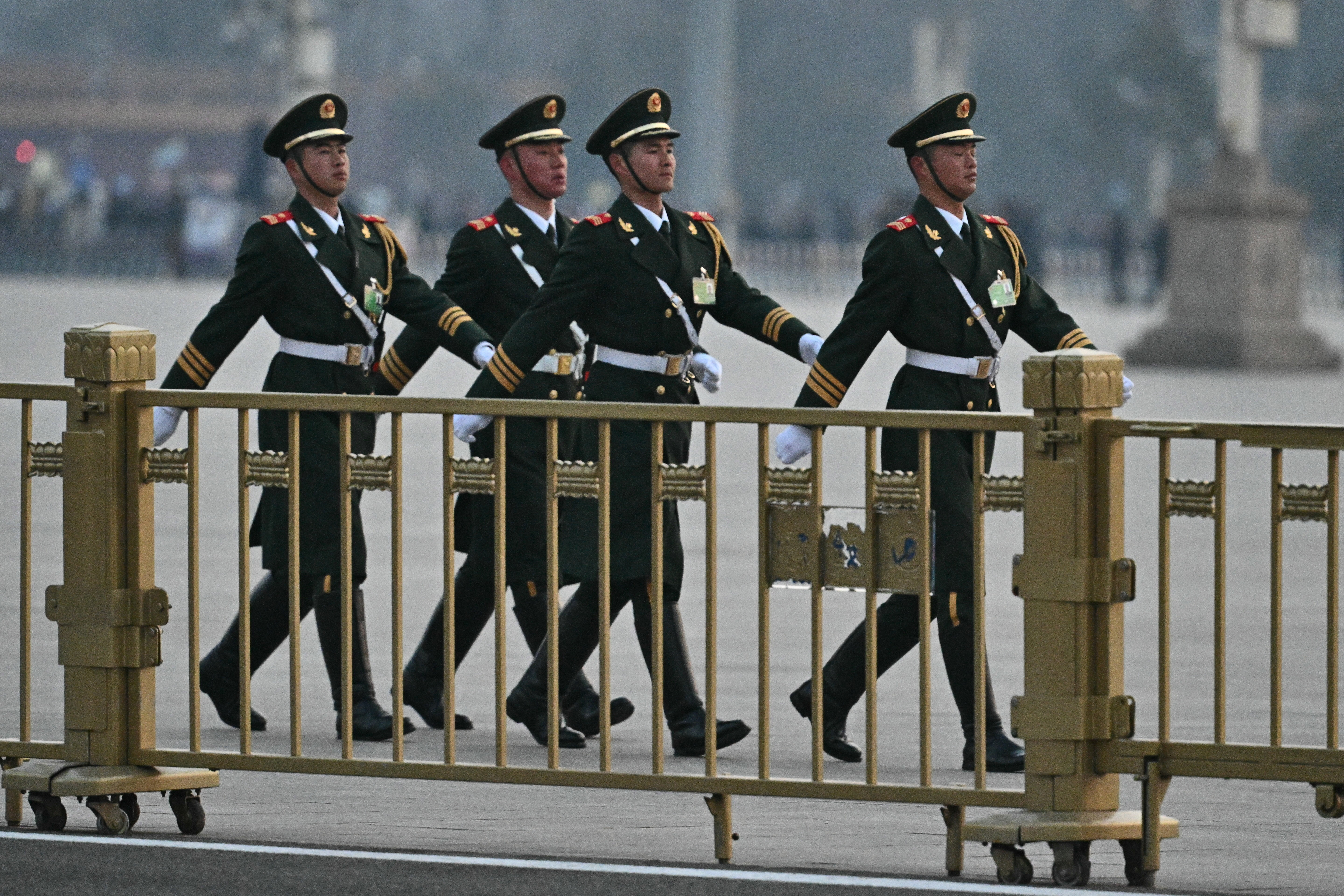 Chinese paramilitary police officers patrol on Tiananmen Square before the opening session of the National People’s Congress at the Great Hall of the People in Beijing on March 5, 2025. (Pedro Pardo/AFP via Getty Images)
Numerous police forces from various Chinese provinces are tied to the international liaising system, which is also used by other state agencies to carry out activities abroad and monitor, control, pressure, and communicate with the Chinese diaspora.
Surveillance and Political Control
The report states that the primary objective of the CCP, as spelled out in a 2018 amendment to the Chinese Constitution, is to have Communist Party leadership “above all else” and to put the Party above even the state of China itself.
As such, the Party seeks to satisfy its ever-expanding definition of national security and political security, according to the report, including using its liaison and policing points, which form part of a goal of “maintaining stability.” It also includes preventing “hidden danger,” countering “false ideological trends,” and cracking down on “evil cults” that don’t accept CCP control over their spiritual or religious tradition.
As the report notes, “maintaining stability” is a broad term and can refer to “stopping anything—a protest, a petition, a land dispute, a rumor, a gathering—from growing into a challenge to Party rule, which is why it is preferably done ‘at the source’: grassroots preventive control rather than reactive response.”
A “hidden danger,” meanwhile is defined in the report as “anything that could become a problem for the Party’s grip on power before it does—and the objects screened include people, beliefs, and grievances.” Meanwhile, ideological trends to be countered include “Western constitutional democracy,” “universal values,” “civil society” (outside the control of the Party-run state), “neoliberalism,” “the Western view of journalism,” and “historical nihilism,” which questions the CCP’s version of history.
The report draws a parallel to China’s domestic system of monitoring and controlling citizens, whereby neighbourhoods are divided into small administrative zones that are then monitored by designated officials who report any concerns to higher authorities.
The system of overseas liaison and policing stations operates similarly, according to the report. It is carried out by identifying potential threats or disruptions to China and the CCP, including political dissent or risks to public safety and social stability. Similar principles are used for different united front groups, including the CCP’s Overseas Chinese Federation and the United Front Work Department.
Safeguard Defenders cites several of the Chinese regime’s publications and statements describing how overseas contacts are used to surveil political activities and individuals, as well as to help Chinese law enforcement obtain information it wants on individuals living abroad without having to formally cooperate with foreign police agencies such as the RCMP.
In such a way, Beijing is able to repress political opposition inside China from democracy supporters, dissidents, and groups it persecutes including Tibetans, Uyghurs, and Falun Gong practitioners.
The Epoch Times reached out to the RCMP, Public Safety Canada, and Global Affairs Canada for comment but didn’t hear back by publication time.







