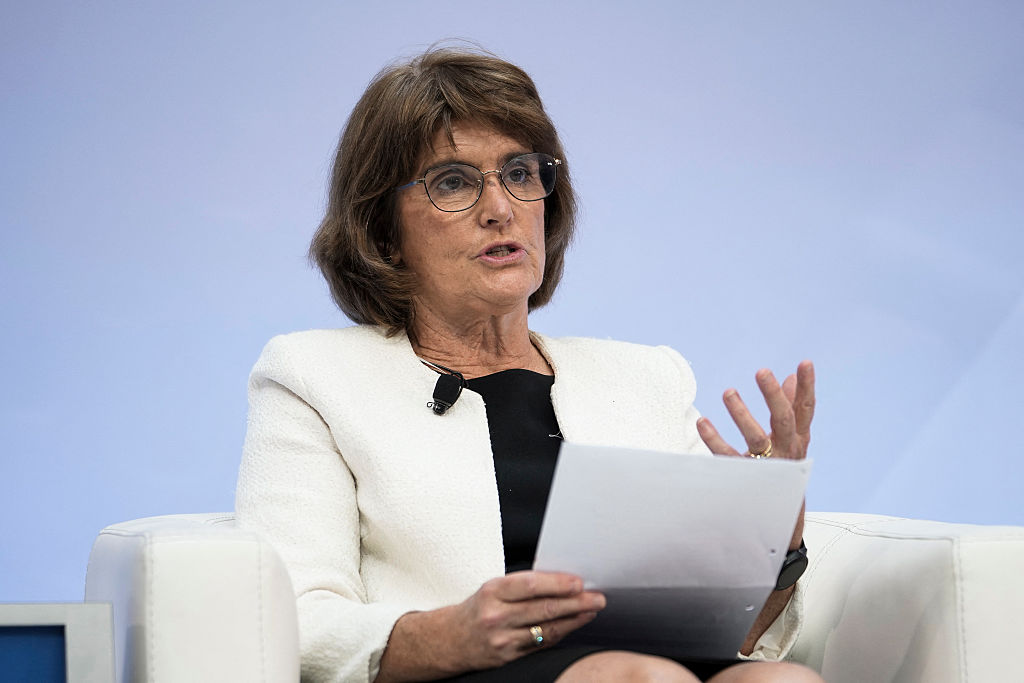

Reserve Bank of Australia (RBA) Governor Michele Bullock has conceded a fifth interest rate rise this year is unwelcome news for many Australians but is necessary to bring inflation under control.
The board lifted the cash rate, which influences what banks charge borrowers, by 25 basic point to 4.85 percent on Nov. 3, the highest level since 2008. Six members voted for the rise and three wanted to stay at 4.60 percent.
Bullock’s explanation at her press conference came down to five main points.
-
Inflation is too high. The governor said the RBA’s forecasts indicated that inflation would remain “higher for longer.” Prices rose 4.3 percent in the year to September, above the RBA’s target of 2 to 3 percent.
-
Demand is greater than supply. Bullock said interest rates cannot change global oil prices, and the rises are not aimed at them. “Absent the oil price rise, we had a problem with excess demand, so we had to increase interest rates,” she said, noting the increases began in February, before the Middle East conflict.
-
Weak productivity and strong investment. “Productivity growth has been weak for some time,” Bullock said, limiting the economy’s capacity to grow without generating higher inflation. She also noted that investment had been much stronger than expected, partly driven by data centre-related investment.
-
Higher fuel costs are filtering through the broader economy. “Fuel is an important input to many parts of the economy, so as oil prices have risen, businesses have seen their costs rise, and they are looking to pass on these costs,” she said, noting that higher interest rates can limit that flow-on effect.
-
High inflation could become accepted. Bullock warned that inflation expectations must not become entrenched in price-setting decisions across the economy, as this could exacerbate the problem. She said the RBA was already hearing that 3.5 percent was becoming “the new normal” for inflation.
Inflation ‘Baked In’
Bullock warned rate rises will do little to ease inflation in the coming period. “We can’t do much about the next year,” she said, describing inflation of around 3.5 percent until the end of 2027 as “pretty much baked in.”
The RBA now expects inflation to remain above 3 percent over the next year and return to the top of its target range only in late 2027, about three quarters later than previously forecast.
No Recession Forecast
Bullock ruled out a recession in the RBA’s current forecasts, while acknowledging that households could still feel the effects of a difficult economic environment.
“Our central forecasts do not see us going into recession, but it does see growth slowing quite markedly,” she said.
“It is going to make people feel like it’s a recession, because they feel poorer.”
The cumulative impact on mortgage holders is becoming substantial. Deloitte Access Economics estimated in October that five 25-basis-point increases during 2026 would add about $9,000 (US$6,200) a year in interest costs to the average new owner-occupier mortgage.
The consultancy warned that households could experience recession-like conditions even if the wider economy avoided an official recession.
Asked about further rises, Bullock said the RBA’s forecasts assume “basically one more rise,” but she would not be drawn on what comes next.
“I wouldn’t be interpreting [that] as saying we definitely are going up. We’re basically preserving our options,” she said.