
British Prime Minister Andy Burnham has said that he is open to calls for a formal apology for the UK’s historical role in slavery, before attending this week’s Commonwealth summit, where he is likely to face demands for financial reparations.
Writing in The Guardian on Oct. 31, Burnham said that the UK government was “offering a structured dialogue with those affected by the transatlantic slave trade,” which Britain played a major role in abolishing.
“Listening to calls for a formal apology on behalf of the British state will form an important part of this process, and I am open to them,” he said.
Burnham rejected demands from some countries for financial reparations over what they said were the harms done to the estimated 12.5 million Africans who were commodified and sold as part of the slave trade between the 15th and 19th centuries.
The prime minister wrote: “I do not think that British people today can be held liable for historical wrongs, however heinous, that happened in a different age under different laws and in which they played no personal part.”
Burnham’s article was published ahead of a speech by British monarch King Charles at the Commonwealth Heads of Government Meeting in Antigua and Barbuda.
A spokesperson for Charles said that he “will not shy away from confronting the most shameful aspects of the past” during his visit, with his speech to be delivered on Nov. 3.
“It would not be appropriate for him to address matters of particular policy relating to the UK government’s position,” the spokesperson said, amid speculation and debate in the media about whether or not Charles is likely to offer an apology.
The monarch, who is undergoing treatment for cancer, is head of the Commonwealth group of 56 nations, mainly former British colonies. The leaders represent some 2.7 billion people, with the Commonwealth spanning Africa, Asia, the Americas, Europe, and the Pacific.
Caribbean leaders at this week’s summit are expected to press longstanding demands for reparations, which they have frequently framed in terms of debt relief and funding for education, healthcare, and climate policies.
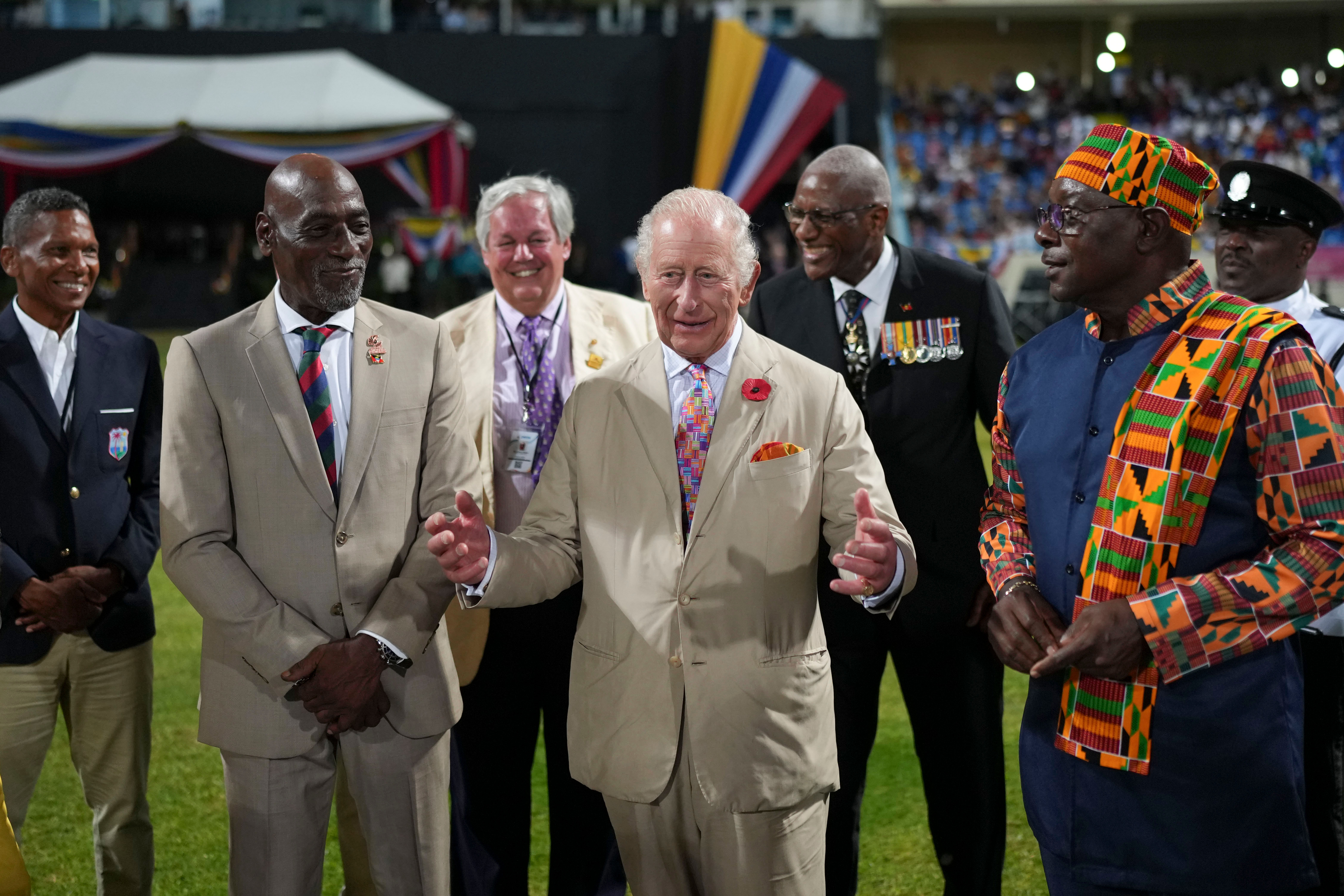 British King Charles III (C) gestures before an exhibition cricket match at the Sir Vivian Richards cricket ground in North Sound, Antigua and Barbuda, on Nov. 1, 2026. (AP Photo/Matias Delacroix)
‘A New Drive on Debt’
Burnham wrote that he wanted to “launch a new drive on debt,” including by helping more vulnerable countries “repay over a longer time period and with better rates.”
Britain’s position has remained resolute on not paying reparations, with Burnham’s predecessor Keir Starmer telling a Commonwealth Summit in October 2024 that today’s nations should not live “in the shadow of the past” but instead should learn from it.
An April 2025 YouGov poll of 3,023 British adults, published in March, found that 23 percent of white respondents supported the UK paying reparations to countries affected by the transatlantic slave trade, compared with 71 percent of black respondents.
British traders transported an estimated 3.2 million Africans across the Atlantic, according to the Trans-Atlantic Slave Trade Database.
The UK government played a significant role in ending the slave trade through the Abolition of Slave Trade Act in 1807, following a long campaign led by member of Parliament William Wilberforce, an outspoken evangelical Christian.
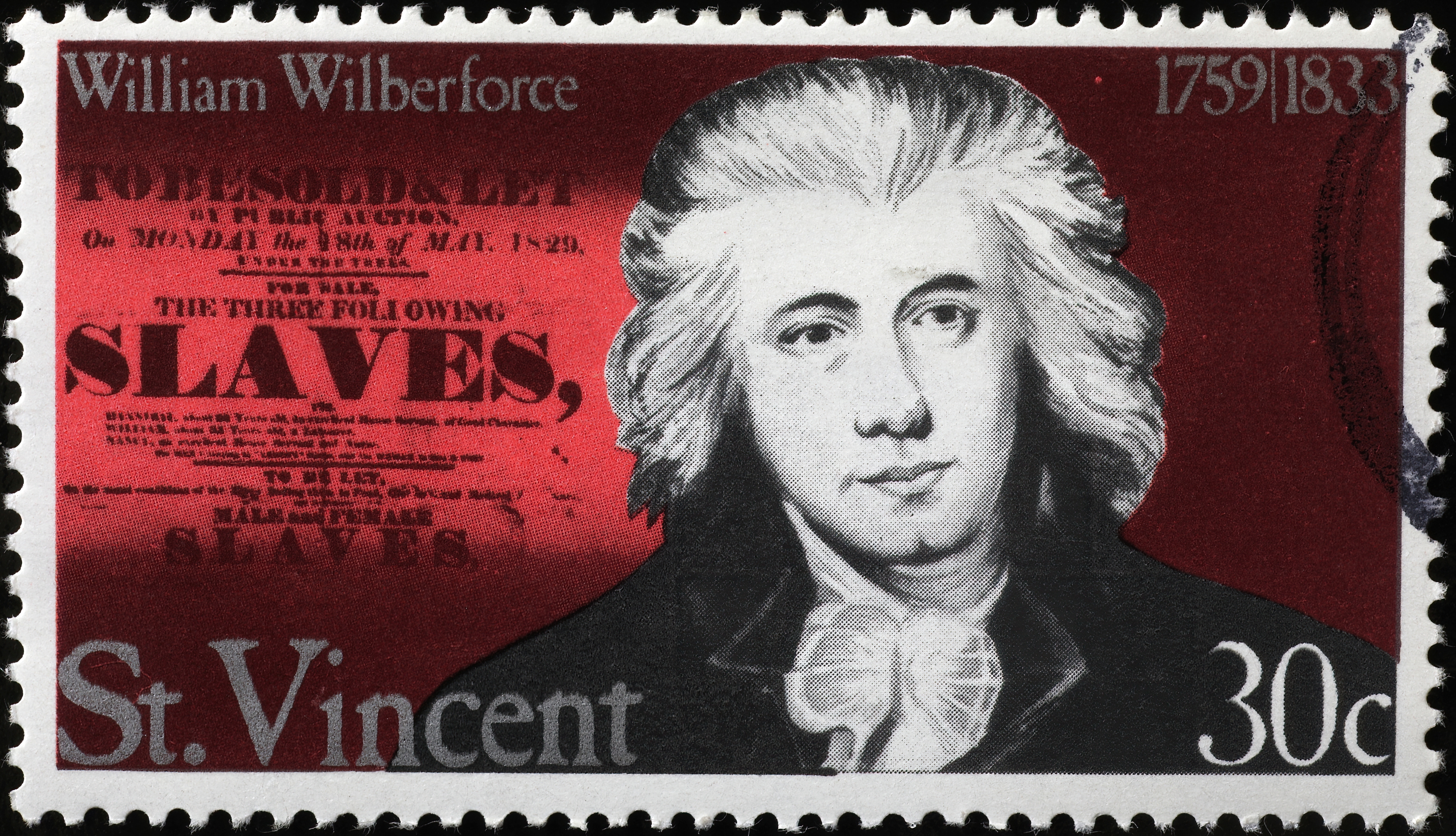 Abolitionist William Wilberforce on a stamp of Saint Vincent, in Milan, Italy, on Feb. 18, 2023. (spatuletail/Shutterstock)
The Brattle Report, published in June 2023 by the University of the West Indies, claimed that the UK owed more than 18 trillion pounds in reparations for its role in slavery in 14 Caribbean countries.
Opponents of reparations point to the fact that white people have also been enslaved historically and that some black people were themselves slave traders.
‘Grave Injustice’
Antigua and Barbuda Prime Minister Gaston Browne issued a statement responding to Burnham’s piece, in which he welcomed the “sorrow and regret” expressed by the British leader and “his willingness to consider a formal apology on behalf of the British state.”
Browne said the call by Caribbean nations for reparations remained unchanged, however, writing in his statement published by Antiga News on Oct. 31: “The transatlantic slave trade was a grave injustice whose consequences have endured long after emancipation.”
He welcomed Burnham’s proposals “for practical assistance to poor and vulnerable Commonwealth countries,” including an initiative to change debt arrangements, including offering longer repayment periods and more favorable interest rates.
“Differences over financial compensation should be addressed through dialogue, but they need not prevent progress in areas where agreement is possible,” he wrote.