
Prime Minister Mark Carney says Canada is working toward becoming an “associate member” of the European Union, a term he has previously been cautious about using.
Carney is hosting European Commission President Ursula von der Leyen and European Council President António Costa in Montreal for a summit aimed at advancing what he has called an “alliance for the future.” The two-day Canada-EU summit runs through Oct. 30.
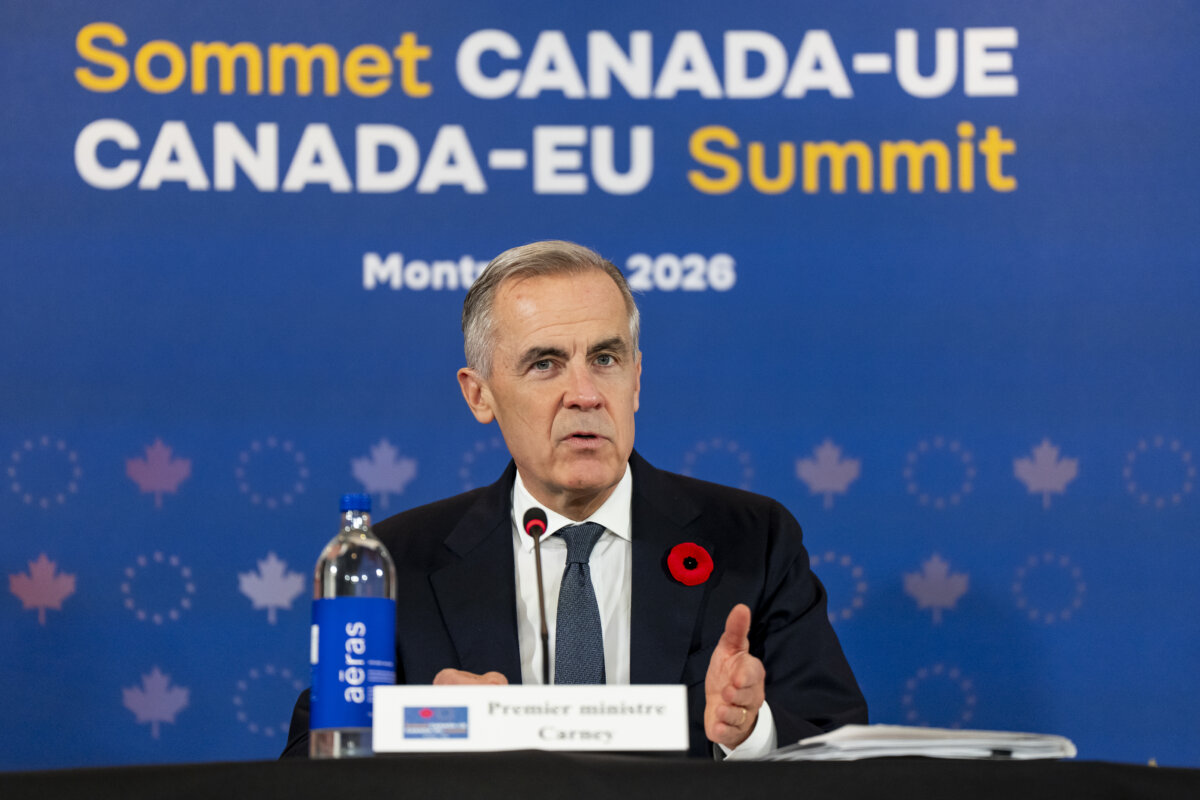
“We are here because we share a common mission,” Carney said during brief remarks on Oct. 29 before a roundtable discussion with business leaders in Montreal on the sidelines of the summit.
“We’re in the process of forging a new alliance for the future, with Canada as an associate member,” he added, noting that the partnership would be one that is “anchored in values, but builds on our complementary strengths.”
Carney’s comments during the roundtable are a change from those he made in the past.
The idea of Canada becoming an associate member was first publicly mentioned by von der Leyen during an address to the European Parliament on Sept. 16. Carney welcomed the proposal in his own speech to the parliament the following day. Prior to that, as sources had indicated to the media that the two sides are considering “associate membership,” Carney told reporters that his government isn’t pursuing “membership.”
More recently, Carney downplayed the importance of the terminology used when speaking to reporters on Oct. 27. He said the practical substance of the partnership—such as cooperation in defence, critical minerals, digital trade, and energy—matters more to Canada than the title given to it.
Conservatives have accused Carney of not being clear about the proposal, with Tory Leader Pierre Poilievre saying “he says one thing in Canada and the opposite in Europe.” Tories have also said that while they welcome free trade and defence cooperation with Europe, they reject “forcing EU taxes, EU laws, & EU’s radical open-border immigration policy on struggling Canadians who are already paying too much.”
Opposition by Some EU Members
The proposal has faced resistance from several EU member states, including Germany, France, Italy and Greece, according to European media reports. The countries have not opposed closer ties with Canada, but have questioned the use of a label that is not defined in EU treaties, and said this term could be reserved for countries such as Ukraine and Moldova who could potentially one day become full members of the bloc.
Diplomats told Euronews that the countries raised objections to mentioning associate membership in a draft summit declaration, citing concerns about the term’s undefined legal status and the lack of consultation with member states.
Some European news agencies subsequently reported this week that the term “associate member” had been dropped from a draft joint declaration ahead of the formal summit talks in favour of working toward an “ever closer association,” with definitions pushed to next year’s summit.
However, von der Leyen reaffirmed her commitment to the proposal while speaking in Montreal on Oct. 29.
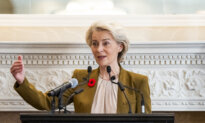
Von der Leyen told a crowd gathered at an event hosted by the C.D. Howe Institute in Montreal that while Canada cannot be a full member “because of geography,” she wants to bring the relationship “to the highest level possible” by potentially making Canada the first associate member of the European Union.
She made similar remarks while addressing business leaders at the roundtable discussion alongside Carney later in the day, saying the summit offered an opportunity to “reimagine” Canada-EU relations and take the partnership to a new level.
“We have always been close, but now it’s about new frontiers that we are looking at, and to bring indeed our partnership to the highest possible level,” she said. “And this is the reason why bilaterally we are exploring the idea of an associate member.”
Carney said that deeper partnership between his country and the EU would mean increased co-operation in artificial intelligence, finance, critical minerals, food security, and advanced manufacturing at a “time of a rupture in the global system.”
“The recognition of our values, and the ability to work together has never been more important,” he said.
He billed the roundtable discussion as a chance for Canadian business leaders to offer their input on how the two regions could best deepen cooperation and increase opportunities for partnership.