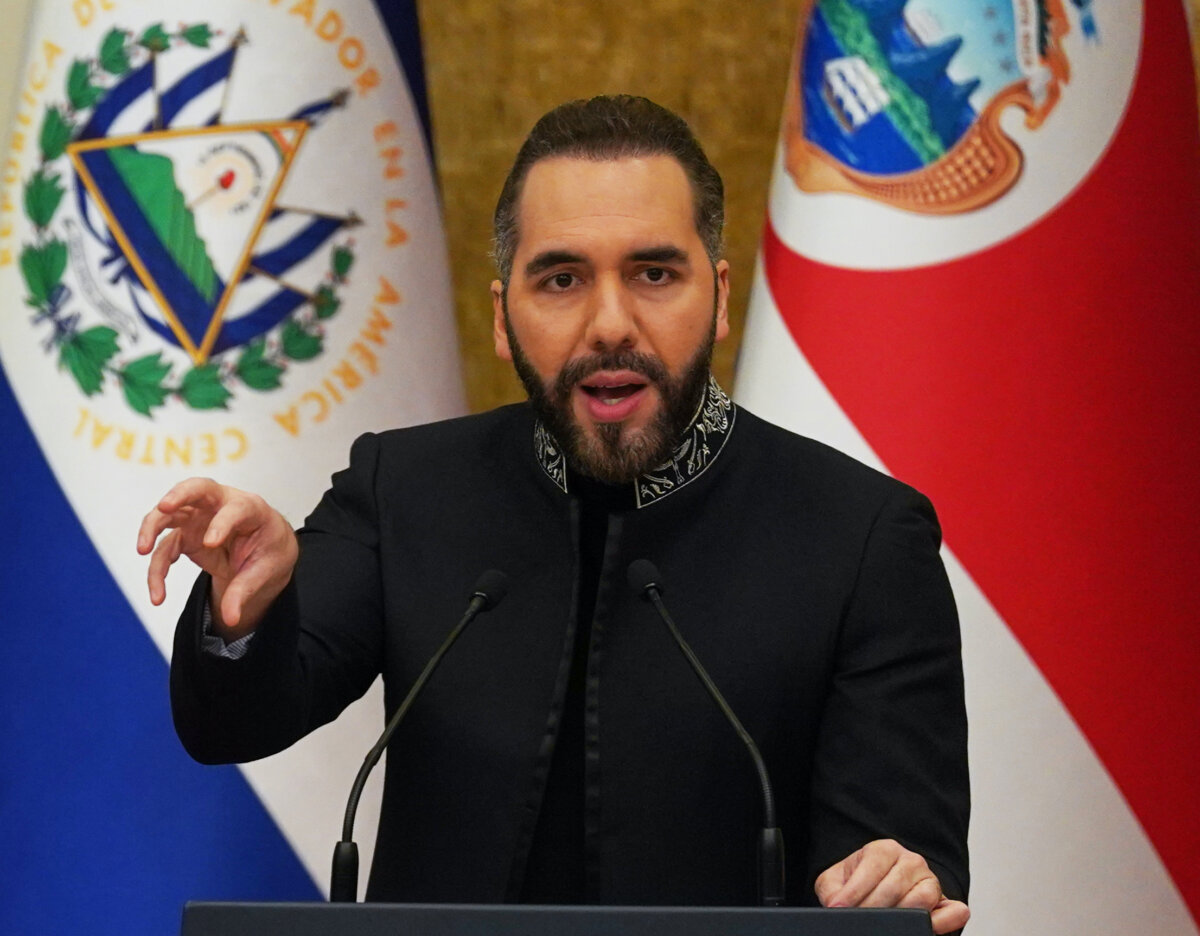
El Salvador has said it will send more than 2,000 troops to Haiti to rescue four missing soldiers, while Haiti’s electoral council has postponed presidential elections planned for December.
The four men, who were working as aviation technicians as part of a U.N.-backed Gang Suppression Force in Haiti, were ambushed on Oct. 18 by a gang in the Santo area of Croix-des-Bouquets, a suburb of the capital of Port-au-Prince. The gang set the soldiers’ armored vehicle on fire.
El Salvador—along with Jamaica, Guatemala, and Chad—was providing troops to the Gang Suppression Force after the United Nations approved it on Sept. 30, 2025.
On Wednesday, El Salvador’s foreign ministry said Bukele spoke by phone with Haitian Prime Minister Alix Didier Fils-Aimé, whose office issued a statement that the two leaders “reaffirmed their engagement to reinforce bilateral coordination and operational cooperation in the framework of the Gang Suppression Force, notably to support rescue operations and respond to security challenges.”
“The Haitian government expresses its solidarity with the Salvadoran military personnel and their families, and reaffirms its determination to work with its partners toward the restoration of security and stability in the country,” the statement reads.
Fils-Aimé, an entrepreneur, was appointed by Haiti’s transitional presidential council in November 2024, after it sacked his predecessor, Garry Conille. Fils-Aimé has struggled to prevent Haiti’s slide into anarchy, with parts of the country under the rule of the gangs.
Over the weekend, Bukele deployed hundreds of soldiers to Haiti, but did not clarify their role or how long they intended to stay.
Bukele announced on Oct. 24 that human remains that had been handed over to his military at the main international airport in Haiti were not those of the missing soldiers.
On Oct. 21, Salvadoran President Nayib Bukele posted a message on X, warning the leaders of the gang that is holding the men.
“We have a single objective: to bring our four compatriots back home alive, without any harm,” Bukele wrote. “However, I want you, the gang leaders, to understand one thing very clearly: today’s attack is nothing compared to what is coming if we do not get all four hostages back alive.”
Bukele warned the Haitian gang leaders not to mistake his words for “empty threats.”
“We have already finished with the gangs in El Salvador, and we can finish with you, too,” Bukele said. “We still have time to avoid this. Return our four compatriots to us alive, without any harm, and everything will go back to how it was before the kidnapping. The decision is in your hands.”
Gang Leader Mocks Bukele
Several gang leaders, including Wilson Joseph—known as Lanmo San Jou—leader of the Mawozo 400 gang, turned to social media to post videos mocking Bukele and pouring scorn on his threats.
After Humberto Salazar, a political commentator from the Dominican Republic, claimed that gangs in Haiti were not the same as those in El Salvador, and that Bukele was like Napoleon heading to his “Waterloo,” the Salvadoran leader responded in an Oct. 23 post on X.
“Everyone who has enlisted is a believer, and we have entrusted this mission to God, while Haiti’s gangs are satanic, and it’s public knowledge that they carry out human sacrifices,” Bukele wrote. “God will grant us victory. The Creator of the Universe is with us.”
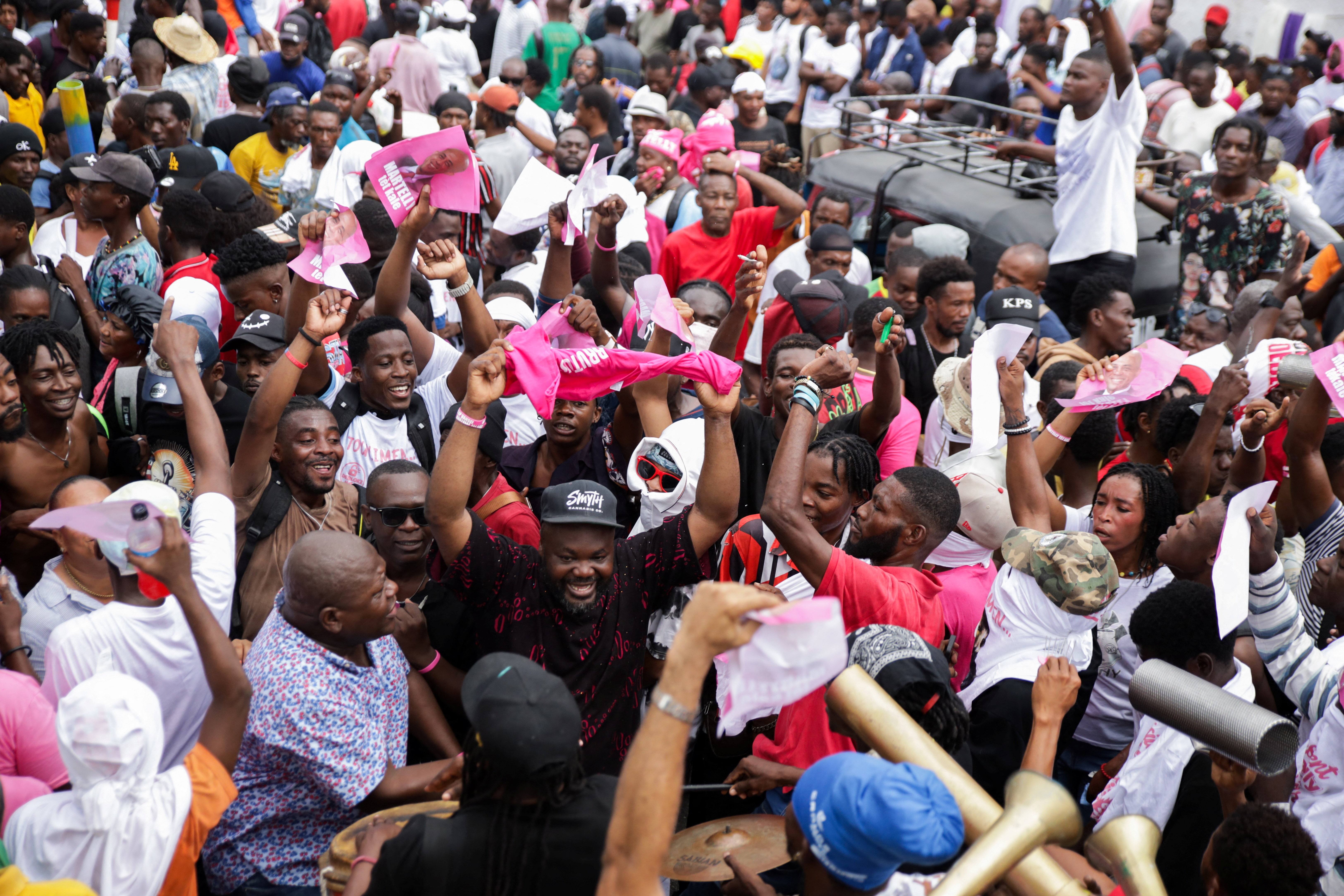 Supporters gather for former Haitian President Michel Martelly, as he registers to run for president in the upcoming election, in Port-au-Prince, Haiti, on Oct. 23, 2026. (Fildor Pq Egeder/Reuters)
Haiti’s Election Postponed
The Caribbean’s most populous nation has not held elections for a decade, and its last president, Jovenel Moïse, was assassinated in 2021.
The transitional presidential council has repeatedly postponed a vote citing insecurity.
Haiti’s electoral council announced in July that it was scheduling the presidential election for Dec. 13, but on Wednesday, it confirmed it was postponing the poll until next year.
The first round of the presidential and legislative elections will be on July 18, 2027, followed by a second round and local elections on Oct. 4, 2027.
Among those who have already thrown their hats in the ring is former President Michel Martelly, a former musician who was in power from 2011 to 2016.
The electoral council said that as of Oct. 28, 19 presidential candidates had registered.
Reuters contributed to this report.
Correction: A previous version of this article misstated the date when the U.N. approved the Gang Suppression Force. The Epoch Times regrets the error.