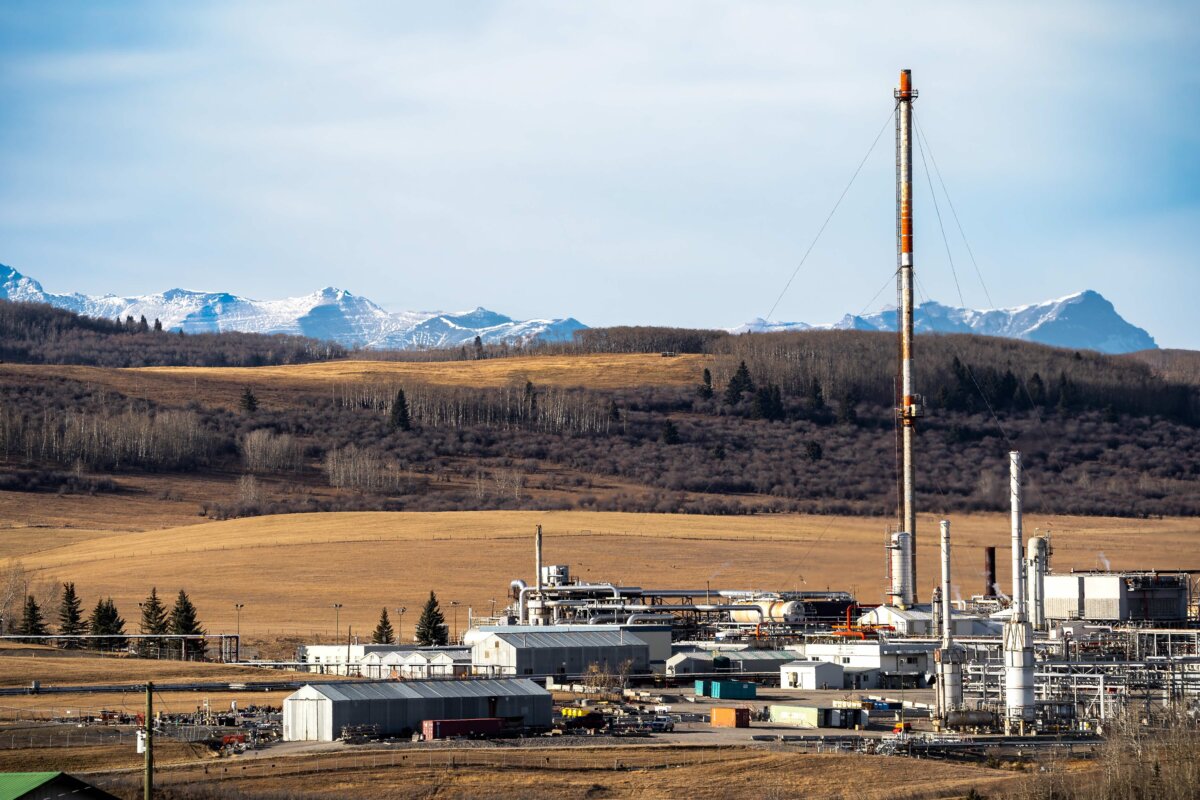

Alberta’s power regulator has approved a 920-megawatt power plant project designed to serve a large-scale data centre northeast of Edmonton, finding the project “in the public interest.”
The Alberta Utilities Commission (AUC) approved the application on Oct. 23, allowing Heartland Power Generation LP to construct and operate the natural-gas-fired plant in Alberta’s Industrial Heartland in Sturgeon County. Heartland Power is a wholly owned subsidiary of Beacon Group Holdings Inc., which holds a controlling interest in data-centre developer Beacon Data Centers Inc.
Heartland Power says construction will likely begin in late 2026, with an in-service date for late 2027. It also requested a construction completion date of Dec. 31, 2028, to account for potential delays or contingencies.
The commission said its jurisdiction covers only the power plant, not the regulation or approval of data centres. It outlined several reasons for approving the application and imposed conditions that the companies must meet.
This project is unrelated to Meta’s $13 billion artificial intelligence data centre that it wants to build near the Town of Morinville, also near Edmonton.
Decision
The commission said the power plant’s location within Alberta’s Industrial Heartland would help the company address the project’s overall effects. It concluded that Heartland Power could limit the plant’s environmental, social, and indigenous impacts through its design, government oversight, approval conditions, and other measures the company has promised to take.
The company said the plant would use a cooling system that recirculates glycol rather than relying on large amounts of water. It would require up to one cubic metre of water per day, or 365 cubic metres annually. The plant would also obtain drinking-quality water for other uses from Sturgeon County’s municipal water system.
Heartland Power has said that the power plant requires removing 9.469 hectares of wetlands and other water bodies for construction. However, it said it would maintain five wetlands and “one ephemeral drainage on the north end.”
The commission also concluded that Heartland Power can control the plant’s noise levels and comply with provincial noise regulations through mitigation measures, final design verification, post-construction monitoring, and ongoing engagement with Samson Cree Nation. It found that existing regulations provide reasonable assurance that authorities will continue to monitor and address the project’s cumulative effects.
The company estimated that noise from the plant would reach 45.8 decibels during the day and 38.4 decibels at night, below the permitted limits of 50 and 40 decibels, respectively.
The commission acknowledged that the company was required to consult with the Samson Cree Nation but concluded that the plant would likely have little effect on the First Nation’s ability to exercise its constitutional rights. It also found that the consultation requirements had been met.
The commission identified several economic benefits, including employment opportunities, associated economic activity, and an on-site electricity supply. It also concluded that the plant’s emergency response plan adequately protects the public and that Heartland Power can manage project-related emergency risks to an acceptable level.
Heartland Power said construction of the power plant would create 150 to 300 jobs, while its daily operations would require 15 to 30 permanent jobs.
The commission further determined that the plant’s reclamation security plan provides sufficient assurance that funds will be available to decommission the facility and reclaim the site.
“On balance, the Commission finds that the benefits of the power plant outweigh its adverse effects and approval of the power plant, with conditions, is in the public interest,” the report added.
Conditions
The commission imposed several conditions requiring Northbridge Power to submit final project designs, noise assessments, an emergency response plan, and financial guarantees for decommissioning and land reclamation before construction begins.
Further, the company must monitor noise levels after operations begin, implement additional mitigation measures if necessary, and notify Samson Cree Nation of incidents that could affect water quality in the North Saskatchewan River system.
Northbridge must also establish reclamation security equal to five percent of estimated costs by the end of its first year of operation, increase that amount annually to reach full coverage by year 20, and update its cost estimates every five years.
Pushback
Alberta’s push to attract AI data centres has generated opposition from residents concerned about electricity and water consumption, noise, pollution, and whether the projects will deliver their promised economic benefits.
Hundreds of protesters gathered in Morinville in August to oppose Meta’s $13 billion data centre in Sturgeon County, raising concerns about environmental effects, utility costs, and the potential for artificial intelligence to eliminate jobs.
Similar concerns have emerged elsewhere in Alberta. In August, the AUC rejected a proposed natural-gas power plant for an AI data centre in Olds, concluding that the location was unsuitable because of its proximity to the surrounding community.
A Nanos Research poll released in August also found that 64 percent of Canadians opposed or somewhat opposed government financial incentives for AI data centres, with respondents most frequently citing electricity demand, environmental damage, and water consumption.