
Prime Minister Mark Carney says Canadian negotiators are not yet in a “position” to come to a new trade agreement with the Trump Administration, despite recent reports of some limited progress.
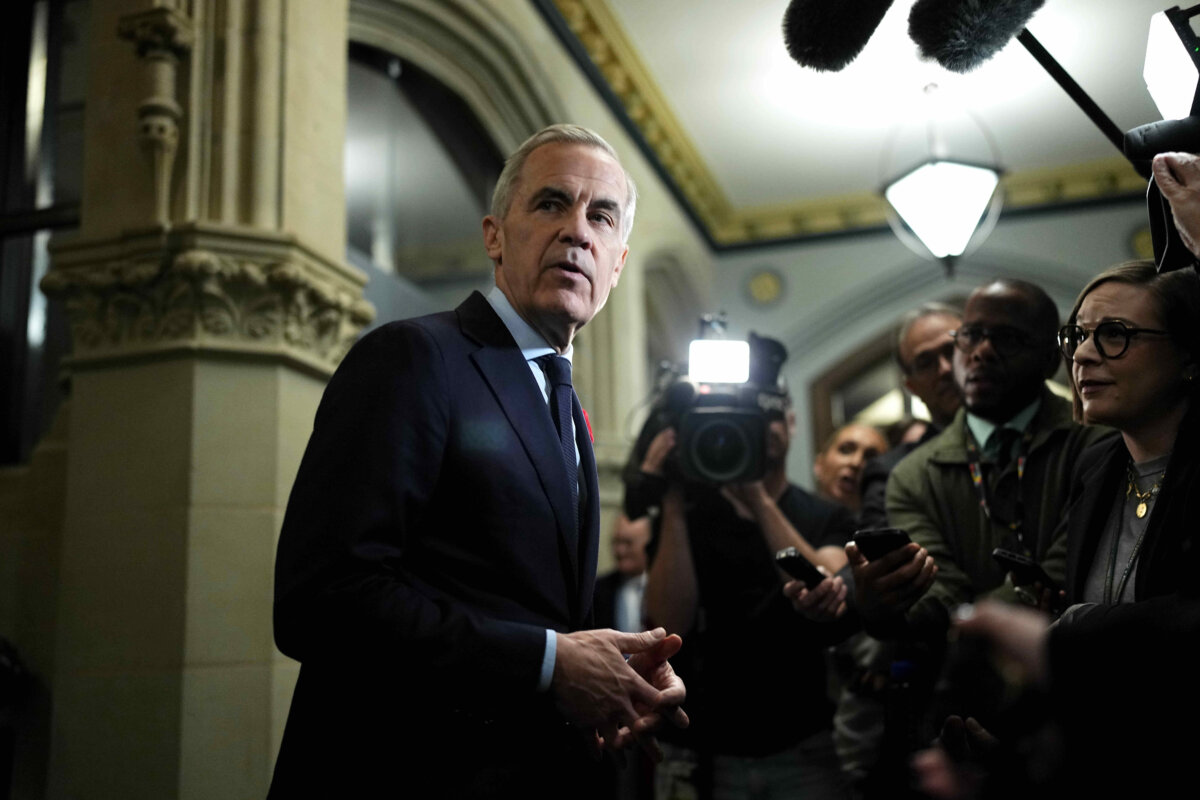
Carney made the comments in response to questions from reporters ahead of a Liberal caucus meeting on Parliament Hill on Oct. 28. He said Ottawa would only come to an agreement with the United States if the terms were in Canada’s interests.
“We’re prepared to have a good deal for Canadians, the right deal for Canadians, and we will only entertain…. a deal that suits Canadians. We think there’s deals that are in the best interest of Canada first and foremost, but also are in the interests of the United States,” Carney said.
“That’s always been the case. We’ve been consistent. If those deals present themselves we will pursue them. But we’re not at that position right now.”
Both Carney and U.S. President Donald Trump have indicated in recent days that a trade agreement remains possible.
Speaking at a rally Oct. 25 in Port Huron, Mich., Trump said a trade deal with Canada is likely to be reached “pretty soon.”
“Canada has been ripping off the United States for years, OK? For years. And I had to do it,” he said, apparently referring to U.S. tariffs imposed on Canada in late August. “We’ll have that settled pretty soon. They’re willing to give us anything at this moment.”
On Oct. 26, Carney said any progress in the negotiations reflected Washington moving closer to Canada’s position. He reiterated that Ottawa would not accept terms that crossed its negotiating red lines.
“To the extent any progress has been made, it’s because the U.S. is coming closer to our position,” Carney said Oct. 26. “To the extent to which the U.S. is moving towards accepting those aspects, then there’s a greater prospect of a deal.”
During an Oct. 23 press conference in Istanbul, Turkey, however, Carney said Canada was prepared to wait for an agreement that served its interests, even if that meant dealing with “another administration” in the future.
Canada’s chief trade negotiator, Janice Charette, said on Oct. 22 that there was no timeline for restarting formal trade talks with the United States. She said she believed Washington would not fully remove tariffs on Canadian goods because of the revenue they generate for the U.S. government.
Negotiations between Ottawa and Washington broke down on Aug. 21. The United States subsequently imposed 50 percent tariffs on about $27.6 billion worth of Canadian goods beginning Aug. 22. Canada responded with tariffs of 15 to 50 percent on a matching value of U.S. imports, effective Sept. 8.
Carney said U.S. demands during the August negotiations crossed Canadian red lines, including on French-language and cultural protections, Canada’s ability to negotiate trade agreements with other countries, tariff treatment for medium- and heavy-duty trucks, and the handling of the softwood lumber dispute.
The U.S. government offered a different account of the breakdown, saying Canadian negotiators introduced last-minute demands and retreated from earlier commitments.