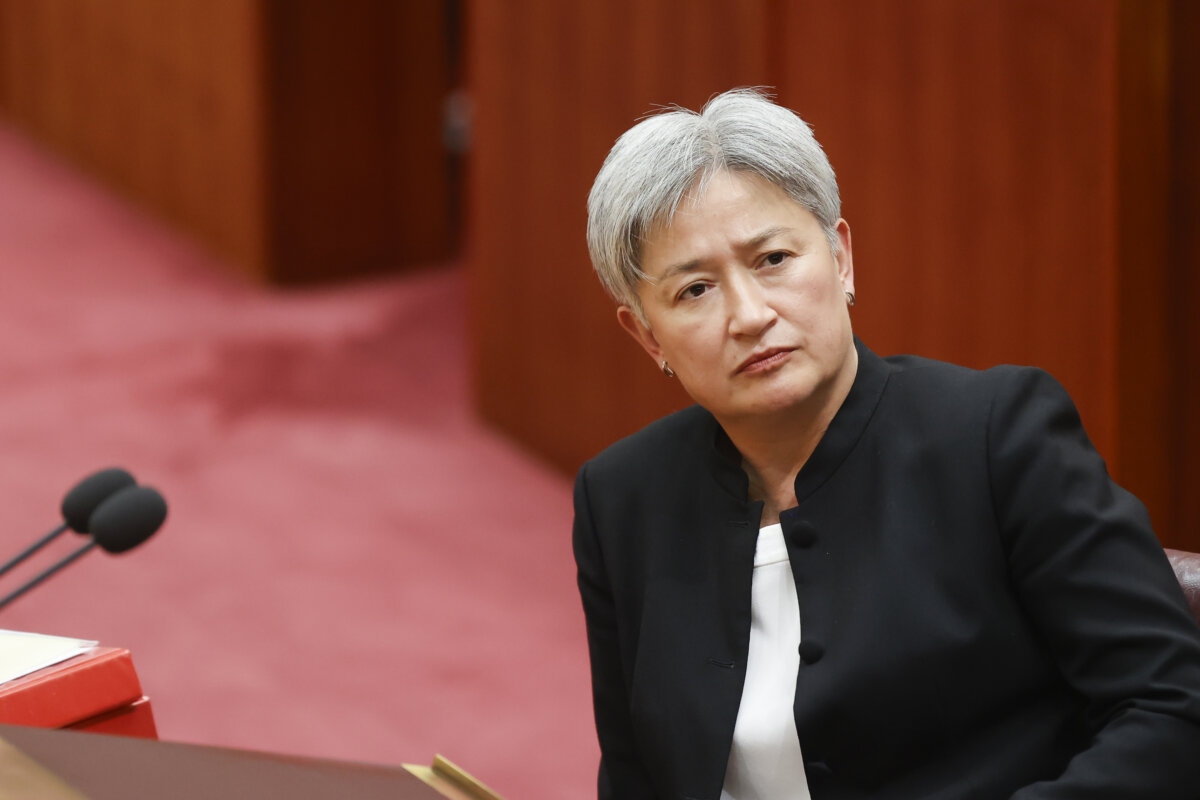

The federal government cannot directly cancel collaborations between individual Australian researchers and foreign scientists under newly passed laws that govern collaboration with overseas institutions.
The amendments, passed in August, require universities to identify and manage national security risks arising from their researchers’ overseas collaborations, even when the university is not a party to the arrangement.
However, Julie Heckscher, head of the Department of Foreign Affairs and Trade (DFAT) regulatory and legal policy division, confirmed that the foreign minister’s powers to cancel arrangements or seek court injunctions do not extend to individual projects.
She said the new requirements were not yet in force.
Under the Foreign Arrangements Scheme, the government can cancel or block certain agreements between Australian universities, state, and local governments, and foreign entities if they conflict with Australia’s national interests or foreign policy.
Liberal Senator Jessica Collins questioned whether the new requirements would address reported collaborations between Australian academics and foreign researchers involved in sensitive military technologies.
She cited links between researchers at the University of Sydney, UNSW, and Adelaide University, and Iranian scientists working on drone technology, as well as collaborations between UNSW academics and scientists tied to the Chinese Communist Party’s military arm, the People’s Liberation Army.
Heckscher said DFAT had not checked whether those cases would fall under the new requirements, although they “probably are covered.”
In June, a Senate inquiry examined reports that Australian researchers had continued working with Iranian counterparts on drone technology despite previous government warnings.
Education Department officials said some arrangements remained lawful because they did not breach sanctions or the Foreign Arrangements Scheme.
Wong Says Universities Must Manage Risks
Foreign Minister Penny Wong defended the approach, saying universities were best placed to oversee the activities of their own researchers.
“We have thousands of researchers, thousands of employees at universities,” she said. “What we want is the universities to discharge their obligation.”
Collins, who said she spent more than 10 years at a university, argued that international links between academics were so common that many could easily go unnoticed, and that the new requirements lacked “teeth.”
She also noted that the government had rejected a Coalition amendment to bring researcher-to-researcher arrangements into the scheme, saying existing national security laws were enough, before bringing in its own amendment a day later.
Wong defended the compromise, saying the Coalition’s proposal “let the universities off the hook and was administratively unachievable.”
Warnings Over Research With Iran
Collins said Wong had written to universities calling for an end to research with Iranian institutions, with further warnings sent to 26 universities between March and June this year.
Heckscher said DFAT’s subsequent checks found no remaining university-level arrangements with Iranian institutions, apart from a limited exception involving some students.
She said the Foreign Arrangements Scheme had received more than 23,000 notifications since 2020, with universities accounting for 84 percent.
Wong had also blocked two proposed arrangements involving institutions in Russia and Belarus this year, she said.
A spokesperson for Universities Australia told The Epoch Times that Australian universities “take national security and research integrity seriously.”
“Australia needs strong safeguards against genuine security risks while preserving the international partnerships that underpin world-class research,” the spokesperson said.
“Universities will continue to work closely with government in support of that.”