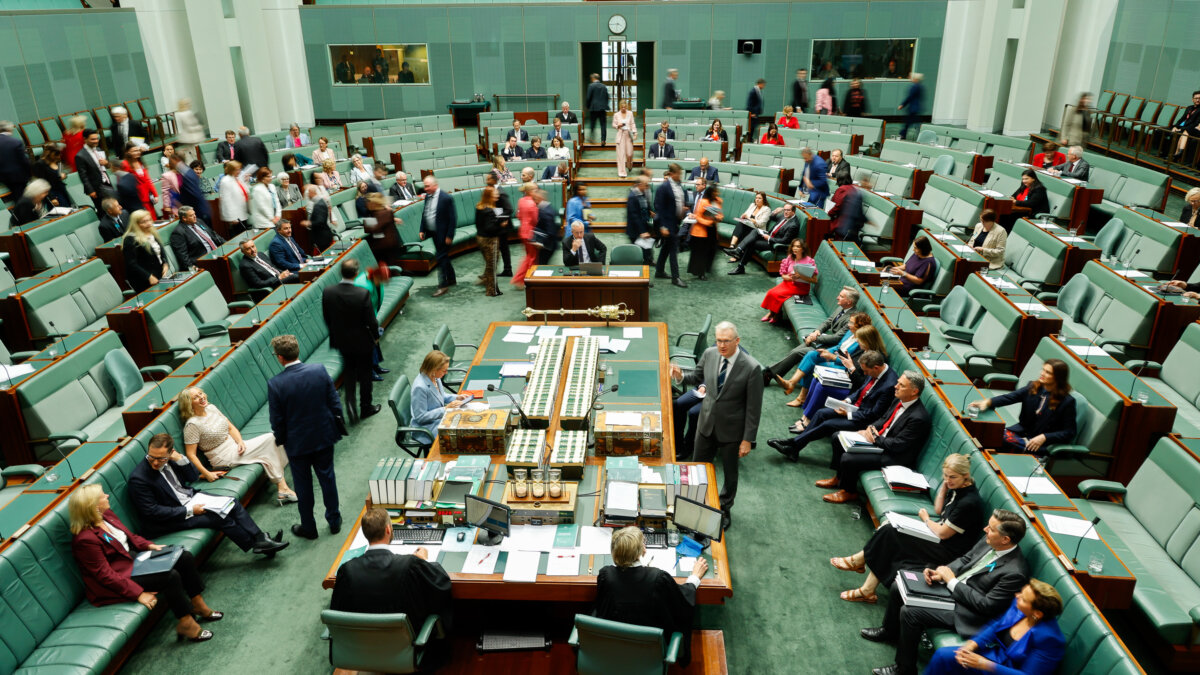

Parliament has approved two amendments to the Online Safety Amendment (Digital Duty of Care) Bill 2026, introduced by independent MP Kate Chaney.
The bill also passed the House of Representatives on Oct. 28, and will go to the Senate.
Chaney suggested the first amendment should require digital platforms to consider “attachment hacking” as a potential harm, such as when artificial intelligence (AI) chatbots use emotional language to engage children.
The second amendment would require big tech companies to make options for opting in to or out of algorithm-driven feeds prominent and easy to use.
“eSafety found AI companions offer human-like, sycophantic and often sexually explicit conversations,” Chaney told parliament.
“About 200,000 Australian children aged 10 to 17 have used one, and we’ve seen just how badly this can go wrong.”
Chaney, the Member for Curtin, gave examples of three Australian teenagers who had taken their own lives after extended engagement with AI chat bots.
“Reporting on their chat logs suggests the bots discouraged them from turning to other people,” she said.
“Psychologists are telling us that children are increasingly turning to AI instead of friends, parents, and teachers.
“But this is a significant risk to children’s long-term psychological development, human relationships are how children learn to form bonds, regulate emotions, and form a sense of self.”
Chaney further argued that her second amendment should be accepted in order to prevent tech companies from circumventing rules that would ensure users can switch off from curated algorithms.
“We know that tech companies will do what they can to exploit loopholes and keep users on their algorithm,” she said.
“After the EU required Meta to give users an option to switch off the algorithm, the company hid the setting, removed significant functions from the non-algorithmic feed, and automatically switched users back to their algorithmic feed every time they closed and re-updated the app.
“This malicious compliance is unacceptable. To ensure Australians have genuine control to switch their algorithm on or off, the setting must be prominent, accessible, easy to use, and not affect the function of the app.”
The amendments were agreed to 97 to 30.
The Digital Duty of Care bill is expected to require platforms to better manage potential harms, prevent children from accessing more harmful content, such as pornography, and allow users to choose whether their feeds are algorithmically curated.
However, some politicians have raised concerns around whether the bill could lead to excessive censorship, including One Nation Leader Pauline Hanson.
“All this talk from Albanese about a digital duty of care and controlling algorithms is just cover for what it really is, a Chinese Communist Party-style internet censorship bill,” she said in September.
The Labor government previously dropped a section of the bill that would have given the communications minister the power to designate other forms of online harm beyond those stipulated in the bill.
Critics, including the Coalition, expressed concern the section of the bill could create an excessive level of government power.