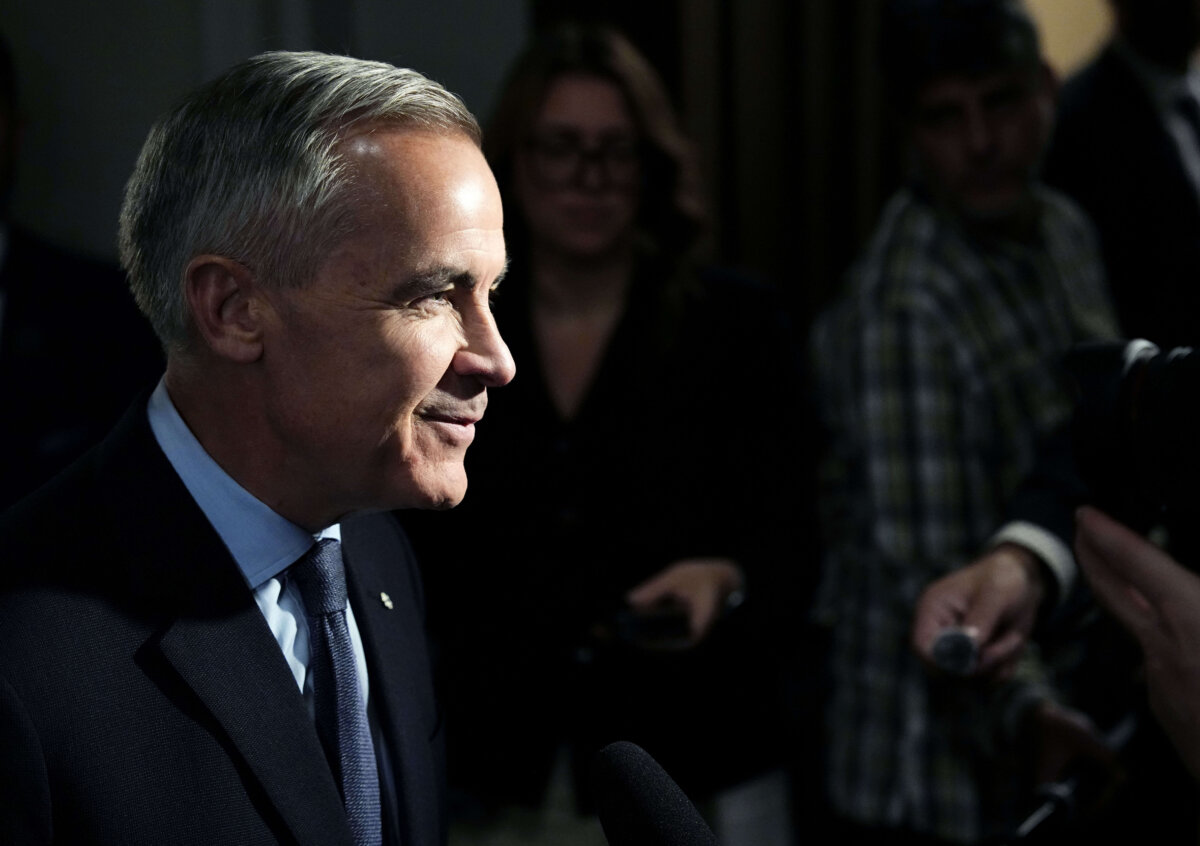

Prime Minister Mark Carney said Washington has moved closer to Ottawa’s position in trade negotiations. U.S. President Donald Trump, meanwhile, repeated over the weekend his position that Canada is taking advantage of the United States, and that the matter will be “settled pretty soon.”
“To the extent any progress has been made, it’s because the U.S. is coming closer to our position,” Carney said at a press conference in Ottawa on Oct. 26.
The prime minister reiterated that his government is prepared to sign a trade agreement in Canada’s interest, but had set “very clear” red lines that prevented it from agreeing to a deal in August.
“To the extent to which the U.S. is moving towards accepting those aspects, then there’s a greater prospect of a deal,” he said.
Days earlier, at a press conference in Istanbul, Turkey, Carney said his government was prepared to wait months or even until “another administration” takes power in the United States before it signs a deal.
Trump had said at a rally in Port Huron, Michigan, on Oct. 25 that the trade negotiations would be settled “pretty soon” and that Canada was “willing to give us anything at this moment.” He added that Canada had been “ripping off” the United States for many years.
Trade negotiations broke down in August, with Carney saying Washington had made unacceptable demands involving restrictions on Canada’s ability to pursue trade agreements with other countries, the exclusion of medium- and heavy-duty trucks from tariff exemptions, and weaker protections for the French language and Canadian culture. Trump administration officials have accused Ottawa of raising additional demands at the last moment.
The White House imposed 50 percent tariffs on $27.6 billion worth of Canadian goods on Aug. 22, the day after Carney walked away from trade negotiations. Canada followed suit on Sept. 8, imposing retaliatory tariffs of 15, 25, and 50 percent on $27.6 billion worth of U.S. imports.
Washington imposed import bans on most Canadian alcoholic beverages, some dairy-related products, and motorcycles, beginning Sept. 29. The United States has also threatened to raise tariffs on automotive and steel products from 25 percent to 50 percent beginning on Jan. 1, 2027, in response to Ottawa’s counter-tariffs.
Chief Canadian trade negotiator Janice Charette said on Oct. 22 that there is no timeline for resuming formal trade talks with the United States. She said she believed Washington would not fully remove tariffs on Canadian goods because of the revenue they generate for the U.S. government.