
Italy approved a raft of security measures on Oct. 20, including a crackdown on taking part in violent protests, in the wake of unrest that swept through its northern cities at the weekend and widespread riots in neighboring France.
A new offence of violent participation in a demonstration, together with tougher penalties for rioters, and fines for parents whose children take part in vandalism and looting, has been introduced by the Italian government.
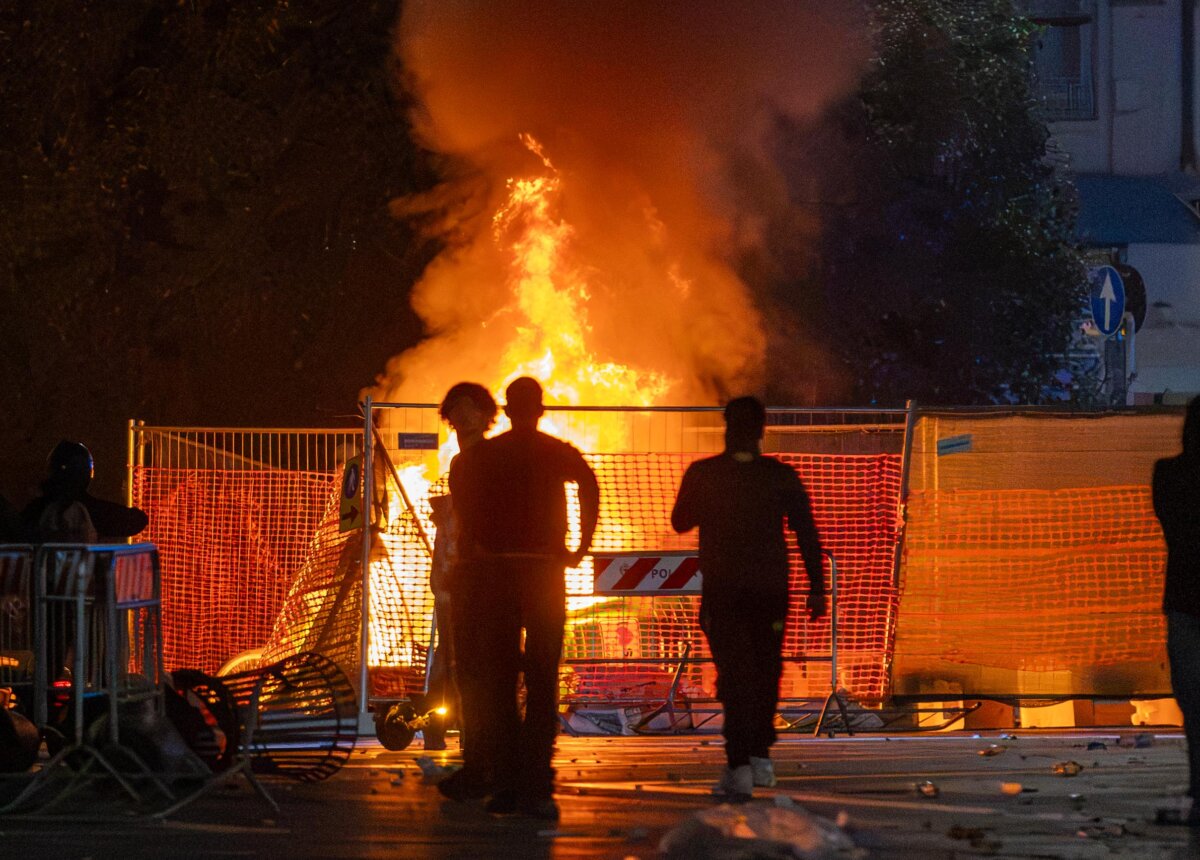
The weekend saw rioting in a number of cities in the north of Italy, including the financial capital Milan, where gangs of mainly young people went on the rampage on Oct. 17, smashing windows, stealing from shops, and attacking police.
Many wore hoods, while some of those on the streets started fires in bins and looted stores in the center of Milan. Pockets of violence spread to other northern cities, including Bologna, Brescia, Bergamo, and Turin.
“There is nothing revolutionary about vandalizing and stealing. Vandalism and theft are not protest, they are criminality,” Prime Minister Giorgia Meloni said in a video posted to social media, as she unveiled the tough new measures.
Anyone who takes part in a group of at least five people and endangers public safety during protests now faces up to five years in prison and a maximum fine of 20,000 euros ($22,460) under the new measures, which come into effect immediately.
Penalties increase if people are injured or faces are concealed, while authorities are given powers to order swift compensation for any damage inflicted. In the case of minors, their parents can be held liable.
Police now have the right to detain youths aged between 14 and 17, even if they have not committed a crime, where there is evidence they pose a danger to the public, extending powers that previously applied only to adults.
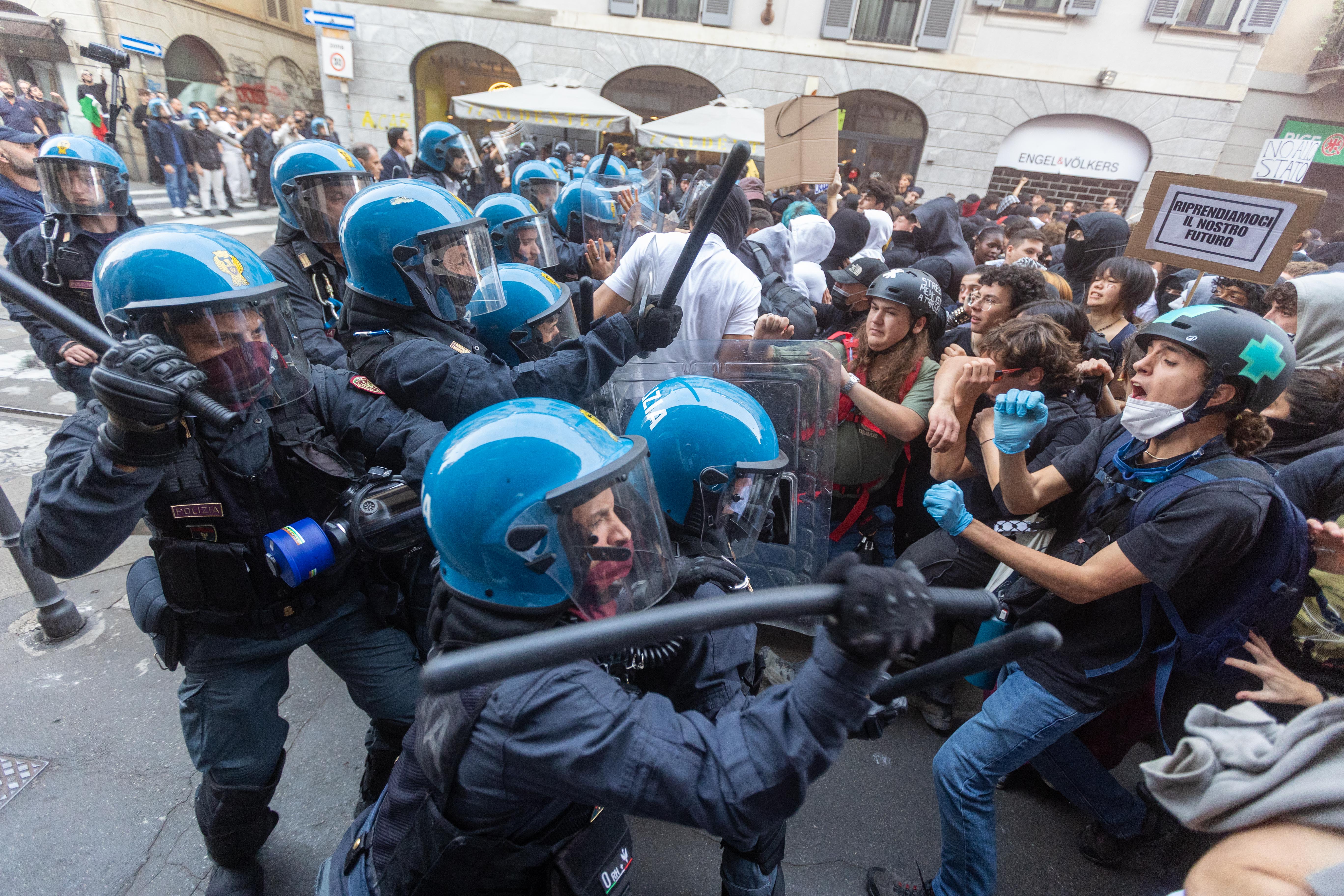 Police confront protesters in Milan, Italy, on Oct. 17, 2026. (Stefano Porta/LaPresse via AP)
Army on Street
The government said it would deploy 500 Army troops alongside police in Milan until the end of 2026, amid fears among authorities of further violence at demonstrations planned for the coming weekend.
The military presence is designed to bolster security at key sites, enhance monitoring across the area, and step up surveillance around sensitive locations, the defense ministry said in a statement.
Most stores in Milan’s Via Montenapoleone shopping district, home to luxury brands including Chanel, Tiffany, and Dior, had removed merchandise from their windows by Oct. 19, while many shops boarded up their windows.
Immigrants Could Lose Citizenship
Milan police said that some 2,000 youths participated in the Oct. 17 riots, including a large contingent of Italians and foreigners.
Deputy Prime Minister Matteo Salvini, head of the co-ruling conservative League party, wrote on X on Oct. 20, following the announcement of the new measures, that immigrants could be stripped of their citizenship if they took part in violent protests, while those seeking leave to remain in Italy would have their applications denied.
“More troops for Safe Streets, including 500 already in Milan, delayed arrests thanks to cameras, and greater powers for the Armed Forces and Law Enforcement,” he said.
“And then onward, looking ahead, with the revocation of citizenship and residence permits for adults who commit crimes, and the impossibility of obtaining citizenship for minors who deal drugs, loot, or vandalize.”
French Riots Echoed
The unrest in Italy echoed the French riots, where hundreds of thousands of people took to the streets on Oct. 17 as protests turned to violence and looting.
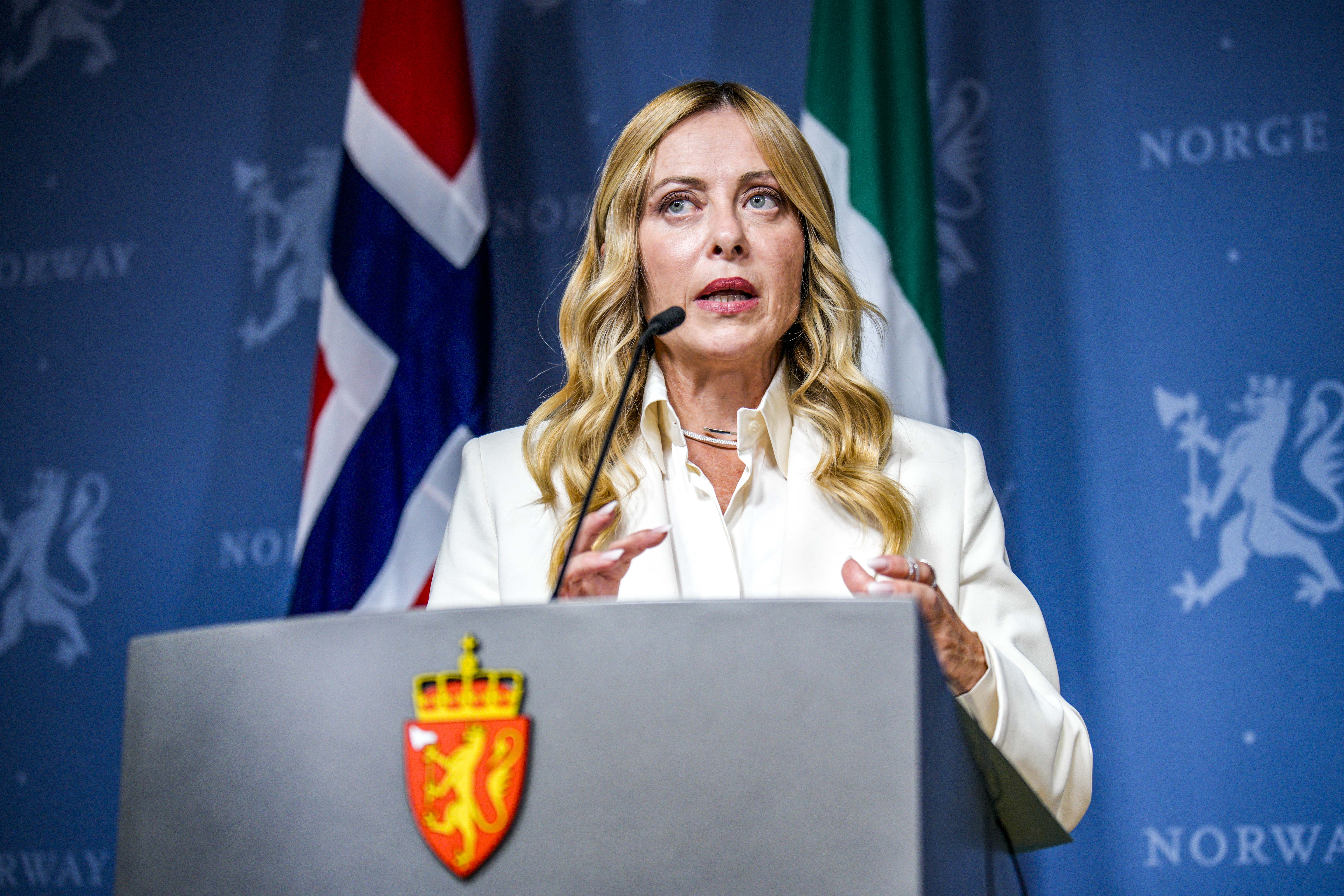 Italian Prime Minister Giorgia Meloni in Oslo, Norway, on Sept. 17, 2026. (Stian Lysberg Solum / NTB / AFP via Getty Images)
The country’s prison population has increased by more than 17 percent over the past four years, or almost 10,000 additional inmates, government data show.
Hardship No ‘Excuse’
Southern Italy has witnessed a separate wave of nonviolent protests, where truck drivers angered by soaring diesel prices and the rising cost of living have staged roadblocks that are disrupting supply chains.
Agricultural groups have warned that fruit and vegetables could be left to rot, while some pasta makers have had to halt production. Following talks with industry representatives, the government has promised to provide more help for truckers.
“We know what it means to look for a job, to earn an insufficient wage, and to see no prospects for the future … but hardship must never be used as an excuse for violence,” Meloni said on Oct. 20.
Meloni said the state’s response “must be firm,” adding that of the 330 people detained or arrested over the rioting, “half of them of foreign origin, born abroad, or born in Italy to foreign families.”
“I expect that the crimes committed will be prosecuted promptly and that all the rules available, including those of the recent Security Decrees, will be rigorously applied,” she said.