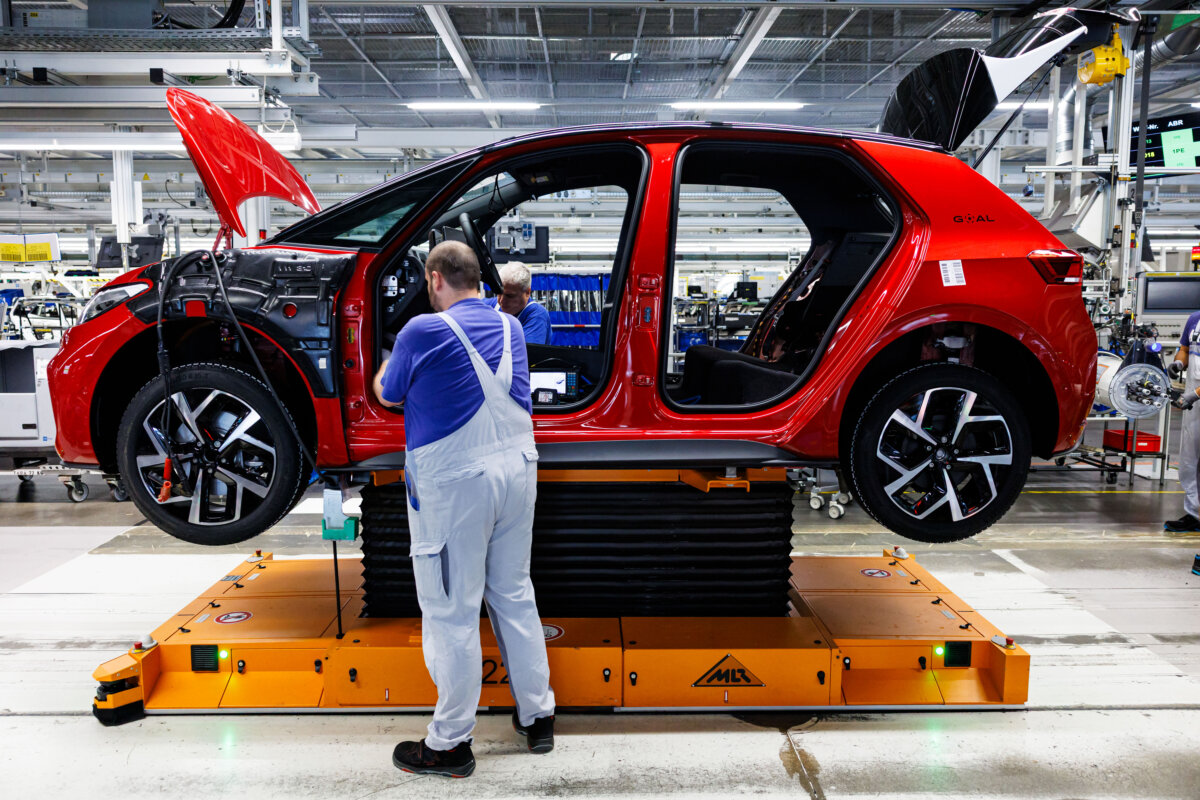

Sales of battery-electric vehicles reached a record high across the European Union in 2026 as more affordable models came onto the market and drivers responded to higher petrol and diesel prices, according to a European clean transport advocacy group.
A report published by Transport & Environment (T&E) on Oct. 5 showed that 1.64 million battery-electric vehicles (BEVs) were sold across the EU between January and August, up by 45 percent from the same period a year earlier.
BEVs made up 22 percent of new-car sales over the eight months, an increase of 6 percentage points from the same period in 2025. Their market share rose to 28 percent in August.
European automakers are introducing more electric models to the market. According to T&E, about 60 new BEV models are expected to launch by the end of 2026, nearly four times the annual average of about 15 new models introduced each year between 2021 and 2025.
This comes amid the tightening of EU rules on pollution from new cars. Under EU regulations, all new cars sold from 2035 must have zero tailpipe emissions.
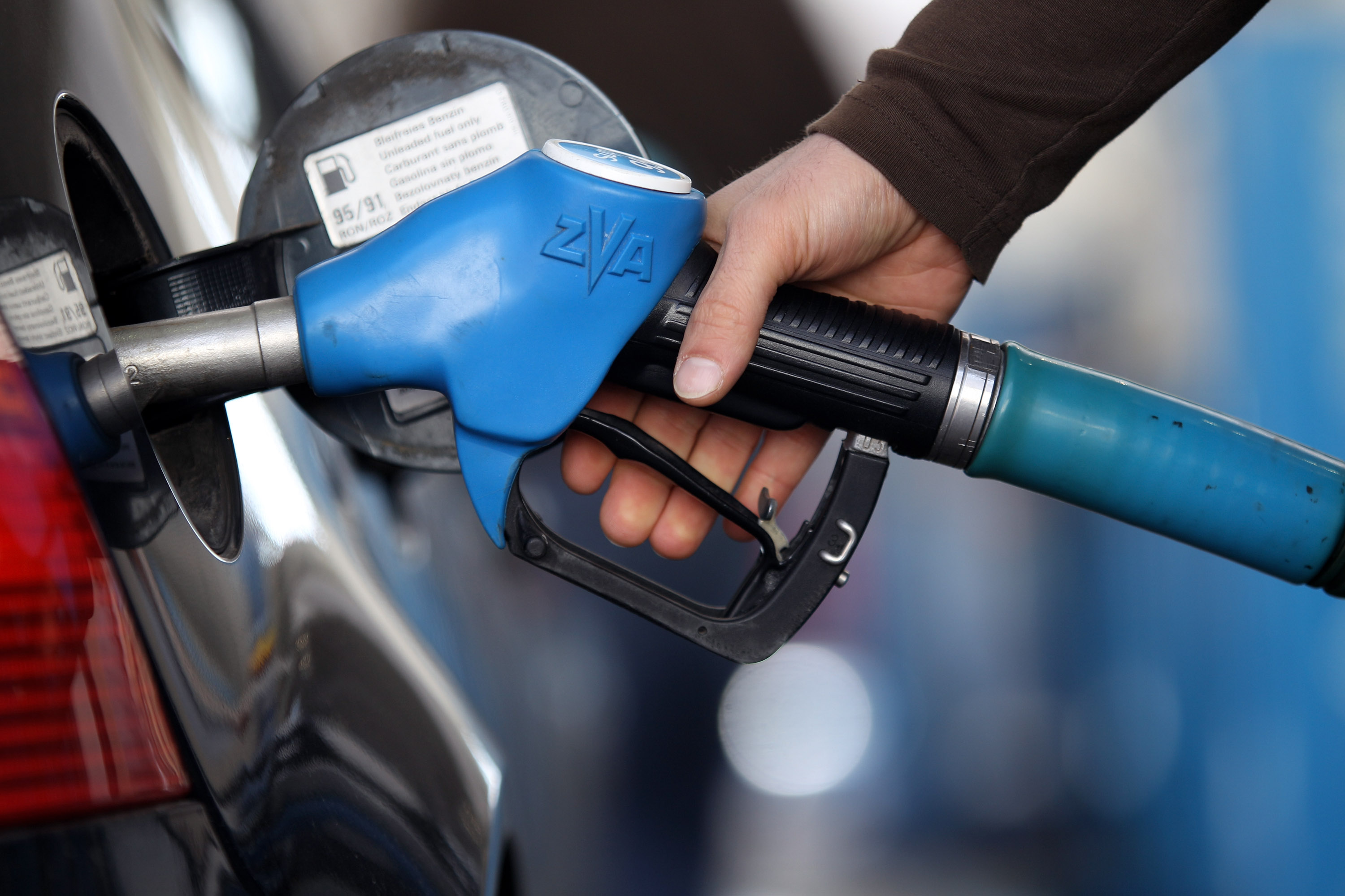 A man pumps gas, in this file photo. (Miguel Villagran/Getty Images)
Since the beginning of the Iran conflict, diesel prices have risen by 38 percent. Consumers in Europe spend 30 euros ($33.60) more than before to fill a 50-liter tank, according to the report.
Last week, the G7 nations stated that they would release up to 100 million barrels of diesel and crude oil from their strategic reserves over the next four months. It was a second coordinated response to supply disruptions linked to the conflict in Iran.
Earlier this spring, the International Energy Agency agreed to release about 400 million barrels of oil.
Geography, Prices
France and Germany accounted for about half of all BEV sales across the EU in the first half of the year. In August, BEVs made up 38 percent of new-car sales in France and 32 percent in Germany.
Italy and several countries in Eastern Europe also recorded strong growth. Sales rose by 69 percent in Italy, 151 percent in Slovenia, and 103 percent in Bulgaria. However, BEVs still account for less than 10 percent of new-car sales in those markets.
Consumers are seeing a wider selection of lower-priced electric vehicles than ever before.
The report states that 16 BEV models costing less than 25,000 euros ($28,000) are expected to be available by the end of 2026, double the number from a year earlier. Four of them are expected to cost less than 20,000 euros ($22,400).
About 10 models priced at or below 20,000 euros ($22,400) are expected by 2028, including the Renault Twingo, Volkswagen ID.Up, and Dacia models.
Stellantis is also expected to launch an electric vehicle family priced at about 15,000 euros ($16,800), with a Citroën 2CV revival confirmed and an entry-level Fiat Panda reported.
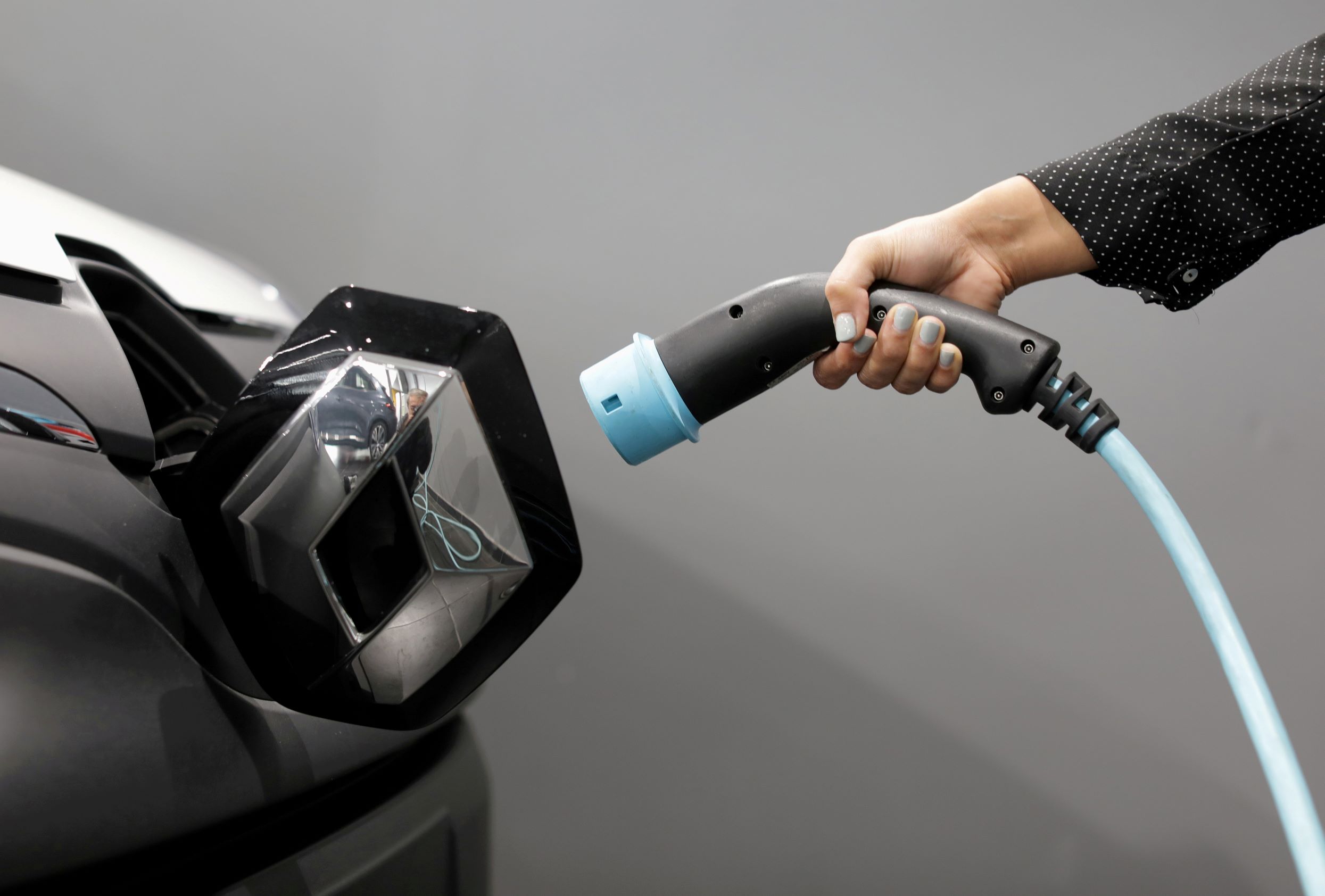 A woman plugs in a cable to charge a Renault Kangoo ZE electric utility vehicle at a Renault dealership in Cagnes-sur-Mer, France, on Oct. 22, 2020. (Eric Gaillard/Reuters)
Lucien Mathieu, cars director at T&E, said consumers had been waiting for more affordable electric vehicles.
“European drivers are finally seeing more of the smaller and more affordable electric cars they have been waiting for,” Mathieu said. “The oil crisis has further fuelled the rush by European consumers for affordable small electric cars.”
He said that Volkswagen’s ID. Polo “was quickly sold out, with over 40,000 orders and a 10-month waitlist.”
Outside Europe, T&E stated that several smaller markets have adopted BEVS more rapidly than larger economies.
Vietnam recorded the fastest growth, with battery-electric vehicles increasing to more than a 40 percent market share from 5 percent in less than three years. Australia also experienced rapid growth over the past two years.
The report states that the United States has lost momentum, with BEVs never exceeding a 10 percent market share.