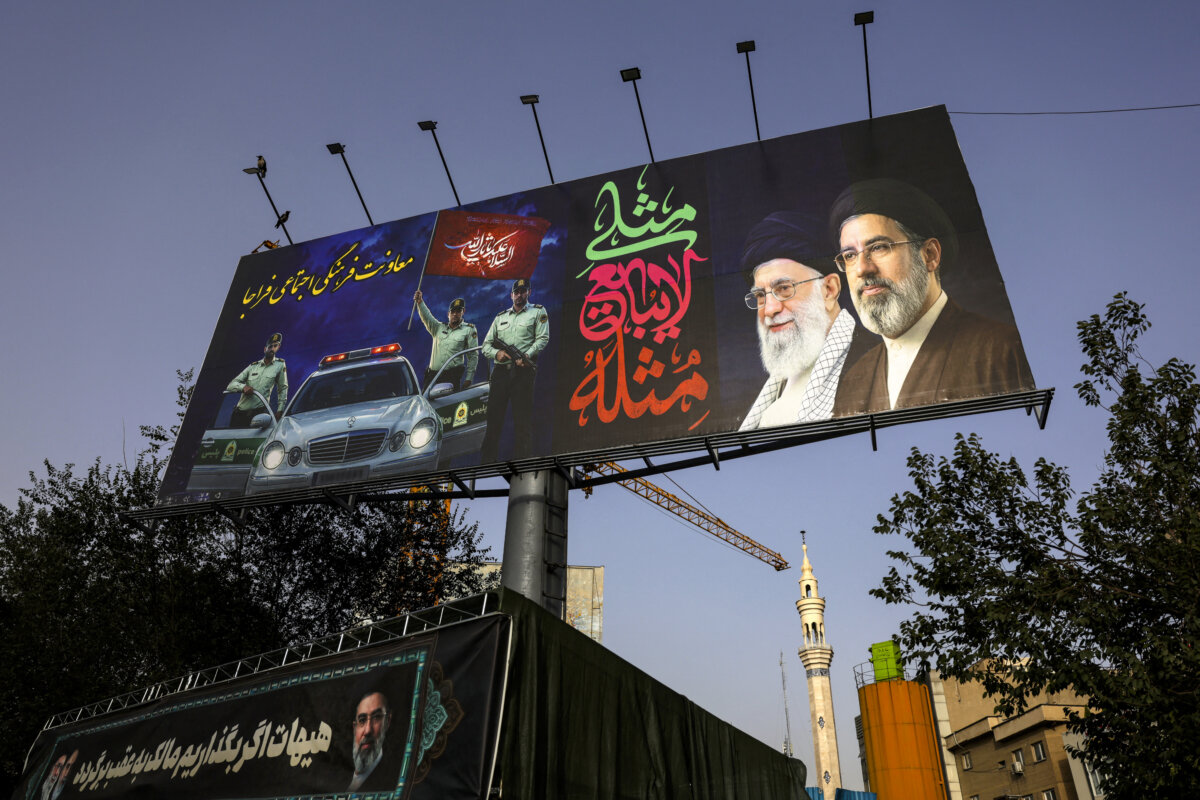

A top Iranian official on Oct. 4 asserted that the Strait of Hormuz won’t be reopened until the United States meets the conditions set by the Iranian regime.
In Iran’s parliament, speaker Mohammad Bagher Ghalibaf said on Oct. 4 that the strait, a key waterway that connects oil-producing countries in the Gulf with broader markets, will not be opened until the conditions of a memorandum that was signed by the United States and Iran over the summer are met, according to the semi-official IRNA.
IRNA quoted Ghalibaf as saying that the United States “is deliberately creating contradictory messages to confuse Iranian public opinion and disrupt decision-making.”
The memorandum, signed in June, included provisions such as that the Islamic regime dilute its stockpile of enriched uranium, the lifting of sanctions on Iranian oil, potential economic investment in the country, and the immediate reopening of the strait. The deal fell through after the Iranian regime attacked three commercial vessels in the strait, prompting the United States to declare the memorandum over and resume airstrikes on Iranian territory.
Since the start of the U.S.–Israeli conflict with Iran in February, Tehran has launched attacks against commercial ships attempting to travel through the Strait of Hormuz.
The U.S. military, meanwhile, has maintained a blockade on Iranian ports; the U.S. Central Command on Sept. 30 confirmed it had redirected 125 commercial vessels that were heading to or from Iran.
An Iranian Foreign Ministry spokesperson said on Oct. 4 that Tehran had clarified its broad positions via mediators to the United States, and it stated that more points have yet to be communicated to Washington.
“The Americans’ propositions are more or less in line with their previous positions, specifically on the nuclear issue,” spokesperson Esmaeil Baghaei said. “We told them our focus in this stage is the issue of the Strait of Hormuz and the return to security in this waterway requires clear steps from the U.S.”
He also denied that Tehran had offered U.N. nuclear watchdog inspections of its nuclear facilities in exchange for U.S. sanctions relief, saying Iran had not entered into nuclear discussions with Washington.
The comments from Iranian officials were made as Tehran and Washington issued renewed warnings to each other.
Iranian Foreign Minister Abbas Araqchi on Oct. 4 issued a warning against the United States again, telling ambassadors and diplomats in Tehran that Iran hoped Washington will choose diplomacy.
“If they again move towards military solutions, we are more prepared than before and will take whatever action is necessary to defend ourselves,” Araqchi said.
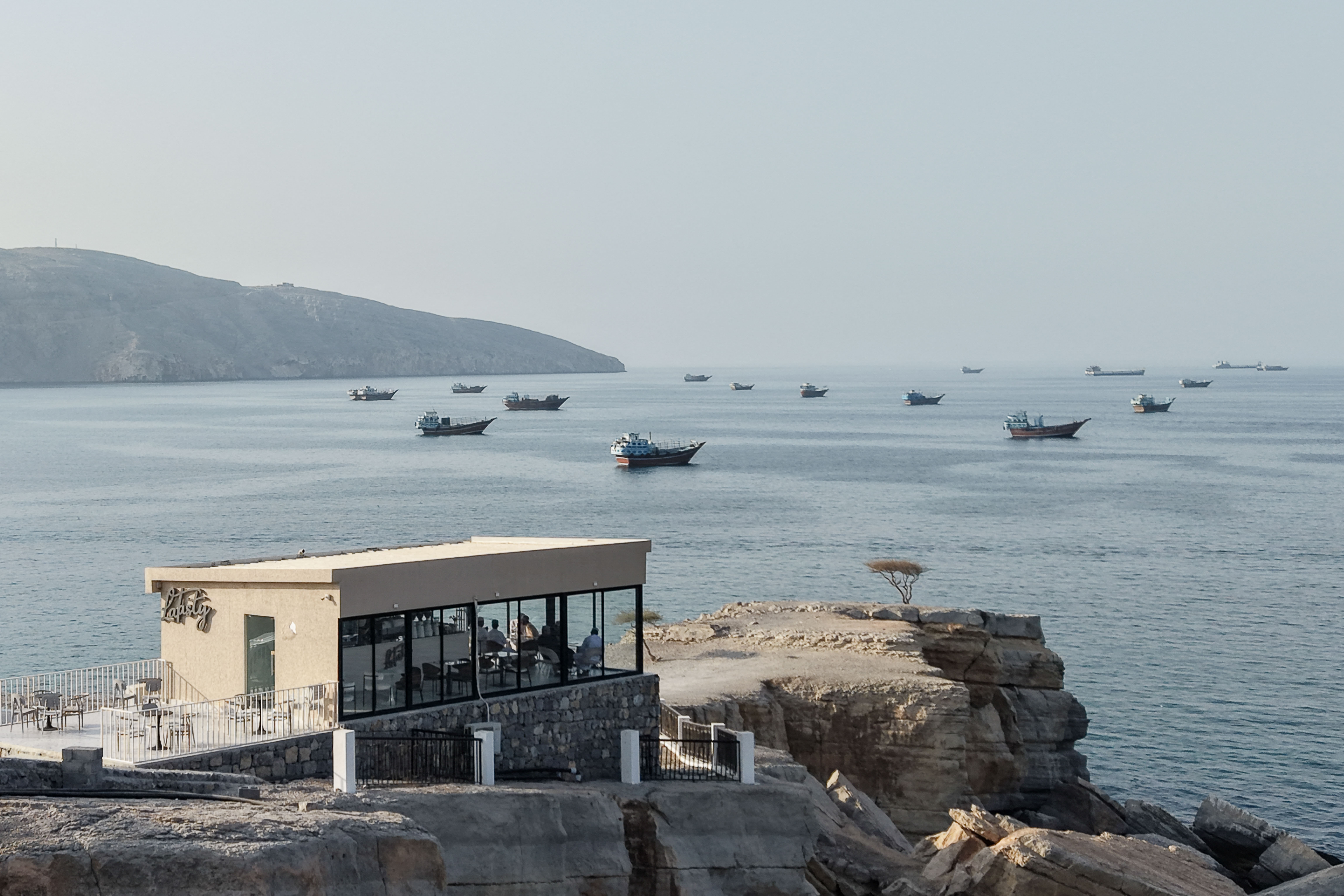 Ships are anchored off the coast of Khasab in Oman’s Musandam Governorate, near the Strait of Hormuz, on Oct. 2, 2026. (AFP via Getty Images)
On Oct. 3, U.S. War Secretary Pete Hegseth told reporters that U.S. President Donald Trump is focused on making sure Iran will never obtain a nuclear weapon, a concept the president has reiterated frequently since the beginning of the war.
“If they want to blink and think he doesn’t mean it, it would be to their detriment,” Hegseth said.
Tehran now is being given the choice to “give it up the way that they should without any leverage that they have, or it may have to happen the hard way,” he said.
Trump told reporters on Oct. 3 that Iran’s military capabilities have been “decimated.”
“We have a decision that I’ll make about Iran,” Trump told reporters at the White House before he flew to Ohio for a rally. “So the only question is it’ll either be the easy way or the hard way. We’ll have it the easy way or the hard way.”
According to data published by the American Automobile Association, gas prices remain elevated across the United States but have dropped over the past week or so. On Oct. 4, the average price for regular gasoline stood at $4.36 per gallon, down about 11 cents from a week ago.
Reuters contributed to this report.