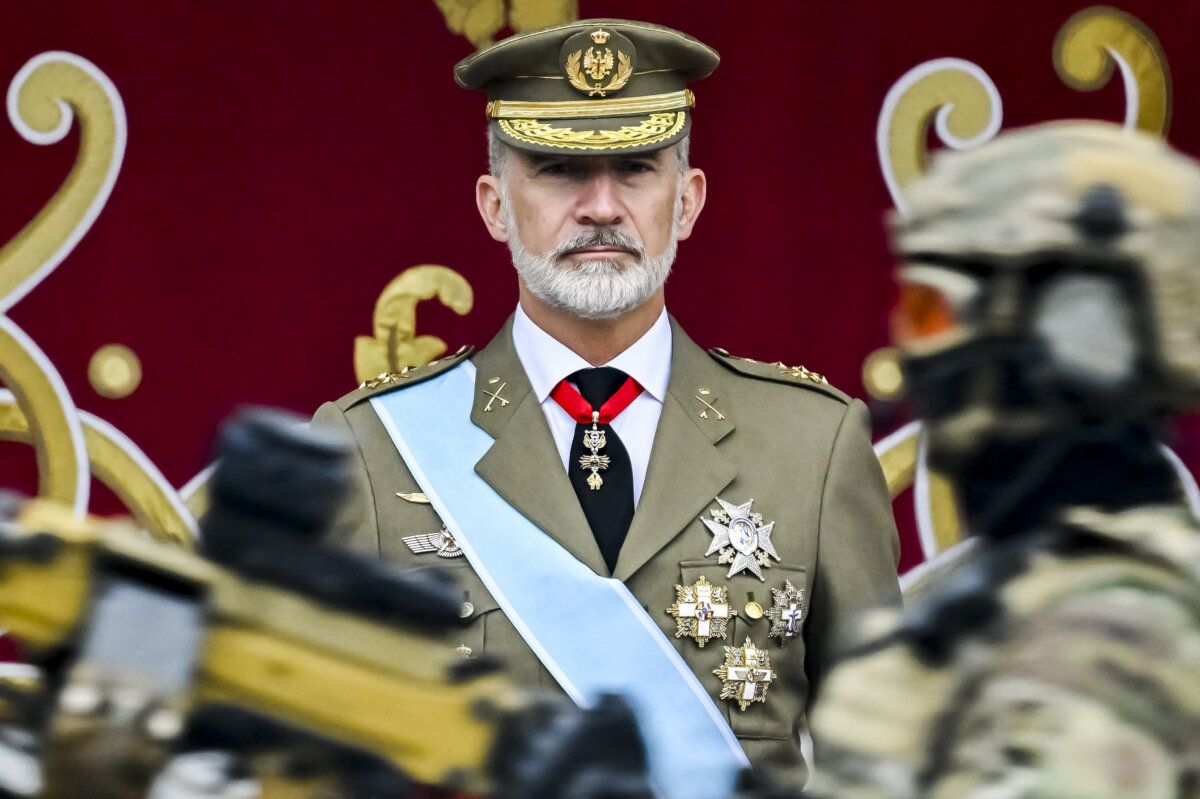

Spain’s King Felipe VI has said that all countries in the European Union should play their part in preventing another mass incursion by illegal immigrants after the Ceuta breach.
The monarch made his remarks in an uncharacteristically outspoken address on Sept. 29 during a gala dinner to mark a visit by French President Emmanuel Macron.
The king said that what happened two months ago in the Spanish exclave on the North African coast was “unacceptable” and presented an unprecedented security, public order, and humanitarian challenge.
‘Reinforcement of Collaboration’
“It’s a situation that ought to have as a consequence a reinforcement of collaboration between member states in resources and cooperation,” he said of the influx of an estimated 72,000 mostly young, male migrants.
In an apparent appeal to Brussels, the king said, “The European countries that suffer the most pressure from being on the external borders of the European Union cannot alone bear a responsibility that also belongs to everyone.”
Juan Jesús Vivas, the mayor-president of Ceuta, said the king has promised to visit the autonomous city at some point, something that he has not done during his 12-year reign.
The king received Vivas at the palace in Palma in August, and during the meeting, pledged to visit Ceuta. No date has been announced for the royal visit, which will be diplomatically sensitive given Morocco’s claim to the territory.
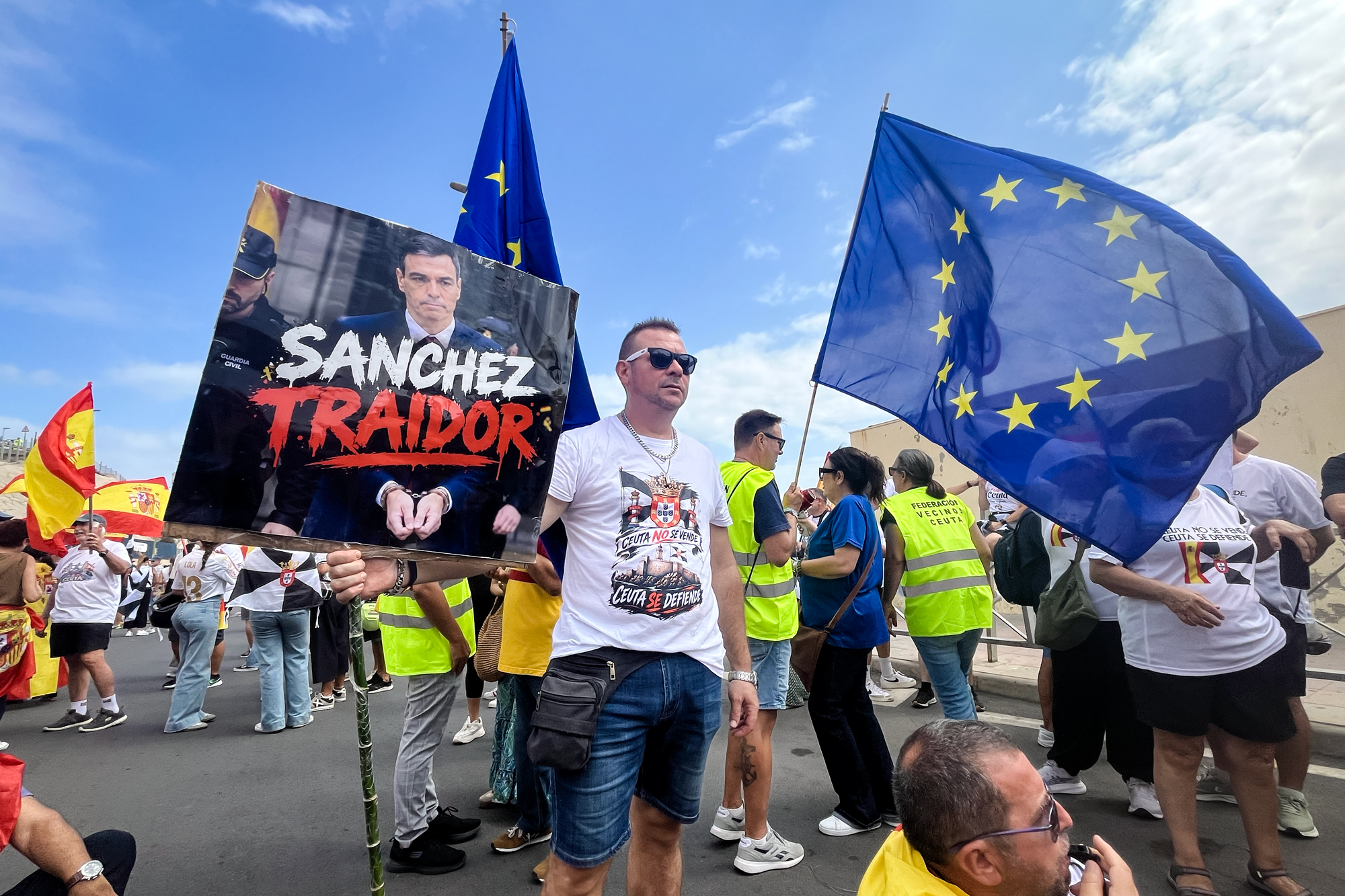 A Ceuta protester holds a sign calling Spanish Prime Minister Pedro Sánchez a “traitor” as more than 1,000 residents walked to the Tarajal border to demand expulsion of illegal immigrants and to reaffirm that the city is Spanish and European, in Ceuta, Spain, on Sept. 20, 2026. (Etienne Fauchaire/The Epoch Times)
Swifter Returns Proposed
The dinner at the Royal Palace in Madrid was also attended by Spain’s Socialist Prime Minister Pedro Sánchez, one of the most pro-immigration leaders within the EU.
Sánchez has been heavily criticized by political opponents at home and by foreign leaders over his amnesty for illegal immigrants in Spain, which resulted in about half a million people being regularized.
Sánchez has proposed possible changes to asylum rules to return illegal arrivals more quickly, which rights advocates and some lawyers say would violate human rights conventions.
Asked about the plans, Spanish territorial policy minister Angel Víctor Torres told reporters that the government was “analyzing the possibility” of a legislative amendment but that it was “not easy” because of issues arising from international law.
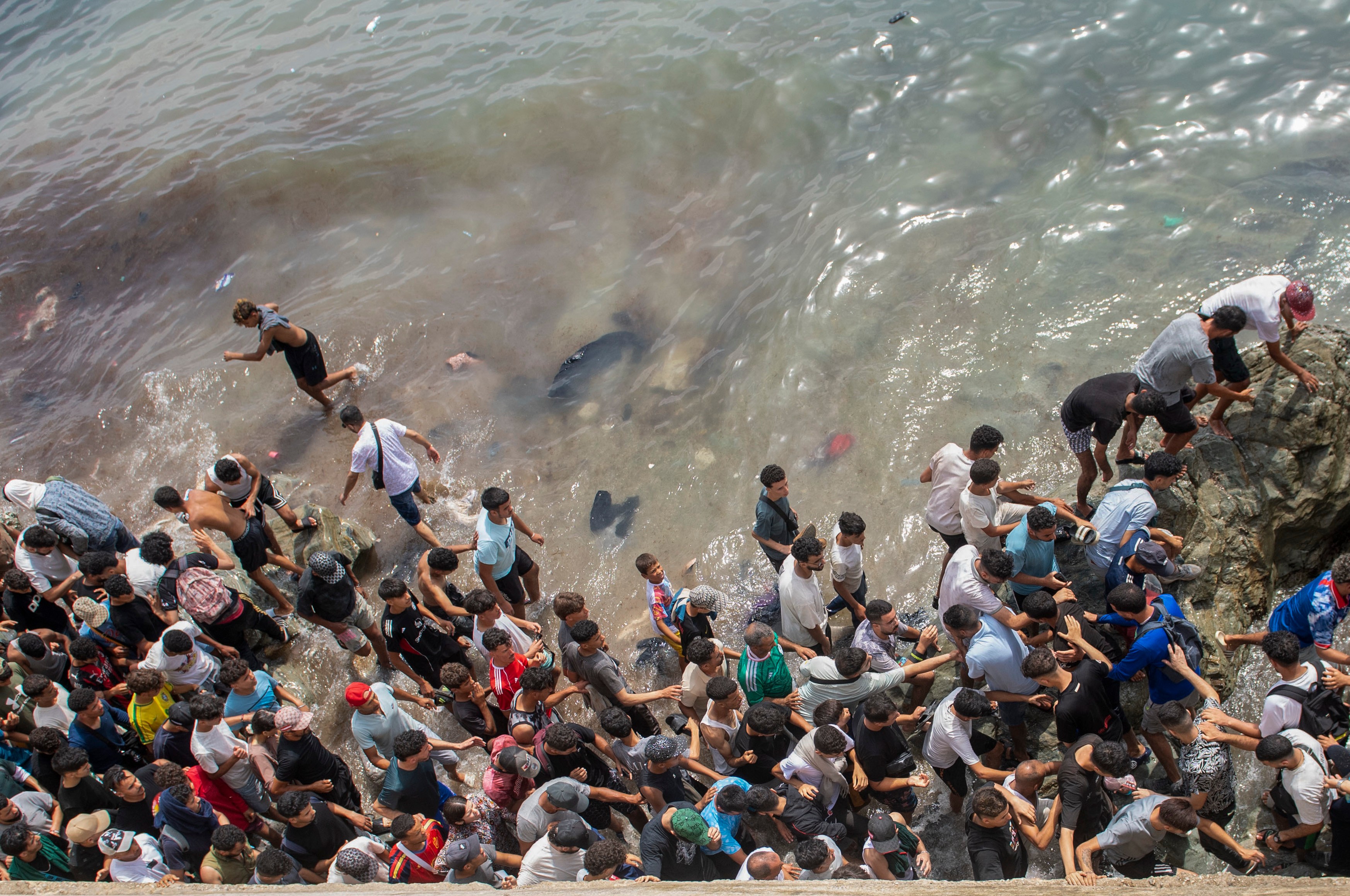 Migrants attempt to cross illegally from the Moroccan northern town of Fnideq to the Spanish exclave of Ceuta on July 31, 2026. (AP Photo)
Italian Border Response
Following the mass breach into the exclave on July 30, the Italian government suspended the EU’s border-free Schengen arrangements with Spain, initially for a month, saying it did not want to put its own population at risk from unknown arrivals.
Ceuta is one of the EU’s only two land borders with the African continent, together with Melilla. These two Spanish territories regularly face surges of illegal immigrants seeking to reach Europe from Morocco, although the migrants often come from other African countries.
Tens of thousands took to the streets across Spain earlier this month to protest the government’s handling of the immigration crisis.
European Commission President Ursula von der Leyen praised Madrid for the swift handling of returns to Morocco following the August breach, noting that the majority of migrants had been sent back.
European migration commissioner Magnus Brunner unveiled a proposal on Sept. 29 to strengthen EU border controls in the wake of the crisis.
The plan, which requires the approval of all 27 member states, would strengthen the mandate of Frontex, the EU border protection agency, and give it a standing corps of border personnel ready for immediate deployment.