
Europe’s five biggest military powers announced on Feb. 20 that they are teaming up on a multi-million-dollar project to bring low-cost air-defense systems such as autonomous drones and missiles into production in the next 12 months.
Representatives made the announcement at the European Group of Five (E5) defense ministers meeting in Krakow, Poland, which brought together the continent’s five largest defense spenders: France, Germany, Italy, Poland, and the UK. Also in attendance were representatives from NATO and the European Union.
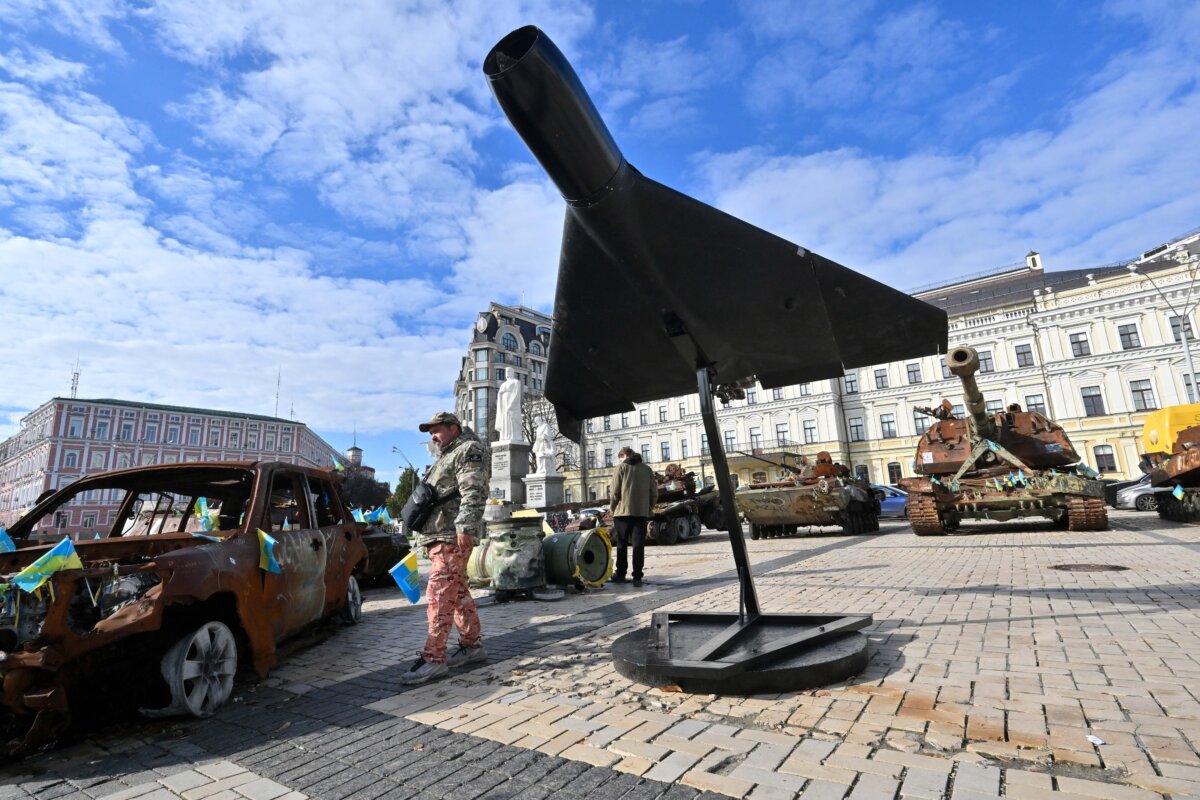
The move was sparked amid the ongoing war in Ukraine, in which autonomous interceptor drones have been found to provide an effective alternative to expensive air-defense missiles.
The initiative is being spearheaded by the UK but has received the backing of the other four nations.
Polish Defense Minister Wladyslaw Kosiniak-Kamysz said the group supported the Low-Cost Effectors and Autonomous Platforms (LEAP) initiative “wholeheartedly.”
“The drone solutions became something of a revolution in the battlefield in Ukraine,” Kosiniak-Kamysz said at the meeting. “They changed the course of war. They changed our strategies in terms of how we arm our forces.”
UK Minister for Defense Readiness and Industry Luke Pollard said that the problem currently facing Europe is that in order to be “effective at shooting down relatively low-cost missiles, drones, and other threats,” it must match the cost of the threat with the cost of defense.
“That is why we want to have more,” Pollard said. “So it’s a multi-million-pound, multi-million-euro commitment that each member of the E5 has made to step up the technology. We feel confident that this is the very first step of what we hope will be a series of initiatives under LEAP to look at how we can have ground-to-air and other capabilities that pulls our collective experience, that provides a call to arms for our defense industries in every single one of the five nations to respond to the challenge.”
Pollard said that the E5 members are “really hopeful” that the scheme will develop an effector that will be in production within 12 months.
Effectors are the components of a system that produce a physical effect, while autonomous platforms, the other aspect of the LEAP initiative, are unmanned systems capable of independent decision-making.
The UK government said in a separate statement, “LEAP will see the development of advanced low-cost air defence systems—such as autonomous drones or missiles—the first project of which will be delivered by 2027, providing an unparalleled opportunity to harness European defence financing, leadership, [artificial intelligence] and autonomy.”
The Krakow meeting came as European leaders work to boost defense capabilities amid increased European doubts about Washington’s commitment to protecting the continent.
Addressing this, German Defense Minister Boris Pistorius said that while the United States is committed to securing the nuclear aspect of Europe’s defense for the “foreseeable future,” Europe itself has to take more responsibility for “conventional deterrence.”
EU foreign policy chief Kaja Kallas, who was also present at the meeting in Krakow, said that the move is “not about competing with NATO” but is “about making Europe stronger within NATO.”
“A stronger Europe makes the Alliance also stronger,” she said.
In addition to the LEAP initiative, Pistorius floated the idea of a European version of the “Five Eyes” intelligence-sharing partnership among the United States, the UK, Canada, Australia, and New Zealand.
“That is also conceivable, and the task has been assigned,” Pistorius said, according to Bloomberg.
He also suggested considering a joint tanker fleet or a multi-domain task force.
The Five Eyes alliance has been active in some form among the Anglophone countries since World War II.
This is not the first time such an alliance has been suggested by a European country; the incoming government of the Netherlands also called for such an arrangement on Jan. 30 in a governing plan.