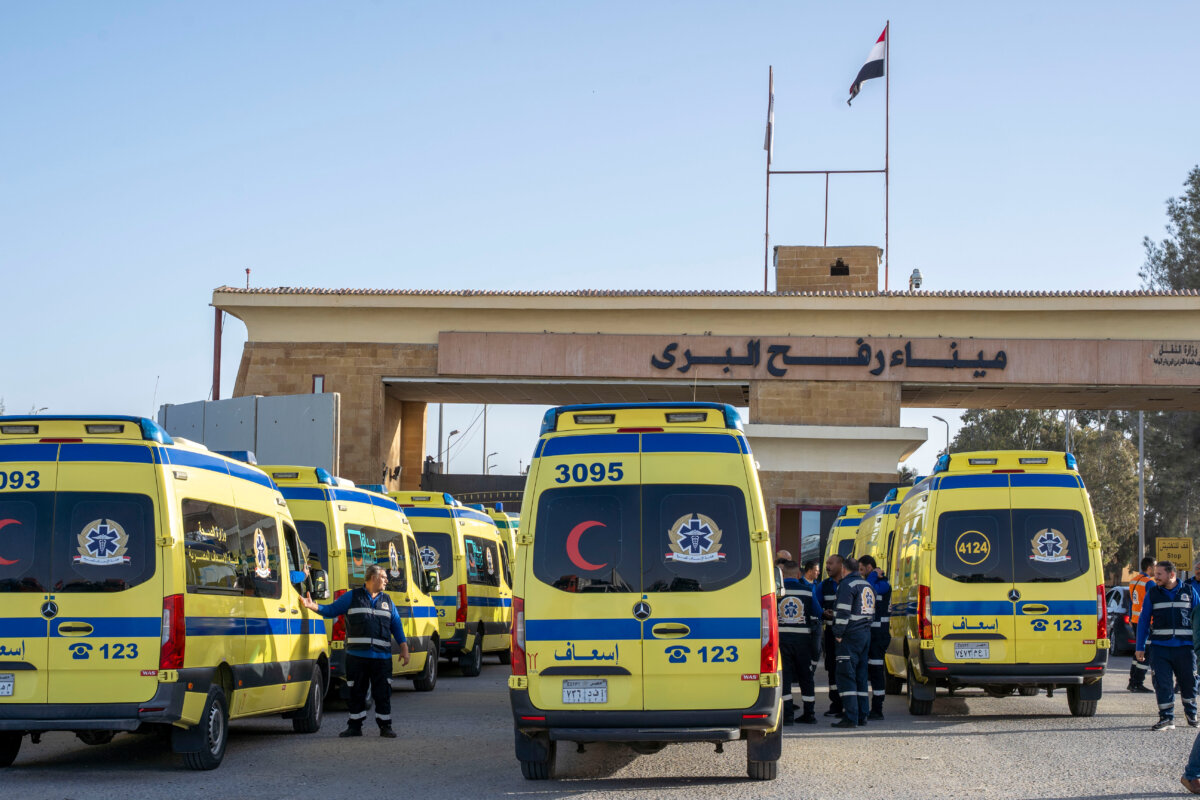

A dozen Palestinian returnees entered the Gaza Strip from Egypt through the Rafah crossing on Feb. 2 after the border point reopened for limited pedestrian traffic a day earlier, Egyptian state media reported.
Al-Qahera News satellite channel said on Feb. 3 that a bus carrying 12 returning passengers arrived in Gaza via the Rafah land crossing.
The channel also reported that Egyptian authorities received the first group of injured and sick Palestinians coming from Gaza through the Egyptian side of the crossing to receive treatment in Egyptian hospitals.
A second batch of Palestinians returning to Gaza arrived at the main square of the Rafah crossing from the Egyptian side on Feb. 3 to complete entry procedures before heading into the strip, according to Al-Qahera.
The Rafah crossing, Gaza’s key gateway to Egypt, had been closed since May 7, 2024, during the war between Israel and terrorist group Hamas. It reopened on Feb. 1 under a U.S.-brokered Gaza cease-fire agreement and remains subject to Israeli security screening.
On Feb. 2, the U.S. State Department’s Near Eastern Affairs bureau posted on X a statement from the National Committee for the Administration of Gaza announcing the opening and pilot operation of the Rafah crossing in both directions.
Ali Shaath, chairman of the National Committee for the Administration of Gaza, part of President Donald Trump’s Board of Peace, described the reopening as “the beginning of a long journey to reconnect what has been cut off and to open a true window of hope for our people in the Gaza Strip.”
Shaath also praised the Egyptian authorities for their role in the reopening of the crossing.
Egypt Activates Emergency Health Plan
Egypt’s Health Ministry said on Feb. 2 that it had activated a national emergency health services plan in conjunction with the reopening of the Rafah crossing from the Palestinian side.
The spokesman for the ministry, Hossam Abdel Ghaffar, said the plan includes about 150 hospitals nationwide, with the capacity to expand depending on developments. It also provides between 250 and 300 fully equipped ambulances.
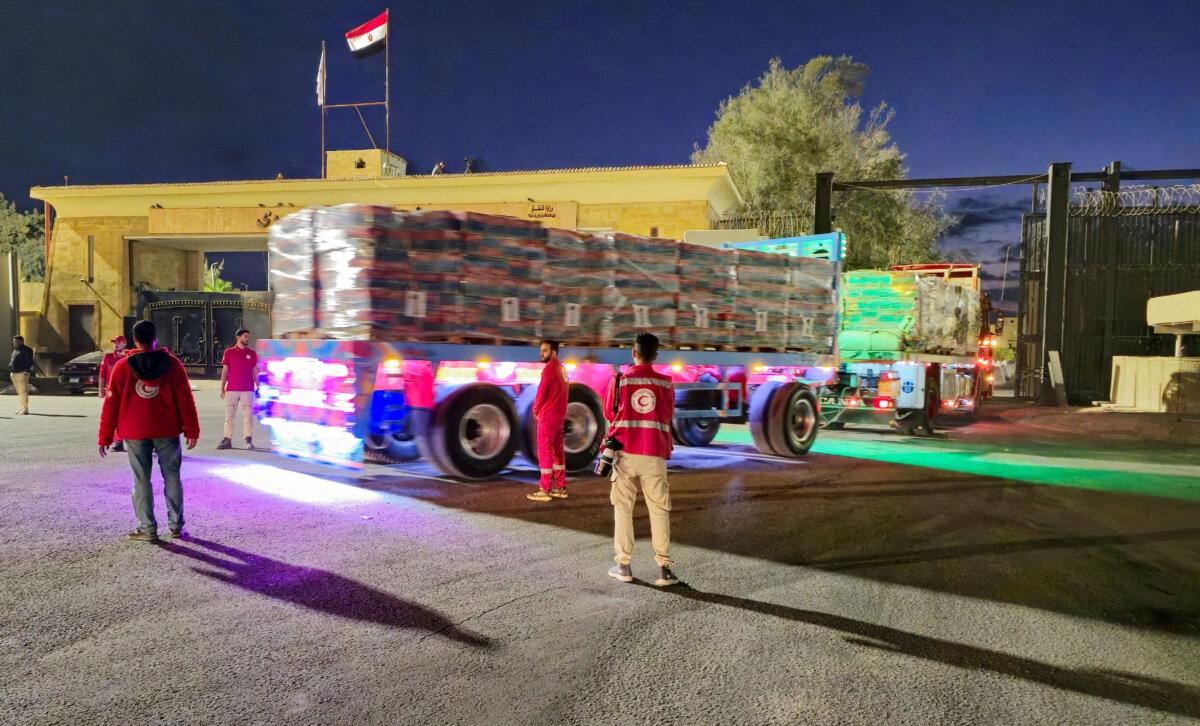
Approximately 12,000 doctors across critical specialties and more than 18,000 nurses, along with 30 rapid deployment teams from the Central Department of Emergency and Critical Care, are prepared to receive patients from Gaza, he added.
Abdel Ghaffar also said a strategic stockpile of medicines and supplies has been secured, in coordination with the National Blood Bank, to support up to 1,000 blood transfusions per day during emergencies.
According to a Feb. 2 statement by the Hamas-run Gaza Health Ministry, since the start of the war on Oct. 7, 2023, 71,800 people have been killed and 171,555 injured in Gaza.
The ministry does not distinguish between civilians and combatants in these casualty figures, and The Epoch Times cannot verify their accuracy.
Relief, Recovery, Reconstruction
The National Committee for the Administration of Gaza views the reopening of the Rafah crossing as “a vital outlet for humanitarian cases,” including medical referrals, students, and family reunification cases.
“We are working with full determination and in cooperation with mediators, the Palestinian National Authority, and the Board of Peace led by U.S. President Donald Trump, to ensure that this step becomes an entry point toward broader stability, the restoration of essential services, and paving the way for relief, recovery, and reconstruction,” Shaath said.
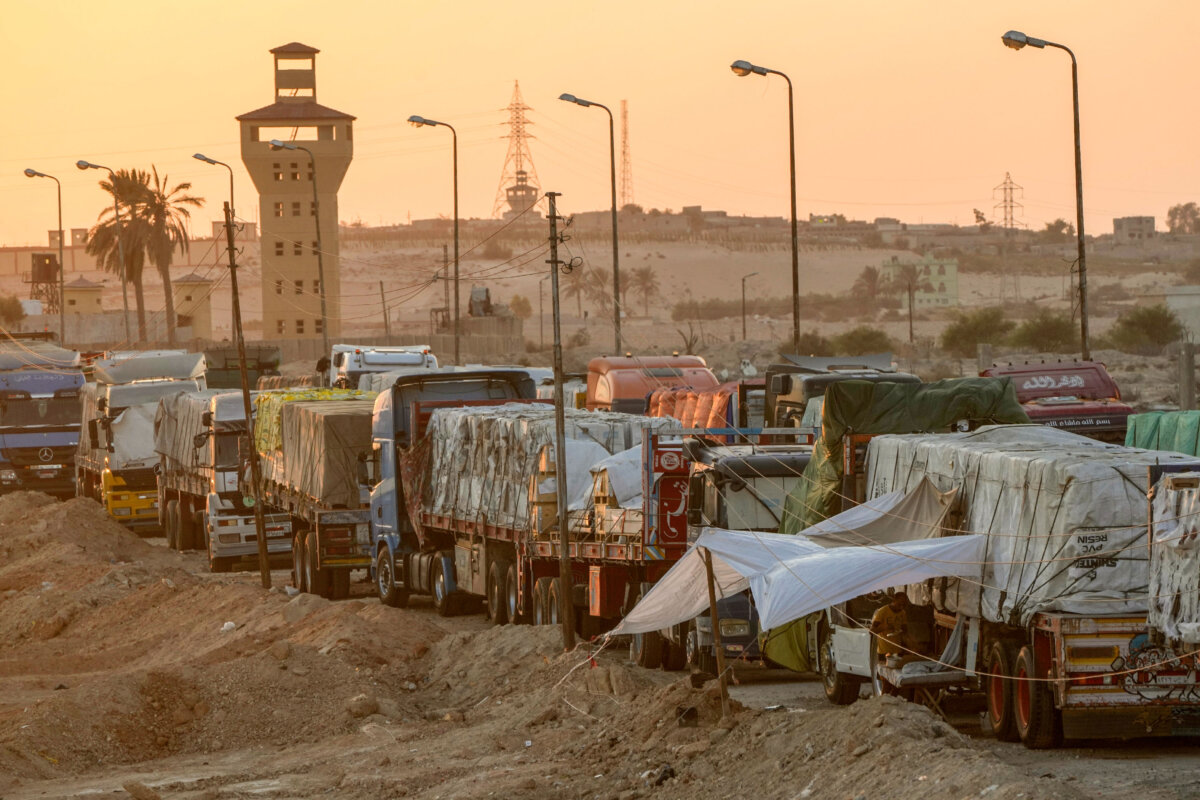
The U.N. Office for the Coordination of Humanitarian Affairs (OCHA) welcomed the reopening of the crossing on Feb. 2.
“Civilians must be allowed to leave and return voluntarily and safely, as international law requires,” OCHA said.
“Ultimately, essential humanitarian supplies must enter in sufficient quantities and with fewer restrictions through Rafah and other crossings.”
Entry into and exit from Gaza via Rafah will be allowed after individuals receive security clearance from Israel and under the oversight of the European Union mission, similar to the process used in January 2025, according to the Coordinator of Government Activities in the Territories (COGAT), the Israeli defense ministry body responsible for implementing government policy in Gaza and the West Bank.