

Author of a political memoir called “Whatever It Takes,” Graham Richardson never shied away from his reputation as a “fixer” and one of the Australian Labor Party’s (ALP) most ruthless operators.
Indeed, some say he revelled in it—being called to a meeting with “Richo” was sometimes enough to have a wavering MP change their mind before a word was spoken.
Not for nothing did Richardson accrue several colourful monikers during his career, including “minister for kneecaps,” “the kingmaker,” and a “factional warlord.”
Richardson operated unseen in the proverbial, sometimes literal, smoke-filled rooms where deals were made, and so were careers, while others were prematurely ended.
When former Prime Minister Bob Hawke overlooked him for a coveted portfolio and instead tried to make him High Commissioner in London, his chagrin led to the sacking of one of Australia’s most popular prime ministers and his replacement with Paul Keating in December 1991.
Prior to that, he’d played a key role in rolling Bill Hayden and replacing him with Hawke in early 1983.
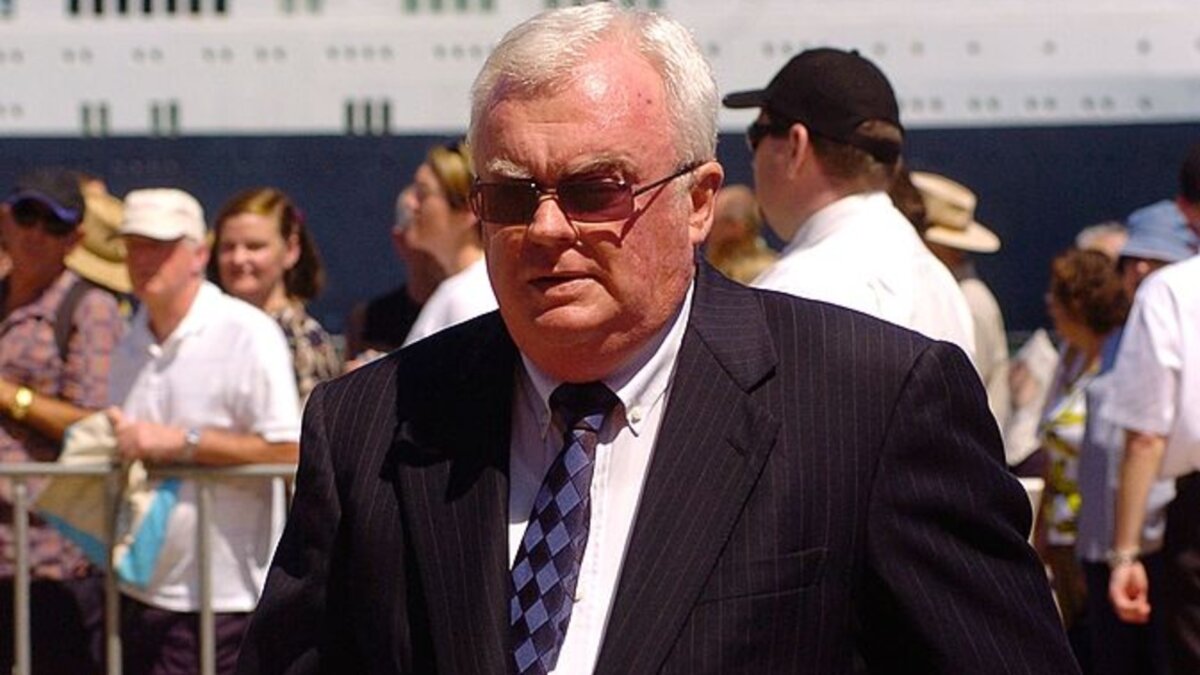
Following the 1993 election, Richardson was said to be manoeuvring against Keating, demonstrating a trait mentioned in many of his obituaries—he was fiercely loyal until the moment he felt that loyalty wasn’t being reciprocated, in which case he’d do “whatever it takes” to even the score.
But whereas others with that sort of power and influence tend to be shadowy figures, rarely if ever giving media interviews, Richardson also enjoyed the spotlight, infuriating his opponents as he projected the relaxed bonhomie that marked the other side of the man.
Born in 1949, to a father who would become state secretary of the Amalgamated Postal Workers’ Union he joined the Labor Party at 17.
A brief period studying law at the University of Sydney brought him into contact with a group of ambitious young men on the Labor Party Right that included Keating, and by 1971 Richardson had a job in the New South Wales (NSW) Labor Party office. It took him just five years to become state secretary.
Branch Stacking, Criminality
When Neville Wran won power in a landslide win in the 1978 NSW state election—the first of two “Wranslides,” as they were called, while Richardson was in charge of the party machine—it brought him to prominence.
But at the same time, the state party had descended into branch stacking, criminality, and even violence as the Left and Right factions fought for dominance.
Richardson was no mere observer of these conflicts; Professor of History at the Australian National University Frank Bongiorno says he was “up to his eyeballs in it and acquired some deeply unpleasant allies along the way.”
By 1983 he was a senator and, along with Robert Ray, who led the Victorian Right, was a key figure in shaping the national faction system within the Labor Party that has characterised it ever since.
But he also did much for which he is almost universally admired.
In 1987 Richardson became minister for the environment and the arts, entering the full Cabinet six months later with sport, tourism, and the territories added to his portfolios.
He credits a visit to Tasmania with Bob Brown as the catalyst that convinced him of the need for environmental protection, which in turn led to his decision to save forests in that state and in Queensland, and to protect Kakadu National Park from mining.
His environmental credentials enabled him to negotiate electoral deals with the Greens, which helped sustain the Hawke and Keating governments.
But it was his deal-making with business figures—which brought large donations into Labor’s coffers—which cast a shadow over the government.
There was the Offset Alpine affair, involving an old printing factory owned by now disgraced stockbroker Rene Rivkin. It was destroyed in a fire on Christmas Eve 1993, two months after the company upgraded its insurance policy.
The insurance company was forced to pay out $53 million, more than 10 times what the plant was worth.
Who benefited was impossible to tell because a large parcel of Offset shares was hidden behind Swiss bank accounts.
Then a decade later, two journalists found that Rivkin had told Zurich’s district attorney that the shares belonged to him, another businessman, and Richardson.
“For the next six-and-a-half years, the corporate police tried their damnedest to prove their case, while Rivkin, Kennedy and Richardson did their best to frustrate them,” Paul Barry wrote in The Monthly.
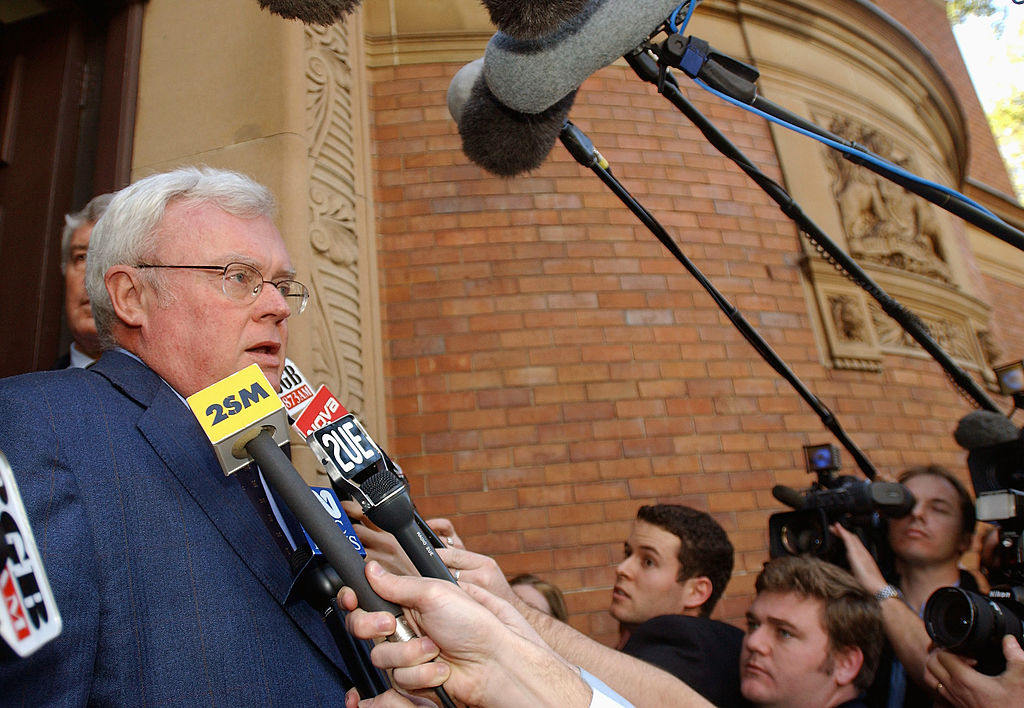
Allegations also surfaced that he’d sought to exercise influence on behalf of his cousin by marriage, Gregory Symons, who’d been arrested in the Marshall Islands for forging government documents relating to a migration scam and was later subsequently jailed.
A judicial inquiry was necessary to resolve allegations of ministerial impropriety, and Richardson spent the remainder of his term on the backbench.
He was back a year later as health minister following Keating’s surprise 1993 election win but retired from politics the following year and went on to have a career as a lobbyist and colourful media commentator.
On the Albanese government, he said, “I think they’ve certainly raced too far way too quickly. I think they’ve left Australia behind. Labor are way out in front, and the country is behind, saying, ‘Listen, where are you blokes going?'”
And on former Prime Minister John Howard, Richardson questioned in the Quarterly Essay how “a socially awkward, ordinary, boring man with a record of failure in the ’80s could become one of the most dominant political figures of post-war Australia.”
Despite writing about an opponent he clearly didn’t like, Richardson clearly saw a fellow follower of the “whatever it takes” philosophy, saying of Howard, “Today he can thwart the ambitions of his loyal deputy, throttle the influence of the ever-decreasing numbers of Liberal ‘wets’ and, with his new-found Senate power, shape our nation in virtually any way he chooses.”
From ‘I Will Miss Him’ to “Good Riddance”
Richo’s passing brought out old friends and foes to reflect on his legacy.
Former Prime Minister Tony Abbott called him “a fierce Labor warrior who mellowed into a generous-spirited and widely-liked voice in our public life.
“I am grateful for a friendship that blossomed after he began his media work. He played his politics hard but at least in later years fair as well. Richo exemplified a decent partisanship that could engage opponents with respect. I will miss him.”
Former Greens leader Bob Brown said, “Richo had a rare insight into Australians’ love for wildlife and nature,” while Christine Milne credited him with numerous wins for the Australian environment, saying, “He took on environmental protection as a successful election-winning weapon, something no environment minister has done since.
“I will always be grateful that he chose to exercise his powers as … minister and as a Labor powerbroker to leave a real legacy for the environment and for future generations.”
Many veteran journalists paid tribute, including Paul Bongiorno, who wrote “Richo was a brilliant political strategist. He was a gifted communicator who spoke with disarming frankness. Despite his flaws he was a real contributor to our nation.”
Others, like Crikey’s editor Bernard Keane, didn’t hold back, saying he “cuddled up to media moguls and happily took their thirty pieces of silver to protect his rotten reputation. Good riddance.”
The Australian Financial Review’s editorial was no kinder.
“If there was a recurring theme to his contribution to Australian politics and business, it was that these institutions existed to serve one person: Richo. His legacy is one of self-enrichment, self-aggrandisement and self-indulgence,” it said.
But what did Richardson think of his career?
While he never revealed much of his inner self in interviews, former talkback host Brian Carlton said, “I worked closely with Graham Richardson in his early radio days, post politics. He was intelligent, decent and often reflected on what he did and said while a Labor senator, not always fondly.”







